Book Review: The Shaping of Grand Strategy
Tuesday, May 24th, 2011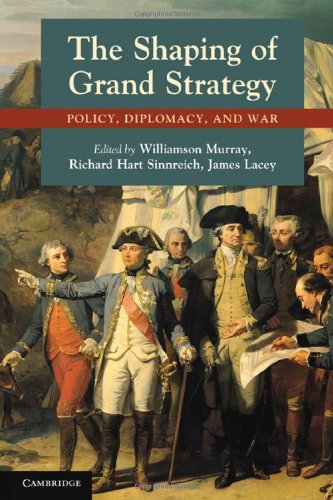
The Shaping of Grand Strategy: Policy, Diplomacy, and War
As readers of this blog know, grand strategy is an important and timely subject that speaks directly to the difficulty American leaders have had in navigating the ship of state in the waters of the international arena. The Shaping of Grand Strategy: Policy, Diplomacy, and War
The Shaping of Grand Strategy has a number of strengths to recommend it to the serious student of history or strategic practitioner:
Focus: The case studies are all anchored in the Westphalian state system starting with the early modern period of European absolutism and apex of “national” monarchies and transitions through a Bismarckian 19th century to finish with the West’s cataclysmic 20th century battle with totalitarianism. This gives the chapters by different scholars a sense of cohesion and chronological succession.
Balance: The Shaping of Grand Strategy gives scholarly treatment from both the theoretical, strategic studies perspective as well as the historical case study. I learned some things about Louis XIV’s Europe and the Great Britain of the Pitts and the Hanoverian dynasty of which I was unaware. Theory bookends history in this tome.
Nuance: Each scholar gives his subject an adult treatment. Controversial points are interesting rather than shrill and each author engages an impressive synthesis of historiographic material as they cover a broad ground in investigating grand strategy. Each chapter is sound and engaging.
Limitations, such as they are, to be considered:
Absent: Powerful non-Western case studies. The ancient world. Revolutionary war (French, Soviet or Islamist insurgent) as a grand strategy. Geoeconomics asnd political economy as a foundation for grand strategy.
Weak: Insufficient treatment of the impact of nuclear weapons and deterrence on grand strategy, which frankly deserved a chapter of it’s own.
If you are composing a syllabus for a class on grand strategy or strategy, The Shaping of Grand Strategy would serve as an excellent generalist core for the course, supplemented by cognate, specialist or subtopical readings.
Some things that struck me while reading The Shaping of Grand Strategy:
- Colin Gray’s distillation of the strategic dilemmas faced by Truman and an almost Boydian implicit explanation of what grand strategy is and why it needs a compelling moral power:
High policy does not emerge in a vacuum, though it can be invented in a hurry without much forethought when necessity presses. Policy requires a North Star for guidance that can inspire, yielding to would-be leaders the fuel they require to recruit and satisfy their followers
- James Lacey’s realistic and granular treatment of the relationship between military strategy and grand strategy in the WWII Anglo-American Alliance and his generally admiring assessment of FDR as a strategist vs. a critical treatment of George Marshall.
- Marcus Jones’ emphasis of the importance of the strategist himself and the uncertainty of decision making in his chapter on Otto von Bismarck.
- The drawing of historical parallels with today by John Lynn and Richard Sinnreich as well as the investigation of the reasons for grand strategic failure of British appeasement by Williamson Murray.
The Shaping of Grand Strategy is a tight, concise and focused academic book that furthers the discussion of grand strategy by providing coherent and detailed examples as well as a readable an interesting analysis from which both the professional or the the student can profit.
Strongly recommended.
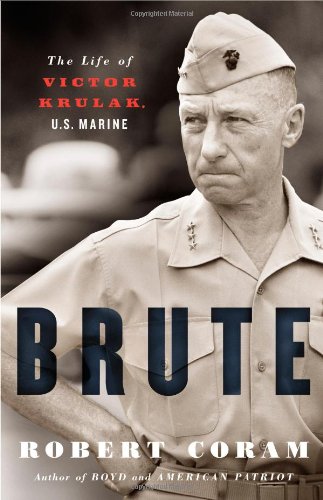
 by Robert Coram
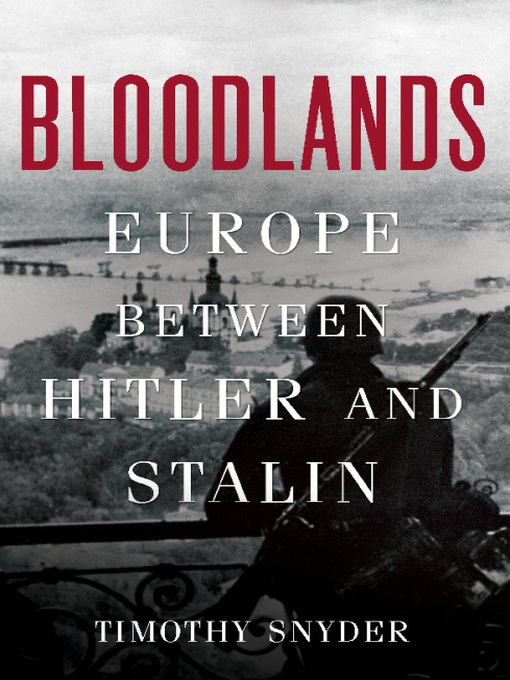
 by Timothy Snyder
 , Robert Gellately’s
  , Richard J. Evans’
  and Alan Bullock’s classic dual biography
  . I’d also recommend, for those with the stomach for historiographic commentary, Robert Conquest’s
  and John Lukac’s

 by Jim Storr
 Callwell, Roger Trinquier, André Beaufre, David Galula, T.E. Lawrence, Giulio Douhet, Gerhard von Scharnhorst, Helmuth von Moltke, Engels, Lenin – to be fair in this little contest, we should not include those thinkers who predate the United States, such as Thucydides or Machiavelli.
 sia, both of which are primarily concerned in different ways with the health of the state. Anglo-American “rule of law” has been an evolutionary – and sometimes revolutionary – march to constrain the exercise of arbitrary power and, eventually, assure an egalitarian access to justice. When Norman French-speaking King John of England bitterly complained at Runnymede that the English barons might as well demand his crown, he was right. The Magna Carta was intended to curb John’s capricious tyranny with formal rules governing how and when the King could exercise power against whom.

 Maatje Mostar, but she gave no details. The British Broadcasting Corp. said she died in a nursing home after suffering a fall last month.
  wanting. We are less than she, not because she did more but because in her place we might not have done at all.

