Sir Ken Robinson on Educational Paradigms: Animate Version
Saturday, October 16th, 2010I have featured Sir Ken Robinson here previously. I saw this short 11 minute “talk” today in John Hagel’s twitterfeed. It’s great!
I have featured Sir Ken Robinson here previously. I saw this short 11 minute “talk” today in John Hagel’s twitterfeed. It’s great!

John Robb at Global Guerrillas:
Moral decay is often cited as a reason for why empires/civilizations collapse. The slow failure of the US mortgage market, the largest debt market in the world and the shining jewel of the US economic/financial system, is a good example of moral decay at work.
Why is this market failing? It’s being gutted — from wholesale fraud and ruthless profiteering at the bank/servicer level to strategic defaults at the homeowner level — because a relatively efficient and effective moral system is being replaced by a burdensome and ineffective one. What shift? Our previous moral system featured trust, loyalty, reputation, responsibility, belief, fairness, etc. While these features were sometimes in short supply, on the whole it provided us with an underlying and nearly costless structure to our social and economic interactions.
Our new moral system is that of the dominant global marketplace. This new system emphasizes transactional, short-term interactions rather than long-term relationships. All interactions are intensely legalistic, as in: nothing is assumed except what is spelled out in the contract. Goodness is solely based on transactional success and therefore anything goes, as long as you don’t get punished for it.
In this moral system, every social and economic interaction becomes increasingly costly due to a need to contractually defend yourself against cheating, fraud, and theft. Worse, when legalistic punishment is absent/lax, rampant looting and fraud occurs.
Given the costs and dangers of moral decay, it’s not hard to see why it can cause a complex empire/civilization to collapse.
John is drawing on an intellectual tradition goes back to Gibbon, Ibn Khaldun, Polybius, Confucius and Mencius but is mashing it up with modern concepts of social complexity, such as is found in Joseph Tainter’s The Collapse of Complex Societies
When Robert Wright wrote of “ossifying” societies unable to stand the test of barbarians in the ancient and medieval worlds, in Nonzero:The Logic of Human Destiny, he was explicit that a moral critique often correlated with economic/darwinian fitness. Rome, for example, eschewed adaptive technological innovation due to it’s heavy reliance on inexpensive slave labor. Oligarchic societies fit the moral decay theory because oligarchies focus on the zero sum game of extracting existing wealth from the population instead of creating and accumulating it. The extraction process requires an expensive social architecture of control and this is subject to diminishing returns. At a certain point, any system reaches the tipping point on adding the next level of non-productive complexity and begins to unravel.
What if the historical ratchet could be reversed?
What if the excess complexity could be systemically pared back along with the opportunities for corruption and self-aggrandizement that required countermeasures?
Societies are occasionally capable of moral and political renovation, cases in point, the Glorious Revolution and the Meiji Restoration, both of which tied ancient ideals to new political forms while sweeping away a corrupt elite. The American Revolution period, through the adoption of the US Constitution would be another example of societal transformation. These successes, which involve constitutional reforms and a rejuvenated political economy are essentially of a social contractual nature and are rare. Failure is more common, as with Sulla’s bloody reforms that temporarily got rid of bad actors and rebooted the Roman Republic to an older, more virtuous model but failed to address the fact that the structural flaws of the Republic itself were the problem, not the ambition of Marius.
Things are not yet too far gone. There is much that is wrong with the United States but we have a more resilient and coherent foundation upon which to reconstruct than did the Romans of the 1st century BC.
America has many Mariuses but a better Republic.
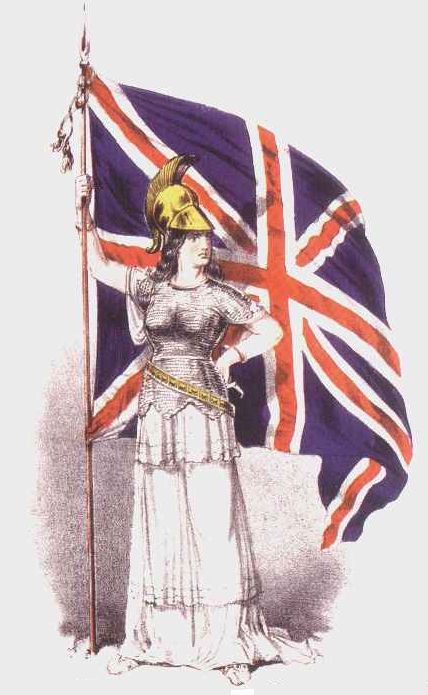
The United States is not the only Western power suffering from strategic uncertainty. James Frayne, a British political consultant who is a friend of this blog and an avid student of strategy, drew my attention to his post at The Campaign War Room:
The House of Commons Public Accounts Committee – under the leadership of Bernard Jenkin – has been running a very worthwhile investigation into “Who Does UK Grand Strategy?” The uncorrected evidence has begun to be put online and it’s worth taking a look at. Peter Hennessy, Julian Lindley-French, and Hew Strachan gave evidence on 9 September, which you can read here. Foreign Secretary William Hague and National Security Adviser Sir Peter Ricketts gave evidence on 14 September, available here. Various figures from the MoD gave evidence on 16 September, available here.We have no meaningful national conversation in the UK on national strategy, so we owe Bernard Jenkin one for pushing this investigation forward. I haven’t had a chance to go through all the evidence yet and will post something longer on it further down the line.
Seems straightforward enough, but the quality of the links are really good; senior British officials in frank discussion of grand strategy. Here’s an example:
Q54 Robert Halfon: Would you make the distinction between a Grand Strategy and a National Security Strategy and do you agree that if there is that difference, a long term strategy needs to look forward 20 years plus?
William Hague : I think a National Security Strategy is an important component of it. I do not think a National Security Strategy is the entire strategy of the country, because there needs to be a strategy not only for maintaining our security, but for advancing our prosperity. These things are closely linked; it is only on strong economic foundations that it is possible to build an effective foreign or defence policy. But it cannot just be a defensive strategy. Was it not a Napoleonic maxim: “The side that stays within its fortifications is beaten”? I think one has to have a strong sense of how the country is going to extend its influence and reach out into the rest of the world, using whatever, to use the jargon, using soft power as well as hard power. So there is something more to the strategy of the country than the National Security Strategy.
Q55 Robert Halfon: Once you have devised that strategy, how does it withstand political pressures and a change of government?
William Hague : If it is good, of course, it will withstand a change of government not by seeking prior agreement across political parties but by being something that has been clearly demonstrated as something the country should pursue. I think that is really how consensus and cross party agreement works in this country. Of course, we are in a period now where it works in a different way between the two coalition parties, because since we are in government together, we have to formally agree things together. But I think if an approach to the future of the nation is shown and understood to be working, it will be something that is continued by other governments in the future.
Some thoughts:
First, there’s a substantial difference between the committee hearing in the House of Commons and what would transpire over here in the US House of Representatives or especially in the Senate. The seriousness of the exchange in this inquiry is evident, conversational it may come across at times, the MPs led by Bernard Jenkin appear genuinely interested in the opinion of the witnesses and the Commons seems to be exercising oversight in a meaningful sense of the word. The Brits also use adult vocabularies, unlike most American politicians. It would be hard to imagine Congressmen saying “otiose” in a hearing. Or, in a few instances, knowing what it meant ( too self-referential, I suppose).
At a Congressional hearing on grand strategy, the witnesses would submit prepared statements that would be read only by junior staff and the MoC would use the opportunity for grandstanding speeches on C-Span and prosecutorial questions aimed at scoring polemical debating points. Winesses in America might not be forthcoming and could possibly bring their own lawyers due to the risk of being boxed in by questions that could later be construed as perjury. Real oversight by Congress or interest in the granular subject matter of national security is limited to a small number of MoC, basically the leadership (majority and minority) of each house, and a few distinguished members like Rep. Ike Skelton, Sen. Richard Lugar and so on.
Secondly, I have to wince at the perception senior British officials have of American governmental capacity for strategic thinking or the effectiveness of institutions like the National Security Council, which the British govenment seeks to imitate. To be brutally frank, the NSC has been a dysfunctional apparatus for most of it’s existence and operated at peak performance ( in the sense of assuring the president’s control over foreign, defense and intel policies and bureaucracies) only under Eisenhower and Nixon with relatively decent performance as “honest broker/enforcer” under Ford and Bush I. and select years here and there of other administrations. The apex of strategic thinking in the USG, interestingly enough, was during the presidencies of FDR, Truman, Nixon and Reagan; the NSC did not exist under the first, was a work in progress under the second and a roman circus during the tenure of the last until Carlucci and Powell became successive NSC advisers.
If the US seems to have given greater thought to strategy of late, it was because the downward spiral of Iraq beat the living hell out of the Bush administration politically into opening the policy door to outside voices like General Jack Keane, Kalev Sepp, the Kagans, David Kilcullen, John Nagl, General Petraeus, General Mattis etc. Even then American COIN is an operational activity of the US military, not a whole of government strategy, that serves to kick the ball of grand strategy down field (which politicians like because grand strategy can raise controversial questions of values and political economy).
Third, With some amusement, unless I missed it in my quick read, senior British leaders appear to be unaware that Britain’s postwar choice under Clement Attlee to build a robust welfare state was a seminal act of grand strategy. British voters in 1945 made a strategic choice of butter over guns – or empire, or high levels of capital investment. As strategy is essentially a matter of ways, means and ends, devoting very high levels of GDP to public consumption puts narrow parameters on what a country will be able to do in the world. Or for that matter, at home in the future. American politicians clearly do not realize this either. Socialism in Europe has brought not the withering away of the state, but instead a withering away of the state’s military power.
Fourth, In reference to the second doc, Q215 Chair: Grand strategy is far more important to small or medium states than to a hegemon or an empire because their margin for error or waste is much smaller. The United States government can afford, relatively speaking, to gratuitously waste geopolitical opportunities (at least for a time) which it has been doing with gusto since 1991. Singapore, by contrast, cannot waste any of it’s chances if it wishes to remain prosperous and free. Britain needs a grand strategy if it’s leaders value and seek to pass on to posterity a British identity. The same can be said over here for America and some of the visceral anger inherent in the Tea Party arguably seems to come from their realization that American elites do not place too much importance on an American identity or sovereignty.
I sincerely hope the British can find not only a grand strategy, but the correct one. The world needs a strong and capable Britain and America does too.
ADDENDUM:
James Frayne delivers his verdict – Q: “Who Does UK Grand Strategy?”, A: “Nobody”:
There are three big things that stand out for me from the evidence. The first is that there was a strong consensus from the academics and the former defence officials that Britain has no real capability either for the creation of Grand Strategy specifically, or for competent strategic thinking more generally. They suggested that we do not have the institutional framework in place to create Grand Strategy and we do not have the functions within Government to train people – officials and politicians – in strategic thought.
Crucially, it was also suggested by the academics and former defence officials that we have actually got out of the habit of thinking strategically. In the past, when Britain had a more obvious formal global role, we were forced to think strategically. With relative decline and the consequent attachment of our foreign and security policy (to say nothing of our economic policy) to the US, NATO and the EU, we lost the capacity for independent thought. It was suggested by some of the former defence officials that Britain has something of an “anti-intellectual culture” which makes them sceptical about strategy-making; people prefer pragmatism.
Dr.Patrick Porter castigates the Tories:
Major war capability did not become obsolete with the end of the Cold War. The ‘north German plain’ symbol is the cliche and soundtrack of a dangerous complacency. Other states like China, India and Russia invest heavily in the kind of ‘kit’ that Osborne finds absurd. Russia recently fought a land war in Georgia, and puts its Blackjack bombers in British skies.
In fact, the dismissal of Russia as a has-been military power who went into history with the end of the Cold War is symptomatic of a complacency about power politics and major war, and we are still living with the consequences of our recent failure to take Russia seriously as a geopolitical heavyweight.

From FT.com:
Computers set for quantum leap
A new photonic chip that works on light rather than electricity has been built by an international research team, paving the way for the production of ultra-fast quantum computers with capabilities far beyond today’s devices.
Future quantum computers will, for example, be able to pull important information out of the biggest databases almost instantaneously. As the amount of electronic data stored worldwide grows exponentially, the technology will make it easier for people to search with precision for what they want.
An early application will be to investigate and design complex molecules, such as new drugs and other materials, that cannot be simulated with ordinary computers. More general consumer applications should follow.
I bet.
I’m no computer geek, but I know a bit about economics. Quantum computing represents a moment of comparative advantage for the nation(s) that pioneers it akin to Great Britain being first with the Industrial Revolution. The first use for the world’s first lab functional quantum computer is to apply it’s power in other fields where innovation is stymied by previously intractable math problems, thus permitting a burst of patentable breakthroughs or discoveries that lead to applied scientific and commercial uses. The second use of the quantum computer’s power will be put towards solving problems related to optimizing quantum computing itself, both in terms of refining the systems and assembling arrays.
Advantages of this nature tend to be self-reinforcing and synergistic. The state that accrues these downstream spillover benefits of quantum computing in rapid succession could potentially leapfrog over everyone else to a degree not seen in centuries.
Jeremy O’Brien, director of the UK’s Centre for Quantum Photonics, who led the project, said many people in the field had believed a functional quantum computer would not be a reality for at least 25 years.
“However, we can say with real confidence that, using our new technique, a quantum computer could, within five years, be performing calculations that are outside the capabilities of conventional computers,” he told the British Science Festival, as he presented the research
The upside of holding this kind of technological advance back from the commercial domain in order to “lock in” comparative advantage until the nearest quantum computing rival has gotten close, but not yet reached, operational use, will be overwhelming.
Don’t you feel great that the corporatist Bush administration was indifferent to venture capital start-ups, explicitly hostile to basic science research and xenophobic toward top-notch H1-B and foreign grad student talent while the Obama administration is explicitly hostile to start-ups and enamored of pouring scarce billions into rustbelt legacy industries, outdated infrastructure projects and oligarchic Wall Street paper shufflers instead of the high tech and VC sectors?
A**holes.

Charles Cameron is the regular guest-blogger at Zenpundit, and has also posted at Small Wars Journal, All Things Counterterrorism, for the Chicago Boyz Afghanistan 2050 roundtable and elsewhere. Charles read Theology at Christ Church, Oxford, under AE Harvey, and was at one time a Principal Researcher with Boston University’s Center for Millennial Studies and the Senior Analyst with the Arlington Institute:
In a Time of Religious Arousal
by Charles Cameron
We live in times of considerable religious arousal – witness the Manhattan mosque and cultural center controversy, the on-again, off-again Florida Quran burning, last week’s Glenn Beck rally at the Lincoln Memorial,Hindutva violence against Muslims in India, Muslim violence against Christians, the wars ongoing or drawing to an end in Afghanistan and Iraq, the threat of an Israeli or American attack on Iran, the Palestinian-Israeli conflict and peace process… In each of these instances, religious arousal has a role to play.
It would require considerable care, research, and craftsmanship to produce a nuanced and appropriately balanced view of human nature, the current state of the world, American, European and Islamic popular, polite and political opinions, the global admixture of peoples and approaches that characterize Islam, the history of violence, religious and otherwise, the braiding in different times and places of religion with politics, the roots of violence, the roots of peace and its meanings both as a state of cessation of conflict and as a state of contemplative calm…
Such a presentation would require at least a book-length treatment, and cannot be trotted out every time some new spark emerges from the ancient fires… but perhaps I can lay out some of my own considerations about the topic here, in somewhat condensed form.
The teachings of Jesus appear to have been directed towards an audience that included regular folk: fishermen, members of an occupying military force, radical zealots, a tax-collector, a physician, a prostitute, religious scholars… a fair cross-section of human kind…
Every religion of any real “size” will have followers who are intellectuals, fearful followers, angry and reactive followers, contemplative followers – followers who are skilled in the various businesses of crime prevention, defense, contemplation, literature, the sex trade, theft, medicine, art, bargaining, diplomacy, music, architecture, investigativejournalism, yellow journalism, inspirational writing, poetry…
It will of necessity address, and over time retain traces, of all their concerns.
Every religion of any real “size” will also have begun in a particular time, place and cultural setting, and will carry considerable parts of that setting with it, although it may also contain elements of a more profound or elevated spirit…
Every religion and scripture will, I suggest, promise a garden / paradise / city which is both attainable “outside” life, in a “there” which is hard to put into words, and “within” us, a similarly difficult concept to verbalize, in the moment, here. It will also contain what I call “landmines in the garden” – verses or narratives that offer sanction to what we today might regard as abhorrent violence against the innocent “other”.
Thus in Numbers 25 in the Jewish Tanakh and Christian Bible, the Lord offers to Phineas / Pinchas a “covenant of priesthood”, because he recognized that his Lord did not appreciate an Israelite and a woman of the Midianitescopulating, and skewered the pair of them in flagrante through their conjoined parts with his spear — without first seeking the approval of the High Priest.
This story gave rise to the notion of the “Phineas Priest” action, in which a “lone wolf” kills on behalf of [a version of the Christian] God.
One of the most radical Christian Identity theorists is Richard Kelly Hoskins, who in 1990 invented the notion of the “Phineas Priest,” built around the concept of the biblical Phinehas, who used a spear to slay an Israelite and a Midianite who had lain together. Phineas Priests believe themselves modern day Phinehases, with a self-appointed mission to strike out in the most violent and ruthless way against race mixers, abortionists, homosexuals, Jews, and other perceived enemies.
Hoskins expounded the idea in his 1990 book, Vigilantes of Christendom: The Story of the Phineas Priesthood, citing both Robin Hood (!) and John Wilkes Booth as examples…
It seems highly probable that Byron de la Beckwith, killer of civil rights leader Medgar Evers, considered himself a Phineas Priest, see Reed Massengill, Portrait of a Racist: The Man who Killed Medgar Evers, pp 303-305. Similarly, it appears that Rev. Paul Hill, convicted of abortion clinic murders, was considered by his friends, and may have considered himself, a Phineas Priest. Likewise Yigal Amir, assassin of Yitzak Rabin, seems to have had the Phineas story in mind when deciding, without rabbinic support, to go ahead and kill the Israeli PM.
For an example of a recent meeting of rabbis — in Jerusalem’s Ramada Renaissance hotel– to promote the permissibility under halachic law of the killing of goyim / gentiles, see this article by Max Blumenthal and the accompanying video:
Individuals, small sects or powerful movements will on occasion seize on these “landmine” texts within a religious tradition, and use them to justify acts of violence, large and small.
The Crusades, for instance, did this on behalf of Christianity and against Islam, notwithstanding which St Francis was able to approach Saladdin’s nephew, the Sultan Malik al-Kamil, across the battle lines, coming in peace, discussing matters of devotion, and departing in peace. The Islam of al-Andalus was for centuries, in comparison to the Christendom of its time, a model of scholarship and tolerance – though not without aspects of the pre-eminence of Islam, dhimmi status for People of the Book, the jizya, etc.
Mark Juergensmeyer, author of Terror in the Mind of God and currently our finest analyst of religious terrorism, recently co-edited a book on Buddhist Warfare (obligatory, cautionary note: Juergensmeyer and I are both contributors to Michael W Wilson and Natalie Zimmerman’s book, A Kingdom at Any Cost: Right-wing Visions of Apocalypse in America). The world of Zen has been rattled by controversy regarding the support of leading roshis for the Japanese imperial war effort — and there are apocalyptic references to a future war between Buddhists and the mleccha (presumably Islam) in the text ofwhat the Dalai Lama has termed an “initiation for world peace” — the Kalachakra tantra.
Alexander Berzin, who has translated for the Dalai Lama on numerous occasions when this teaching was given, comments:
A careful examination of the Buddhist texts, however, particularlyThe Kalachakra Tantraliterature, reveals both external and internal levels of battle that could easily be called “holy wars.” An unbiased study of Islam reveals the same. In both religions, leaders may exploit the external dimensions of holy war for political, economic, or personal gain, by using it to rouse their troops to battle. Historical examples regarding Islam are well known; but one must not be rosy-eyed about Buddhism and think that it has been immune to this phenomenon. Nevertheless, in both religions, the main emphasis is on the internal spiritual battle against one’s own ignorance and destructive ways.
Any and all religions can be used to justify internal struggle, external violence, external peace-making and inner peace: the question is how these various threads are interwoven in individual cultures and histories, and in our own times.
That is, I’d suggest, a matter for legitimate dispute – but not one with an easy one sentence or even single paragraph answer.
In my view, the most powerful response to the current global “jihadist” movement will come not from advocates of democracy (whether backed up or not by military force or threat of force) who will naturally appear to be interfering in affairs between the soul and its God that do not concern them – but from people within the jihadists’ own religious tradition.
Noman Benotman, one-time leader of the Libyan Islamic Fighting Group and colleague of bin Laden and Zawahiri, wrote an open letter to bin Laden dated 10 September 2010 / 1 Shawwal 1431 AH, which the Quilliam Foundation just released under the title “Al-Qaeda: Your Armed Struggle is Over“.
Benotman’s letter opens with an invocationfrom Qur’an57:16:
Is it not time for believers to humble their hearts to the remembrance of God and the Truth that has been revealed.
The text of Benotman’s message is only four pages long, and I recommend reading the whole of it – but have selected this single passage as representative of his critique:
What has the 11th September brought to the world except mass killings, occupations, destruction, hatred of Muslims, humiliation of Islam, and a tighter grip on the lives of ordinary Muslims by the authoritarian regimes that control Arab and Muslim states? I warned you then, in summer 2000, of how your actions would bring US forces into the Middle East and into Afghanistan, leading to mass unrest and loss of life. You believed I was wrong. Time has proved me right
Benotman closes:
In urging you to halt your violence and re-consider your aims and strategy, I believe I am merely expressing the views of the vast majority of Muslims who wish to see their religion regain the respect it has lost and who long to carry the name of “Muslim” with pride.
For those who are concerned at the influence of Anwar al-Awlaki on English-speaking youth, there’s a detailed 130-page critique of his approach to global jihad from a strict Salafist perspective available on the web:
On the topic of suicide bombing / martyrdom operations viewed from an Islamic perspective, I’d suggest reading the Ihsanic Intelligence “Hijacked Caravan“:
And for a glimpse of the wider possibilities offered within the Islamic world, Bassam Tibi’s brief summary in his book, The Challenge of Fundamentalism: Political Islam and the New World Disorder is worth considering:
To me religious belief in Islam is, as Sufi Muslims put it, “love of God,” not a political ideology of hatred. … In my heart, therefore, I am a Sufi, but in my mind I subscribe to ‘aql/”reason”, and in this I follow the Islamic rationalism of Ibn Rushd/Averroes. Moreover, I read Islamic scripture, as any other, in the light of history, a practice I learned from the work of the great Islamic philosopher of history IbnKhaldun. The Islamic source most pertinent to the intellectual framework of this book is the ideal of al-madina al-fadila/”the perfect state”, as outlined in the great thought of the Islamic political philosopher al-Farabi.
Irani and Funk’s “Rituals of Reconciliation: Arab-Islamic Perspectives” indicates something of what an Islamic approach to truth and reconciliation might look like:
No doubt there’s a great deal more that onemight say, but that must suffice for now.
Charles Cameron.

Zenpundit is a blog dedicated to exploring the intersections of foreign policy, history, military theory, national security,strategic thinking, futurism, cognition and a number of other esoteric pursuits.
Customized Web Site & Blog Design

