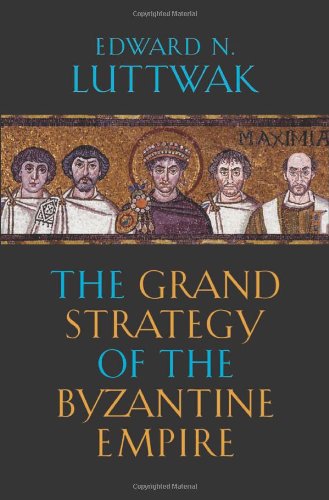
Just starting reading this magnum opus by eminent strategist Edward Luttwakand I am thoroughly enjoying it; particularly, the context-building historical digressions that enrich the text. Highly recommended.
This is the television premier of this extraordinarily film. I wrote about seeing this film here.
Restrepo chronicles the deployment of a platoon of U.S. soldiers in Afghanistan’s Korengal Valley. The movie focuses on a remote 15-man outpost, Restrepo, named after a platoon medic who was killed in action. It was considered one of the most dangerous postings in the U.S. military. This is an entirely experiential film: The cameras never leave the valley; there are no interviews with generals or diplomats. The only goal is to make viewers feel as if they have just been through a 94-minute deployment. This is war, full stop. The conclusions are up to you.
I highly recommend this film to all of our readers.
An information page for Restrepo is here, including video.
RESTREPO, an award winning documentary, was based on (or more precisely, closely related to) the book WAR by Sebastian Junger, which told the story of the war against the Taliban in the Korengal Valley, waged by the soldiers of the 2nd Platoon of Battle Company.
I previously reviewed WAR here and the movie RESTREPO here.
Robert Coram, whom I had the pleasure of meeting at Boyd ’07, has a new biography of the legendary military visionary and Marine Lt. General Victor “Brute” Krulak, reviewed here by Max Boot and here by Tony Perry (Hat tip to Dr. Chet Richards). Having thumbed a few pages, Krulak appears a complicated man – gifted, dauntless and extremely driven but also possessed of a mean streak, edging at times toward petty cruelty.
After reading approxmately a third of The Human Faceof War by Dr. Jim Storr, a retired Lt. Colonel, King’s Regiment and an instructor at the UK Defence Academy, I will say that if you are going to read only one book on modern military thought this year, it should be The Human Face of War. It’s that good.
Aside from a reflexive hostility toward John Boyd’sOODA Loop( though not, strangely enough, toward the substantive epistemology advocated by Boyd that the diagram represented), Storr’s tome is an epistle of intellectual clarity on military theory that deserves to be widely read.
In response to the interest raised on the relevance of the Galula model for understanding and dealing with today’s insurgencies, I conducted a brief inquiry with key experts on the topic – Peter Mansoor, Steven Metz, David Betz, and Alex Marshall.
Dr. Peter Mansoor
The Galula model applies in those cases where the population of a country is more concerned about the effectiveness and legitimacy of its government than in its sectarian or ethnic make-up. “Classic” counterinsurgency efforts to improve the legitimacy of a government are then operative. In those cases where sectarian or ethnic identity trumps other factors (e.g., Sri Lanka or Chechnya), then protecting the people will avail the counterinsurgent little in the way of gaining their trust and confidence. In these cases, other strategic or operational approaches need to be considered….
Dr. Steven Metz
To me, the Cold War/Maoist model of insurgency applied in situations where new segments of a society were becoming politically aware or mobilized and thus made demands on the state which it could not fulfill. These demands were both tangible–infrastructure, security, education–and intangible (a sense of identity). That’s why I think it has very little applicability to current insurgencies. Granted current insurgencies attempt to emulate the Maoist strategy because it worked in the past, but I think this will lead to failure.
Dr. David Betz
The work of the French officer David Galula was clearly very influential on the thinking of the authors of FM 3-24 Counterinsurgency. There is certainly a lot to like. For one thing, his book Counterinsurgency Warfare is less than 150 pages long which makes it an easy read-four cups of tea and a Sunday afternoon will get you through it. For another, it’s written in a very aphoristic style which is highly memorable. So if you’re trying to get across to a large number of people a number of ‘best practices’ or paradoxes of COIN then Galula is a very good assigned reading. The truth is though that most COIN best practice would fit on a bumper sticker. In fact the new UK Field Manual on COIN comes with a laminated credit card sized aide memoire on one side of which are printed the principles of COIN and on the other ISAF’s game plan for stabilizing Afghanistan. I’m not criticizing-I think it’s a handy thing; my point is rather that Galula and his interpreters sometimes sound a bit like Kipling’s ‘Just So’ stories. In practice, it’s complicated, as one sees in Galula too if you read his longer, messier, more ambiguous and more rewarding book Pacification in Algeria. Anyway, to get to the point I have three main reservations about Galula…..
Dr. Alex Marshall
My issue with the Maoist Paradigm is really two-fold.
My first reservation, as a historian, is that we lack a definitive English-language study of Maoist insurgency itself beyond some fairly stereotyped notions of a three-stage or five-stage revolutionary process (from political agitation to guerrilla conflict to regular warfare). Galula and Thompson were great generalizers, but one can scarcely call their work proper historical studies-their general view was that Maoist-style insurgencies involved a degree of mass brainwashing for example. We possess some interesting case studies of how Maoist mobilization worked in practice on the ground, in individual villages or Shanghai for example, but there is so much more that could be done. Thus Western writing during the Cold War in general generated a shorthand stereotype, when in reality insurgency practice was often more diverse. The reason was simple I suggest-most successful insurgents aren’t particularly pithy writers (Guevara and Mao were exceptions), most unsuccessful ones are very quickly dead.
My second concern is more overarching however. The majority of discourse on COIN doesn’t take into account the strategic context, remaining locked into the operational level instead…..
A very productive piece by Manea and the gents above. Galula’s historiographic importance in COIN should be undisputed and his contribution to theory acknowledged and respected. Application of Galula’s framework (or, really, anybody’s) for understanding COIN, in analyzing insurgencies should be used cautiously or lightly until there is enough of an emprical understanding of the structure and motivations of the insurgents and the political deficiencies of the state, to see to what extent the model fits, before the operational assumptions of a military bureaucracy and theater command harden into place.
Lacking the reliable contingency of a superpower patron on an ideological crusade in the 21st century to impose a stamp of identity and tactics on it’s proxies, insurgencies are likely to be as diverse as La Familia is from FARC, the Taliban or the Real IRA.
by Charles Cameron
.
It’s easily missed. It’s part of the “small print” that most small-format paperbacks carry on the copyright page:
The sale of this book without its cover is unauthorized. If you purchased this book without a cover, you should be aware that it was reported to the publisher as “unsold and destroyed.” Neither the author nor the publisher has received payment for the sale of this “stripped book.”
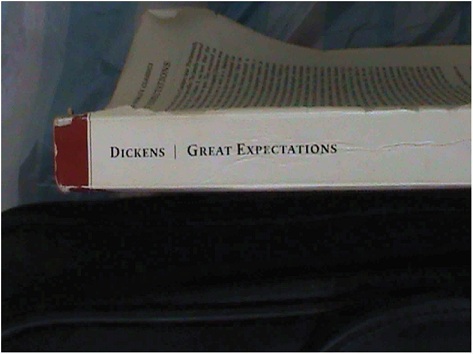
Here’s the picture that AQAP took of the copy of Dickens’ novel Great Expectations they inserted into one of their bombs recently – which they then published in issue 3 of their English language magazine Inspire:
And here’s the explanation that accompanies that photo, in a piece titled “The Objectives if Operation Hemorrhage” by their “Head of the Foreign Operations Team”:
This current battle fought by the West is not an isolated battle but is a continuation of a long history of aggression by the West against the Muslim world. In order to revive and bring back this history we listed the names of Reynald Krak and Diego Diaz as the recipients of the packages. We got the former name from Reynald de Chatillon, the lord of Krak des Chevaliers who was one of the worst and most treacherous of the Crusade’s leaders. He fell into captivity and Salahuddeen personally beheaded him. The name we used for the second package was derived from that of Don Diego Deza, the Inquisitor General of the Spanish Inquisition after the fall of Granada who along with the Spanish monarchy supervised the extermination and expulsion of the Muslim presence on the Iberian Peninsula employing the most horrific methods of torture and done in the name of God and the Church. Today we are facing a coalition of Crusaders and Zionists and we in al Qaeda of the Arabian Peninsula will never forget Palestine. How can we forget it when our motto is: “Here we start and in al-Aqsa we meet”? So we listed the address of the “Congregation Or Chadash”, a Gay and Lesbian synagogue on our one of our packages. The second package was sent to “Congregation B’nai Zion”. Both synagogues are in Chicago, Obama’s city.
.
We were very optimistic about the outcome of this operation. That is why we dropped into one of the boxes a novel titled, Great Expectations.
They may not have read the book or seen the movie, as Ibn Siqilli comments at the link above, but they do have long memories and/or a taste for history, and they are indeed sending signals with small details like the fictitious names of their addressees.
*
This is in line with one of the basic premises of Islamic thought: that the world we inhabit is a world of ayat or symbols (the singular is ayah, and the word is also used to refer to the verses of the Qur’an, each of which is viewed as a symbolic utterance). Here, for instance, is a passage from Fazlun Khalid’s paper, Islam and the Environment, from the website of Jordan’s Royal Aal al-Bayt Institute for Islamic Thought:
The Qur’an refers to creation or the natural world as the signs (ayat) of Allah, the Creator, and this is also the name given to the verses contained in the Qur’an. Ayat means signs, symbols or proofs of the divine. As the Qur’an is proof of Allah so likewise is His creation. The Qur’an also speaks of signs within the self and as Nasr explains, “… when Muslim sages referred to the cosmic or ontological Qur’an … they saw upon the face of every creature letters and words from the cosmic Qur’an … they remained fully aware of the fact that the Qur’an refers to phenomena of nature and events within the soul of man as ayat … for them forms of nature were literally ayat Allah”. As the Qur’an says, “there are certainly signs (ayat) in the earth for people with certainty; and in yourselves. Do you not then see?” (Adh-Dhariat, 51:20, 21).
*
BTW, I don’t think Penguin (or, for that matter, Charles Dickens) got paid for that book… whatever their expectations may have been.
Zenpundit is a blog dedicated to exploring the intersections of foreign policy, history, military theory, national security,strategic thinking, futurism, cognition and a number of other esoteric pursuits.


 by
by 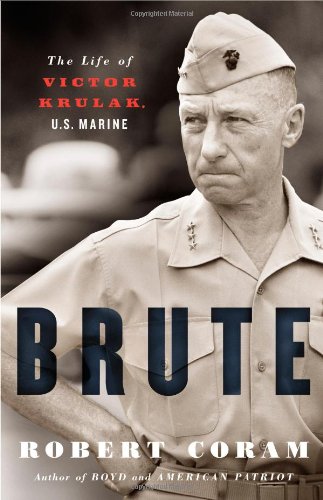
 by Robert Coram
 by Timothy Snyder
 , Robert Gellately’s
  , Richard J. Evans’
  and Alan Bullock’s classic dual biography
  . I’d also recommend, for those with the stomach for historiographic commentary, Robert Conquest’s
  and John Lukac’s

 by Jim Storr