zenpundit.com » military

Archive for the ‘military’ Category

“The Galula Doctrine”

Wednesday, January 23rd, 2013

Small Wars Journal has published another edition of the excellent COIN interview series conducted by Octavian Manea. Here he interviews A.A. Cohen, author of Galula: The Life and Writings of the French Officer who Defined the Art of Counterinsurgency 

The Galula Doctrine: An Interview with Galula’s Biographer A.A. Cohen

OM: Which were the role of Mao and the exposure to Chinese civil war in Galula’s story? It seems to be his decisive formative lab experience like Russia was for George Kennan.

AAC: Unquestionably, of all the influences exerted on Galula’s treatise, Mao and the Chinese Civil were the greatest. Galula had a strong intellectual admiration for Maoist revolutionaries, despite being very opposed to what they stood for. Before the Chinese Civil War, Galula had no interest in insurgency or counterinsurgency. He had not fought as a Partisan during WW2; he had no experience or interest in these fields until he was exposed to China as of late 1945, in the thick of its civil war. There, his analytical penchant led him to see himself as the decipherer of Mao, intent on getting to the bottom of what the revolutionaries were fundamentally about. Galula cut through the egalitarian propaganda and all that surrounding the People’s revolution. Above all, he wanted to understand why these guys were gaining momentum as they were despite the unfavorable odds. When he figured it out, he reverse-engineered their methods to arrive at a counter-process to revolution and insurgency. His embrace of Chinese dialectics, and with these, the notion of unity of opposites or yin and yang, was helpful in achieving this.

Is counterinsurgency to Galula more of a strategy or  more of a technique and a methodology?

What Galula offers, first and foremost, is a doctrine – not a strategy. His doctrine is underpinned by an important theory about people and what motivates them to take up arms, or to side with those who do. The theory goes that in times of danger (war), the majority of people will be motivated primarily by a fundamental need for security. Galula is adamant about this. But he also recognizes that there will be a minority of people – the instigators at the core of a movement – that will be ideologically, or even fanatically motivated. These are the true believers. He makes no qualms about prescribing that this is the group that the counterinsurgent or counterterrorist will need to find and neutralize, while protecting the rest of the population that aspires to a normal, if not better life. If you buy into this theory, Galula’s doctrine offers a multi-step framework for operations; in other words, a method to counterinsurgency. His famous eight steps are there to provide some logical linearity to what is otherwise a very nonlinear form of warfare. Within that framework, you have the flexibility to formulate your strategy and to conduct your operations to achieve your objectives.

Read the rest here.

I agree that Galula was not offering a strategy. Even more strongly, I think Cohen is correct about the historical importance of China’s long period of disorder, from the overthrow of the Q’ing dynasty to Mao ZeDong’s declaration of the People’s Republic, for Galula. However, not just for him but for anyone interested in questions of war and statecraft where insurgency, warlordism, state failure, state-building, foreign intervention, balance-of-power politics, ideological mass-movements, 4GW, revolution and total war coexisted and co-evolved.

The best comparison in our lifetime to China in this period would have been Lebanon  in the 1980’s, except that China’s polycentric conflict was even more complex and on an epic scale.

Empirical Studies of Conflict Site

Monday, January 21st, 2013

For those studying war, insurgency, irregulars or terrorism ESOC will be extremely useful – and depending on your area of research, possibly invaluable – as a resource.

Small Wars Journal had this to say about ESOC:

.…ESOC identifies, compiles, and analyzes micro-level conflict data and information on insurgency, civil war, and other sources of politically motivated violence worldwide. ESOC was established in 2008 by practitioners and scholars concerned by the significant barriers and upfront costs that challenge efforts to conduct careful sub-national research on conflict. The ESOC website is designed to help overcome these obstacles and to empower the quality of research needed to inform better policy and enhance security and good governance around the world.

The ESOC team includes about forty researchers (current and former) and is led by six members: Eli Berman, James D. Fearon, Joseph H. Felter, David Laitin, Jacob N. Shapiro, and Jeremy M. Weinstein.

The website is organized by countries and research themes. The six country pages are: Afghanistan, Colombia, Iraq, Pakistan, the Philippines, and Vietnam. The content is structured according to five themes: Demographic/Socioeconomic, Geography, Infrastructure, Public Opinion, and Violence. The website currently hosts about 45 ESOC data files, over 35 ESOC peer-reviewed publications (with replication data), and ten working papers. The ESOC team has also posted links to many external data repositories and external readings that have proven useful for analysis. The website will be regularly updated with new micro-level conflict data and contextual information, as it is compiled and submitted by ESOC researchers.

One caution: based on my source who was one of the folks gathering data for part of this project, as with all quantitative method research, there are hidden qualitative decisions in who did the counting, how and by what yardstick. If you are drawing conclusions about big picture trends in insurgency or irregular warfare across periods of time you are good to go. If your research is sharply confined to a specific and narrowly defined historical case study (say one campaign, a battle, one district – whatever), then drill down into ESOC’s data and methodology to the granular level before drawing a conclusion vice your sources and data outside ESOC.

Steady breathing

Tuesday, January 8th, 2013

[ by Charles Cameron — something as simple as spirit, important to special ops & law enforcement — an open question ]
.


.

Let’s begin with a quote from Buddhist monk Thich Nhat Hanh, The Miracle of Mindfulness: An Introduction to the Practice of Meditation:

Breath is the bridge which connects life to consciousness, which unites your body to your thoughts. Whenever your mind becomes scattered, use your breath as the means to take hold of your mind again.

That’s about as basic as you can get. Breath begins with your first gasp (in-spiration) and runs like a silk thread through your life till your last sigh (ex-spiration) and it’s all spirit — which turns out to be beyond the mind-body dichotomy, and a balancing factor for both.

**

Fast forward.

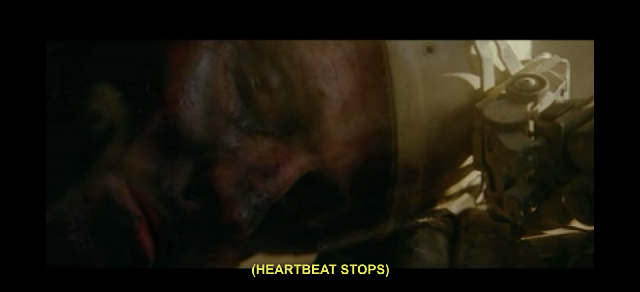
Let’s turn from breath — spiritus in Latin, as in spiritus ubi vult spirat, “breath blows where it wants to”, John 3.8 — to its specific application in “combat breathing” as illustrated by the still from the National Geographic movie Seal Team Six: the Raid on Osama bin Laden at the head of this post.

In “Fear Factor”, his review of Amanda Ripley’s fascinating-sounding The Unthinkable: Who Survives When Disaster Strikes, published in City Journal 21 June 2008, blog-friend John Robb writes:

… in complex disasters, the biological-fear response can slow thinking so severely that it can kill you.

We can counter fear, however. The best method, FBI trainers say, is to get control of your breathing. “Combat breathing” is a simple variant on Lamaze or yoga training — breathe in four counts, hold four counts, exhale four counts, and repeat. It works because breathing is a combination of the somatic (which we control) and the autonomic (which we can’t easily control) nervous systems. Regulation of the autonomic system deescalates the biological-fear response and returns our higher-level brain functions to full capacity. So one of the best ways you can prepare yourself to overcome fear in a crisis is as simple as a meditation, Lamaze, or yoga class.

I find it fascinating and also sensible that yogic / meditative techniques are now taught by members of the special ops and law enforcement communities:

Training under stress also will help officers learn to control their arousal level. As their physiological agitation escalates, so might their susceptibility to perceptual and memory distortions. Thus, learning to control arousal level can help reduce distortions. Therefore, officers should receive training in and regularly practice ways to control arousal levels in high-stress situations. One process, the combat breathing technique, has proven highly effective in this area.

Alexis Artwohl, “Perceptual and memory distortion during officer-involved shootings”, FBI Law Enforcement Bulletin, Oct, 2002

This reminds me of Richard Strozzi Heckler’s In Search of the Warrior Spirit: Teaching Awareness Disciplines to the Green Berets, now in its fourth edition.

**

Breath, spirit, breathing — it’s …

… “right under our noses”, all too easily overlooked, and heart-stoppingly, mind-blowingly important.

Let’s talk a bit about it…

Foust on “False Fears of Autonomous Weapons”

Friday, December 21st, 2012

Hat tip for a strong recommendation from Adam Elkus:

Josh Foust has a very sensible piece up about the seemingly endless furor about “killer drones” (we never called our warplanes “Killer F-16’s” or guided weapons “killer cruise missiles”).

The false fear of autonomous weapons 

….Many of the processes that go into making lethal decisions are already automated. The intelligence community (IC) generates around 50,000 pages of analysis each year, culled from hundreds of thousands of messages. Every day analysts reviewing targeting intelligence populate lists for the military and CIA via hundreds of pages of documents selected by computer filters and automated databases that discriminate for certain keywords.

In war zones, too, many decisions to kill are at least partly automated. Software programs such as Panatir collect massive amounts of information about IEDs, analyze without human input, and spit out lists of likely targets. No human could possibly read, understand, analyze, and output so much information in such a short period of time.

Automated systems already decide to fire at targets without human input, as well. The U.S. Army fields advanced counter-mortar systems that track incoming mortar rounds, swat them out of the sky, and fire a return volley of mortars in response without any direct human input. In fact, the U.S. has employed similar (though less advanced) automated defensive systems for decades aboard its navy vessels. Additionally, heat-seeking missiles don’t require human input once they’re fired – on their own, they seek out and destroy the nearest intense heat source regardless of identity.

It’s hard to see how, in that context, a drone (or rather the computer system operating the drone) that automatically selects a target for possible strike is morally or legally any different than weapons the U.S. already employs.

Yep.

Most of the anti-drone arguments are a third hand form of opposition to US foreign policy or Counterterrorism policy for a variety of reasons, sometimes tactical and strategic, but mostly just political. Saying you are against inhuman drone strikes sounds a hell of a lot better than honestly saying that you would be against any kind of effective use of military force by the US against al Qaida and the Taliban in any and all circumstances. I can’t imagine Human Rights Watch would be happier if the US were using F-16’s and B-52’s instead.

Or commandos with small arms for that matter.

New Book: The Violent Image by Neville Bolt

Friday, December 14th, 2012

The Violent Image by Neville Bolt 

Columbia University Press just sent me a review copy of The Violent Image, by Dr. Neville Bolt of King’s College vaunted War Studies Department.  Initially, I was amused by the colorful book jacket, but flipping through, it belies a very weighty, heavily footnoted, academic exploration of the iterative relationship between propagandistic imagery and insurgency. Even a casual perusal indicates that The Violent Image is a book many readers of ZP will  like to  get their hands on.

From the jacket:

….Neville Bolt investigates how today’s revolutionaries have rejuvenated the nineteenth century “ptopaganda of the deed” so that terrorism no longer simply goads states into overreacting, thereby losing legitimacy. Instead the deed has become a tool to highlight the underlying grievances of communities

A small sampling of some of the section titles:

Strategic Communications:the State
Strategic Communications: the Insurgent
Networks in Real and Virtual Worlds
Images as Weapons
POTD as Insurgent Concept of Operations
Anonymity and Leaderless Revolutions
The Arab Uprisings and Liberation Technology
POTD as Metaphor

Endnotes run slightly over 90 pages and the bibliography tips the scales at 50, for those interested in such things.

Looking forward to reading this and seeing how Bolt presents his case.


Switch to our mobile site

