zenpundit.com » authors

Archive for the ‘authors’ Category

Munzenberg’s Viral Post: What is in your Antilibrary?

Thursday, March 27th, 2008

The other day, I was having a conversation in the comments section regarding ancient Chinese philosophers with my learned friend Lexington Green, when I had cause to quote Nassim Nicholas Taleb, from his most recent book The Black Swan: The Impact of the Highly Improbable:

The writer Umberto Eco belongs to that small class of scholars who are encyclopedic, insightful, and nondull. he is the owner of a large personal library ( containing thirty thousand books), and separates vistors into two categories: those who react with ‘Wow! Signore professore dottore Eco, what a library you have! How many of these books have you read?’ and others – a very small minority- who get the point that a private library is not an ego boosting appendage but a research tool. Read books are far less valuable than unread ones. The library should contain as much of what you do not know as your financial means, mortgage rates, and the currently tight real estate market allow you to put there. You wil accumulate more knowledge and more books as you grow older, and the growig number of unread books on the shelves will look at you menacingly. Indeed, the more you know, the larger the rows of unread books. Let us call the collection of unread books an antilibrary.

A passage that immediately made me feel better about having resigned myself to falling further and further behind in reading the books that I keep purchasing ( I’m now also periodically finding myself going to IKEA to buy shelf extensions. I’ve resigned myself to that too).

The obscurely named Munzenberg of Soob, also enjoyed Taleb’s take on the proper function of a book collection and has begun a viral post What is in your Antilibrary?:

I’d like to pose a question to those who read this blog entry: What are three to five books on your shelf that lay unread and what knowledge do you hope to retrieve from them? [ ed.- see Munzenberg’s antilibrary here]

….I suppose I may have to tag people to get a widespread antilibrary booklist going. Feel free if you are reading this blog entry to start your own entry (the more books the better right?). I’ll link to you here if I catch it. I shall tag:

Tdaxp
Ortho
Zenpundit
Adam Elkus
Ymarsakar

As Munzenberg has graciously “tagged” me, here is a fraction of my current antilibrary (the antilibrary appears to be a dynamic state with a definite phase transition to library status) I decided to avoid those recently acquired books at the top of my pile and use some finely-aged examples:

On the Origins of War: And the Preservation of Peace by Donald Kagan

Bought it after I enjoyed reading his revisionist The Peloponnesian War with the intent of getting into Kagan’s head on strategy and military history in general. I was reading a flood other military books at the time and it was lost in the shuffle

HO CHI MINH: A LIFE by William J. Duiker

This is a critically acclaimed biography by a highly respected scholar which I intended to read in tandem with recent biographies of Chiang Kai-Shek and Mao ZeDong, in order to get a feel for the interlocking social networks these leaders shared (Zhou Enlai was a hub for each man for a time). I finished those books but have not begun this one yet.

The Growth of the Mind: And the Endangered Origins of Intelligence by Stanley Greenspan, MD

I actually started this one but it was thrown into a packing box during a year I was building a house, selling another and moving several times. It then spent several years in storage before making it back on to a shelf. The purpose was to learn more about cognitive development in children.

Pillar of Fire : America in the King Years 1963-65 (America in the King Years) by Taylor Branch

Refresher on social, African-American and political history. Like the Kagan book, it was crowded out of the must-read bookpile by the deluge of military history and strategy books that I was reading at the time

The House of Rothschild: Volume 2: The World’s Banker: 1849-1999 by Niall Ferguson

As I am one of those freaks who actually enjoys economic history, I read Ferguson’s first volume years ago and thought it was lucidly written. This book too, fell victim to the packing box

It’s a rare opportunity to be on the ground floor of one of these viral posts and to be able to watch how far afield it travels, so I am selecting my “tags” with great care:

Sean Meade

Pundita

Brad DeLong

Valdis Krebs

Dave Dilegge

Dave Schuler

UPDATE:

Younghusband opines on The Traveller’s Library
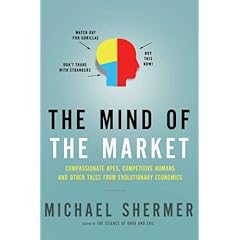
Marxist Gorillas and Chimpanzee Capitalists?

Wednesday, January 2nd, 2008

Caught my eye today: The Mind of the Market: Compassionate Apes, Competitive Humans and other Tales From Evolutionary Economics by Michael Shermer.  A premise that intuitively makes sense to me ( and therefore, I’ll have to read it with a critical eye).

Going to have to pick this one up.


Can You Feel the Beat ?

Wednesday, November 28th, 2007

One of the numerous interesting people I met at the Boyd 2007 conference seminar was Gustave Reininger, a producer of movies and television crime dramas, with whom I shared a few drinks at the Quantico Officer’s Club and exchanged colorful stories about Chicago history. It was, as I recall, a very enjoyable conversation.  At the time Gustave had mentioned a number of film projects that he was working on; now one of them has moved closer to fruition.

Corso: The Last Beat, which is due out in 2008, comes on the heels of the 50th anniversary of the publication of Jack Kerouac’s totemic bestseller, On the Road and like Kerouac’s Sal Paradise, the lead figure, the Beat poet Gregory Corso ,is on an existential quest:

“The “Beats” are back.  Ever “cool”, ever “hip”, this poignant, humorous film will introduce today’s youth market to the inner circle of the American Icons of “the Beat Generation” – Kerouac, Ginsberg, Burroughs and Gregory Corso. “The Last Beat” follows Corso, the most colorful of them. After the death of Allen Ginsberg, his best friend, Corso goes “On the Road” to rediscover himself as the “Last Beat.”

Many of my students have been Generation Y/NetGen/Echo Boomers. While more cheerfully self-confident than the Silent Generation and less megalomaniacal than the Boomers, whom they match in demographic size, they share with these postwar-coming-of-age generations a collective yearning for identity, for a meaning larger than themselves.

This film may strike a cultural chord.

(Hat tip to A.E.)

Ralph Peters on the Myths of Modern War

Wednesday, November 21st, 2007

Ralph Peters

My friend Bruce Kesler, who takes a position of healthy skepticism on theories about warfare, sent me a piece by the colorful military writer and ex-intel analyst, Ralph Peters, a few days ago which I finally had the time to read today. The article appeared in The American Legion Magazine and might have been off the radar of some of my readers ( it was off of mine -thanks Bruce!):

12 Myths of 21st-Century War

“Thanks to those who have served in uniform, we’ve lived in such safety and comfort for so long that for many Americans sacrifice means little more than skipping a second trip to the buffet table.Two trends over the past four decades contributed to our national ignorance of the cost, and necessity, of victory.

First, the most privileged Americans used the Vietnam War as an excuse to break their tradition of uniformed service. Ivy League universities once produced heroes. Now they resist Reserve Officer Training Corps representation on their campuses.Yet, our leading universities still produce a disproportionate number of U.S. political leaders. The men and women destined to lead us in wartime dismiss military service as a waste of their time and talents. Delighted to pose for campaign photos with our troops, elected officials in private disdain the military. Only one serious presidential aspirant in either party is a veteran, while another presidential hopeful pays as much for a single haircut as I took home in a month as an Army private.

Second, we’ve stripped in-depth U.S. history classes out of our schools. Since the 1960s, one history course after another has been cut, while the content of those remaining focuses on social issues and our alleged misdeeds. Dumbed-down textbooks minimize the wars that kept us free. As a result, ignorance of the terrible price our troops had to pay for freedom in the past creates absurd expectations about our present conflicts. When the media offer flawed or biased analyses, the public lacks the knowledge to make informed judgments.

This combination of national leadership with no military expertise and a population that hasn’t been taught the cost of freedom leaves us with a government that does whatever seems expedient and a citizenry that believes whatever’s comfortable. Thus, myths about war thrive….”

Peters goes on to list and explain the following “12 myths”:

  1. War doesn’t change anything
  2. Victory is impossible today.
  3. Insurgencies can never be defeated
  4. There’s no military solution; only negotiations can solve our problems.
  5. When we fight back, we only provoke our enemies
  6. Killing terrorists only turns them into martyrs.
  7. If we fight as fiercely as our enemies, we’re no better than them
  8. The United States is more hated today than ever before
  9. Our invasion of Iraq created our terrorist problems
  10. If we just leave, the Iraqis will patch up their differences on their own.
  11. It’s all Israel’s fault. Or the popular Washington corollary: “The Saudis are our friends.”
  12. The Middle East’s problems are all America’s fault.

In the course of his preface and the extended “de-bunking” that follows, Peters makes a large number of points that I can agree with individually in the abstract or in isolation. To that, I cheerfully admit. My problem – and it’s a serious problem, actually – is that in the big picture, where Peters takes the simplification and conflation of complex and critical variables to the point of intellectual irresponsibility.

Peters is arguing for America taking a “Jacksonian” ( in Walter Russell Meade taxonomy) posture toward our Islamist and terrorist enemies in particular and toward the world in general. It’s an argument that may appeal to members of the American Legion, in particular the GI Generation of WWII vets who experienced fighting a total war, but it’s not a helpful strategy unless our enemies manifest a sufficiently targetable center of gravity, like, say, taking over Pakistan and making Osama bin Laden Grand Emir.

Frankly, our goal should be to never permit let our enemies reach such a position of strength in the first place. That means peeling away Muslim and tribal allies of convenience to pitch in killing the al Qaida network, not lumping the Saudis in with al Qaida, the Iranians, Musharraf and whatever itinerant Middle-Eastern types seem vaguely dysfunctional in a civilizational sense ( personally, I like reading about dead terrorists and I think their supporters, financiers, intellectual cheerleaders and mosque recruiters are all fair game for rendition or assassination, wherever they are. Doesn’t that give us more than enough of room to work with without attacking the entire Arab-Islamic world ??). I won’t even bother to go into the geoeconomic lunacy of bombing or attacking Saudi Arabia.

In my humble opinion, Peters knows all this very well. He’s a very smart guy. Certainly smart enough to comprehend downstream effects. What he’s doing these days is not strategy but shtick.

Friday, August 3rd, 2007

SOLZHENITSYN AND HIS BATTLE FOR RUSSIA’S SOUL

Der Spiegel recently had an interview with Aleksandr Solzhenitsyn ( hat tip to M. Gemmill). At 88, Solzhenitsyn has lost neither his mental acuity nor his uncompromising vision of Russia that made him the most feared of dissidents by Soviet leaders, until his expulsion from the USSR in 1974, four years after being awarded the Nobel Prize. Some excerpts of Solzhenitsyn’s answers from the interview:

“The prize in 1990 was proposed not by Gorbachev, but by the Council of Ministers of the Russian Soviet Federative Socialist Republic, then a part of the USSR. The prize was to be for “The Gulag Archipelago.” I declined the proposal, since I could not accept an award for a book written in the blood of millions.

…I have grown used to the fact that, throughout the world, public repentance is the most unacceptable option for the modern politician.

….Vladimir Putin — yes, he was an officer of the intelligence services, but he was not a KGB investigator, nor was he the head of a camp in the gulag. As for service in foreign intelligence, that is not a negative in any country — sometimes it even draws praise.

….Only an extraordinary person can turn opportunity into reality. Lenin and Trotsky were exceptionally nimble and vigorous politicians who managed in a short period of time to use the weakness of Kerensky’s government. But allow me to correct you: the “October Revolution” is a myth generated by the winners, the Bolsheviks, and swallowed whole by progressive circles in the West.

….However, when you say “there is nearly no opposition,” you probably mean the democratic parties of the 1990s. But if you take an unbiased look at the situation: there was a rapid decline of living standards in the 1990s, which affected three quarters of Russian families, and all under the “democratic banner.” Small wonder, then, that the population does not rally to this banner anymore. And now the leaders of these parties cannot even agree on how to share portfolios in an illusory shadow government.”

Solzhenitsyn has never been a voice of liberalism or even Russian nationalism in the traditional pan-Slavic, imperial and chauvinistic sense the term is usually meant. Rather he has propagated Russophilism, even to the extent of using archaic Russian words without modern foreign antecedents, when possible, in his writings. Solzhenitsyn’s emphasis on the unique cultural and spiritual traditions of old Russia is one that excludes other peoples – including those like Jews and Ukrainians- who have been deeply intertwined with or innately part of Russian history.

Part of Solzhenitsyn’s thunderous moral denunciation of the monstrosities of the Soviet system were because of the ruin of the old Russian patrimony under the profoundly alien doctrines of Communism, a Western import. I would not be surprised if Solzhenitsyn traced the origin of Russia’s sad history to Peter the Great as much as to Vladimir Lenin.


Switch to our mobile site

