zenpundit.com » analytic

Archive for the ‘analytic’ Category

Will Dr Fadl retract his Retractions?

Monday, February 14th, 2011

[ by Charles Cameron ]

Sayyid Imam al-Sharif, popularly known as Dr Fadl, wrote two of the key works of jihadist ideology, The Essential Guide for Preparation and the thousand-page Compendium of the Pursuit of Divine Knowledge, in the late 1980s — thereby providing his friend from student days, Ayman al-Zawahiri, with powerful scholarly backing for the doctrines of militant jihad and takfirism. Lawrence Wright refers to Fadl as an “Al-Qaeda mastermind” in a detailed 2008 New Yorker analysis.

Dr Fadl was imprisoned without trial in the Yemen shortly after 9/11, but it was after he had been transferred to an Egyptian prison in 2004 that he wrote Rationalizing Jihad, the first volume of his “retractions” — a work so powerful in its attack on his own earlier jihadist doctrine that al-Zawahiri felt obliged to respond with a two-hundred page letter of rebuttal. A second volume from Dr. Fadl followed more recently.

Here’s the point: as far as we (the “open source reading” public) know, Dr Fadl remains in Tora Istikbal prison in Egypt, and thus far it has been possible for Al-Qaida and others to argue that his “retractions” were the result of coercion.

*

In recent days, however, Egypt has been in considerable flux.

There were reports before the fall of Mubarak of prisoners being liberated or escaping from prison — either as part of the revolution, or alternatively to supply Mubarak with groups of paid thugs who could attack the demonstrators. More recently, the freeing of political prisoners has been one of the demands the demonstrators have made of the military, and it is here that Robert Fisk’s report in The Independent today fits in:

As for the freeing of political prisoners, the military has remained suspiciously silent. Is this because there are prisoners who know too much about the army’s involvement in the previous regime? Or because escaped and newly liberated prisoners are returning to Cairo and Alexandria from desert camps with terrible stories of torture and executions by – so they say – military personnel. An Egyptian army officer known to ‘The Independent’ insisted yesterday that the desert prisons were run by military intelligence units who worked for the interior ministry – not for the ministry of defence.

*

Every major act on the world stage has consequences that ripple out in unexpected directions.

If Dr Fadl regains his liberty, the question arises whether he will claim his critiques of jihadist dictrine were obtained by force, and effectively retract his retractions – or whether he will stand by them, as I somehow expect he might — still declaring, this time as a free man, that “There is nothing that invokes the anger of God and His wrath like the unwarranted spilling of blood and wrecking of property,” and “There is nothing in the Sharia about killing Jews and the Nazarenes, referred to by some as the Crusaders. They are the neighbors of the Muslims … and being kind to one’s neighbors is a religious duty.”

*

I haven’t seen any discussion of this question in the western press, and it was only a tweeted nudge from Leah Farrall on January 31 that set me thinking about Dr Fadl, and the questions that his possible release from prison might raise.

Is he free? Will he be freed? If he is, what will he say?

Whichever tack he takes, his statements will have impact.

And as Leah points out, there are parallels between Dr Fadl’s critique of al-Qaeda and that of Abu Walid al-Masri — which just gives me further reason to be interested in what we might hear next from either one.
Book Review: The Grand Strategy of the Byzantine Empire by Luttwak

Monday, February 14th, 2011

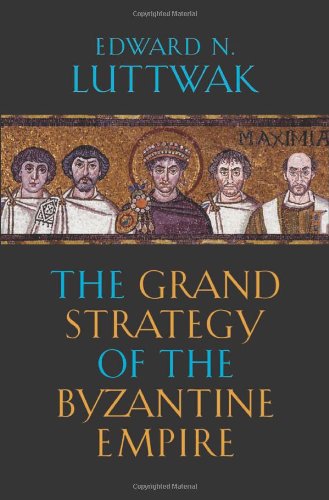
The Grand Strategy of the Byzantine Empire by Edward Luttwak

A quarter century in the making, eminent and controversial strategist Dr. Edward Luttwak has produced a tour de force work of scholarship that illuminates the little known (to laymen)  military and diplomatic vision of the Byzantine Empire while making a case for adopting some of Byzantium’s strategic posture to adapt to the challenges of today. A book intended to provoke as much as inform the reader, Luttwak’s epilogue, “Conclusion:Grand Strategy and the Byzantine ‘Operational Code”, which synthesizes the best elements of leading schools of strategic thought, is so good that it merits a separate printing of it’s own.

Luttwak’s central idea is that the Hellenic and holy Orthodox Byzantines, who forever saw themselves as “the Romans”, abandoned the grand strategic posture of the Roman Empire whose mighty legions were optimized to smash heavy infantry into the enemy, seeking not just a decisive victory, but the total destruction of the enemy. Facing a sophisticated peer rival in Persia and the endless steppes that vomited up unending waves of invading Huns, Avars, Pechnegs, Slavs, Bulghars, Bulgars, Turks and Mongols, eventually menaced by an ideologically motivated Islamic enemy, the Byzantines sought to conserve their strength by avoiding decisive battle.

As the position of the Empire meant that one destroyed enemy might be replaced by a worse successor, the Byzantines crafted a grand strategy that maximized stratregic alternatives to wars of attrition that the small, highly trained, well-armed, tactically versatile and irreplaceably expensive Byzantine army could ill afford. Diplomacy, espionage, bribery, assassination, recruitment of foreign proxies, strategic raiding, naval supremacy, manuver warfare and cunning strategems were all employed in preference to engaging in decisive battle. Today’s enemy might be tomorrow’s ally was a foremost consideration for the Byzantines, who took great care to lay down hard-won military wisdom in handbooks and manuals like The Strategikon or  De Re Strategica.

Strengths and Weaknesses:

Where you sit in reading The Grand Strategy of the Byzantine Empire is likely to determine where you stand on it. 

Luttwak has written a very interesting book about a historical subfield in which he himself is not an expert but has infused it with distillations of professional insight regarding strategy and warfare that no Byzantinist scholar and only very few military historians could have brought to bear. And importantly, never have tried to do so. Luttwak’s commentary on each of the surviving Byzantine military manuals, some only recently translated, for example, while repetitive for a lay reader is an important service for students of war and military strategy.

The empire lasted an exceedingly long period of time, as the Byzantines themselves reckoned it, from the 8th century BC to 1453 when the last Emperor Constantine died heroically fighting the final onslaught of the Ottoman Turks a mere 39 years before Christopher Columbus discovered the New World.  Luttwak is not a historian and makes no attempt to approach the subject as a historian would – something that might require multiple volumes or a very superficial treatment – and makes selections from Byzantine history to illustrate thematic points regarding strategy or, as with the digressions on the composite recurve bow and training of mounted archers, the complex relationship between technology, economics, military tactics and strategy.  To the reader interested in strategy and military history, Luttwak’s approach is efficient and sensible; for those interested in a comprehensive understanding of the Byzantines it makes for a highly idiosyncratic reading.

Nor does Luttwak make any pretense of bowing to rhetorical academic conventions. He does not soften his language anywhere, referring for example to the later wars between the Empire and Arab potentates as “jihad” and “crusade” and draws clear connections between the wars of Byzantium and the wars today with al Qaida, the Taliban and Iraq or the continuity between old  Persia and Ahmadinejad’s Iran. Luttwak freely injects modern terminology into archaic subjects and generally writes as he pleases, meandering whenever details of a topic interest him. His endnotes though, are a rich source of further commentary and observations and the bibliography runs for an additional seventeen pages.

Strongly recommended.

Debating the Mexican Cartel Wars at SWJ Blog

Monday, February 14th, 2011

Only Some Dare Call it “Insurgency”

A “must read” article by Dr. Robert J. Bunker at SWJ Blog:

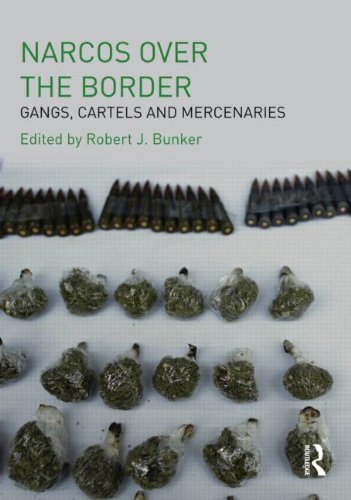
The Mexican Cartel Debate: As Viewed Through Five Divergent Fields of Security Studies

….What is clear is that complex post-modern threats-such as those posed by the Mexican cartels and, for that matter, Al Qaeda and its affiliate network- do not fit into neat categories and well-defined security fields. What is needed is for a U.S. governmental „honest broker? or supra-security organization to come into the Mexican cartel debate and leverage the five fields of security studies highlighted in this essay into a broader networked effort. This effort must further be tied into issues pertaining to the trans-operational environments involving U.S. engagement with Mexican cartels and their affiliates. We can no longer afford the luxury of watching numerous fields of study and security response organizations-each with their own form of „extreme specialization?- independently going about their activities in a totally uncoordinated manner. Instead, attention should be directed at creating a hemispheric strategy for the Americas, possibly even global in scale, to directly challenge the rise of the Mexican cartels and their mercenary and gang affiliates along the entire threat continuum highlighted in this essay.

That the narco-cartels originally had illicit economic motivations and lack Maoist ambitions is apparently a very large obstacle for some orthodox counterinsurgency experts to wrap their heads around – despite the fact that if a group with a political identity were beheading rivals, assassinating police chiefs, kidnapping mayors, using propaganda of word and deed, setting off car bombs and fighting the Army, they’d call it “insurgency”.

While the USG is not supposed to call the narco-cartel war an “insurgency“, we appear to be starting to treat it as one.
 

Egypt: it’s the Mahdi!

Saturday, February 12th, 2011

[ by Charles Cameron ]

16_imam-zaman2-mahdi-from-tehran-times.jpg

image of the awaited Twelfth Imam from Tehran Times

*

Here’s a report on remarks President Ahmadinejad made in celebration of the anniversary of the Iranian revolution, just hours before President Mubarak quit, from this morning’s Washington Post:

The crisis that has been roiling Egypt, a key U.S. ally in the region, dominated Friday’s celebration. Ahmadinejad said that the 12th imam Mahdi, a revered 9th-century Shiite saint, had directed the uprisings in Egypt and Tunisia.”

This is a global revolution, managed by the imam of the ages,” he told the crowds gathered in and around Tehran’s central Azadi Square.

He predicted the formation of a world government, ruled by the 12th imam: “Hearts and beliefs are swiftly leaning toward forming a global governance and the necessity of the rule of the perfect human, linked to the heavens.”

h/t @IbnSiqilli

I really should have seen that one coming!

Is COIN Dead?

Thursday, February 10th, 2011

slide1.JPG

By that, I mean contemporary, mid-2000’s “pop-centric” COIN theory as expressed in FM 3-24  – is it de facto dead as USG policy or is COIN theory formally evolved to officially embrace strong elements of CT, targeted assassinations, FID, “open-source counterinsurgency” and even bare-knuckled conventional warfare tactics?

Mind you, I have nothing against pragmatic flexibility and think that, for example, moves to arm more Afghan villagers for self-defense are realistic efforts to deal with the Taliban insurgency, and I prefer USG officials speaking frankly about military conditions as they actually exist. Doctrinal concepts should not be used to create a “paint-by-numbers” military strategy – it is a starting point that should be expected to evolve to fit conditions.

But having evolved operations and policy as far as the USG military and USG national security agencies have, with the current draconian budgetary restraints looming – are we still “doing COIN”? Or is it dead?

Thoughts?


Switch to our mobile site