On War as an Unfinished Symphony
Thursday, November 3rd, 2011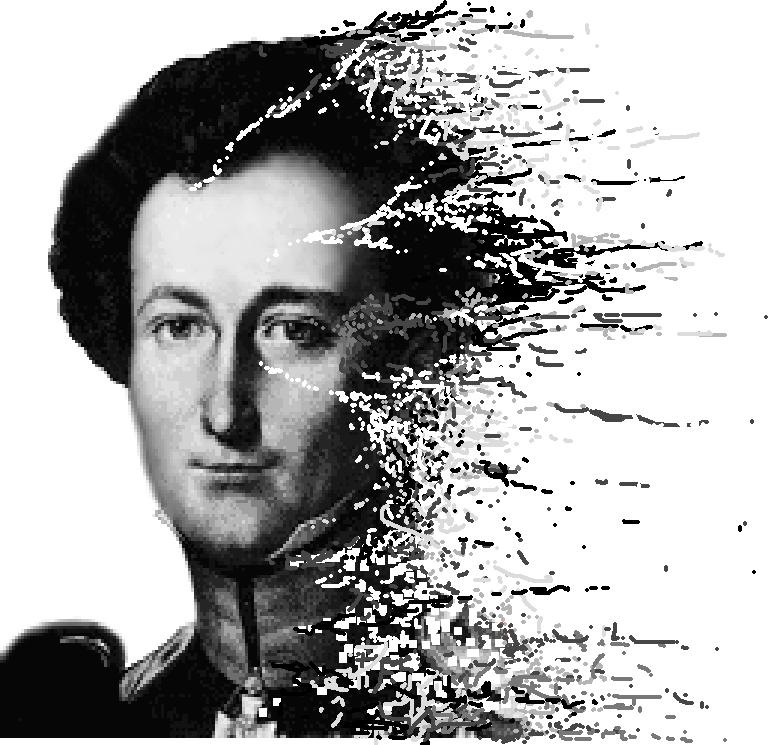
On War by Carl von Clausewitz has been the most influential book on strategy and war of all time.
We can say this because On War is the standard by which all other works of strategy are measured and only a few compared – notably Sun Tzu’s Art of War and The Peloponnesian War by Thucydides. The odd thing is that we can say this despite the fact that On War is more frequently shelved, cited or understood secondhand rather than read, even by military professionals. And furthermore, within the narrow demographic that reads Clausewitz seriously and critically, there can be heated dispute over what he meant, due to the difficulty of the text. Then there are the secondary effects, historical and military, of Clausewitz having been misunderstood, forgotten, ignored or at times, his strategic philosphy consciously rejected.
The shadow cast by On War is all the more remarkable given it’s circumstances of publication. Clausewitz died in 1831, at fifty-one, of 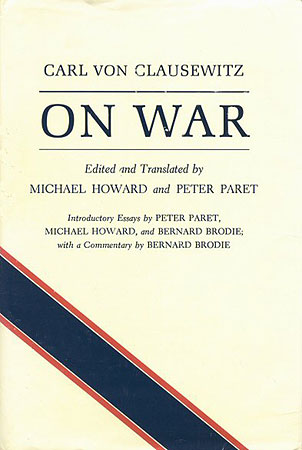 cholera, having finally risen to a military post his talents merited. He had been writing On War since 1816 and it was far from completed or refined to his satisfaction and it is highly unlikely, in my view, that Clausewitz would have consented to it’s publication in the condition in which he left it. His determined and intellectually formidible widow, Marie von Clausewitz, further shaped the manuscript of On War, guided by her intimate knowledge of her husband’s ideas and was likely the best editor Clausewitz could have posthumously had.
Nevertheless, to my mind On War remains a magnificent unfinished symphony.
What would On War have looked like if Clausewitz had lived another twenty-five or thirty some years? Assuming continued good health, Clausewitz would have seen, perhaps commanded in, the First Schleswig War and at least studied the Crimean War from afar. He would have had another quarter-century of reading and mature reflection on his subject. Clausewitz, who had a keen understanding of history, would have also witnessed the grand European upheaval of liberal revolution in 1848 that rocked the Hohenzollern monarchy to it’s core. What new insights might Clausewitz have gleaned or expanded upon? Would his later chapters On War have evolved to equal the first?
Having outlived Marie (who died in 1836), would Clausewitz have become a deeply changed man?
What I find it difficult to believe is that Clausewitz, with his creatively driven and philosophically exacting mind, would have been content to let the manuscript of On War rest where it stood in 1831. Or that we read today what Carl von Clausewitz ultimately intended.
 natural approach to any problem is deception. For example, he had an affair with this athlete, a gymnast, and he went through two phases. Phase one: He concealed it from his wife. Phase two: He launched a public campaign showing himself to be a macho man. He had photographs of him shooting a rifle, and as a Judo champion, and therefore had the news leaked that he was having an affair. Not only an affair with a young woman, but a gymnast, an athlete. Obviously such a person is much more wily and cunning and able to handle conflict than his American counterpart. But when such a person is the head of a department, the whole department is actually paralyzed and they are all reduced to serfs and valets. Therefore, what gets applied to a problem is only the wisdom of the aforementioned wily head of the department. All the other talent is wasted, all the other knowledge is wasted.
 after the Soviet War. Attracted to secular military theory, guerrilla warfare tactics and strategy rather than theological disputes, hating the West but despising Salafist radicals, Lia’s Abu al-Suri is an isolated and anomalous figure in “the jihadi current” of the 1990’s and post-9/11 era.