zenpundit.com » islamic world

Archive for the ‘islamic world’ Category

Tracking the Mahdi on WikiLeaks

Tuesday, November 30th, 2010

by Charles Cameron

A quick search for “Mahdi” and “Mehdi” and “Twelfth Imam” in the 294 messages so far published in diplomatic Wikileaks reveals some references to individuals with those names, and a couple to Moqtada al-Sadr’s Jaysh al-Mahdi (spelled “Jaysh al-Madhi” in one cable by someone who is perhaps confused by the similarity of the name to that of Mahatma Gandhi), along with three cables in which Mahdism is touched upon.

1

09ASHGABAT1182 of September 16, 2009 reports a comment by an undisclosed source who is “adamant” that the US should not enter into direct talks with Iran’s leadership:

Not only, he insisted, is the Iranian leadership “untrustworthy,” and dominated by a group of “messianics,” who base crucial decisions about domestic and foreign policy on a belief in the imminent return of the “Missing” (Twelfth) Imam.

From my point of view, any foreign policy based on or strongly influenced by belief in the imminent return of a prophesied figure of good or evil, whether that figure be Moshiach or Christ or Mahdi, Antichrist or Dajjal, should be cause for concern: from a religious perspective, because messianic expectations are precisely what Matthew is talking about when he writes that “false Christs and false prophets will rise and show great signs and wonders to deceive, if possible, even the elect” (Matt 24.24) – and from a secular perspective because such identifications have been made again and again across history, often with disastrous results (think Waco, think the 1979 siege of Mecca, think the Taiping Rebellion).

That’s why I’m interested in monitoring the various strands of apocalyptic thinking out and about in the world today.

2

A little over a month earlier, on August 3, 2009, 09RPODUBAI316 under the sub-head “A Benevolent Dictator’s Fall from Grace” discussed the idea that the “Arab street” (both Sunni and Shi’a are mentioned) initially saw some Mahdist qualities in Ahmadinejad:

A Syrian journalist and blogger, who owns a media consultancy firm in Dubai, believes that many in the Arab street initially viewed Ahmadinejad when he came to power in 2005 as a “benevolent dictator.” Citing the tradition of the Mahdi, the media consultant argued that both Shi’a and Sunni Arabs are taught from early childhood to await the arrival of a strong and unimpeachable figure who will lead the Muslim world. The media consultant maintained that even secular Arabs view the world, albeit unintentionally, with this ingrained mindset. Our contact argued that Ahmadinejad played in to this narrative, and when Ahmadinejad arrived on the international stage many Arabs saw him, in contrast to their own flawed leaders, as a humble and pious man who was brave enough to stand up for his people and the greater Muslim world by confronting Israel and the West head on. However, both the intensely competitive campaign period and the forceful reaction by the Iranian people to the official election results have led some moderate Arabs to rethink Ahmadinejad’s true disposition. The election, the media consultant said, led some Arabs to understand that despite his astutely crafted and well-marketed image in the Arab world, Ahmadinejad is resented by many Iranians for domestic mismanagement, incompetence, and corruption. Because of this public fall from grace, so the media consultant told us, Ahmadinejad is no longer the “untouchable, holy figure” in the Arab world he once was — his flaws have brought him down to the level of the Arab world’s own imperfect leaders.

I’m reminded of the way that Steve Davis of Charleston, SC, among others, projected messianic qualities onto then-candidate Obama, when he wrote:

Barack’s appeal is actually messianic, it’s something about his aura, his spirit, his soul, that exudes enlightenment in the making.

I interpret Obama’s Lebanon, NH remarks as making light of that sort of projection (McCain’s video makes light of it, too), whereas Ahmadinejad appears to take his own status within the aura of the Mahdi all too seriously.

3

The last reference allows me to end on a happier note.

The French diplo Jean-Christophe Paucelle is quoted in 09PARIS1046 of July 31, 2009 on the topic of Ahmadinejad’s inauguration.

First he mentions that since non-Muslims had not been invited to previous inaugurations, European members of the diplomatic corps might not know which door to take if they wished to walk out on the ceremony, should such an action be called for… and then he discusses an additional reason why the French would attend the ceremony, despite the contested nature of the election:

Paucelle said that the case of detained French citizen Clothilde Reiss has also influenced the EU decision to attend the inauguration ceremonies. “We think she may be released soon, and we don’t want to create another irritant,” Paucelle said. “There are enough already.” He reported that the French have reason to believe Reiss may form part of a group of detainees likely to be released on the August 7 anniversary of Imam Mahdi. Paucelle noted that a letter released July 29 by Ahmadinejad supported the idea of granting clemency to post-election protesters during Mahdi celebrations. “The Iranians will need to take face-saving measures, and so she will likely transfer to house arrest or some other status,” Paucelle said. He added that, of course, she may not be released at all next week, but the French remain optimistic that she will soon be out of prison.

Clotilde Reiss was indeed not released on that occasion — but she was in fact freed somewhat later, on Sunday, May 16th, 2010.

RESTREPO on Television this Monday

Monday, November 29th, 2010

An important announcement from my colleague, Lexington Green:

Lexington Green – (1) RESTREPO Monday, 11/29/10 at 9PM ET/PT; (2) Maj.Gen. Scales on Small Unit Dominance

This is the television premier of this extraordinarily film. I wrote about seeing this film here.

Restrepo chronicles the deployment of a platoon of U.S. soldiers in Afghanistan’s Korengal Valley. The movie focuses on a remote 15-man outpost, Restrepo, named after a platoon medic who was killed in action. It was considered one of the most dangerous postings in the U.S. military. This is an entirely experiential film: The cameras never leave the valley; there are no interviews with generals or diplomats. The only goal is to make viewers feel as if they have just been through a 94-minute deployment. This is war, full stop. The conclusions are up to you.

I highly recommend this film to all of our readers.

An information page for Restrepo is here, including video.

RESTREPO, an award winning documentary, was based on (or more precisely, closely related to) the book WAR by Sebastian Junger, which told the story of the war against the Taliban in the Korengal Valley, waged by the soldiers of the 2nd Platoon of Battle Company.

I previously reviewed WAR here and the movie RESTREPO here.

What the Dickens? Symbolic details in Inspire issue 3

Sunday, November 21st, 2010

by Charles Cameron
.
It’s easily missed. It’s part of the “small print” that most small-format paperbacks carry on the copyright page:

The sale of this book without its cover is unauthorized. If you purchased this book without a cover, you should be aware that it was reported to the publisher as “unsold and destroyed.” Neither the author nor the publisher has received payment for the sale of this “stripped book.”

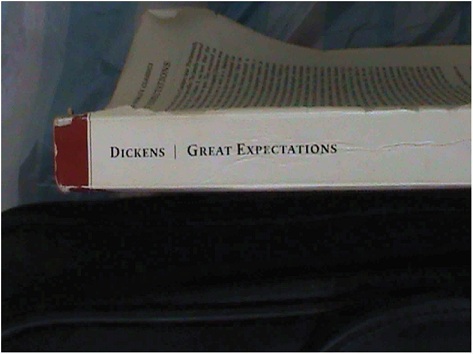
Here’s the picture that AQAP took of the copy of Dickens’ novel Great Expectations they inserted into one of their bombs recently – which they then published in issue 3 of their English language magazine Inspire:

Dickens

And here’s the explanation that accompanies that photo, in a piece titled “The Objectives if Operation Hemorrhage” by their “Head of the Foreign Operations Team”:

This current battle fought by the West is not an isolated battle but is a continuation of a long history of aggression by the West against the Muslim world. In order to revive and bring back this history we listed the names of Reynald Krak and Diego Diaz as the recipients of the packages. We got the former name from Reynald de Chatillon, the lord of Krak des Chevaliers who was one of the worst and most treacherous of the Crusade’s leaders. He fell into captivity and Salahuddeen personally beheaded him. The name we used for the second package was derived from that of Don Diego Deza, the Inquisitor General of the Spanish Inquisition after the fall of Granada who along with the Spanish monarchy supervised the extermination and expulsion of the Muslim presence on the Iberian Peninsula employing the most horrific methods of torture and done in the name of God and the Church. Today we are facing a coalition of Crusaders and Zionists and we in al Qaeda of the Arabian Peninsula will never forget Palestine. How can we forget it when our motto is: “Here we start and in al-Aqsa we meet”? So we listed the address of the “Congregation Or Chadash”, a Gay and Lesbian synagogue on our one of our packages. The second package was sent to “Congregation B’nai Zion”. Both synagogues are in Chicago, Obama’s city.
.
We were very optimistic about the outcome of this operation. That is why we dropped into one of the boxes a novel titled, Great Expectations.

They may not have read the book or seen the movie, as Ibn Siqilli comments at the link above, but they do have long memories and/or a taste for history, and they are indeed sending signals with small details like the fictitious names of their addressees.

*

This is in line with one of the basic premises of Islamic thought: that the world we inhabit is a world of ayat or symbols (the singular is ayah, and the word is also used to refer to the verses of the Qur’an, each of which is viewed as a symbolic utterance). Here, for instance, is a passage from Fazlun Khalid’s paper, Islam and the Environment, from the website of Jordan’s Royal Aal al-Bayt Institute for Islamic Thought:

The Qur’an refers to creation or the natural world as the signs (ayat) of Allah, the Creator, and this is also the name given to the verses contained in the Qur’an. Ayat means signs, symbols or proofs of the divine. As the Qur’an is proof of Allah so likewise is His creation. The Qur’an also speaks of signs within the self and as Nasr explains, “… when Muslim sages referred to the cosmic or ontological Qur’an … they saw upon the face of every creature letters and words from the cosmic Qur’an … they remained fully aware of the fact that the Qur’an refers to phenomena of nature and events within the soul of man as ayat … for them forms of nature were literally ayat Allah”. As the Qur’an says, “there are certainly signs (ayat) in the earth for people with certainty; and in yourselves. Do you not then see?” (Adh-Dhariat, 51:20, 21).

*

BTW, I don’t think Penguin (or, for that matter, Charles Dickens) got paid for that book… whatever their expectations may have been.

Games of War and Peace V: Space Invaders

Thursday, November 18th, 2010

By Charles Cameron 

It has been a while since I posted an entry in my “Games of War and Peace” series, but I just came across a quote in Stephen Ulph’s Towards a Curriculum for the Teaching of Jihadist Ideology that brought back memories…

spaceinvaders

The epigraph to Ulph’s Introduction quotes from Rosie Cowan and Richard Norton-Taylor’s piece, Britain now No 1 al-Qaida target – anti-terror chiefs from the (UK) Guardian of 19 October 2006, and I’ve added a couple of earlier paragraphs for context:

Even though the police and M15 have disrupted terror plots and groups influenced by al-Qaida, they describe the networks as very resilient.They say there is a frightening number of young men willing to step up and replace those who have been arrested or gone to ground.

“It’s like the old game of Space Invaders,” said one senior counter-terrorism source. “When you clear one screen of potential attackers, another simply appears to take its place.”

I don’t think there’s a deep strategic insight there, the way there may be with Mao and the game of Go, although the question of what drives the continuing recruitment of those young men is an important one.

But I’d like to ask — what other game-related insights do you find of value in understanding contemporary jihadism?

Al-Awlaki has a Phineas moment

Wednesday, November 10th, 2010

Posted by Charles Cameron

Here’s a meme worth noting when it crops up in the advocacy of religious violence:

You don’t need permission from a religious authority…

1

This particular idea came up in the video of Anwar al-Awlaki that was released yesterday, Nov. 8th.

Flashpoint Partners translated the comment in question, “do not consult anyone in killing the Americans. Fighting Satan does not require a jurisprudence. It does not require consulting. It does not need a prayer for the cause. They are the party of Satan … It is the battle between truth and falsehood.”

The AFP translation of the key phrase here reads, “Killing the devil does not need any fatwa (legal ruling).”

2

My interest was piqued because of the correspondence between this comment from al-Awlaki, and the case of Phineas in the biblical Book of Numbers, chapter 25.

Phineas is “the son of Eleazar, the son of Aaron the priest” – but when he recognizes that the Lord would be infuriated by the interracial and interreligious copulation of Zimri, “a prince of a chief house” in Israel, with Cozbi, the daughter of the “head over a people, and of a chief house in Midian”, he does not go to the priest his grandfather seeking permission to kill them – he knows it is his Lord’s wish that they should die, and so he takes the responsibility for his action entirely upon himself, and kills them.

3

As I shall recount in greater detail in two future posts on the topic of Phineas, it is the fact that Phineas acts without first requesting permission that pleases his Lord so much that He grants to Phineas and his seed “the covenant of an everlasting priesthood”.

It is precisely this acting without requesting permission that is emphasized in modern Christian Identity writings on the topic of “Phineas Priests”:

So a Phinehas priest is a MAN who acts on personal initiative to execute Yah’s judgment on violations of Yah’s laws which are adversely affecting His people.

And according to Ehud Sprinzak, the eminent scholar of modern Jewish terrorism, it was reading the “Balak portion” of the book of Numbers, in which the story of Phineas is recounted, that convinced Yigal Amir that he could legitimately assassinate Yitzhak Rabin without first obtaining rabbinic approval (which would have put the rabbi who granted him permission at risk).

4

So. We have one more piece of the puzzle by which a mind with its own interpretation of God’s will can come to the conclusion that some specific act or acts of violence – accurately termed “terrorism” by others – are not only divinely sanctioned, and indeed mandatory, but can be undertaken without the requirement of prior verification from an appropriate religious authority.

And in this case — the religious authority, such as it is, of Sheikh al-Awlaki proposes this.

5

Aaron Zelin‘s post on the Qur’anic text invoked by al-Awlaki’s title and the commentaries on that verse by ibn Kathir and others, is well worth your time, if you have not already seen it.


Switch to our mobile site