zenpundit.com » history

Archive for the ‘history’ Category

2013

Tuesday, January 1st, 2013

Celebrating the new year by looking at what happened in ’13 way back when…..

2613 BC  By some accounts, the construction of the Great Sphinx may have begun

413 BC – The Battle of Syracuse results in a cataclysmic defeat for the Athenian Empire’s Sicilian Expedition at the hands of Hermocrates and Gylippus.  The Athenian strategoi Demosthenes and Niciasare ignominiously executed by the Syracusans. This defeat contributes to the downfall of Athens in the Peloponnesian War.

213 BC The great inventor Archimedes builds catapults so powerful that the Romans laying siege to Syracuse believed the city to have the aid of giants

13 BC Rome enjoys the noontide of the age of Augustus 

13 AD  The great geographer Strabo publishes his book on the shape of the Earth.

113 AD Emperor  Trajan builds Trajan’s Column near the Colosseum in Rome to commemorate his victory over the Dacians in the Second Dacian WarOsroes I of Parthia violates the treaty with Rome by installing a puppet ruler in Armenia. The 60 year old emperor, Trajan, marches east and declares Armenia to be annexed and becomes a Roman province.

313 AD Emperor Constantine the Great issues the Edict of Milan, legalizing Christianity and ending the persecutions of Christians and initiating the decline of Paganism

613 AD The Prophet Muhammed begins preaching the call to Islam

1013 AD The Danes invade England.  King Ethelred the Unready flees to Normandy, and Sweyn the Dane becomes King of England.

1113 AD The Order of the Knights of the Hospital of Saint John, founded to protect pilgrims to the Holy Land, vows to fight in its defense.

1213 AD  Jin China is overrun by the Mongols under Genghis Khan, who plunder the countryside and cities, until only Beijing remains free, despite two bloody palace coups and a lengthy siege. Pope Innocent III issues a charter, calling for the Fifth Crusade to recapture Jerusalem.

 1513 AD Juan Ponce de Leon becomes the first European definitely known to sight what is now the territory of the United States (specifically Florida), mistaking it for another island

 1613 AD  An assembly of the Russian Empire elects Mikhail Romanov to be Tsar of Russia, and establishes the Romanov Dynasty, ending the Time of Troubles.

1813 AD Napoleonic wars rage in Europe, War of 1812 sees the American invasion of Canada and Mexico wages it’s War of Independence from Spain 

1913 AD Last year of the post-Napoleonic “Long Peace” before WWI. The Mexican Revolution and China’s Warlord Era accelerate. America passes the 16th Amendment, permitting the Income Tax to be levied and Henry Ford introduces the assembly line, revolutionizing industrial mass production.

What will 2013 bring that will be remembered in a century?

New Book: The Violent Image by Neville Bolt

Friday, December 14th, 2012

The Violent Image by Neville Bolt 

Columbia University Press just sent me a review copy of The Violent Image, by Dr. Neville Bolt of King’s College vaunted War Studies Department.  Initially, I was amused by the colorful book jacket, but flipping through, it belies a very weighty, heavily footnoted, academic exploration of the iterative relationship between propagandistic imagery and insurgency. Even a casual perusal indicates that The Violent Image is a book many readers of ZP will  like to  get their hands on.

From the jacket:

….Neville Bolt investigates how today’s revolutionaries have rejuvenated the nineteenth century “ptopaganda of the deed” so that terrorism no longer simply goads states into overreacting, thereby losing legitimacy. Instead the deed has become a tool to highlight the underlying grievances of communities

A small sampling of some of the section titles:

Strategic Communications:the State
Strategic Communications: the Insurgent
Networks in Real and Virtual Worlds
Images as Weapons
POTD as Insurgent Concept of Operations
Anonymity and Leaderless Revolutions
The Arab Uprisings and Liberation Technology
POTD as Metaphor

Endnotes run slightly over 90 pages and the bibliography tips the scales at 50, for those interested in such things.

Looking forward to reading this and seeing how Bolt presents his case.

Two Cheers for the State?

Wednesday, December 12th, 2012

An excellent post from Adam Elkus – strongly recommended!

The State Problem In National Security Policy

….The report makes a lot of comments about the rise of individual autonomy, the empowering of regional network-cities, and technology’s acceleration of the power of non-state actors. Wired interpreted part of this as signaling a decline of the statewhich has been a popular theme since Martin van Creveld’s work on theTransformation of War. I think that is an accurate characterization of the parts of the 2030 report that talk about the empowerment of non-state actors and the rise of international networks. I’m less interested in the report, though, than in the general narrative of state decline in national security policy discourse.

We’ve heard that states are in decline, and both benign and malign networks and private actors are on the rise. This isn’t a new theme—if you look back a few decades the rise of multinational corporations and the multilaterals prompted a similar debate about sovereignty and power in the modern world. The state-centric defense practitioner is enjoined to move beyond caring about states and embrace a new reality.

…. What we have been dealing with, however, is an unfortunate tendency to write the non-state actor and transnational network out of the last few centuries of history. But he (or she) stubbornly refuses to go away. We can talk about some of the reasons why this might be the case in the international environment but it is also worth talking about why we often assume much more coherence and cohesion in our domestic environment than reality may justify.

….In Charles Tilly’s book Democracy, he argues that four processes are necessary to create and sustain a democratic state: the growth of state capacity by suppressing alternative sources of power, the reduction of categorical inequalities, and the integration of strong tie-based trust networks into public life. Warlords and kingpins that predate make it difficult for rights to be guaranteed. Categorical inequality lessens the ability of the people to meaningfully control their own destiny. And strong trust networks that cannot express themselves in political and social life also have the potential for predation and the erosion of state authority. Tilly casts these processes as never-ending in scope, and states are capable of backsliding on any one of them.

Very rich food for thought.

Trust networks are an interesting way to look at broader social networks and discern, at times, the presence of modularity (and therefore specialized skills, capacities, knowledge etc.) within a looser network structure (weak ties and links vs. highly interconnected sets of hubs with strong ties). We tend to graph these things in simple diagrams, like concentric circles with “al Qaida hard core” in the center, but really, they are more akin to clumping or clotting or uneven aggregation within a less dense field of connections.

Adam is also right that the irregular, the illegal, the tribal, the secret society, the rebellious peasant was largely ignored by nationalistic  historians in the late 19th and early to mid 20th century – and when they came back in vogue in the 1960’s with revisionist, labor, social, cultural etc. schools of historians, they tended to groan under the heavy yoke of dogmatic Marxist class analysis and then later the radical academic obsessions with race, gender and sexual orientation “oppression”. Too seldom, were these people and their doings found to be interesting in themselves so much as puppets for a very tortured, abstract passion play to exorcise demons and pursue petty grudges against other scholars.

In any event, Adam is worth reading in full.


Congratulations!!

Tuesday, December 4th, 2012

To Lexington Green and James Bennett, for finishing their new book, America 3.0 – due out (I think) in 2013 published by Encounter Books.

A political vision for an era desperately short on imagination and needing statecraft of inspiration.

The Antilibrary of the Living Dead

Friday, November 30th, 2012

From time to time we talk here about “the pile” of books waiting to be read, or the larger “Antilibrary” which briefly also became a blog, now defunct:

….The writer Umberto Eco belongs to that small class of scholars who are encyclopedic, insightful, and nondull. he is the owner of a large personal library ( containing thirty thousand books), and separates vistors into two categories: those who react with ‘Wow! Signore professore dottore Eco, what a library you have! How many of these books have you read?’ and others – a very small minority- who get the point that a private library is not an ego boosting appendage but a research tool. Read books are far less valuable than unread ones. The library should contain as much of what you do not know as your financial means, mortgage rates, and the currently tight real estate market allow you to put there. You wil accumulate more knowledge and more books as you grow older, and the growing number of unread books on the shelves will look at you menacingly. Indeed, the more you know, the larger the rows of unread books. Let us call the collection of unread books an antilibrary.

–    Nassim Nicholas Taleb 

It occurred to me the other day, that the Antilibrary contains some unread books that, while bought we the best of intentions, perhaps even an air of anticipation, yet were never read – and at the current rate of new book purchases, never will be. To get “living dead” status a book needs to have been sitting on a shelf for a minimum of five years (the archives of book collectors don’t count since they are buying to own or invest and not always to read) and ten is even better. Here are a few of mine:

Tecumseh: A Lifeby John Sugden

My only explanation is that this one was a gift by a well-meaning friend who knew in a vague sort of way that I am “into history”. I really don’t care very much about Tecumseh and still less about his brother the Prophet ( maybe if he had a better handle on the prophecy thing their confederation would have won).

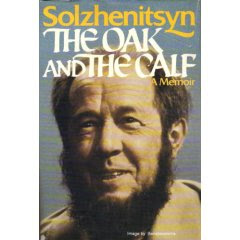
The Oak and the Calf by Aleksandr Solzhenitsyn

This has been sitting on my shelf for 20+ years. This is odd, because I’ve read The Gulag Archipelago twice, along with Cancer Ward,  The First Circle and August 1914.  Not sure if I burned out on Russian-Soviet studies at the time or if the collapse of Communism made it less relevant but it has never been cracked open.

Conquest by Hugh Thomas

Sweeping, magisterial, impressively detailed…..and decidedly unread for at least 15 years.

Nietzsche by Rudiger Safranski

As my Great-great Grandfather hailed from Germany, I now suspect the author may be a distant relation. That hasn’t helped me get started reading it.

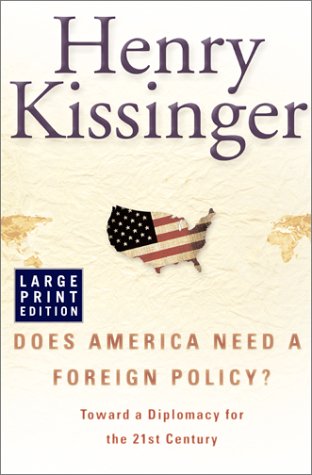
Does America Need a Foreign Policy by Henry Kissinger

One of the more ironically-timed books ever written, coming out a mere six months before 9/11, I have had this one for 10 years + and I think I bought it in hardcover for $4 (you can it used on Amazon for one cent. Ouch!). I have read a fair amount of Kissinger, including his acromegalic, multi-volume memoirs, but I can’t muster the energy to read this one.

What are you not reading and why?


Switch to our mobile site