zenpundit.com » games

Archive for the ‘games’ Category

The best war game is a library of windows

Tuesday, July 3rd, 2012

[ by Charles Cameron — Escher, Borges, simulating the future, wargames, A Pattern Language, Sembl ]
.

MC Escher, Relativity

.
Ridiculous phrase, a library of windows. Unless you think, as I do, of books as windows onto different worlds, in which case it makes a whole lot of sense, and a decent library has more windows onto more profoundly different worlds than any physical room — and here we are getting into the territory of Jorge Luis Borges (links to Library of Babel) and Maurits Escher (image above).

And let me just state for the record that Godel Escher Bach could just as well have been Escher Carroll Borges, and that a comparison between the logics of Escher and Borges is one of the desiderata of our times.

That’s a Sembl move.

**

Let’s expand the concept of window to include the sort of inter-worldview glimpse that Haaretz describes today here:

Last week, in a small beit midrash (study hall) named after Rabbi Meir Kahane in Jerusalem’s Shmuel Hanavi neighborhood, an emergency meeting was convened to discuss instigating freedom of religion and worship on the Temple Mount. It was a closed meeting attended by representatives of the Temple Institute, HaTenu’ah LeChinun HaMikdash (the Movement to Rebuild the Holy Temple) and the Temple Mount Faithful, as well as two representatives of Women for the Mikdash, and others. The activists met to try to understand how they could overcome the authorities, who they believe are plotting against them, and return to the Temple Mount. At this meeting, Haaretz was offered a rare behind-the-scenes glimpse of the most ardent activists in the battle to Judaize the Temple Mount.

**

Here’s the meat of the post, as yet uncooked. Back in 2005, but brought to my attention today by Rex Brynen at Paxsims, is this piece from Strategy Page:

After eight years of effort, and spending over $300 million, the U.S. Army has officially received its new wargame (WARSIM) for training battalion, brigade, division, and as big as you want to get, commanders, and their staffs. Now even the most elaborate commercial wargame would not get $300 million for development, and eight years to create the system. But wargames for professional soldiers have different requirements, and a troublesome Department of Defense bureaucracy to deal with. First, the requirements. Commercial wargames shield the player from all the boring stuff (support functions, especially logistics.) But professional wargames must deal with these support activities, because in a real war, these are the things commanders spend most of their time tending too. …

WARSIM covers a lot of complex activities that a commander must deal with to achieve battlefield success. Besides logistics, there’s intelligence. Trying to figure out what the enemy is up to is, next to logistics, the commanders most time consuming chore.

— which in turn was referenced by Michael Peck writing in a Kotaku piece today titled Why It’s So Hard to Make a Game Out of the 21st Century:

Let’s build a game. Let’s make it a strategy game. We will realistically simulate global politics in the 2030s. Perhaps a sort of Civ or Supreme Ruler 2020-type system.

Where shall we start? How about something easy, like choosing the nations in the game? It’s simple enough to consult an atlas. We’ll start with Britain…but wait! Scotland is on the brink of declaring independence from the United Kingdom. Should Britain be a single power, or should England and Scotland be depicted as a separate nation? What about Belgium splitting into Flemish and Walloon states? And these are old, established European nations. How will states like Syria and Nigeria look in two decades? It was only a bit over 20 years ago that the Soviet Union appeared to be a unshakeable superpower that controlled Eastern Europe and Central Asia.

**

Let’s cook that meat, let’s make a meal of it.

Peck’s piece goes into many other ways in which predictive gaming isn’t terribly productive.

But it left me asking the question, what would I do with a game-sized budget, if my aim was to push military and intelligence towards greater insight.

And my answer would be to embed information in walls. In corridors…

To build windows at sparse and irregular intervals into the internal corridors that connect any given office in the Pentagon or three-letter agency — or my local preference (hush, I know it’s the Glorious Fourth tomorrow) MI-5 and -6 — through which analysts and decision makers can glimpse snippets of information.

Which can then fall into the deep well of memory.

It is deep within that well of half-forgotten knowledge, ST Coleridge tells us, that the “hooks-and-eyes of memory” link one thought with another to build a creative third.

**

A wall, then. I would build a wall embedded with facts and fancies, maps and illustrations, graphs and stats, film clips and news clips, anecdotes and quotes — even, perhaps, tiny alcoves here and there with books free for the taking, music CDs, DVDs of movies, old, new, celebrated, strange…

And I would be constantly shifting and rearranging the “views” from my windows, so that what was seen yesterday would not be what would be seen tomorrow — yet with a powerful index of words, topics, themes, memes, image contents, names of actors, newscasters, authors and so forth, so that what was once seem and dimly recalled could be recaptured.

**

The concept here is pretty much the exact opposite of having a huge black poster proclaiming Creativity Matters!

Don’t get me wrong, creativity does matter (get that poster and others here), but it “works in mysterious ways its wonders to perform” — and the way to entice it is to see things out of the corner of the eye…

The windows I’m looking for, therefore, offer glimpses you wouldn’t necessarily notice if you were deep in thought or conversation, and conversely, wouldn’t see twice and grow so familiarized to that they’d become irrelevant by repetition. They’d be glimpsed in passing, their esthetic would be that of Christopher Alexander’s Zen View, pattern 134 in his brilliant work — the closest we have to a Western I ChingPattern Language:

The idea, then, is to seed the memory with half-conscious concepts, patterns, facts and images, carefully selected and randomly presented — so that those hooks and eyes have the maximum chance of connecting some scrap of curious information with a pressing problem.

Which is how creativity tends to work.

**

That way each corridor becomes a game-board — but it is in the analyst’s focused mind that the game is played and won.

What you’d get, in effect, would be community-wide, ongoing free-form gameplay in complete alignment with the web-based game we’re currently developing at Sembl. Games of this genre will also have powerful application in conflict resolution.

And peace.

Bureau of Continuing Education

Monday, July 2nd, 2012

[ by Charles Cameron — Anabaptists, Amish, Mennonites and Robespierre, rock’n’roll, gaming ]
.


.

I knew the Amish and Mennonites tended towards a pacifist interpretation of Christianity, but I had no idea until this evening that Robespierre had granted them special recognition on that account:

The matter was referred for a decision to the Committee of Public Safety. And on 19 August 1793 this body issued what was indeed not formally a decree, but simply a recommendation, in effect brief guidelines directed to local authorities, concerning the proper procedure to be adopted in dealing with drafted Mennonites. Among those signing, or confirming, this document we find the names of such prominent Jacobins as Robespierre, Carnot, Couthon, Hérault de Séchelles, and St Just. ‘We have observed the simple hearts of these people,’ states their arrêté, ‘and believing a good government ought to employ all kinds of virtue for the public good we ask you to treat the Anabaptists with a mildness that matches their character, to prevent them from being harrassed in any way, and finally to allow them to serve in such branches of the armed forces as they may agree to, like the pioneers or the teamsters, or even to allow them to pay money in lieu of serving personally.’

Peter Brock, Against the Draft: Essays on Conscientious Objection from the Radical Reformation to the Second World War, University of Toronto Press, 2006, p. 76.

Amish Warfare, on the other hand, is either a rock band, or a playlist of YouTube videos “designed for various Call of Duty related topics”, or both.

Quite a name for a band.

Quite a stand to take, right at the start of the Reign of Terror.

Boko Haram: religious vs social war

Wednesday, June 27th, 2012

[ by Charles Cameron — follow up to Taliban: religiosity vs pragmatism ]
.

Sen. Ita Solomon Enang, Chairman of Nigeria’s Senate Committee on Business and Rules, recently responded to a press question about Boko Haram, in an interview published under the curious title, Boko Haram war more religious than social — Engang:

Q: Previously you said Boko Haram attacks were not targeted at Christians but with the consistent attacks on worshippers in churches, have you not changed your mind and how do you think this problem can be dealt with?

A: Unfortunately, I held a position that it is not a religious war in the past. But my position on that is becoming shaky because when people now blatantly take guns to churches and aim at unarmed worshippers, kill them and go away; or they take a bomb to the church and detonate it there, I would say this is like a jihad and I think we should stop behaving like ostriches. I think that the sooner we accept it as a religious war, the better we will be able to handle it.

**

I keep circling around this central point. Much of interest and concern in today’s world revolves around the manner in which politics and religion are separable, braided together, or inseparable…


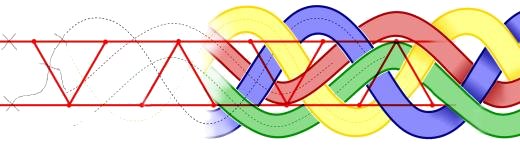
image credit: Christian Mercat, under GNU license v 1.2 — see documentation.

What does it mean for a war to be a religious war, or — to avoid the complexities that defining war bring into the picture while substituting the equivalent complexities attendant on the word violence — for violence to be religious violence?

  • Do both sides have to fight a religious war for it to be religious?
  • Can individuals perform acts of religious violence within a war that is not itself religious?

In some ways the issue parallels the one raised by Zen today in a quote from Colin Gray:

It is not sensible to categorize wars according to the believed predominant combat style of one of the belligerents. Guerrilla-style warfare is potentially universal and, on the historical evidence, for excellent reasons has been a favored military method of the weaker combatant eternally. There are no such historical phenomena as guerrilla wars. Rather, there have been countless wars wherein guerrilla tactics have been employed, sometimes by both sides. To define a war according to a tactical style is about as foolish as definition according to weaponry. For example, it is not conducive of understanding to conceive of tank warfare when the subject of interest is warfare with tanks and so forth, typically, if not quite always, in the context of combined arms.

Zen’s response to Gray:

Gray is correct that many wars partake of a blend of tactical fighting styles or that most wars are better defined (or at least should be in terms of causation) by their political character. That said, a specific fighting style sometimes is a definitive descriptive characteristic of a war, particularly if a dominant tactical style explains one side’s consistent comparative advantage (ex. the Macedonian phalanx vs. the Persians) in battle and some of the resultant choices which were forced upon the adversary.

**

We have a sort of Venn-diagram-in-words possibility: religiopolitical — but it’s really little more than a sop to the fact that religion and politics are at time closely woven. The religiosity of voiolence, and for that matter the violence of religiosity — these are things that wax and wane, shifting sands — they don’t always stay still long enough for us to box them in words, to reify them, to treat them as easily discernible and manipulable mental objects.

That said, to paraphrase Zen, “a specific religious style sometimes is a definitive descriptive characteristic of a war…”

Our understanding may be shifting and nuanced, but the briefs and executive summaries that decision-makers receive, the soundbites they articulate (can one articulate a soundbite?), and the headlines that preach their doctrines to the wide world — these use a given word or they don’t.

Let me turn that around: the briefs and executive summaries that decision-makers receive, the soundbites they articulate, and the headlines that preach their doctrines to the wide world inevitably either use a given word, or they don’t. And yet a realistic understanding of the given situation will be no less inevitably shifting and nuanced…

I feel very timid dipping a toe into Boyd in present company, but a fighter-pilot is a one-person observer, orienter, decider and actor, no? with a loop measured in fractions of seconds, not months? — whereas between intelligence gathering, strategic orientation, policy-making, and diplomatic or military action there are a multitude of communications channels — many of which function as shears that trim nuance down to the nub.

I suspect that questions like “is this a religious war?” and “is this guerrilla war?” carry (at a minimum) book-length subtleties with them, and wind up all too often with answers which are either yes or no, one or zero.

**

It’s all a bit like asking, “what game is this war we’re playing?”

One senior US official in Iraq was quoted by Anthony Cordesman as saying:

the current situation is like playing three dimensional chess in the dark while someone is shooting at you.

Tom Barnett, in The Pentagon’s New Map:

It is not chess but something closer to soccer. The ball is always moving, and substitutions are constantly changing the composition of both your team and your enemy’s. But worse still, your political leadership’s definition of the “problem” you are trying to solve keeps changing, making your attempts to keep score almost meaningless. You want to know what today’s definition of the problem is? Try reading the op-ed pages; you will have plenty to choose from.

John Arquilla and David Ronfeldt:

Major transformations are thus coming in the nature of adversaries, in the type of threats they may pose and in how conflicts can be waged. Information-age threats are likely to be more diffuse, dispersed, multidimensional nonlinear and ambiguous than industrial-age threats. Metaphorically, then, future conflicts may resemble the Oriental game of Go more than the Western game of chess. The conflict spectrum will be remolded from end to end by these dynamics.

As I noted recently, Alasdair MacIntyre wrote, about the complexity of contemporary life in general:

Not one game is being played, but several, and, if the game metaphor may be stretched further, the problem about real life is that moving one’s knight to QB3 may always be replied to by a lob over the net

When it comes time to think, there are only so many metaphor-boxes to fit your nuances into. You pays your money, and you takes your choice.

Egypt as Pac-Man?

Sunday, June 24th, 2012

[ by Charles Cameron — jeu d’esprit ]
.


.

I know it’s just an artefact of Juan Cole choosing a very light blue for “Classic Liberals” in his blog post on Mursi and the Brotherhood in a Pluralist Egypt — but his image of the Egyptian political landscape irresistably conjured up Pac-Man — and viewed in the light of Mursi‘s victory today, Pac-Mac begins to look a lot like a westernized, stylized portrayal of the star and crescent…

Maybe we’re hoping the Ikhwan will go chasing the djenoun

One bead for a rosary

Friday, June 22nd, 2012

[ by Charles Cameron — one bead from NASA for the glass bead game as rosary ]
.


photo credit: Norman Kuring, NASA’s Goddard Space Flight Center
.

Consider her sacred, treat her with care.


Switch to our mobile site