zenpundit.com » Strategy and War

Archive for the ‘Strategy and War’ Category

Ruminating on Strategic Thinking II. : Social Conditions

Tuesday, January 3rd, 2012
A follow up to Part I.

How does a society, as opposed to individuals, develop a capacity for “strategic thinking” ?

While war is an obvious answer, it is not an advisable first resort. First of all, although war teaches hard lessons about strategy, the costs of losing a war are high. Secondly, the costs of winning a war can be high. Thirdly, few people, relatively speaking to the number involved, have any direct input into genuinely strategic decisions during wartime; most will either gain tactical experience or be relegated to support functions. At best, wars seem to create a cohort of excellent tactical leaders with the potential to, someday, mature into strategic leaders or strategists. At worst, from a war, the wrong lessons may be drawn and institutionalized to create a future disaster.

What conditions produce strategic thinkers for a state? A brief example from American history:

Here are some of the US leadership of WWII, the postwar “Wise Men” and their Cold War successors, collaborators, thinkers and military chiefs:

Franklin Roosevelt, Henry Stimson, Joseph Grew, Dean Acheson, Douglas MacArthur, Charles E. Bohlen, George F. Kennan, Paul Nitze, George C. Marshall , Harry S. Truman, Robert A. Lovett, Dwight D. Eisenhower  , John J. McCloy , W. Averell Harriman, William Donovan, James F. ByrnesChester Nimitz,  John Foster Dulles,  James Forrestal, Vannevar Bush,  Allen Dulles, Ernest King, Albert Wohlstetter, Dean Rusk, Hyman RickoverHerman Kahn, Robert McNamara,  Bernard Brodie, Fritz G. A. KraemerMcGeorge BundyRichard Nixon, Thomas Schelling, Henry Kissinger

Some commonalities that these individuals shared, sometimes in pluralities and others in large majorities:

Above average to very high IQ
Middle class to high socioeconomic status
Eastern Establishment
Fraternal organizations
Male
Protestant
Episcopalian
Ivy League education
Law 
Politics
Military service
Diplomacy
Wall St.
Harvard
Yale
Princeton
Columbia
Harvard Law
Military Academy
University of Chicago
Berkeley
Skull & Bones
Scroll & Key
WWI
WWII
RAND
Executive Branch
Nuclear weapons/arms control/power

This list could be expanded or reduced on a number of grounds. For example, the list is composed of men primarily because almost no women, with very few exceptions, even from elite backgrounds, had an opportunity during the first 2/3 of the 20th century to contribute to strategic decisions or policy making. We could also include other characteristics, but what we have is sufficient for some broad generalizations.

  • First, these men generally engaged in careers that featured complex activities that stressed and rewarded incisive analysis of factual scenarios, assessment of risk and potential benefits, intuitive judgment and organizational abilities – law, politics, the stock market, diplomacy and corporate leadership. A minority of the list had formal training in advanced mathematics.

  • Secondly, the men all had the social wherewithal and ambition to gain entry into educational and social institutions that were by definition, highly exclusive on more than a strictly meritocratic basis. For many from higher SES families, this presented no significant barrier but for the “outsiders” like Kennan, Nixon or Rickover, it was a formidable obstacle to overcome. In either case, there were social mores or even commonly held prejudices to which they had to adapt in order to “fit in”. Despite this demonstration of social intelligence, most members of our list were not  professional politicians (but those that were made an impact on American history much greater than that of an “average” president).

  • Thirdly, the presence of such overlapping experiential commonalities, while not creating a formal “strategic community” was probably sufficient to impart a strategic mentalité as to how the world really worked, red in tooth in claw, as well as implicit ideological assumptions as how the world ought to work, if perfected. This meant that strategic debates about American national security could take place within the framework of commonly held assumptions and reference points. While certain individuals might be disliked (MacArthur, Truman, Nixon) or regarded warily, with little trust (Nixon, FDR, Kahn) their strategic arguments were nevertheless widely understood within the elite and could be assessed on their merits – an excellent environment for building an elite consensus and continuity on matters of policy and strategy. This condition may be a political prerequisite for a democratic state’s formulation and adoption of a successful grand strategy.

If we wonder why the United States has been so ineffective at strategy in recent years, maybe we should look at how our current (and most importantly, future) elite’s formative experiences have sharply diverged from their strategically gifted WWII-Cold War predecessors.
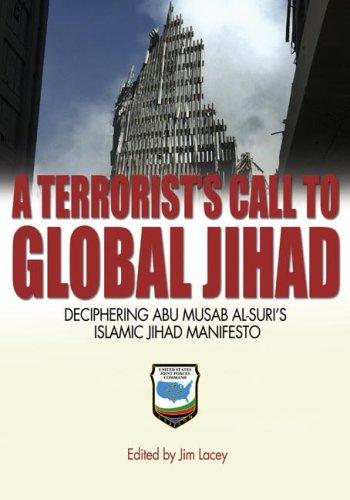
Book Review: A Terrorist’s Call to Global Jihad

Thursday, December 29th, 2011

A Terrorist’s Call to Global Jihad: Deciphering Abu Musab al-Suri’s Islamic Jihad Manifesto by Jim Lacey (Ed.)

Previously, I read and reviewed Brynjar Lia’s Architect of Global Jihad, about Islamist terrorist and strategist Abu Musab al-Suri. A sometime collaborator with Osama bin Laden and the AQ inner circle, a trainer of terrorists in military tactics in Afghanistan and an advocate of jihadi IO, al-Suri was one of the few minds produced by the radical Islamist movement who thought and wrote about conflict with the West on a strategic level. Before falling into the hands of Pakistani security and eventually, Syria, where al-Suri was wanted by the Assad regime, al-Suri produced a massive 1600 page tome on conducting a terror insurgency,  The Global Islamic Resistance Call, which al-Suri released on to the jihadi darknet.

Jim Lacey has produced an English digest version of al-Suri’s influential magnum opus comprising approximately 10 % of the original  Arabic version, by focusing on the tactical and strategic subjects and excising the rhetorical/ritualistic redundancies common to Islamist discourse and the interminable theological disputation. There are advantages and disadvantages to this approach.

First, Lacey has produced a concise and readable book from a large mass of sometimes convoluted and repetitive theorizing that al-Suri strung together piecemeal, sometimes on the run or in hiding. For those interested in getting to the heart of al-Suri’s nizam la tanzim strategic philosophy, A Terrorist’s Call to Global Jihad is an invaluable resource for strategists, counter-terrorism specialists, tactical operators,  law enforcement and laymen. Secondly, it is also a useful reference for policy people to see through al-Suri’s eyes the internal political and philosophical divisions within the radical jihadi community. al-Suri himself writes very ambivalently about 9/11 as a great blow against America and yet a complete calamity in it’s effects for the “jihadi current” that destroyed everything the Islamist revolutionaries had so painstakingly built, including the Taliban Emirate. Thus a climate was created by the American counter-attack where old methods of struggle were no longer useful and jihadis must adopt radically decentralized operations ( what John Robb terms Open-Source Warfare; indeed it is clear to an informed reader that al-Suri, a wide-ranging intellectual rather than a narrow religious ideologue, was influenced by Western literature on asymmetric warfare, 4GW, Three Block War  and COIN).

The drawback to this approach is more for scholars looking at the deeper psychological and ideological drivers of jihadi policies, strategy and movement politics. The religious questions and obscure Quranic justifications cited by Islamist extremists that are so tedious and repetitive to the Western mind are to the jihadis themselves, of paramount importance in establishing both the credentials of the person making an argument but also the moral certainty of the course of action proposed. al-Suri himself had some exasperation with the degree to which primarily armchair ideologues, by virtue of clever religious rhetoric, could have more influence over the operational decisions of fighting jihadis than men with field experience like himself. By removing these citations, an important piece of the puzzle is missing.

The Musab al-Suri whose voice appears in A Terrorist’s Call to Global Jihad is consistent with the one seen in Lia’s book, dry, sardonic, coldly hateful toward the West and highly critical of the jihadis own mistakes, laden with overtones of pessimism and gloom. al-Suri did not envision a quick victory over the West and wrote his manifesto as a legacy for future generations of Islamist radicals because the current one was nearly spent after the American onslaught and poorly educated in comparison with predecessors like the generation of Sayid Qutb.

Strongly recommended.

Zen’s Iconic Compare and Contrast: Nine Years

Saturday, December 24th, 2011

I would like to depart from my usual style and take a leaf out of Charles Cameron’s playbook – notably his last post. Consider this a “Part II”.

Here are my selections:

Friendship Bridge, Afghanistan – February 16, 1989

….Many troops wondered how the Iraqis, whom they had worked closely with and trained over the past year, would react when they awakened on Sunday to find that the remaining American troops on the base had left without saying anything.

“The Iraqis are going to wake up in the morning, and nobody will be there,” said a soldier who identified himself only as Specialist Joseph. He said he had emigrated to the United States from Iraq in 2009 and enlisted a year later, and refused to give his full name because he worried for his family’s safety…..

Tampa Highway, Iraq – December 18, 2011

War without a strategy is like driving without a map – and in both cases you may not like your destination.

Two on Strategic Thinking

Friday, December 16th, 2011

Colonel Paul Yingling hits a theme much beloved here at ZP:

An Absence of Strategic Thinking

….The future of Pakistan is more difficult to predict. It could limp along as a failing state, or suddenly fail with little warning. The West knows so little about the internal dynamics of the country that virtually any significant change will come as a surprise. Although the exact timing and extent of state failure in Pakistan is difficult to predict, the consequences of such failure are not. Partial or total state failure of a nuclear Pakistan would pose a grave threat to the United States. In such a scenario, the White House would not know who controlled Pakistan’s nuclear arsenal. A nuclear-armed al Qaeda, Lashkar-e-Taiba, or other extremist group would be difficult if not impossible to deter.

ISAF’s exit from Afghanistan has much more to do with American domestic politics than with coalition strategy. American fiscal constraints and political paralysis set this course in motion long ago, and corrective measures are unlikely in the absence of a crisis. Too often, what passes for strategic thought in the United States is actually a struggle among self-interested elites seeking political, commercial, or bureaucratic advantage. Such behavior is the privilege of a country that is both rich and safe. However, a pattern of such behavior is self-correcting: no country that behaves this way will stay rich or safe for long.

Hat tip to The Warlord Loop and SWJ Blog.

Wiggins at the Wohlstetterian Opposed Systems Design blog weighs the question of a grand strategy board and finds it to be wanting:

Everyone wants their greybeard panel but relationships and timing matter

….The influence of these sorts of boards depends massively upon relationships and timing. Senior leaders have tight schedules and must makes decisions with whatever information they have at hand. If the SECDEF or the National Security Advisor knows and trusts someone, even if they don’t have a formal role in government, then an informal conversation with that person might be able to help. But what the senior leader needs at that point is cogent and focused advice, which is why the relationship (does the leader trust the adviser? does the adviser understand what the leader really needs?) and timing (can the right advice be delivered at the right time?) matter so much.

Strategy, fundamentally, cannot be routinized. It cannot, therefore, be broken down into a bureaucratic process. Thus, any attempt to improve strategic thinking through bureaucratic reorganizations misses the point. That reality is unsatisfying and messy but accurate.

A fair point by Wiggins. The existence of a grand strategy board would be a goad to remind an incoming administration that “strategy” is important and would put a tool at their disposal. It would not guarantee strategic thinking in policy making any more than the NSC guarantees an orderly national security decision making process.

Presidents currently get the NSC they want rather than the one that they deserve, and the same would be true of a grand strategy board. Some who recognized the utility though, would use it well.

COIN may be Dead but 4GW has a New Lease on Life

Monday, December 12th, 2011

As I had predicted, a global recession, budgetary chicken in Congress and national weariness after a decade of war in Afghanistan and Iraq have forced a public rethink of the prominence of counterinsurgency doctrine in America’s military kit.  Colonel Gian Gentile, long the intellectual archenemy of FM 3-24 and the “Surge narrative” has pronounced COIN “dead” and even CNAS, spiritual home of COIN theory inside the Beltway, is now advocating COIN-lite FID (Foreign Internal Defense). As this entire process is being driven by a global economic crisis, there is another aspect to this American inside-baseball policy story.

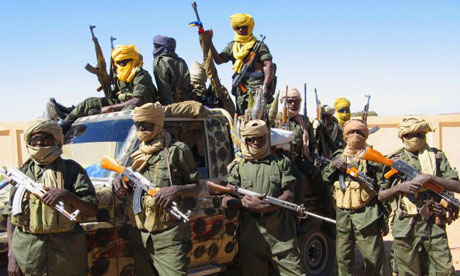
While COIN as the hyperexpensive, nation-building, FM 3-24 pop-centric version of counterinsurgency is fading away, irregular warfare and terrorism are  here to stay as long as there is human conflict. Moreover, as economic systems are to nation-states as vascular systems are to living beings, we can expect an acceleration of state failure as weak but functional states are forced by decreased revenues to reduce services and diminish their ability to provide security or enforce their laws. The global “habitat” for non-state, transanational and corporate actors is going to grow larger and the zones of civilized order will shrink and come under internal stress in the medium term even in the region that Thomas P.M. Barnett defined as the “Core” of globalization.

The theory of Fourth Generation Warfare is helpful here. Many people in the defense community object to 4GW thinking, arguing that it is a poor historical model because it is overly simplified, the strategic ideas typified by each generation are cherrypicked and are usually present in many historical eras (albeit with much different technology). For example, eminent Clausewitzian strategist Colin Gray writes of 4GW in Another Bloody Century:

….The theory of Fourth Generation Warfare or 4GW merits extended critical attention here for several reasons. It appears to be a very big idea indeed. It’s author [ William S. Lind] and his followers profess to be able to explain how and why warfare has evolved over the past 350 years and onto the future….

….Talented and intellectually brave strategic theorists are in such short supply that I hesitate before drawing a bead on Lind and his grand narrative of succeeding generations of warfare. Nonetheless, there is no avoiding the judgment that 4GW is the rediscovery of the obvious and the familiar. 

4GW theory is not something that can be defended as having sound historical methodology. However, it works well enough as a strategic taxonomy of mindsets and political environments in which war is waged; particularly with the inclusion of the van Creveldian assumptions of state decline, it is a useful tool for looking at warfare in regions of weak, failing and failed states. The same global region Dr. Barnett has termed “the Gap” in his first book, The Pentagon’s New Map.

Tom predicated his geostrategy on the power of globalization being harnessed with judicious use of Core military power to “shrink the Gap” and provide connectivity as an extremely powerful lever to raise up billions of the world’s poor into a more stable, freer and middle-class existence. While that still holds, the flipside is that times of  sharp economic contraction limit the ability of the Core, led by the United States, to intervene robustly, permitting the “bad guys” to make use of connectivity and black globalization for their own purposes. Where the great powers are disunited, disinterested or increasingly in the case of European power projection, disarmed, the Gap could potentially grow.

A new Iraq or Afghanistan sized campaign is not in the American defense budget for at least a decade. Or NATO’s. Hence the newfound interest in cheaper alternatives to massive intervention on the ground, for which the Libyan campaign might charitably be classed as an “experiment” ( where it was not simply bad strategy and negotiated operations) or as a multilateral reprise of Rumsfeldian ideas of transformative, light and fast military force mashed up with Reagan Doctrine proxy warfare, justified under a new ideological theory of R2P.

These are rational policy responses to conditions of parsimony, but it also indicates a coming era of strategic triage rather than grand crusades in using military force to stabilize parts of the global system.  The US and other great power  are going to be more likely to follow Teddy Roosevelt’s advice to “Do what you can, where you are, with what you have” than they are to heed JFK’s call “to pay any price, bear any burden”. The politics of hard times means that we will be minimizing our burdens by replacing, where we can, boots with bots, bullets with bytes and Marines with mercs. Not everywhere, but certainly on the margins of American interests.

Beyond those margins? We will aid and trade with whatever clients can maintain a vestige of civilized order without too much regard to the niceties of  formal state legitimacy. Too many states will be ceding autonomy to subnational and transnational entities on their territory in the next few decades and we will have to abide by that reality if regions of the world become Somalia writ large. What to do? A number of recommendations come to mind:

  • Get our own economic house in order with greater degrees of transparency and adherence to rule of law in our financial sector. Legitimacy and stability, like charity, begins at home.
  • Adopt policies that strengthen the principle of national sovereignty and enhance legitimacy rather than weaken or erode it. This does not mean respecting hollow shells of fake states that are centers of disorder, but respecting legitimate ones that effectively govern their territory
  • Foreign policies that reject oligarchical economic arrangements in favor of encouraging liberalization of authoritarian-autarkic state economies prior to enacting political reforms ( democracy works better the first time on a full stomach).
  • Create a grand strategy board to advise senior policy makers and improve the currently abysmal level of strategic calculation and assessment prior to the US assuming open-ended commitments to intervention
  • Accept that the Laws of War require a realistic updating to deal with the international equivalent of outlaws, an updating that contradicts and rejects the 1970’s era diplomatic effort to privilege irregular combatants over conventional forces.
  • Fighting foreign insurgencies is something best done by primarily by locals, if willing, with our aid and advice. If those with the most to lose are not willing to stand, fight and die then they deserve to lose and the US should either eschew getting involved at all or resolve to secure whatever vital interest that exists there by brute force and make certain that reality is clearly communicated to the world (i.e. Carter Doctrine).  Truly vital interests are rare.

Switch to our mobile site