zenpundit.com » Mexico

Archive for the ‘Mexico’ Category

Are Insurgencies “Antifragile”?

Thursday, May 16th, 2013

I have been reading Nassim Nicholas Taleb’s latest book,  Antifragile . It’s a highly intriguing book and I will give it a full review soon, but Taleb’s core concept of antifragility is important  and lends itself to wide application. Here’s Taleb on what constitutes “antifragility” – things that gain or improve with disorder – which he was careful to distinguish not just from “fragility” but also from “robustness” and “resilience”:

Almost all people answer that the opposite of “fragile” is “robust”, “resilient” , “solid”, or something of the sort. But the resilient, robust (and company) are items that neither break nor
improve, so you would not need to write anything on them – have you ever seen a package with
“robust” stamped on it? Logically, the exact opposite of a “fragile” parcel would be a package on which one has written “please mishandle” or “please handle carelessly”. It’s contents would not just be unbreakable, but would benefit from shocks and a wide array of trauma. The fragile is the package that would be at best unharmed, the robust would at best and at worst unharmed. And the opposite of fragile is therefore what is at worst unharmed. [31]

Italics in original.

Taleb uses a number of metaphors – the Phoenix, the Hydra – as well as examples to get across the point that an antifragile entity overcompensates in reaction to stress/damage/disorder by becoming better, growing stronger, more powerful, adaptively improving itself. Think of the effects of weight training in building muscle or a wildfire spurring bountiful growth in an ecosystem. There’s more to Antifragile than this but the gist is sufficient for now.

Which brings me to the question, “Are insurgencies antifragile?”

The study of insurgency, terrorism and revolution, while important and useful tend to suffer from several drawbacks. One is compartmentalization and academic specialization. As Robert Bunker pointed out in Narcos Over the Border,  a problem like “criminal-insurgency” attracts very different reactions from Law enforcement, intelligence analysts, the military, counter-terrorism officials and other experts (to say nothing of politicians) which makes consensus over a common analytic framework very difficult. Sometimes even defining the problem across domains is frustrating. As a result, many studies are too narrow and the few admirably ambitiously broad ones are deeply stamped in the political lens of the era in which they were researched and written – i.e. imperialist Small Wars, the Cold War, the War on Terror, Pop-centric COIN of Iraq and Afghanistan wars etc.  It is a subject that requires both more (and more intellectually creative) scholarship and a greater degree of synthesis.

In the meantime, I’d like to offer some speculation in an effort to answer the question:

  • The characteristics of “antifragility” in terms of at least some kinds of insurgency bears a striking resemblance to that of “wicked problems“, which has also been used to categorize some enduring irregular conflicts. Particularly in the sense of not having natural stopping points , manifesting complex interdependencies and resistance to simple, silver bullet solutions that could destroy it.
  • Moreover, most successful insurgencies are not, contrary to Maoist theory, autochthonous  – they draw many resources from external sources – black globalization, foreign patrons, legitimate trade, fundraising – and from the very state waging counterinsurgency warfare against them. The Afghan Taliban would be a much poorer military force without the vast amount of American aid passing through the hands of Pakistan and the Karzai regime
  • An insurgency’s claim to being “antifragile” may rest as much or more upon the general political and socioeconomic environment being relatively chaotic than on the nature of the insurgent organization itself.  The Chinese, Russian and Lebanese civil wars, Mexico’s narco-insurgency, West Africa and Afghanistan in the 1990’s, the Congo basinand Iraq in the 2000’s all had polycentric and disorderly environments that allowed  irregular groups to rapidly rise and fall on a local and regional basis. By contrast, “bilateral” insurgency vs. state dynamics can stabilize conflict for decades
  • An insurgent organization may lose antifragility as it restructures itself over time to become either more robust (ex. –Hezbollah) subnational entity or to accept greater fragility in order to acquire state-like hierarchical advantages ( political discipline and specialization). Note that “fragile” does not mean “weak”, it means “vulnerable”. States can be very strong and concentrating massive amounts of resources and coercive force, yet be strangely vulnerable to internal coups, popular uprisings, economic collapse, strategic myopia or even natural disasters. One of the great dangers today are complex systems that combine epic power with extreme fragility – small disruptions by irregulars yield huge ROIs.
  • States might be able to seek a strategic advantage over insurgencies by improving their robustness and smother the relatively ineffectual kinetic attacks of guerrillas or terrorists with inertia, refusing to “feed” the growth of an antifragile insurgent opponent, starving them of material resources and political oxygen. India has trucked along with something like seventeen ongoing insurgencies and episodic acts of major terrorism for decades without the Indian state remotely being in jeopardy of being overthrown by, say, the Naxalites, Sikh extremists or Kashmiri Islamists. Compare that with the rapid collapse or retreat of the state in places like Somalia, Yemen, Libya, Mali, Syria and so on.
  • The effects of globalization and information technology, the ability to have  John Robb’sopen source” decentralized, fast-evolving, insurgencies, give an an impetus to insurgencies becoming antifragile. At a minimum, it improves the odds.
Comments welcomed

History doesn’t rhyme — it swears

Friday, May 10th, 2013

[ by Charles Cameron — finding both rhyme and obscenity here, to be honest — San Salvador then, Mexico today ]
.

**

I once had the privilege of hearing Carolyn Forché read her poems.

You can read and hear her reading the prose poem from which that excerpt is taken here — for richer background on her experiences in El Salvador, see her extraordinary essay El Salvador: An Aide-Mémoire in Granta, or find a copy of The American Poetry Review for July/August 1981, pp. 3-7.

Sources:

  • Carolyn Forché, The Country Between Us
  • Sunil S, El Narco and the Jihad in Pragati, illus credit: El cartel de San Luis
  • **

    I know, in the title of this post I’m conflating a quote attributed to Mark Twain, “History doesn’t repeat itself, but it rhymes”, with Bob Dylan‘s “Money doesn’t talk, it swears”. So be it.

    As Dylan also once said: “I said that.”

    An Insurgency Coming to a Place Near You?

    Tuesday, October 2nd, 2012

    Mayor Rahm Emanuel has taken criticism for Chicago’s skyrocketing homicide rate which stands this year at a shocking 19.4 per 100,000 residents. This is roughly triple the murder rate in New York City, is worse than in perennially crime-ridden Oakland and is within shouting distance of  war-torn Afghanistan and Mexico, which are fighting vicious insurgencies. Even for Chicago, the current level of street violence is unusually brazen.

    Chicago has always taken an ambivalent attitude toward it’s enormous, 100,000 strong, network of rival street gangs. Traditionally, part of the social fabric of Chicago’s ethnically divided wards, Chicago’s street gangs were far better organized and more ruthlessly disciplined than street gangs elsewhere, which allowed them a limited entree into participation in local politics. The Chicago Outfit from Al Capone’s day on controlled the votes in the old 1st Ward, ran several near suburbs like Cicero and recruited especially brutal sociopaths from the Forty-Two gang; the legendary Mayor Richard J. Daley in his youth had been a thug for the Hamburg Athletic Club, the Democratic Party’s election-time enforcers in the 11th Ward. In more recent decades, the Black P. Stone Nation/El Rukns were Federal grantees and a number of powerful street gangs today use the Black United Voters of Chicago as a front group and cut-out to make deals with local politicians and swing aldermanic races.

    However disturbing the status quo may have been in Chicago, it is potentially changing for the worse. Much worse.

    DEA BOSS: MEXICAN DRUG CARTELS ARE SO DEEPLY EMBEDDED IN CHICAGO, WE HAVE TO OPERATE LIKE WE‘RE ’ON THE BORDER’ 

    The city may be nearly 2,000 miles from Mexico, but the country’s drug cartels are so deeply embedded in Chicago that local and federal law enforcement are forced to operate as if they are “on the border,” according to Jack Riley, special agent in charge for the Chicago Field Division of the Drug Enforcement Administration (DEA).

    Because of Chicago’s location in the heart of the United States, its large Mexican population and its abundance of street gang activity, drug cartels have designated the city as one of its main hubs of operation in America, Riley told TheBlaze in an exclusive interview. Inevitably, the increasing presence of cartels has also contributed to the Windy City’s skyrocketing violent crime rates, the DEA boss revealed.

    “My opinion is, right now, a number of the Mexican cartels are probably the most organized, well-funded, vicious criminal organizations that we’ve ever seen,” said Riley.

    Right now, at least three major Mexican cartels are fighting for control of billions of dollars worth of marijuana, cocaine and heroin in Chicago. That includes the ruthless Zetas and the powerful Sinaloa cartel, run by Joaquin “El Chapo” Guzman, arguably the most wanted man in North America, and perhaps the entire world….

    ….“If I pitted the Italian organized crime groups against for instance, ‘Chapo’ Guzman and the Sinaloa Cartel, it wouldn’t be a fight,” he told TheBlaze. “In my opinion, Chapo Guzman is the new Al Capone or Scarface to Chicago. His ability to corrupt, his ability to enforce his sanctions and to really do with an endless supply of revenue is in my opinion far greater than older Italian organized crime.”

    ….The drug trafficking organizations are based in Mexico but, he explained, they have operatives in various cities across the nation. In Chicago, local gangs are used by cartels as a means to get their products onto the streets without putting their operations at risk, all the while raking in massive profits from drug sales. Cartels move every drug you can think of, including cocaine, marijuana, heroin and methamphetamines.

    Overall, police records indicate Chicago’s murder rate is up 31 percent from 2011. Further, Mayor Rahm Emanuel in August requested federal assistance to combat violence and drugs. The Chicago Sun-Times reported on Aug. 31 that at least 82 people were injured or killed in shootings within a one week period, 10 in one night alone. Additionally, as of Aug. 23, there had been 351 shooting deaths so far in 2012….

    Read the rest here.

    The vast profit margin in illegal drug sales and the formidable manpower of Chicago street gangs have led the Mexican cartels to make a strategic choice to stay in the background, as hegemonic partners with local gangbanger street crews and not make the kind of flamboyantly ghoulish “narcocultas” attacks or DIY militarization typical of the Mexican criminal insurgency.  Sharing profits and letting locals run the major risks with law enforcement is a cartel strategy to avoid antagonizing the Federal government into treating their drug operations as ” international terrorism” with the draconian response that would imply, here, inside Mexico and further abroad. The same reason the cartels do not try to kill large numbers of American tourists or assassinate prominent Americans in Mexico, which they could easily do.

    However, the cartels could shift from transnational organized crime activities to exporting narco-insurgency to America under a number of scenarios:

    •  Cartel vs. Cartel – a cartel losing to rivals in Mexico breaks the informal rule against high profile attacks inside the US by striking it’s enemies here, inviting a cycle of severe retaliation and drawing in local allies – Mexican Mafia, MS-13 etc.
    • Federal Squeeze – law enforcement gets really serious about systemically destroying a particular cartel, rooting out it’s illicit money stashed in the US banking system and legal investments and jailing everyone in sight under RICO and extraditing everyone else from Mexico. The narcos will employ “silver or lead” tactics to intimidate and co-opt local officials and whole communities and then escalate into symbolic terrorism.
    • US Intervention – American assistance to the government of Mexico against the cartels tips the balance in Mexico’s civil war to what the cartels see as an existential threat ( i.e. drone targeted killings) and the narcos respond with furious attacks against American soft targets intending to create high body count events.

    There is nothing magical about the US-Mexican border that prevents the ghastly violence in Mexico from occurring here – it is a rational calculation by cartel leaders that such behavior is not worth the risk of a stand-up fight with the US military and intelligence agencies – the cartels are only just holding their own against the lesser capabilities of the government of Mexico However, if cornered and desperate, the cartels are capable of rapidly escalating the violence in specific American communities to 2006 -2007 Iraq insurgency levels – in places like Chicago. It could happen faster than anyone believes possible.

    The political effect of this will be a riptide – and none of it to the good.

    Crucifixion revisited: from Yemen to Mexico

    Monday, September 10th, 2012

    [ by Charles Cameron — comparative contemporary crucifixions, an ugly, ugly business whenever, wherever and by whomsoever… ]
    .

    I don’t suppose MEMRI — which is after all, as its name suggests. focused on the Middle East — will be taking note of the recent crucifixion in Michoacan, Mexico, but any ZP readers who saw my recent post about the crucifixion MEMRI documented in Yemen (upper panel) might find the following from a “technical note” at SWJ about the Michoacan crucifixion of a rapist (lower panel) illuminating:

    It would have been more expedient to simply hang Martinez Cruz by a rope over the traffic sign but instead the time and effort was taken to symbolically crucify him. This act, along with the accompanying narco message, the way in which the alleged rapist was forcibly taken from police custody, the severing of the male genitalia, and the fact that the incident took place in Michoacán all provide a “contextual basis” which suggests that elements of either La Familia or Los Caballeros Templarios (the Knights Templars) splinter group/successor are involved with this abduction and subsequent torture-killing. Both groups in the past have carried out public humiliations and torture-killings against those they deem as undesirables and threats to civil society. Viewing themselves as protectors of the citizenry of Michoacán, both groups, which expose cult-like Christian beliefs, would thus likely view such a symbolic crucifixion as indicative of god’s judgment on a sinner. If this interpretation is accurate, then this barbaric incident would represent another small escalation in radicalized Christian cult-like behaviors emerging in Michoacán.

    Robert Bunker, with whom followers of the blog will be familiar, wrote this piece for SWJ and has added this in a striking addendum:

    A recent precedent for the threat of Christians crucifying others in Mexico exists. In September 2011, seventy evangelical protestants were forced to flee from the village of San Rafael Tlanalapan, about 45 miles West of Mexico City, after being threatened with lynching and crucifixion if they remained in the village. The instigator of the threat was Father Ascensión González Solís, the local parish priest, who was subsequently forced to retire.

    **

    Dangling thoughts:

    Religious sanction can at times elicit violence from the merely pious…
    The religiosity of the extremely violent is itself liable to be extremely violent…

    Introducing Urb.Im

    Tuesday, July 31st, 2012

    [ by Charles Cameron — my new job, solutions-oriented thinking / writing about urban poverty in 6 cities ]
    .

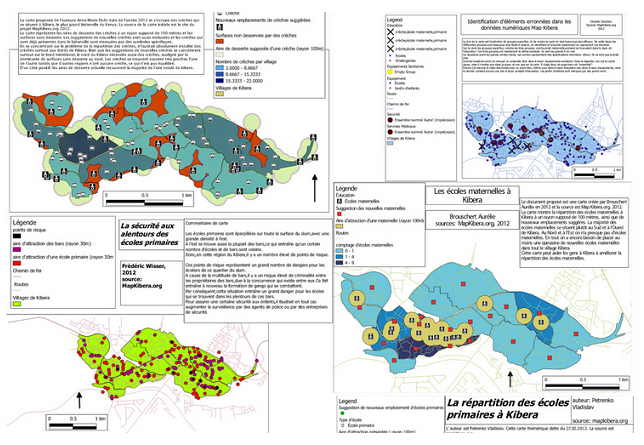
    http://zenpundit.com/?attachment_id=12052

    Mapping Kibera, Nairobi

    .

    Yesterday was my first day at work on my new job with Urb.Im:

    The urb.im network is a global community working for just and inclusive cities. It connects practitioners in six cities and throughout the world to establish an international community of practice and learning, sharing ideas and experiences in order to innovate, replicate, and scale working solutions to the problem of urban poverty. urb.im is a project of Dallant Networks and the Ford Foundation.

    The six cities we’re focusing on are Mumbai, Rio, Lagos, Mexico DF, Nairobi and Jakarta — and we are strongly solutions-oriented.

    **

    I imagine there will be considerable overlap between the diverse interests of those who follow Zenpundit and the specific cities and issues I’ll be working with at Urb.Im — so this is both a news bulletin about my new employment (suggesting I’ll now be focusing my attention on a new problem and solution set), and an invite to ZP readers to steer me towards relevant materials (eg via hipbonegamer on Twitter), and to join in the discussions at Urb.Im as appropriate.

    One of my ambitions is to get some significant cross-website conversations going, so that the widest array of bright minds and good hearts gets together to spark new ideas and possibilities, and put existing resources on the map for all interested parties…

    **

    And speaking of mapping

    The illustration above is of a map of schools in Kibera, Nairobi, one of the largest informal settlements in the world — mapping both problem areas and available solutions is a key element in the kind of work we’ll be doing. For more details on mapping Kibera, see this Urb.Im page, and to download and enlarge the Kibera education-map image, go here.


    Switch to our mobile site