zenpundit.com » Failed State

Archive for the ‘Failed State’ Category

Two Cheers for the State?

Wednesday, December 12th, 2012

An excellent post from Adam Elkus – strongly recommended!

The State Problem In National Security Policy

….The report makes a lot of comments about the rise of individual autonomy, the empowering of regional network-cities, and technology’s acceleration of the power of non-state actors. Wired interpreted part of this as signaling a decline of the statewhich has been a popular theme since Martin van Creveld’s work on theTransformation of War. I think that is an accurate characterization of the parts of the 2030 report that talk about the empowerment of non-state actors and the rise of international networks. I’m less interested in the report, though, than in the general narrative of state decline in national security policy discourse.

We’ve heard that states are in decline, and both benign and malign networks and private actors are on the rise. This isn’t a new theme—if you look back a few decades the rise of multinational corporations and the multilaterals prompted a similar debate about sovereignty and power in the modern world. The state-centric defense practitioner is enjoined to move beyond caring about states and embrace a new reality.

…. What we have been dealing with, however, is an unfortunate tendency to write the non-state actor and transnational network out of the last few centuries of history. But he (or she) stubbornly refuses to go away. We can talk about some of the reasons why this might be the case in the international environment but it is also worth talking about why we often assume much more coherence and cohesion in our domestic environment than reality may justify.

….In Charles Tilly’s book Democracy, he argues that four processes are necessary to create and sustain a democratic state: the growth of state capacity by suppressing alternative sources of power, the reduction of categorical inequalities, and the integration of strong tie-based trust networks into public life. Warlords and kingpins that predate make it difficult for rights to be guaranteed. Categorical inequality lessens the ability of the people to meaningfully control their own destiny. And strong trust networks that cannot express themselves in political and social life also have the potential for predation and the erosion of state authority. Tilly casts these processes as never-ending in scope, and states are capable of backsliding on any one of them.

Very rich food for thought.

Trust networks are an interesting way to look at broader social networks and discern, at times, the presence of modularity (and therefore specialized skills, capacities, knowledge etc.) within a looser network structure (weak ties and links vs. highly interconnected sets of hubs with strong ties). We tend to graph these things in simple diagrams, like concentric circles with “al Qaida hard core” in the center, but really, they are more akin to clumping or clotting or uneven aggregation within a less dense field of connections.

Adam is also right that the irregular, the illegal, the tribal, the secret society, the rebellious peasant was largely ignored by nationalistic  historians in the late 19th and early to mid 20th century – and when they came back in vogue in the 1960’s with revisionist, labor, social, cultural etc. schools of historians, they tended to groan under the heavy yoke of dogmatic Marxist class analysis and then later the radical academic obsessions with race, gender and sexual orientation “oppression”. Too seldom, were these people and their doings found to be interesting in themselves so much as puppets for a very tortured, abstract passion play to exorcise demons and pursue petty grudges against other scholars.

In any event, Adam is worth reading in full.


The Last Lion, Winston Spenser Churchill, Defender of the Realm, 1940-1965 — finally released!

Saturday, November 3rd, 2012

[by J. Scott Shipman]

The Last Lion, Winston Spenser Churchill, Defender of the Realm, 1940-1965, by William Manchester and Paul Reid

In the 1980’s, William Manchester wrote two of three planned volumes on the life of Winston Churchill. He had notes for the final volume but illness prevented him from completing. Instead, he brought in Paul Reid to finish his masterpiece. While it took 25 years, the wait was well worth it; Reid thus far (I’m halfway through) has channelled Manchester’s style and presenting a seamless connection to the first two volumes.

Strongest recommendation.

Cross posted at To Be or To Do.

Nir Rosen Among the Alawites

Thursday, September 20th, 2012

Controversial journalist Nir Rosen is, by my standards, a left-wing extremist with carcinogenic political views. On the other hand, he is also a fearless and skillful war correspondent who goes places to report where few others dare; as a result, Rosen is usually worth reading, particularly as he seldom is treading a well-worn path:

London Review of Books: Among the Alawites -Nir Rosen reports from Syria 

….When Abu Laith took me to Rabia itself, news of our arrival spread quickly. Thousands of residents staged a seemingly spontaneous but clearly sincere demonstration in support of the regime in the centre of town, next to a statue of Hafez al-Assad holding an olive branch and a sword. The statue, paid for by locals, was erected after the uprising started. Behind it was a massive poster with a picture of Hafez and Bashar. On it was written ‘Rabia is the lion’s den,’ a play on the word assad, which means ‘lion’. I was dragged from house to house so people could speak of their dead and wounded relatives, and of Rabia’s 42 martyrs. I told one group of local men that when I visited opposition strongholds like Baba Amr in Homs I always heard similar stories about fathers or sons being martyred. ‘Our sons were just going to work,’ an army colonel whose nephew was killed in Idlib said in reply. ‘There is a difference between killing a man going to work for the state and killing an armed man taking up weapons against the state. Is it peaceful demonstrators who kill five officers at a checkpoint?’

For the past year Rabia’s Alawites have clashed with neighbouring Sunni villages. Last summer the town’s students couldn’t travel into the city of Hama to take their exams because the opposition had blocked the road. Around thirty Alawite families from one nearby majority Sunni village have settled in Rabia, feeling it was no longer safe to stay where they were. The displaced families were disappointed with the government’s response. ‘We didn’t have any weapons or we would have fought back,’ one man told me. ‘They should have sent in tanks but the opposition blocked the roads. We want the state to solve our problems and the army to return us to our land. The army has to enter the villages, but the army is busy in Hama. Why is the state taking its time?’ Abu Laith’s father, a retired soldier, agreed. ‘Only the army can solve this,’ he said. ‘If we respond ourselves it will be seen as sectarian violence and other villages will join them against us. They will outnumber us.’

From Rabia I headed north-west towards Aziziya, a remote Alawite village which has clashed with the neighbouring Sunni village of Tamana. As in most Alawite villages, the majority of its men work in security or the army. Its Sunni neighbours all support the opposition, and opposition militias have been operating in the area since last spring. Salhab, the nearest town of any size, contains hundreds of displaced Alawite mothers and children who have fled the village. The fight between Aziziya and Tamana showed no sign of abating and in the town I found several families in a near hysterical state. A woman who’d recently reached Salhab shouted at me: ‘We left under fire! Our dignity is precious! Our leader is honourable! They are traitors! Everything for Bashar!’

The Alawites and Syria’s Christian minorities are not going to fare well if Syria falls to the increasingly Salafist-tinged opposition. Their back is against the wall. The Druze and Kurds, with potential ethnic allies in neighboring states, may have greater leverage if the Baathist regime collapses.


Turning Away From Strategy

Thursday, August 23rd, 2012

It appears that the Pentagon no longer intends to educate the most talented members of the officer corps to think strategically.

I say this because the status of the premier professional military education institutions – the war colleges and NDU – have been devalued, their leadership slots demoted and their educational mission degraded. As a guest columnist for Tom Ricks noted back in June:

….The new uniformed leadership of the Armed Forces, i.e., General Dempsey and his staff, apparently intend to prune NDU back to where it was a few decades ago. There will be some modest resource savings, but since the entire university budget doesn’t amount to the cost of a single joint strike fighter, one has to wonder what is motivating all of what is happening here. In the cuts that have been discussed, Dempsey’s deputy, Marine Lt. Gen. George J. Flynn has wielded the meat axe, often with the aid of micromanaging action officers. No one here in the rank-and-file is sure if the urbane chairman is on board with the details of all of this. (Ironically, both the chairman and J-7 are NDU graduates with advanced degrees.)

This set of changes took place in stages. First, while very few general or flag officer slots were cut in the armed forces, the three-star president of the university slot was downgraded to two, and the school commandants, downgraded from two to one star. No big deal, one might say, but one would be wrong, very wrong. A three star in Washington can go head-to-head with a principal on the joint staff or a senior OSD bureaucrat to protect the university. To compound the problem, the last three star president was retired in the spring and the university was left for a few months under the command of a senior foreign service officer, a former ambassador, a woman of great diplomatic talent and experience with no clout in the Pentagon. The new commandant — a highly regarded Army two-star — will not report until deep into June, when all or most of the cuts have been set in concrete. (Interesting question: can an employee of the State Department legally or even virtually assume command of a DoD organization?)

….A new “charter” was subsequently published by the Chairman. It focused the university on joint professional military education and training, which in itself, is a good thing. Immediately, however, the research and outreach activities of the university, often more focused on national strategy than military affairs, came under intense scrutiny. These outfits had grown way beyond their original charters and had become effective and highly regarded servants of a wider interagency community. Much of their work was not done for the joint staff but for OSD Policy, and some of that in conjunction with civilian think-tanks. The research arm of the university was productive, even if not always useful in a practical way to the joint staff. It also was helpful to the colleges in a much more proximate and direct fashion than other think tanks, like RAND.

….The research, gaming, and publications arms of the university — a major part of the big-think, future concepts and policy business here — will be cut to somewhere between half and a third of their original sizes. To make things worse, many of the specific cuts appear to have been crafted in the Pentagon, and nasty emails have come down from on high, about how the university is bankrupt and going into receivership, which was never the judgment of the military and civilian accrediting officials, who inspect us regularly and have generally given the university high marks.

If it would be impressive if some of our senior generals had been as effective on the battlefield as they are in the bureaucracy.

Uncreative destruction of intellectual seed corn is a bureaucrat’s way of telling everyone to shut up, don’t question and get in line. There’s nothing wrong with having excellence at joint operations as an educational goal for most future brigadiers and major generals but our future theater commanders, combatant commanders, service chiefs and their respective staff officers need something more – they need strategy.  More importantly, the Secretary of Defense, the President, the Congress and the American people need the DoD to have an in-house capacity to generate deeply thought strategic alternatives, question assumptions and red-team any self-aggrandizing options the services or bureaucracy feel like offering up in a crisis.

The motivation here is simple, really. If you put out all the strategic eyes of the Pentagon, then the one-eyed men can be King. Or he can always contract out his strategic thinking to highly paid friends to tell him what he wishes to hear.

Naturally, this will have bad effects downstream in a superpower whose civilian leadership seldom has as good a grasp of geopolitics and the fundamentals of classical strategy as they do of law or the partisan politics of running for office. They will be in need of sound strategic advice from uniformed military leaders and they will be much less likely to get it. Instead, they will have senior officers who are less likely to balk when the President’s back-home fixer turned “adviser” or superstar academic with delusions of grandeur pushes a half-baked plan at an NSC meeting to “do something”. When that happens, the jackasses kicking down this particular barn will have long-since retired and cashed out with consultancies and sinecures on boards of directors.

While a lack of strategic thinking can undermine even a lavishly funded and well-trained military, the reverse is also true; strategic leadership can revive an army that is but a half-dead corpse.

A brief illustration:


After WWI the two states that made the most extreme cuts in military power were defeated Germany and the victorious United States. Germany was forced to do so by Versailles, but responded by opting under General von Seeckt to reduce to 100,000 men by making the Reichswehr a qualitatively superior nucleus of a future expanded German Army. Prohibited from having mass, the Germans opted for class with every long-serving recruit being considered officer material and being superbly trained (even to the extent of covert training and weapons testing jointly with the Red Army deep inside the Soviet Union to evade Allied inspections). Von Seeckt also instituted a shadow general staff office that thought deeply about tactical lessons, operations and strategy for the next war. Without the Reichswehr being what it was it is highly dubious that Hitler could have so rapidly expanded the Wehrmacht into a world-class land fighting force in so few years time.

.

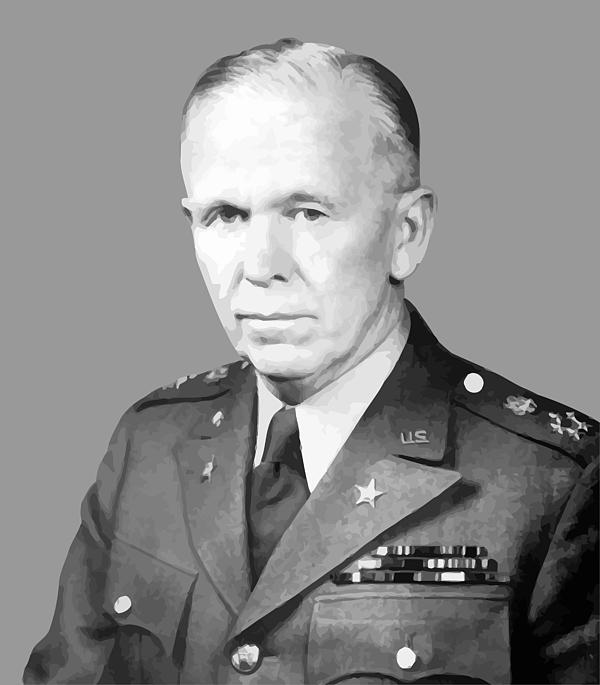
In contrast, the United States radically reduced the size of the regular Army and starved it of weapons, ammunition, gasoline, training and basic supplies. Promotions slowed to a crawl where ancient colonels and elderly majors lingered on active duty and future four and five star generals like Eisenhower, Patton, and Marshall all despaired and contemplated leaving the service. The Army’s – and to extent, America’s – salvation was in the fact that George Marshall persevered as a major and colonel in keeping a little black book of talented, forward thinking, officers and thought deeply and reflectively about building armies, helping enact “the Fort Benning Revolution” in military training. When FDR placed the power in Marshall’s hands as Chief of Staff he knew exactly what to do because he had a well-conceived vision of where the US Army needed to go to meet the national emergency of WWII. He was the American von Seeckt, except that Marshall was an infinite improvement morally, strategically and politically on his German counterpart. We were extremely fortunate to have had him.
.
We may not be as lucky next time.

Barlow on COIN and Failure

Sunday, July 29th, 2012

Some astute observations on COIN practice from the founder of Executive Outcomes, Eeben Barlow:

….Governments, despite often being the prime reason why an insurgency starts, are often only too keen to make the armed forces responsible for establishing workable governance in areas that have become positively disposed towards the insurgency.
As it is an internal problem, countering the insurgency is essentially a law enforcement responsibility. The problem is that often the law enforcement agencies do not realise that an insurgency is developing and through ignorance and denial, mislead government – and the nation – on the seriousness of the situation. This provides the insurgents with numerous advantages, most crucial being time to organise, train and escalate the insurgency.
The end goal of the insurgency is political in nature and therefore, the main effort aimed at countering it ought to be political and not militarily. This “passing the buck” approach places the armed forces in a position they can seldom if ever win as the military’s role is not to govern but to ensure an environment in which governance can take place.  
An insurgency is neither a strategy nor a war. It is a condition based on the perception(s) of a part of the populace that poor governance exists, that government only governs for its own benefit and that they – the populace – are being marginalised or politically suppressed. In reality, an insurgency is an internal emergency that, left unchecked, can develop into a civil war. The insurgency itself is a means to an end and it is an approach aimed at either weakening or collapsing a government’s control and forcing a negotiation in the favour of the insurgents.   
Read the rest here.
As a rule, countries whose citizens  are happy, prosperous and free seldom suffer an insurgency unless they are foreign proxies. Oligarchies however, are frequently the cradle of insurgency and revolution.

Switch to our mobile site