zenpundit.com » ideas

Archive for the ‘ideas’ Category

Guest Post: Shipman Reviews The New Digital Storytelling by Bryan Alexander

Thursday, May 12th, 2011

 

J. Scott Shipman, the owner of a boutique consulting firm in the Metro DC area that is putting Col. John Boyd’s ideas into action, is a longtime friend of this blog and an occasional guest-poster.

Book Review: The New Digital Storytelling

by J. Scott Shipman

Bryan Alexander’s  The New Digital Storytelling, Creating New Narratives With New Media is an excellent, highly readable, and comprehensive treatment of storytelling in our digital world. Dr. Alexander manages in 230 pages of text to capture the universe of available methods, processes, resources and tools available to storytellers, as of 2010. His 36 pages of notes and bibliography includes an exhaustive list of websites and sources used.

Dr. Alexander aimed his book at “creators and would-be practitioners,” storytellers looking for new digital ideas, to include teachers, marketers, and communications managers. Whatever your background, he assures in the introduction, “herein you will find examples to draw on, practical uses to learn from, principles to apply, and some creative inspiration.” I can’t speak for those in the target audience, but as one with but a casual interest in storytelling, I can say Dr. Alexander delivered! Over the course of the couple of days of reading, I came up with about a half-dozen ideas and discovered my MacBook Pro has a lot more under the hood than I ever appreciated or used.

That said, Dr. Alexander warns that his book is not a “hands-on manual” on the tech media discussed. In fact, he assumes the reader will not “be a technologist” and the material is presented accordingly. He says:

The New Digital Storytelling straddles the awkward yet practical divide between production and consumption, critique and project creation.”

The book is divided into four parts:

Part I Storytelling: A Tale of Two Generations

In Chapter 1 Dr. Alexander provides an unambiguous meaning to digital storytelling: “Simply put, it is telling stories with digital technologies.” The medium providing this review to you is my digital story about the book. But that is just the beginning; just about every digital device imaginable is being used to tell stories; blogs, social media, videos, and even in Twitter’s 140 character limit, storytelling genres are emerging [readers at zenpudit.com will recall Charles Cameron’s use of Twitter feeds following UBL’s death]. As Alexander points out, “no sooner do we invent a medium than do we try to tell stories with it.”

In Chapters 2 & 3, Dr. Alexander provides a history of digital storytelling in two parts; part one is what he calls “the first wave.” From foundations in the 70’s and 80’s (his reference to the 1983 movie War Games brought back memories) to the evolution and importance of hypertext. Alexander asks, “How do hypertexts work as digital stories? Users—reader—experience hypertext as an unusual storytelling platform. We navigate along lexia (“multiple readable chunks”) picking and choosing links to follow.” This point truly “clicked” for me; one of the pleasures of reading zenpundit.com is the ubiquity of supporting links and how sometimes these links lead to unexpected, but valuable adventures. Often I’ve landed in a place I would never have found if not for the first “story.” Alexander writes that Web 2.0 has allowed for “the ability to create content for zero software cost is historically significant, and now par for the course.” He points out with the ubiquity of hardware (both PCs and mobile devices) and the social element (social media, for example) a means of of delivery and an architecture are in place where potential storytellers have a low barrier to entry—to get their story out. Alexander includes gaming devices (mobile and console) in the review of the Web 2.0 phenomena.

Part II New Platforms for Tales and Telling

Chapter 4 is a comprehensive review of Web 2.0 storytelling and the fragility of systems existing today, but perhaps gone tomorrow. Dr. Alexander covers distinct types of blogs used in sharing stories; blogs are ubiquitous and the barriers to entry negligible. He covers epistolary novels and diary/journal-based stories and provides numerous examples. One example was News from 1930, which “posts selections from each day’s Wall Street Journal” during the early days of the Great Depression—in essence, a blog as a realtime history lesson. But as we know, the blogosphere is bigger than history, there also exists a market for various fictional stories which include reader interaction/collaboration. Also included are examples of character blogging (as Alexander notes: “Bloggers are characters”) where personalities are revealed over time in a serial nature. Twitter has developed into a unique format for storytelling, forcing the user to pack as much as possible in precious few words/characters. Wikis, social images and Facebook are also covered and explained in ways that made me think about “how” I use social media.

Chapter 5 covers in detail social media storytelling…and this is one of my favorite chapters. Alexander explains podcasts in a way that was accessible and in a way that made me want to “do” a podcast! A podcast is limited to audio, but a web video places a whole new spin on our ability to digitally tell our stories. Chapter 5 is rich in resources and insight.

In chapters 6 and 7 Alexander discusses gaming and storytelling. This may be the part of the book that was over my head (I’m dubious of the real utility of “gamification” in a meaningful/productive way). One sentence did jump off the page: “One key aspect of game-based storytelling is the immersion of the player in the story’s environment.” Indeed, “intimacy” is an enormous missing ingredient in more than storytelling and absolutely necessary in proficiency in just about any endeavor. One other sentence made a big impression: “Children also learn a deep secret about art, which is that the less detailed the representation of a character, the easier it is for us to identify with him or her.” I believe guys like the internet Oatmeal guy and the creator of Zen’s recent post  have figured out this phenomena isn’t limited to children.

Part III Combinatorial Storytelling; or, The Dawn of New Narrative Forms

Chapters 8 through 11 covers the networked book, mobile devices, and alternate reality games. The networked book resonated with me because of something from my distant career on submarines (early 80’s); we would write a story where periodically storytellers would add a sentence and half to an evolving text. The results were always amusing and never predictable. Networked books sound very similar to our collaborative efforts 30 years ago, but with the ubiquity of digital tools, opportunities abound. For example “transmedia storytelling,” where “story content is distributed across multiple sites and media; the movie trilogy, an anthology of animated films, comics, computer games, a massively multiplayer online game, Web content, and additional DVD content.” This dispersion of story content and the variety of venues allows users a more “immersive experience”—-the intimacy Alexander described earlier. Mobile devices are literally changing just about every aspect of our world from political meetings, classrooms, clinics “now that those present can hit the Web for fact checking or peer support.” An excellent recent example was the squashed attempt of the United States Naval Institute’s board to change the organization’s mission. Platforms like Twitter, Facebook, and LinkedIn were used to get the word out to members who took action. New tablet devices will continue to drive this phenomena. Alexander’s treatment of alternate reality games revealed “worlds” created with our world by game participants of such products as Second Life.

Part IV Building Your Story

In the final chapters, Dr. Alexander provides example of “how to” build a digital story, using the classic Center for Digital Storytelling workshop model. For me, this was the most thought-provoking section. The description of how a workshop is conducted, the questions used to prompt creative/insightful “story-able” thought is worth the price of the book. Alexander inventories the software available for audio, images, video editing, publication, concept mapping, and other production tools. This inventory of tools describes the appropriateness of each with respect to the level of experience of the storyteller. Digital storytelling in education is covered in Chapter 14 and is a rich resource for parents and educators who want to leverage the digital world.

The New Digital Storytelling should be the standard guide for anyone who wants to use all the new digital gadgets available to tell their story; this book is an excellent one-stop resource. I plan to use what I’ve learned in the expansion of my family tree history to an A/V platform and have already built a to-do list to get started.

One closing thought; the irony isn’t lost that this “book” about digital storytelling is made of paper, glue, and ink. I can only imagine what an adventure this would be if presented digitally where all the links were connected…a digital story on how to tell digital stories.

The New Digital Storytelling comes with my highest recommendation. Get this book, use those tools, and tell your stories.

Grand Strategy Board II, UK Edition

Tuesday, May 10th, 2011


Aaron Ellis at Egremont, the blog of the Tory Reform Group, has taken a liking to my previous post, Time for a Grand Strategy Board? and decided that the time might be right for Britain:

Should the UK institutionalise its Wise Men?

Ever since the end of the Cold War, this country has found it hard to think strategically. A parliamentary report last year stated, “We have simply fallen out of the habit”. It has also befallen the United States and both our foreign policies have suffered from similar problems. The ‘Big Picture’ is being obscured as policies such as humanitarian intervention and promotion of democracy take the place of grand strategy.

Governments have also found it hard to implement their chosen policies because of the lack of proper strategy – the sort that links ends, ways and means. This has been the case for military action, as we are witnessing in Libya.

The lack of any overarching ideas about our role and our interests has led to an incoherent foreign policy, as competing departments pursue contradictory policies even within the same country.

The problem is partly institutional. Jim Scopes, a former director of strategy at HM Revenue & Customs, has written that current reward and promotion mechanisms in the Civil Service “favour reactive (problem-solving) behaviour rather than proactive (strategic) approaches.” The Public Administration Committee has found that “the ability of the military and the Civil Service to identify those people who are able to operate and think at the strategic level is poor.” As I wrote last month, the makeup of government institutions is not the only factor in making strategies but it is an important one. The world is so unstable right now that it is essential for policymakers to understand the global environment if they are to form a sensible foreign policy – yet the structure of governments influences how they see the world.

If governments are filled with officials more comfortable with solving immediate problems then foreign policy will be reactive and short-termist. We need people to take the longer view…

Read the rest here.

There’s an interesting symmetry here, in the effort to improve the strategic capacity of respectively the United States and the United Kingdom, that derive from the differences in their Constitutional arrangements and national security cultures.

Britain has operated for centuries with an unwritten Constitution and Cabinet government. While these phrases are much more historically complex than meets the eye, the power relationships of Monarch, Houses of Parliament, electorate, peerage, bureaucracy and Party having evolved considerably over time, we can simplify things by stating that the cardinal virtue of the British system was flexibility, to adapt to circumstances. In a crisis, power could rapidly flow to the minister best suited to deal with the trouble at hand and the lack of institutional structures helped ensure that once the crisis had ebbed, concentrated power would just as rapidly dissipate.

The United States, by contrast, has a written Constitution and a Federal government, which while also undergoing historical evolution, is characterized by restraint. Friction is engineered into the American system to thwart or deter concentrations of power and circumscribe it’s exercise within defined parameters . Except in rare instances of overwhelming national consensus, new activities by the US government require the Congress to establish formal institutions that will then fall within the natural gridlock of checks and balances that is the American system.

Ironically, in remediating the lack of strategic vision on both sides of the Atlantic, a Grand Strategy Board would represent an institutionalization of strategy by the British, whose flexible system is in need of a long term, disciplined, focus and a strategic advisory lobby for the Americans, whose more rigid political system periodically requires blue ribbon commissions, panels, study groups and boards to break our habitual political deadlocks.

Elkus on the Troubled History of Raiding

Tuesday, May 10th, 2011


Adam reminds us that punitive raiding is not by itself a substitute for clear strategies or coherent policies in a well-written piece posted at The Atlantic Monthly :

From Romans to SEALs, a Troubled History of Raiding

The Osama bin Laden raid has been hailed as the centerpiece of a new style of “collaborative” warfare that leverages intelligence fusion and networked interagency teams to focus precision force on America’s enemies. Collaborative warfare, while impressive, is only the latest and greatest in a genre of military operation that dates back thousands of years: the punitive raid. From the days of the Roman Empire through Sunday’s raid in Abottabad, Pakistan, governments have relied on punitive raids and manhunts to eliminate challengers to state power without resorting to costly, large-scale occupations. 

But a look at the history and evolution of punitive raiding reveals that it is not a substitute for sound strategy — and can be far more costly than policymakers might suspect and may have political costs that outweigh the strategic benefits. Punitive raids — whether they consist of a large column of raiders advancing by horseback or an airmobile squad of commandos about to drop into an enemy cross-border haven — have always been deceptively appealing as low-cost alternatives…

Read the rest here.

Time for a Grand Strategy Board?

Monday, April 25th, 2011

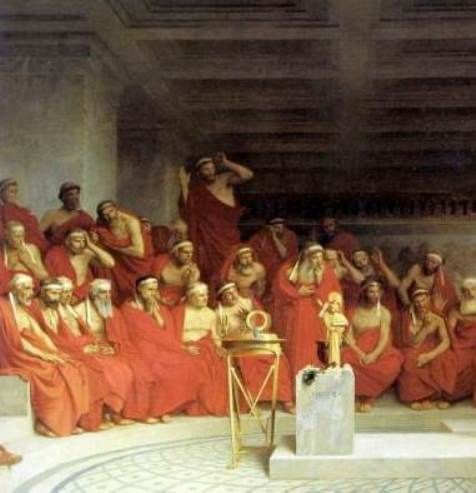
The Gerousia

“I have not lived so long, Spartans, without having had the experience of many wars, and I see among you of the same age as myself, who will not fall into the common misfortune of longing for war from inexperience or from a belief in it’s advantage and safety”

Archidamus, King of Sparta

One thing on which most commentators, academics and former officials seem to agree is that the United States government has a difficult time planning and executing strategy. Furthermore, that since 1991 we have been without a consensus as to America’s grand strategy, which would guide our crafting of policy and strategy. This failing bridges partisan divisions and departmental bureaucracies; there are many career officials, political appointees and even a few politicians, who can explain the nuances of the Afghan War, or the Libyan intervention, the depreciatory tailspin of the US Dollar or America’s Russia policy – but none who would venture to say how these relate to one another, still less to a common vision.

Sadly, they do not, in fact, relate to one another – at least not, as far as I can discern, intentionally.

Few American policies or even military operations (!) in one country can be said to have been conceived even within a coherent and logically consistent regional strategy and it is not just common, but normal, to have DIME agencies working at completely contradictory purposes in the same area of operations. The interagency process, to the extent that it exists, is fundamentally broken and incapable of interagency operational jointness; and the institutional coordinating mechanism for any “whole of government” effort, the National Security Council, has become too consumed with crisis management. A mismatched prioritization of resources which leaves little time for the kind of long range planning and strategic thinking that allows nations to seize the initiative instead of reacting to  events.

It would be a useful corrective for the better conception and execution of US policy, for the President and the Congress to create a special board for grand strategy that could give presidents and key officials frank assessments and confidential guidance to help weave their policy ideas into a durable and overarching national strategy. One that might last beyond a few days’ headlines in The New York Times.

The President of the United States, of course has a number of bodies that could, should but do not always provide strategic advice. There’s the Defense Policy Advisory Board, an Intelligence Advisory Board,  the National Intelligence Council, the State Department’s Policy Planning Staff, the Office of Net Assessment and not least, the NSC itself and the Joint Chiefs of Staff, whose Chairman, by act of Congress, is the military advisor to the President and Secretary of Defense. While strategic thinking does percolate from these entities, many have very specific mandates or, conversely, wide ranging briefs on matters other than strategy. Some operate many levels below the Oval Office, are filled with superannuated politicians or have personnel who, while intellectually brilliant, are excessively political and untrained in matters of strategy. The Joint Chiefs, the professionals of strategy, are highly cognizant of the Constitutional deference they are required to give to civilian officials and are very leery of overstepping their bounds into the more political realms of policy and grand strategy.

What  the President could use is a high level group just focused on getting strategy right – or making sure we have one at all.

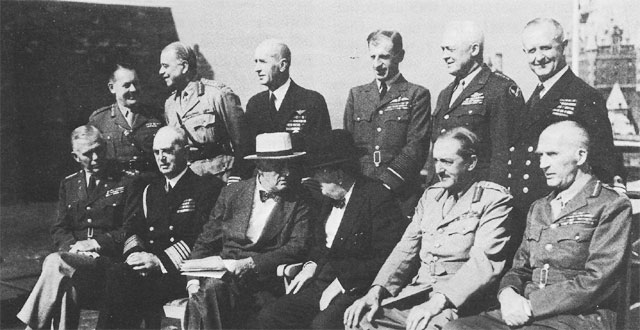
I’m envisioning a relatively small group composed of a core of pure strategists leavened with the most strategically oriented of our elder statesmen, flag officers, spooks and thinkers from cognate fields. A grand strategy board would be most active at the start of an administration and help in the crafting of the national strategy documents and return periodically when requested to give advice. Like the Spartan Gerousia, most of the members ( but not all) would be older and freer of the restraint of institutional imperatives and career ambitions. Like the Anglo-American joint chiefs and international conferences of WWII and the immediate postwar era, they would keep their eye on the panoramic view.

combined-chiefs.jpg

The Octagon Conference – FDR, Churchill and the Combined Chiefs of Staff

Here’s my grand strategy board in a hypothetical perfect world, unlike the one that prevails inside the beltway. I’m sure people will quibble with particular names or will suggest others. I freely admit, for example, that I do not have the best grasp of who our leading intellectual powerhouses are in the Navy, Air Force or the closed world of intelligence analysis and this impairs my ability to put together the list. Nevertheless, I’m trying anyway:

Let’s start with a group of acclaimed and eminent strategic thinkers who have demonstrated over a long tenure, their ability to consider matters of war, peace and statecraft as well as the nuances of strategic theory:

Thomas Schelling -Chairman
Andrew Marshall
Edward Luttwak
Colin Gray
Joseph Nye

Next, some senior statesmen:

Henry Kissinger
George Schultz
Zbigniew Brzezinski

Madeleine Albright

General officers and one colonel with a demonstrated talent for challenging conventional assumptions:

Lieutenant General Paul van Riper
General James Mattis 
General Jack Keane
Colonel John Warden

Two economists:

Alan Greenspan
Nouriel Roubini

Two scientists:

Freeman Dyson
E.O. Wilson

Mixed group of strategists, historians, practitioners and theorists:

David Kilcullen
John Robb
John Negroponte

Barry Posen
Antulio Echevarria

Chet Richards
Micheal Vlahos
Thomas P.M. Barnett
Stephen Biddle
Robert Conquest
Duane Clairridge
Jack Matlock
Martin van Creveld

Visionaries and Contrarians:

Nicholas Nassim Taleb
William Gibson
Ray Kurzweill
Andrew Bacevich

What are the problems with my grand strategy board (aside from having zero chance of coming into being)? 

For one, it is probably way too large. In my efforts to balance expertise in strategy with varied thinking it grew bigger than what is manageable in real life, if the group is to be productive.

Secondly, it is an exceedingly white, male and conservative leaning list – though to some extent that reflects the criteria of experience, the field of strategy itself and the nature of American politics.  Barbara Ehrenreich, for example, is definitely bright but her politics are fundamentally opposed to effectively maximizing American power in the world or the use of military force – thus making her of little use except as a voice of dissent.

Another limitation of this exercise is the idiosyncratic eclecticism of my approach – this was a blog post written over a few days in my spare time and not a methodical inquiry into who in American life would verifiably be the “best qualified” to help construct a grand strategy. There are “insiders” who command great respect within the national security, defense and intelligence communities who are unknown to the general public, or even this corner of the blogosphere, who would be enormously helpful to such a board. Finally, a grand strategy board would not be a panacea; it would be subject to all the inertial pressures that over time would reduce it’s ability to effect change, just as the Policy Planning Staff and the NSC have been “neutered” over decades by the forces of the status quo.

That said, the above group or one reasonably comparable to it could, for a time, markedly improve the construction of strategy , assuming American leaders are willing to enlist such advice, put aside short term political considerations and pursue long term strategic goals.

Whom would you nominate to a grand strategy board?

Grand Strategic Viewing:

More on Where Good Ideas Come From

Tuesday, April 19th, 2011

Dr. Von weighed in on Steven Johnson’s Where Good Ideas Come From with an extensive book review last December( I posted on Johnson here. On a related note, read Charles Cameron’s comment about the limitations of linear thinking here):

Where do New Ideas come from?

….But what exactly are innovation and creativity? The dictionary definition of innovation is ‘the introduction of new things or methods,’ while creativity is ‘the ability to create meaningful new ideas, forms or methods’ that are original and imaginative. So the key notion is the development of new ideas in whatever field one is working. A question naturally develops, which is where do new ideas come from? How do we begin preparing children now to be creative and innovative in the future? In the past, many would have first thought about the arts as being the training ground for creativity. Now, we realize that the development of the abilities and mindsets and skills necessary to be creative in every field of study is necessary.Steven Johnson’s new book, Where Good Ideas Come From: The Natural History of Innovation, provides the argument that there are seven common themes that have led to the vast majority of great ideas throughout history. He gives numerous examples of such ideas, ranging from Darwin’s development of the theory of evolution to the of the GPS system, from Google to the creation of the first mechanical computing devices centuries ago, and so on. It is an interesting read.Here is a summary of the seven themes that lead to good ideas. Keep in mind there is certainly some degree of overlap and relationships between the themes, but overall they can be thought of as distinct concepts.1. The Adjacent Possible: Even if you have an interest in some topic or problem, if there is not a good environment conducive to presenting the necessary pieces to solve the problem, good ideas will almost certainly not develop. You may be brilliant with some of the information (i.e. pieces of a puzzle) in your mind that is necessary to solve a problem, but if your surroundings are not able to provide the remaining pieces of information or experiences, you will endlessly search for them to no avail. If you are isolated from others who know something about your problem or issue, or if there is no means of gathering further information (which is becoming less of a problem with the advent of the Internet), or if your environment does not provide the physical infrastructure or supplies to finish building a new physical device, you will be unable to develop the Idea or solution to your problem.

2. Liquid Networks: Great ideas can develop when information is allowed to flow through a larger network. One possible network is a social network, or often and more specifically, a professional network. The focus of this is the ability to collaborate to solve problems. It turns out that there are almost no great ideas throughout history that have been developed in isolation or by an individual who did not need any help in the development of that great idea. One may think Newton or Einstein did their work in isolation, but this is not entirely true. Those two individuals come about as close as you can get to not needing a network to develop the laws of motion or relativity, but they relied on some level of feedback, reading others’ work, and ultimately talking and discussing issues with close colleagues and friends.
An interesting study was done that looked at how research groups reach the coveted ‘Eureka!’ moment, where a new discovery is made. It turns out that these rare moments of discovery or problem solving almost never happen in the lab! Instead, the ‘Aha!’ are yelled out at the conference table, where members of the group are throwing ideas around and sharing results of their latest work over the past week. The person who figures it out needs to have input they have not thought about from the larger group or network, before the grand idea is formed….

Read the rest here.


Switch to our mobile site