zenpundit.com » foreign policy

Archive for the ‘foreign policy’ Category

News from the near blogosphere: I

Wednesday, July 10th, 2013

[ by Charles Cameron — listen up if you get the chance ]
.

It is possible that this post will reach some of you in time to tune in to this testimony:

**

I’m posting this here because I hope some of you will be able to watch this session live, but also because I think it’s indicative of a shift that is happening — and it’s a shift I’ve been hoping for and wanting to talk about here on Zenpundit. That shift has to do with the blogosphere, and to my mind it’s a very positive one.

I’ll have more on that later — but first, I wanted to get the word out about this session. More, hopefully, a few hours from now.

Geometry aka logic as an analytic tool

Friday, June 28th, 2013

[ by Charles Cameron — reflections on cognitive empowerment by selective noticing ]
.


.

I just realized that I take notice of details at the level of “geometry aka logic” which I would miss if I were more focused on content. In effect, I treat idiosyncracies and hiccups of expression — such as paradoxes — as indicative of condensed or distilled meaning.

What triggered this realization was the way my interest was aroused by this phrase:

The parallel universes may soon become perpendicular.

I found that today in an FP piece, Will June 30 be midnight for Morsi’s Cinderella story?

**

Paradox? Geometry? Contradiction? Figure of speech?

It’s the irregularity in the pattern used to describe the events in question that catches my eye here, however you care to name it. And something very similar is going on when I flag the weird juxtapositions of imagery and music in Taylor Swift, Sara Mingardo, JS Bach and a quiet WTF, or the koan-like tensions and reconciliations inherent in such inseparable pairs as war-and-peace in Of dualities, contradictions and the nonduality.

Here’s the full paragraph, discussing the increasing polarization of the Egyptian public, and some ways in which “the current situation differs more in degree than in kind from the recent past”:

Second, violence is on the table. The parallel universes may soon become perpendicular. Of course, Egyptian politics has had its victims over the past two and a half years, but violence has seemed episodic and almost self-limiting since those who have deployed it have paid a heavy political price. Nobody advocates violence now, but many expect it and it is not uncommon to hear from both sides that they will not shrink from self-defense. And the line between self-defense and offensive action can become thin for each camp for opposite reasons. The opposition is hardly centrally controlled and rogue elements have already been involved in attacks on Brotherhood offices as well as those of its political party. For the Brotherhood, its discipline has led it to prepare for what it sees as defensive action in a manner that understandably appears threatening to outsiders (especially after the events of December 2012 when Brotherhood cadres constituted themselves as a vigilante force to confront those demonstrating at the presidential palace).

Okay, so I’m already reading the article, ergo I must already have been interested enough in what’s going on in Egypt to click through to it. So why the fuss about paradox and geometry in what is, after all, only one turn of phrase in a piece whpose subject already interests me?

**

I’m still feeling my way towards and understanding of how my mind works, how I pick up on things, how I populate my mind with rich and interesting memories, how I make my small and large creative “leaps” — my means of collecting and connecting dots, if you will. Because there’s a cognitive skill there that I haven’t seen taught, and I believe it offers an “outside the box” alternative mode of monitoring topics of interest.

You know, of course, that most every time you read the words you know, of course, that it’s a dead giveaway that the speaker or writer is skimming quickly past a cherished assumption that he or she wouldn’t want you to examine too carefully? Of course you do. It’s one of those psychological “tells” that should alert you, like a facial tick, a hesitation, or that curious (and paradoxical) tight grip on one arm of the chair with one hand while the other rests almost disdainfully relaxed and gracious on the other, in El Greco’s masterful portrait of a Cardinal, now in the Metropolitan in New York:

How very telling that sort of detail can be!

**

And intersections.

I talk quite a bit about juxtapositions and parallelisms, because they’re the elements of “creative leaps” (and Sembl / Hipbone moves) and I “practice” noting them for my DoubleQuotes. But one way to clear the xlutter from mind is to concentrate on places where two fields intersect. I’m interested in apocalyptic, for instance, so I take particular note when someone from a Christian apocalyptic POV (Joel Richardson, Joel Rosenberg, eg) writes about Islamic eschatology, or when someone from an Islamic apocalyptic POV (Sh. Safar al-Hawali, eg) writes about Christian eschatology. Reading wherever I notice this kind of overlap means that I learn in two contexts — effectively doubling my knowledge value — where most reading that’s not “targeted” this way only allows me to learn in one…

Again: parallelisms, overlaps, paradoxes, perpendiculars, contradictions — these are all “formal properties” of a given text rather than “contents” — that’s the level of abstraction at which you can make the details sing.

**

Hey, I’m not alone. As I was cleaning this post up, Adam Elkus tweeted a link to a post about the CTO of Intel, Intel Labs: Assuring Corporate Immortality by Rob Enderle, which contains this phrase:

This is very orthogonal thinking

There we go! The word orthogonal is so important to me, and is so often on the tip of my tongue but out of reach of immediate memory, that I have a file on my computer consisting solely of the words “opposite oblique orthogonal congruent incongruous antithetical obtuse parallel asymptotic perpendicular right angles” — so if I can remember any one of them, I can easily find “orthogonal”.

Very orthogonal thinking — terrific!

New Book: America 3.0 is Now Launched!

Tuesday, May 21st, 2013

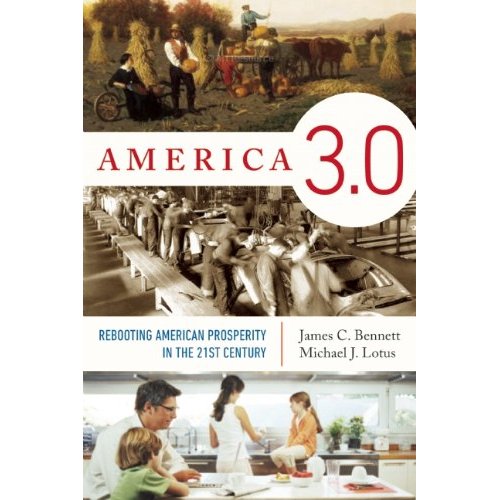
America 3.0: Rebooting American Prosperity in the 21st Century – why America’s Best Days are Yet to Come by James C. Bennett and Michael Lotus

I am confident that this deeply researched and thoughtfully argued book  is going to make a big political splash, especially in conservative circles – and has already garnered a strong endorsement from Michael Barone, Jonah Goldberg, John O’Sullivan and this review from  Glenn Reynolds in USA Today :

Future’s so bright we have to wear shades: Column 

….But serious as these problems are, they’re all short-term things. So while at the moment a lot of our political leaders may be wearing sunglasses so as not to be recognized, there’s a pretty good argument that, over the longer time, our future’s so bright that we have to wear shades.

That’s the thesis of a new book, America 3.0: Rebooting American Prosperity In The 21st Century.The book’s authors, James Bennett and Michael Lotus, argue that things seem rough because we’re in a period of transition, like those after the Civil War and during the New Deal era. Such transitions are necessarily bumpy, but once they’re navigated the country comes back stronger than ever.

America 1.0, in their analysis, was the America of small farmers, Yankee ingenuity, and almost nonexistent national government that prevailed for the first hundred years or so of our nation’s existence. The hallmarks were self-reliance, localism, and free markets.

At the end of the 19th century and the beginning of the 20th, people were getting unhappy. The country was in its fastest-ever period of economic growth, but the wealth was unevenly distributed and the economy was volatile. This led to calls for what became America 2.0: an America based on centralization, technocratic/bureaucratic oversight, and economies of scale. This took off in the Depression and hit its peak in the 1950s and 1960s, when people saw Big Government and Big Corporations as promising safety and stability. You didn’t have to be afraid: There were Top Men on the job, and there were Big Institutions like the FHA, General Motors, and Social Security to serve as shock absorbers against the vicissitudes of fate.

It worked for a while. But in time, the Top Men looked more like those bureaucrats at the end of Raiders Of The Lost Ark, and the Big Institutions . . . well, they’re mostly bankrupt, or close to it. “Bigger is better” doesn’t seem so true anymore.

To me, the leitmotif for the current decade is supplied by Stein’s Law, coined by economist Herb Stein: “Something that can’t go on forever, won’t.” There are a lot of things that can’t go on forever, and, soon enough, they won’t. Chief among them are too-big-to-fail businesses and too-big-to-succeed government.

But as Bennett and Lotus note, the problems of America 2.0 are all soluble, and, in what they call America 3.0, they will be solved. The solutions will be as different from America 2.0 as America 2.0 was from America 1.0. We’ll see a focus on smaller government, nimbler organization, and living within our means — because, frankly, we’ll have no choice. Something that can’t go on forever, won’t. If America 2.0 was a fit for the world of giant steel mills and monolithic corporations, America 3.0 will be fit for the world of consumer choice and Internet speed.

Every so often, a “political” book comes around that has the potential to be a “game changer” in public debate. Bennett and Lotus have not limited themselves to describing or diagnosing America’s ills – instead, they present solutions in a historical framework that stresses the continuity and adaptive resilience of the American idea. If America”s “City on a Hill” today looks too much like post-industrial Detroit they point to the coming renewal; if the Hand of the State is heavy and it’s Eye lately is dangerously creepy, they point to a reinvigorated private sector and robust civil society; if the future for the young looks bleak,  Bennett and Lotus explain why this generation and the next will conquer the world.

Bennett and Lotus bring to the table something Americans have not heard nearly enough from the Right – a positive vision of an American future that works for everyone and a strategy to make it happen.

But don’t take my word for it.

The authors will be guests Tuesday evening on Lou Dobb’s Tonight and you can hear them firsthand and find out why they believe “America’s best days are yet to come

Words, words — what’s a bunch of Wordsworth?

Sunday, May 19th, 2013

[ by Charles Cameron — bemused again, “jihad” (the word) in the news, “big data” too, plus Google expecting Mahdi ]
.

I suppose I should be glad — or should I? — that the word jihad is now in the news.

It’s about time. Jihad (the word, the concept, the interpretations) should have been in the news at least since 9/11, don’t you think? or since the World Trade Center bombing in February 26, 1993, perhaps? or at least since Osama bin Laden’s Declaration of Jihad Against the Americans Occupying the Land of the Two Holy Mosques of September 2, 1996?

In any case, the word finally seems to have arrived, if the entry from the National Geographic site last month (upper panel, above) can be trusted:

And Big Data (lower panel)?

President Obama launched his Big Data Initiative on March 29, 2012, but I’m not sure how long the term has been in active use. I’m told there’s no “big data” listing in the 2009 Oxford English Dictionary on CD-ROM, I have the sense that three days ago’s Foreign Policy is far more up to date than last month’s National Geographic in any case — and just a month or two ago the CTO of CIA, Ira “Gus” Hunt, situated Big Data somewhere between “the cloud” and right now, telling his audience at GigaOM:

Big Data was so last year, right, all those breathless articles and all the front page covers — I was expecting BD to be Time’s Man of the Year, right. This year what we’re really talking about is how do we get value out of the stuff?

That quote, of course, is so “two months ago”…

**

So what does National Geographic tell us about jihad?

The Boston marathon bombing has focused attention on the word “jihad.”

Vice President Biden characterized the alleged bombers as knockoff jihadis.” The Associated Press reported that the elder brother had “vaguely discussed jihad” with his mother over the phone in 2011.

Origins

“Jihad” is derived from the Arabic word juhd (meaning effort, exertion, or power) and literally translates to “struggle” or “resistance” for the sake of a goal. Used 30 times and in multiple contexts in the Koran, jihad most often denotes a struggle against external enemies, the devil, or one’s self. One example from the Koran (49.15) is: “The believers are those who believe in Allah and His Messenger … and jahadu (do jihad) with their properties and selves in the way of Allah.”

Mark Wilks, an early 19th-century British author, introduced jihad into the English lexicon, defining it as a Muslim “holy war,” in his Historical Sketches of the South of India. It’s retained that meaning in English; the Oxford English Dictionary defines jihad as “a religious war of Muslims against unbelievers.”

History

Because of its roots and context in the Koran, jihad has a positive meaning to Muslims. Whatever form jihad may take, the struggle is always noble. When the term is evoked against external enemies, it can be used only during just or defensive wars.

I’m sorry, but that last para beginning “Because of its roots and context in the Koran, jihad has a positive meaning to Muslims” isn’t terribly clear. When al-Zawahiri talks about jihad, for instance, does the writer imagine all Muslim readers imagine he’s talking about something noble? I fear there are some subtleties being missed her that not everyone who reads National Geographic may understand.

**

And what does Foreign Policy want to tell us about Big Data?

The promoters of big data would like us to believe that behind the lines of code and vast databases lie objective and universal insights into patterns of human behavior, be it consumer spending, criminal or terrorist acts, healthy habits, or employee productivity. But many big-data evangelists avoid taking a hard look at the weaknesses. Numbers can’t speak for themselves, and data sets — no matter their scale — are still objects of human design. The tools of big-data science, such as the Apache Hadoop software framework, do not immunize us from skews, gaps, and faulty assumptions. Those factors are particularly significant when big data tries to reflect the social world we live in, yet we can often be fooled into thinking that the results are somehow more objective than human opinions. Biases and blind spots exist in big data as much as they do in individual perceptions and experiences. Yet there is a problematic belief that bigger data is always better data and that correlation is as good as causation.

**

Mr Orange had something to say about the word “jihad” in his War Tracker blog the other day, under the title What’s in the names of terrorist groups (1): Jabhah al-Nusrah li-Ahl al-Shâm min Mujâhidî al-Shâm fi Sahât al Jihâd:

… they still use a religious term in their name: One that is quite negatively understood in the West but not so in the Arab and Muslim world namely Jihâd.

They are Mujâhidîn – those who do Jihâd (religious struggle – in this case fighting) – on the fields of Jihâd. Mujâhidîn has a positive, religiously legitimizing ring to it – see here is someone who struggles for the religion – and is furthermore including. Whether you are with the FSA (even one of the rather secular parts of that group mind you) or with an independent Islamist group or with Jabhah al-Nusrah all do use the term Mujâhîd and all may be identified by that term (Granted there was a time when Thuwâr (revolutionaries) was en vogue but no longer so).

That, IMO, gets us a lot closer to understanding a term that has a range of meanings, a range of users, and a range of audiences — from something along the lines of divinely obligated warfare to something akin to conscience (or what Rilke calls “being defeated, decisively, by constantly greater beings”) , and from those who use it for glorious self-identification to those for whom it is a euphemism for terrorist (irhabi), and from those itching for a fight to those longing, praying and working devotedly for peace…

**

So — since we’re talking big data and jihad, here’s a tiny snippet of jihad-related skew from Google, one of the giants of big data…

I came across it via SelfScholar, who posted a very interesting response re the Iranian nuclear fatwa issue here a few days ago, in a post titled Google Translate’s Khomeini Problem.

It appears that Google Translate has a distinctly unsecular view when it comes to major figures in Shi’ite theology — specifically, it adds religious honorifics to their names when translating from English into Farsi. As you might imagine, I wanted to know how they dealt with the Mahdi — and behold, my prayer was answered:

So Google awaits his blessed return?

It seems pretty clear that SelfScholar would be skeptical about that. He ends his blog post, in fact, with an indication that he neither awaits nor expects it — choosing for his final example “to highlight the inanity of it all, just one for the road…”:

**

Prof. Dr. Muhammad-Reza Fakhr-Rohani has an interesting piece titled Rendering Islamic Politeness Markers into English, which he concludes thus:

There remain some Desiderata to be dealt with. First, the Arabic pre-nominal honorifics as well as post-nominal honorific-cum-optative sentences must be re-translated with a view to remove the items which make the language sound odd, and perhaps ungrammatical. Secondly, appropriate abbreviations must be devised for them. Finally, they must find their ways into English dictionaries, hence registered as part of the language.


A Brief Note on the Benghazi Hearings

Thursday, May 9th, 2013

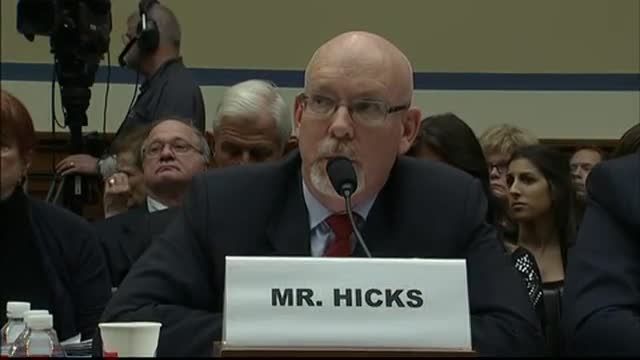
There is legitimate room for debate if there could have been an effective military reaction to the attack in Libya by al Qaida terrorists that killed Ambassador Stevens and other US personnel.  One was apparently never seriously entertained  by senior White House, State Department and Pentagon officials. I think there ought to have been an effort to move heaven and earth and far, far greater willingness to inflict massive casualties on an attacking Libyan mob than existed, but in fairness to the Obama administration, a seat-of-the-pants, unsupported, undermanned response could also have been a replay of Blackhawk Down or Desert One. It’s a tough judgment call for any President.

That’s not why the Obama administration is in trouble today.

Poorly supported security and inept decision making by the State Department in Libya was likewise, disappointing but politically survivable and sadly, unsurprising.. We have seen similar bungling before and after 9/11 by most of our major national security departments and agencies at one time or another. It is a bipartisan phenomenon, albeit one we take far too lightly.

No, as damning testimony today made clear, the Obama administration is in trouble because their poor but not remarkably so handling of Benghazi was shielded by a ridiculous lie told entirely for partisan gain and to protect the overrated reputations and overweening egos of various administration bigwigs, most notably the former Secretary of State, Hillary Clinton.

Is there anyone today – anyone at all – who still believes that Benghazi occurred because of an obscure crackpot’s video on youtube?

Had the administration manfully said “This attack is a terrible tragedy and we dropped the ball but you can believe we won’t make a similar mistake tracking down the people who did this and make them pay” most Americans would have accepted that. No, not rabid partisan Republicans, but most Americans would have wanted to back the President, any President, in the wake of such terrorism which is directed, in the last analysis, at all of us.

They did not – and much of the rest of their reaction indicates that the real concern at State and the White House was and still is with the temerity of their political opponents in daring to demand they account for their actions as if we lived in a Republic or something.

In American politics, it is the self-inflicted wounds that fester and turn gangrenous


Switch to our mobile site