zenpundit.com » warriors

Archive for the ‘warriors’ Category

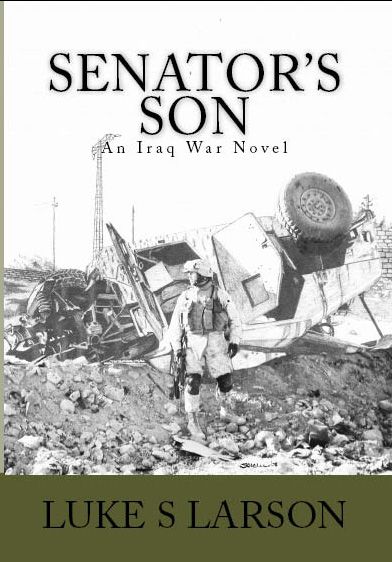
Senator’s Son

Wednesday, February 17th, 2010

larson.jpg

Senator’s Son: An Iraq War Novel  by Luke S. Larson

Just received a review copy of new author Luke Larson’s novel Senator’s Son. I can probably count on the fingers of one hand the number of works of fiction that I have reviewed at ZP, but two things caught my attention about Senator’s Son:

First, the novel is historical realism with a theme of COIN. Secondly, the author Luke Larson is a decorated Marine officer with two tours in Iraq under his belt. Flipping the pages reveals a gritty, sometimes humorous, staccato writing style and military/strategy/policy issues that are discussed here, or at SWJ or Abu Muqawama come to life through the eyes of still learning practitioners. I’m looking forward to reading Senator’s Son and reviewing it in full in late February or early March ( need to finish Carr’s Inside Cyber Warfare first).

Setting aside the book itself, something else occurred to me – that we have reached the point where the war is now appearing not as news, but as literature; Iraq and Afghanistan are proving to be culturally transformative wars for America in ways that the Gulf War or the Korean War were not.

If you consider WWI, the Great War represented an existential crisis for Western Civilization that found expression in the Lost Generation and, in Germany, the polar opposite novels All Quiet on the Western Front and Storm of Steel as well as Hemingway’s A Farewell to ArmsThe Spanish Civil War electrified international opinion, foreshadowing as it did the ideological death-match of the 20th century, and yielded Orwell’s Homage to Catalonia. WWII and the Vietnam War have generated an ocean of histories down to the minutest detail, as well as their share of novels, short stories and movies. It is noteworthy, that most of the time, literature and history followed the conclusion of peace, be it in victory or defeat.

In our time, the books on the war in Iraq, or Afghanistan or against terrorism are arriving while the conflict is still in full throttle, in time to shape the perceptions of policymakers and the public to an unprecedented extent. Something is happening out there, an inchoate need for answers or reassurance that writers are attempting to answer. Most of these books so far have been non-fiction, journalistic instant histories salted with examples of policy analysis and war memoirs.

Senator’s Son marks a new turn toward a wave of fiction addressing the crucible of America’s current wars. Literature can shape a nation’s psyche more profoundly than even the most soberly researched work of history.

For All the GenX, Former Chaotic Good Half-Elven Ranger-Magic-Users Out There….

Saturday, February 13th, 2010

Microsoft has a product for you…..c’mon….go for that “natural 20″….you know you want to…..

Battleground Yemen

Wednesday, January 27th, 2010

An informative post by Curzon at Coming Anarchy

Yemen: Geography Matters!

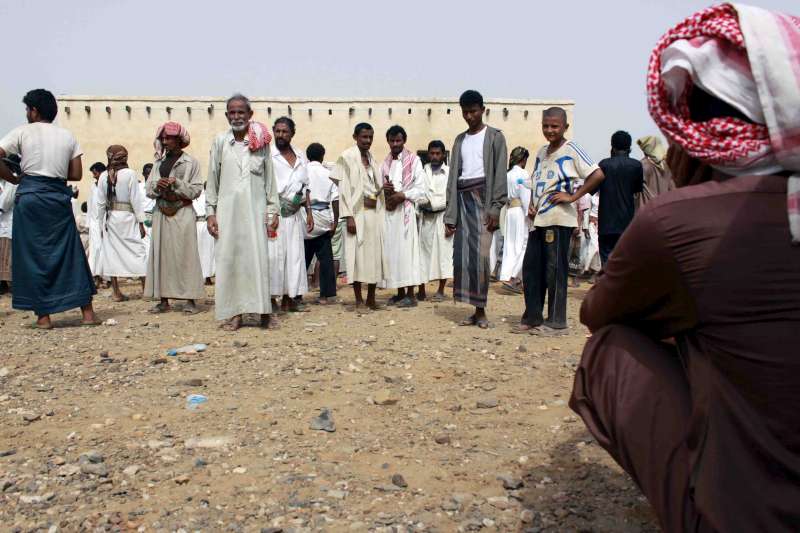
….The Saudis are guilty of aggravating and prolonging the conflict. Wary of taking too many losses on the ground and unable to do much by air and sea, they have recruited the Hashed, a local tribe, to fight against the Huthi, the tribe central to the Shia rebels. The Hashed have several incentives to continue fighting for as long as possible-they have a long-standing feud with the Huthi, and make a great deal of money from fighting for the Saudis, and may be coming up with schemes to prolong the conflict. According to a source of Al Jazeera:

If [the Hashed are] given the mission of taking a particular mountain, for example, they’ll call up the Huthi leaders and tell them: ‘We’re getting five million riyals to take the mountain. We’ll split it with you if you withdraw tonight and let us take over’… After the tribesmen take charge, they hand it over to the Saudis… The next day, the Huthi return and defeat the Saudis and retake the mountain… It’s been happening like this for weeks.

The Post-COIN Era is Here

Monday, January 25th, 2010

Learning to Eat Soup with a Spoon Again……

There has been, for years, an ongoing debate in the defense and national security community over the proper place of COIN doctrine in the repertoire of the United States military and in our national strategy. While a sizable number of serious scholars, strategists, journalists and officers have been deeply involved, the bitter discussion characterized as “COINdinista vs. Big War crowd” debate  is epitomized by the exchanges between two antagonists, both lieutenant colonels with PhD’s, John Nagl, a leading figure behind the U.S. Army/Marine Corps Counterinsurgency Field Manual and now president of the powerhouse think tank CNAS , and Gian Gentile, professor of history at West Point and COIN’s most infamous arch-critic.

In terms of policy and influence, the COINdinistas ultimately carried the day. COIN advocates moved from a marginalized mafia of military intellectuals who in 2004 were just trying to get a hearing from an  indifferent Rumsfeld Pentagon, to policy conquerors as the public’s perceptions of the “Surge” in Iraq (masterminded by General David Petraeus, Dr. Frederick Kagan, General Jack Keane and a small number of collaborators) allowed the evolution of a COIN-centric, operationally oriented, “Kilcullen Doctrine” to emerge across two very different administrations.

Critics like Colonel Gentile and Andrew Bacevich began to warn, along with dovish liberal pundits – and with some exaggeration – that COIN theory was acheiving a “cult” status that was usurping the time, money, talent and attention that the military should be devoting to traditional near peer rival threats. And furthermore, ominously, COIN fixation was threatening to cause the U.S. political class (especially Democrats) to be inclined to embark upon a host of half-baked, interventionist “crusades“in Third world quagmires.

Informed readers who follow defense community issues knew that many COIN expert-advocates such as Nagl, Col. David Kilcullen, Andrew Exum and others had painstakingly framed the future application of COIN by the United States in both minimalist and “population-centric” terms, averse to all but the most restrictive uses of “hard” counterterrorism tactics like the use of predator drones for the “targeted assassinations” of al Qaida figures hiding in Pakistan.

Unfortunately for the COINdinistas, as George Kennan discovered to his dismay, to father a doctrine does not mean that you can control how others interpret and make use of it. As the new Obama administration and its new commander in Afghanistan, General Stanley McChrystal conducted its internally contentious review of “AfPak” policy in 2009 on what seemed a geological time scale, the administration’s most restless foreign policy bigwig, the Talleyrand of Dayton, proposed using COIN as nation-building on steroids to re-create Hamid Karzai’s Afghanistan as the secure, centralized, state that it has never been.  Public reaction to this trial balloon was poor and the administration ultimately pared down General McChrystal’s troop request to 30,000 men, hedging a COIN based strategy toward policy suggestions made by Vice-President Biden.

So, COIN still reigns supreme, albeit with trimmed sails?

No.

We are forgetting something important about the ascendancy of COIN. It was not accepted by a reluctant Pentagon and the Bush administration because COIN is a very effective operational tool in the right strategic context – although that is certainly true. Nor was it because the advocates of COIN were brilliant policy architects and advocates – though most of them are. COIN became the order of the day for three reasons:

1) The  “Big Army, fire the artillery, fly B-52’s and Search & Destroy=counterinsurgency” approach proved to be tactically and strategically bankrupt in Iraq. It failed in Mesopotamia as it failed in the Mekong Delta under Westmoreland – except worse and faster. Period.

2) The loudest other alternative to COIN at the time, the antiwar demand, mostly from Leftwing extremists, of immediately bugging-out of Iraq, damn the consequences, was not politically palatable even for moderately liberal Democrats, to say nothing of Republicans.

3) The 2006 election results were a political earthquake that forced the Bush administration to change policy in Iraq for its’ own sheer political survival. COIN was accepted only because it represented a life preserver for the Bush administration.

We have just had another such political earthquake. The administration is now but one more electoral debacle away from having the president be chased in Benny Hill fashion all over the White House lawn by enraged Democratic officeholders scared out of their wits of losing their seats next November.

Republican Scott Brown, the winner in a stunning upset in Massachusett’s special election for Senator, certainly had no intention of undermining President Obama’s commitment to Afghanistan. To the contrary, he is for it in a far more muscular manner than was his hapless Democratic opponent. But that’s irrelevant. What matters is that in all the recent elections, Democrats have been clobbered by a “Revolt of the Moderates” – socially liberal, fiscally conservative, independent voters who came out in 2008 for Obama and are now shifting radically away from him. For the next year, politicians of both parties will be  competing hard for this bloc which means “deficit hawks” will soar higher than defense hawks.

America’s nine year drunken sailor spending spree is officially over.

Defense experts have long known that the post-9/11, record DoD budget expenditures were not going to be politically sustainable forever and that either a drawdown of combat operations or cancellation of very big, very complicated and supremely expensive weapons platforms or some combination of both would eventually be needed. That eventuality is here and will increase in intensity over the next five years, barring an unexpected economic boom. Spending $60 billion annually on Afghanistan, a nation with a GDP of roughly $ 20 billion, for the next 7 years, is not going to be in the cards. Not at a time of 10 % unemployment, when the Congress will be forced to cut Medicare, education, veteran’s benefits, eliminate COLA’s on Social Security or raise the retirement age and income taxes. Who is going to want to “own” an ambitious “nation-building” program at election time?

There is a silver lining here. Really.

COIN is an excellent operational tool, brought back by John Nagl & co. from the dark oblivion that Big Army partisans consigned it to cover up their own strategic failures in Vietnam. As good as COIN is though, it is not something akin to magic with which to work policy miracles or to substitute for America not having a cohesive and realistic grand strategy. Remaking Afghanistan into France or Japan on the Hindu Kush is beyond the scope of what COIN can accomplish. Or any policy. Or any president. Never mind Obama, Superman, Winston Churchill and Abe Lincoln rolled into one could not make that happen.

Association with grandiosely maximalist goals would only serve to politically discredit COIN when the benchmarks to paradise ultimately proved unreachable. Austerity will scale them back to the bounds of reality and perhaps a more modest, decentralized, emphasis. COIN will then become a normal component of military capabilities and training instead of alternating between pariah and rock star status inside the DoD.

Austerity may also force – finally – the USG to get serious about thinking in terms of comprehensive and coherent DIME-integrated national strategy (Ok – this is more of a hope on my part). Instead of having every agency and service going off in its own direction with strategic nuclear arms reductions being proposed out of context from our conventional military obligations and urgent security threats we might stop and look at how the two fit together. And how these should be in sync with our fiscal and monetary policies and our need to deeply invest in and improve our unsteady economic position in a very competitive, globalized world. The latter is of much greater strategic importance to national security than Afghanistan or whether or not Israel and Hezbollah fight another mini-war.

We are all COINdinistas now. Instead of being controversial, COIN having a secure place in our operational arsenal of ideas has become the new “conventional” wisdom; it is past time to look at some of the other serious challenges America has ahead.

ADDENDUM I:

First, I wanted to thank everyone for their lively responses, both comments as well as email. The critiques are very helpful, as are the large number of PDFs and links to related material. I am trying to catch up on my replies but first, I wanted to feature a link to Andrew Exum ‘s related but inside baseball article up at Boston Review:

The Conflict in Central Asia will likely mark the end of the current era of Counterinsurgency 

 ….Whether or not the United States and its allies are successful in Afghanistan, the conflict in Central Asia will likely mark the end of the Third Counterinsurgency Era. Counterinsurgency warfare has its roots in the colonial experiences of France and the United Kingdom as well as the pseudo-colonial experiences of the United States in the Philippines and Latin America. In the First Counterinsurgency Era, nineteenth-century French colonial military commanders such as Hubert Lyautey, Thomas-Robert Bugeaud, and Joseph Gallieni devised rudimentary “hearts and minds” campaigns that were—though often just as brutal as the conventional warfare of the time—at odds with then-contemporary thought on the employment of military force. 

….Michael Semple —with two decades experience working in Afghanistan and Pakistan—believes that it is, and that the Taliban and its allies cannot win. The balance of power, he argues, has shifted toward the Taliban’s natural enemies, and the Taliban hides this reality by dressing their civil war in the clothes of an insurgency being fought against Western powers. If this assessment is right, there may yet be hope for U.S. and allied efforts in Afghanistan. Because President Obama has pledged to begin a withdrawal from Afghanistan in eighteen months, time may be too short to execute a comprehensive counterinsurgency campaign. But there may be sufficient time to build up key Afghan institutions and allow Afghans to fight a civil war that will no doubt continue after the United States and its allies begin to withdraw.

ADDENDUM II – LINKS To This Post:

Most of these bloggers have extended the discussion into new dimensions or aspects. I will put a short, explanatory tag next to each where warranted.

RBO (Pundita)The cavalry has arrived: Mark Safranski takes on COIN; Pundita takes on Pakistan  Extensive examination of Pakistan

In Harmonium (Dr. Marc Tyrell)Is the post-COIN era here?  The conceptual-perceptual-cognitive implications of this debate

Shlok VaidyaZen is right  Constraints and innovation….and a great post title!

Newshoggers (Dave Anderson)COIN’s coins; political constraints on COIN  COIN = Clausewitzian disconnect

Wings Over IraqLink of the morning is here…  And the bonus Nagl/Gentile mash-up graphic!

SWJ BlogThe Post-COIN Era is Here  Comments on link excerpt have begun……

Guest Post: Charles Cameron on Khorasan – A Muslim Once and Future Kingdom

Tuesday, January 19th, 2010

 Charles Cameron, my regular guest blogger, is the former Senior Analyst with The Arlington Instituteand Principal Researcher with the Center for Millennial Studies at Boston University. He specializes in forensic theology, with a deep interest in millennial, eschatological and apocalyptic religious sects of all stripes.

Khorasan: A Muslim Once and Future Kingdom

by Charles Cameron

The title of an interview in a Taliban sponsored magazine with Hammam Khalil al-Balawi — the Jordanian jihadist physician and double-agent / informant who signed himself Abu Dujana al-Khorasani on jihadist forums, and carried out the recent CIA bombing in Khost — is intriguing in a self-referential, “Doug Hofstadter might like this” sort of way:

Interview with Brother Abu Dujanah al-Khorasani, a Well-Known Blogger in Jihadi Forums, and a Newcomer to the Land of Khorasan.

In his appearances on the web, al-Balawi / Abu Dujana had given himself the geographic cognomen “al-Khorasani” meaning “from Khorasan” — yet he was a Jordanian by birth, and the interview title calls him a “newcomer” to Khorasan, while the interviewer himself remarks, “Abu Dujanah al-Khurasani (sic) is actually now inside Khorasan, and the decision to travel to the lands of jihad is a divine blessing and a magnificent grace.”

The Khorasan that Abu Dujana “is actually now inside” is presumably Afghanistan on the literal, geographical level — but what of the Khorasan of the mind and heart to which, as his choice of handle indicates, Abu Dujana must have long aspired?

What is the significance of “Khorasan”?

It’s a bit like “Jerusalem” — only yesterday I was reading that Grand Rapids, Michigan is referred to as “Jerusalem” by some folk of Dutch extraction in the Pacific Northwest. I think we’ll get the sense of the idea if we call it of “Khorasan of sacred memory and present hope”.  As the UCLA scholar Jean Rosenfeld puts it (personal communication):

In any event, Khorasan refers to much more than a former region of the Islamic empires.  It has a mythical meaning that is being taken seriously as a “once and future kingdom” in the millennial mindset of al-Qaida.

The territory once called Khorasan — and the borders covered by that name shifted a great deal over the centuries — covered parts of what we now know as Iran (which still has a province named Khorasan), Turkmenistan, Uzbekistan, Afghanistan and NW Pakistan.  I’m finding references that suggest the name originally meant “the place where the sun rises” — the East, the Orient.

Rosenfeld suggests that Khorasan “is code in al-Qaida for the warrior sect itself” — “the army of the (future) caliphate in the mind of the International jihad” and thus, Al-Qaida in Fawaz Gerges’ broad sense.  My own reading ties it in with the ahadith about the “black banners of Khorasan” and the army which will sweep down from Khorasan to Jerusalem…

As I’ve noted before   there are many variant ahadith describing the army of the Mahdi.  Here is one commonly cited version:

If you see the black flags coming from Khurasan, join that army, even if you have to crawl over ice, for this is the army of the Caliph, the Mahdi and no one can stop that army until it reaches Jerusalem.”

Quite how we should align that with actual jihadist entities such as AQ core and or its subsidiaries or the various bodies called Taliban, however, I’m not sure. The clearest implication I can see is to the place of origin of the Mahdi’s army.

It is at least as much an eschatological as a geographic claim.

Since the imagery of Khorasan is closely tied to that of black flags, I would like to take a slight detour here.  We have seen that the black flags signify the army of the Mahdi, but what are its origins, and how widely is it used?

The Islamic Imagery Project at West Point Combating Terrorism Center lists “Black Flag” under the heading “Warfare Motifs“, saying:

The Black Flag (al-raya) traces its roots to the very beginning of Islam.  It was the battle (jihad) flag of the Prophet Muhammad, carried into battle by many of his companions, including his nephew ‘Ali ibn Abi Talib.  The flag regained prominence in the 8th century with its use by the leader of the Abbasid revolution, Abu Muslim, who led a revolt against the Umayyad clan and its Caliphate.  The Umayyads, the ruling establishment of the Islamic world at the time, were seen as greedy, gluttonous, and religiously wayward leaders.  The Abbasid revolution, then, was aimed at installing a new, more properly Islamic ruling house that would keep orthodox Islam at the center of its regime. Since then, the image of the black flag has been used as a symbol of religious revolt and battle (i.e. jihad).  In Shiite belief, the black flag also evokes expectations about the afterlife.  In the contemporary Islamist movement, the black flag is used to symbolize both offensive jihad and the proponents of reestablishing the Islamic Caliphate.

The flag is frequently identified with specific jihadist groups — thus Bill Roggio, writing in Long War Journal, refers to “the al rayah, the black flag of al Qaeda” in his 2007 article, “Musa Qala and the NATO offensive”.

Likewise, the Somalian president Abdullahi Yusuf Ahmed in 2006 is reported to have spoken in 2006 of “the ‘black flag’ of Al-Qaeda and the Taliban” — and as recently as this month, Al-Shabaab “vowed to replace the Somali flag with its (al-Shabaab’s) black flag”.

So the Black Flags or banners represent the Prophet as warrior at one end of Islamic history and the Mahdi’s army from Khorasan at the other — and have been adopted as symbols of jihad by different groups from the Abbasids to al-Shabaab. They are indeed indicative of jihad, but it is their association with Khorasan that gives them a specifically Mahdist reference.

The defeat of the Umayyads and establishment of the Abbasid caliphate, and hence also the golden age of Islamic culture, was strongly supported by forces raised in Khorasan, and David Cook in his Contemporary Muslim Apocalyptic Literature suggests that “the Abbasids sought to present their movement as the fulfillment of messianic expectations, and so they produced a great quantity of materials given in the form of hadith traditions to indicate that the Mahdi would come from this region.”

The tale lives on. As I’ve mentioned before, Cook notes that bin Laden’s mentor, Abdullah Azzam, made fresh use of this line of messianic tradition and “popularized the position of Afghanistan as the messianic precursor to the future liberation of Palestine” in his book, From Kabul to Jerusalem, while bin Laden refers to finding “a safe base in Khurasan, high in the peaks of the Hindu Kush” in his 1996 Declaration of Jihad.

The spiritual geography, then, is clear: Khorasan is that place in the east, somewhere in the general region including eastern Iran and northern Afghanistan, from which the Mahdi’s army will come — and it is very plausibly also a place the jihadist might need to “crawl over ice” to reach.

I think Rosenfeld is right in suggesting that al-Balawi’s geographic cognomen is a significant one, as is “Abu Dujana” — the name of a particularly valiant companion of the Prophet, as I discussed in a previous post.

But which of the various jihadist forces currently deployed in Afghanistan and nearby might be the nucleus of the Mahdi’s forces? The army with black flags from Khorasan has been identified with the Abbasids, with the Iranian revolutionaries, and with the Taliban. Bin Laden would presumably wish for it to be with al-Qaida, and Cook also says, this time in Understanding Jihad:

Since Afghanistan, as Khurasan, has powerful resonance with many Muslims because of the messianic expectations focused on that region, this gave the globalist radical Muslims associated with al-Qa’ida under the leadership of Bin Ladin additional moral authority to proclaim jihad and call for the purification of the present Muslim governments and elites.

In Jordan via the jihadist web forums, al-Balawi signaled his identification with the victorious army of the coming Mahdi and with jihadists in Afghanistan by his choice of the cognomen “al-Khorasani” — but the name alone does not tell us which particular jihadist group he might have been thinking of, and that may not even have been an question he felt the need to resolve at that time.

  Once in Khorasan itself, al-Khorasani left us two “media” items, a magazine interview and a video, and we might hope that they would add to our understanding of the more literal, geographical meaning his name carried, for they clearly indicate his associations.

According to Flashpoint-Intel, who provided the version of the interview I’ve seen, al-Khorasani’s interview was given to “Vanguards of Khorasan” which they describe as “a well-known Taliban propaganda magazine” and released by the Al-Fajr Media Center, which they term “the official online logistical arm of Al-Qaida”. SITE refers to “Vanguards” as “the … magazine of al-Qaeda in Afghanistan”. Others more familiar with the logistics may want to clarify the point.

The video, then, seems to give the clearest indication. Al-Khorasani was taped sitting next to Hakimullah Mehsud, the head of the Terik- i-Taliban Pakistan or TPP (whose death in a drone strike is reported but unconfirmed at the time of writing), and indicated his allegiance with the words, “We will never forget the blood of our emir Baitullah Mehsud” — referring to Hakimullah’s predecessor.

In general, “Khorasan” doesn’t appear to function as code for a particular jihadist organization, but as a more general symbol for victorious jihad — coming from the East, faithful to the truth, unstoppable, ushering in the Caliphate, serving the cause of the Mahdi, and thus heralding the End of Days.

I’m intrigued to note that the Australian analyst / scholar Leah Farrall at All Things Counter Terrorism blogged on Abu Dujana today  (after I’d “completed” this post) and closed her post with an aside. I’ll quote the whole paragraph for context, but it’s the last point that ties in here:

Another point of interest is Khorasani’s  internet history circa 2001- 2003. Despite what Khorasani said in his interview in the Taliban magazine ( I think it was the Taliban mag if memory serves), one does not get to be a forum administrator overnight. I watched another person rise through the ranks this way and he had direct contact with  a mid-level AQ commander. It still took him 18 months or so. This brings me back to my question about Khorsani’s early internet history and possible real world history. As an aside, back then, in the early days you didn’t write Khorasani, Kandahari etc unless you had been there. It was used as an identifier. This has changed in recent years but I do wonder about this with him too.

Leah’s curiosity on this point reminds me that along with the general symbolism of Khorasan, which I have tried to explore here, there are intriguing aspects to the particular use Abu Dujana made of the name.

I look forward to any further thoughts she may have.

Grateful thanks to Jean Rosenfeld for our very helpful conversations around this and related topics, and for the comment that gave me its title.

Switch to our mobile site