zenpundit.com » Failed State

Archive for the ‘Failed State’ Category

Sullivan and Elkus on Narco-Insurgency

Wednesday, February 3rd, 2010

Over at SWJ Blog.

Cartel v. Cartel: Mexico’s Criminal Insurgency

All Against All

The government’s strategy, essentially a ‘war of attrition’ is failing. The result of heavy-handed military action is the increasing ‘fractilization’ of the conflict, higher levels of violence, and increasing discontent by the general public and elites. Though the war has largely vanished from the mainstream American press after last summer’s panic over the prospect of Mexico as a ‘failed state,’ the violence continues and risks of cross-border spillover remain.

A good piece.

I am still sticking with my thought experiment on Mexico, which is looking increasingly plausible.

Battleground Yemen

Wednesday, January 27th, 2010

An informative post by Curzon at Coming Anarchy

Yemen: Geography Matters!

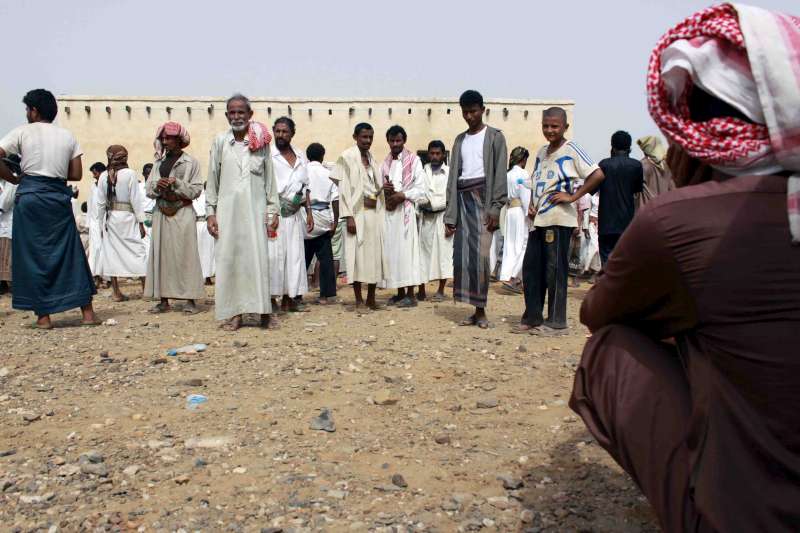
….The Saudis are guilty of aggravating and prolonging the conflict. Wary of taking too many losses on the ground and unable to do much by air and sea, they have recruited the Hashed, a local tribe, to fight against the Huthi, the tribe central to the Shia rebels. The Hashed have several incentives to continue fighting for as long as possible-they have a long-standing feud with the Huthi, and make a great deal of money from fighting for the Saudis, and may be coming up with schemes to prolong the conflict. According to a source of Al Jazeera:

If [the Hashed are] given the mission of taking a particular mountain, for example, they’ll call up the Huthi leaders and tell them: ‘We’re getting five million riyals to take the mountain. We’ll split it with you if you withdraw tonight and let us take over’… After the tribesmen take charge, they hand it over to the Saudis… The next day, the Huthi return and defeat the Saudis and retake the mountain… It’s been happening like this for weeks.

Robb Throws Down the Gauntlet

Sunday, January 17th, 2010

To the legacy society of the nation-state and the hierarchical transnational corporation:

MILESTONE

….It’s time to up the ante and move onto the next phase:  the birth and rapid growth of new societal networks.*  This is going to be a fun ride!

* As in, new societal networks that can outcompete (trounce evolutionarily) all existing status quo organizational forms  (this should not be confused with the diminutive form of ‘social networking,’ as in Facebook and Twitter).

Long term, I think this is correct and that Robb is, as usual,  ahead of the curve on what will become the zeitgeist in the next few decades ( I will add that this evolutionary path appears to be happening much faster than I had considered, by at least 15-20 years). The movement in the 21st century will be toward networked civilizations on one end of the spectrum that will be pretty nice places to be and on the other, a kind of emergent, hypermobile, barbarism where life is hell on Earth. 

The proper response for existing institutions is to swing their resources, their mass and their remaining legitimacy behind the triumph of the former and gracefully adapt and acclimate rather than be disintegrated by the latter. I considered this in the essay ” A Grand Strategy for a Networked Civilization” that I wrote for Threats in the Age of Obama (p.208):

….Nation-states in the 21st century will face a complex international ecosystem of players rather than just the society of states envisioned by traditional Realpolitik. If the predictions offered by serious thinkers such as Ray Kurzweill, Fred Ikle or John Robb prove true, then  technological breakthroughs will ensure the emergence of “Superempowered Individuals”[1] on a sizable scale in the near future.  At that moment, the reliance of the State on its’ punitive powers as a weapon of first resort comes to an end.  Superemepowered individuals, separatist groups, insurgents and an “opting-out” citizenry will nibble recalcitrant and unpopular states to death, hollowing them out and transferring their allegiance elsewhere.

While successful states will retain punitive powers, their primary focus will become attracting followers and clients in whom they can generate intense or at least dependable, loyalty and leverage as a networked system to pursue national interests.  This represents a  shift from worldview of enforcement  to one of empowerment, coordination and collaboration. States will be forced to narrow their scope of activity from trying to supervise everything  to  flexibly providing or facilitating core services, platforms, rule-sets and opportunities – critical public goods – that the private sector or social groups cannot easily replicate or replace.  Outside of a vital core of activity, the state becomes an arbiter among the lesser, interdependent, quasi-autonomous, powers to which it is connected.”

In other words, America and our “leaders” need a Boydian strategy and a ruthless commitment to honest clarity and sacrifice in order to weather the transition and retain some relevance. This is what makes the current cultural trend toward a political economy of oligarchy among the elite so worrisome. Their careerist self-interest and class values will push them to make all the wrong choices at critical junctures.

Will Haiti Katrina-ize the Obama Administration?

Friday, January 15th, 2010

The news trickling out of Haiti is apocalyptic. The president of Haiti is homeless. Hundreds of thousands may be dead. The Haitian state, rickety and corrupt at the best of times, has collapsed along with the government buildings. Gangs of machete-wielding looters rule the capital city as supplies of food and clean water run dangerously low. The magnitude of the disaster may exceed the capacity of even the U.S. to respond unilaterally.

A humanitarian crisis of epic proportions is brewing and anything short of a speedy and massive response in the next 48 hours and a restoration of order in Haiti will inevitably draw comparisons between Haiti and New Orleans under Bush.

None Dare Call it a Rogue State

Wednesday, December 9th, 2009


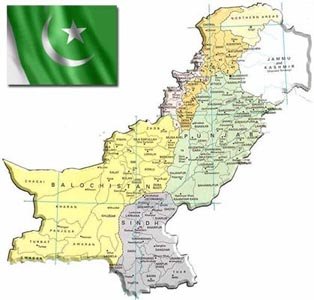
Reader Isaac, points to an excellent analytical overview of Pakistan’s national nervous breakdown at Dawn.com, by Nadeem F. Paracha. It is a lengthy but stupendous post with some 200 + comments:

Little monsters

There is nothing new anymore about the suggestion that over a span of about 30 odd years, the Pakistani military and its establishmentarian allies in the intelligence agencies, the politicised clergy, conservative political parties and the media have, in the name of Islam and patriotism, given birth to a number of unrestrained demons which have now become full-fledged monsters threatening the very core of the state and society in Pakistan.

A widespread consensus across various academic and intellectual circles (both within and outside Pakistan), now states that violent entities such as the Taliban and assorted Islamist organisations involved in scores of anti-state, sectarian and related violence in the country are the pitfalls of policies and propaganda undertaken by the Pakistani state and its various intelligence agencies to supposedly safeguard Pakistan’s ‘strategic interests’ in the region and more superficially, Pakistan’s own ideological interest.

….The 1980s and the so-called anti-Soviet Afghan jihad is colored with deep nostalgic strokes by the Islamists and the military in Pakistan. Forgetting that the Afghans would have remained being nothing more than a defeated group of rag-tag militants without the millions of dollars worth of aid and weapons that the Americans provided, and Zia could not have survived even the first MRD movement in 1981 had it not been due to the unflinching support that he received from America and Saudi Arabia, Pakistani intelligence agencies and its Afghan and Arab militant allies were convinced that it was them alone who toppled the Soviet Union.

The above belief began looking more and more like a grave delusion by the time the Afghan mujahideen factions went to war against one another in the early 1990s and Pakistan was engulfed with serious sectarian and ethnic strife. But the post-1971 narrative that had now started to seep into the press and in many people’s minds, desperately attempted to drown out conflicting points of views about the Afghan war by once again blaming the usual suspects: democracy, secularism and India.

Many years and follies later, and in the midst of unprecedented violence being perpetrated in the name of Islam, Pakistanis today stand more confused and flabbergasted than ever before.

The seeds of the ideological schizophrenia that the 1956 proclamation of Pakistan being an ‘Islamic Republic’ sowed, have now grown into a chaotic and bloody tree that only bares delusions and denials as fruit.

Read the rest here.

There has been an ocean of ink spilled about the Obama administration’s Hamlet-like deliberation over a war strategy for Afghanistan and on the implications of agreeing to 30,000 rather than the 40,000 new troops for the “Afghan Surge”, as Gen. McChrystal had originally requested. The 10,000 difference in boots is not the salient strategic point, though it is the one that excites political partisans on the Right, Left and anti-war Far Left. It also distracts us from debating our fundamental strategic challenge.

The horns of our dilemma is that our long time “ally” whom we have hitched ourselves to in a grand war effort against revolutionary Islamist terrorism is not our ally at all, but a co-belligerent with our enemy. By every policy measure that matters that causes the United States – justifiably in my view – to take a tough stance against North Korea and Iran, applies in spades to Islamabad. Yet none dare call Pakistan a rogue state.

It is the elephant in our strategy room – if the elephant was a rabid and schizophrenic trained mastodon, still willing to perform simple tricks for a neverending stream of treats, even as it eyes its trainer and audience with a murderous kind of hatred. That Pakistan’s deeply corrupt elite can be “rented” to defer their ambitions, or to work at cross-purposes with Pakistan’s perceived  “interests”, is not a game-changing event. Instead, it sustains and ramps up the dysfunctional dynamic we find ourselves swimming against.

We play a bizarre game, our leaders being more concerned about Pakistan’s “stability” than Pakistan’s own generals and politicians who egg on, fund and train the very militant Islamist groups spreading death and chaos inside Pakistan and beyond its borders. Why can we not find Osama bin Laden or Mullah Omar ? Because they are high value clients of the ISI which is no more likely to give them up than the KGB was to hand over Kim Philby.  

Until America’s bipartisan foreign policy elite grapple with the fact – and it is an easily verifiable, empirical, fact – that Pakistan’s government is in chronic pursuit of policies that destabilize Central Asia, menace all of Pakistan’s neighbors, generate legions of terrorists and risk nuclear war with India, no solutions will present themselves.

A strategy will only have a chance of success when it is grounded in reality.

Switch to our mobile site

