zenpundit.com » 2016 » May

Archive for May, 2016

Mancala games in culture & nature

Tuesday, May 17th, 2016

[ by Charles Cameron — I would rather play with the woodpeckers than with the humans ]
.

Mancala games are games in which “seeds” are places in a series of “holes” in a board, often a carved wooden board, according to mathematical principles of play and capture. Wikipedia:

Most mancala games share a common general game play. Players begin by placing a certain number of seeds, prescribed for the particular game, in each of the pits on the game board. A player may count their stones to plot the game. A turn consists of removing all seeds from a pit, “sowing” the seeds (placing one in each of the following pits in sequence) and capturing based on the state of board. This leads to the English phrase “count and capture” sometimes used to describe the gameplay. Although the details differ greatly, this general sequence applies to all games.

¶¶

Equipment is typically a board, constructed of various materials, with a series of holes arranged in rows, usually two or four. The materials include clay and other shape-able materials. Some games are more often played with holes dug in the earth, or carved in stone. The holes may be referred to as “depressions”, “pits”, or “houses”. Sometimes, large holes on the ends of the board, called stores, are used for holding the pieces.

Playing pieces are seeds, beans, stones, cowry shells, half-marbles or other small undifferentiated counters that are placed in and transferred about the holes during play.

¶¶

Among the earliest evidence of the game are fragments of a pottery board and several rock cuts found in Aksumite areas in Matara (in Eritrea) and Yeha (in Ethiopia), which are dated by archaeologists to between the 6th and 7th century AD; the game may have been mentioned by Giyorgis of Segla in his 14th century Ge’ez text Mysteries of Heaven and Earth, where he refers to a game called qarqis, a term used in Ge’ez to refer to both Gebet’a (mancala) and Sant’araz (modern sent’erazh, Ethiopian chess).

Nota Bene:

Even when played with glass beads, mancala games are not even close to the Glass Bead Game as Hermann Hesse describes it, since their moves have nothing to do with cultural citation or meanings, let along their contrapuntal connections and correspondences, but are indifferent markers, inherently fungible.

**

It was 3 Quarks Daily that introduced me to the avian version of mancala games in a post that read:

Acorn woodpeckers drill into trees not in order to find acorns, but in order to make holes in which they can store acorns for later use, especially during the winter.

As the acorn dries out, it decreases in size, and the woodpecker moves it to a smaller hole. The birds spend an awful lot of time tending to their granaries in this way, transferring acorns from hole to hole as if engaged in some complicated game of solitaire.

Multiple acorn woodpeckers work together to maintain a single granary, which may be located in a man-made structure – a fence or a wooden building – as well as in a tree trunk. And whereas most woodpecker species are monogamous, acorn woodpeckers take a communal approach to family life. In the bird world, this is called cooperative breeding. Acorn woodpeckers live in groups of up to seven breeding males and three breeding females, plus as many as ten non-breeding helpers. Helpers are young birds who stick around to help their parents raise future broods; only about five per cent of bird species operate in this way.

**

Conclusion:

For myself, I would rather play with the woodpeckers than with the humans.

Even so, a humanly-wrought board can be very lovely:
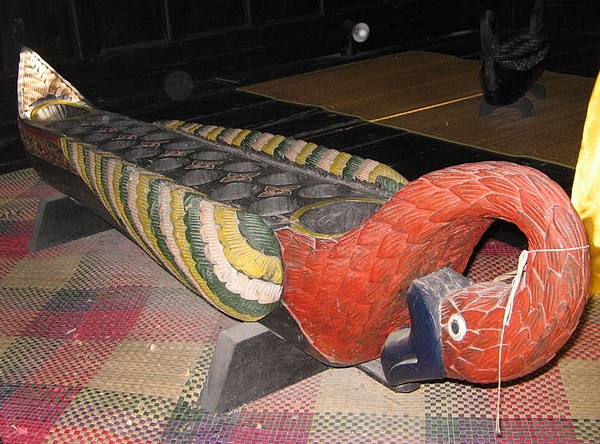
swan mancala board

Turner on Cultural Understanding and Influence In The Arena

Tuesday, May 17th, 2016

[by Mark Safranski / “zen“]


Pete Turner (Right)                                                       Anthony Iannarino

“Alcohol and hand grenades” is always the mark of a great interview.

Some ZP readers are familiar with business strategist and sales expert S. Anthony Iannarino due to his highly regarded and widely read The Sales BlogAnthony also has a podcast, In the Arena and in this week’s episode he interviews another friend of ZP, Pete Turner of The Break it Down Show.

Pete and Anthony discuss HUMINT, cultural understanding, John Boyd, Afghanistan, 4GW, trust building, relationships, organizational cultures and making connections through respect, analogs to the business world, institutional “tribes”, cross-cultural interactions, books and much more.

Give it a listen here. Strongest recommendation.

Sunday surprise: osprey! — & more..

Sunday, May 15th, 2016

[ by Charles Cameron — elemental battles — one extraordinary nature video in slomo, and another with an interesting angle on threesidedness ]
.

But first, by way of preamble..

Haniel Long Annie Dillard SPEC

I’ve told the tale of how I came to appreciate the power of DoubleQuotes by running across these two parallel quotes in the works of two writers I admire, Haniel Long and Annie Dillard, in DoubleQuotes — origins, while in Bobcat jumps shark.. I posted a photo of an encounter that strongly reminded me of the pair of them.

**

You can therefore imagine how delighted i was this week to add this fourth entry into what is rapidly becoming a catalogue of fights-to-the-death between creatures of opposing elements:

The bird, as in Haniel Long’s tale, is an osprey, it’s battle is with a heavy fish — but in this case, it is the osprey that survives the encounter — and the slow motion video capture is simply astonishing.

Which reminds me..

**

I have already posted three times on the subject of ternary logic and three player games — in Of games III: Rock, Paper, Tank, in Spectacularly non-obvious, I: Elkus on strategy & games, and in Spectacularly non-obvious, 2: threeness games — but had somehow omitted any mention of another spectacular wildlife video, this one capturing a three-cornered battle between buffalos, lions and a crocodile or two, which can be found on YouTube under the title Battle at Kruger:

With 77 million views and counting at the time I post this, it’s a video you may very well have seen before — and a terrific testament to the idea that sheer quantity may on occasion be indicative of real quality.

Gilmore Girls and FaceBook Friends

Saturday, May 14th, 2016

[ by Charles Cameron — on relationships today, a DoubleQuote found in the Wild ]
.

Call it unconscious humor, found art, or a DoubleQuote in the Wild — these things “catch the eye” and “capture the heart”. Nice work, David Masad, and thanks fore passing it along, Kelsey Atherton.

Conflict resolution has both positive and negative outcomes

Friday, May 13th, 2016

[ by Charles Cameron — paradox: individual health goes down while societal health improves ]
.

reverse arrow conflict individual & group

I knew this “reverse arrows” graphic would find a multitude of uses.

**

Here’s the news report:

Post-conflict reconciliation led to societal healing, but worsened psychological health.

Key paras:

Civil wars divide nations along social, economic, and political lines, often pitting neighbors against each other. In the aftermath of civil wars, many countries undertake truth and reconciliation efforts to restore social cohesion, but little has been known about whether these programs reach their intended goals.

A new study published in Science suggests reconciliation programs promote societal healing, but that these gains come at the cost of reduced psychological health, worsening depression, anxiety, and trauma.

“Our research suggests that talking about war atrocities can prove psychologically traumatic for people affected by war. Invoking war memories appears to re-open old war wounds,” said Oeindrila Dube, assistant professor of politics and economics at New York University and one of the authors of the study. “At the same time, the reconciliation program we examined was also shown to improve social relations in communities divided by the war.”

¶ ¶ 

The study took place across 200 villages, 100 of which were randomly chosen to be offered the reconciliation program. The research team tracked 2,383 people in both sets of villages, recording their attitudes towards former combatants, their mental health, and the strength of their social ties nine and 31 months after the program.

The study was made in Sierra Leone a decade after the civil war ended. Assuming the methodology is good and the results are as described, there’s a very interesting paradox here. And hey, a decent paradox really gets my mental feet a-tapping. It will be instructive to see whether similar results are found elsewhere.

**

The study is J. Cilliers, O. Dube, B. Siddiqi. Reconciling after civil conflict increases social capital but decreases individual well-being. Science, 2016; 352 (6287): 787 DOI: 10.1126/science.aad9682 — to which I have no access, and which would very likely prove beyond my comprehension in any case.


Switch to our mobile site