zenpundit.com » theory

Archive for the ‘theory’ Category

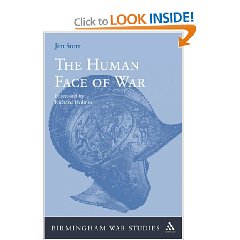
The Human Face of War

Tuesday, December 22nd, 2009

storr.jpg

The Human Face of War by Dr. Jim Storr

An important new book on military theory and history by British defense expert Dr. Jim Storr, a retired Lt. Colonel, King’s Regiment and an instructor at the UK Defence Academy, was reviewed in Joint Forces Quarterly ( hat tip Wilf Owen) by Col. Clinton J. Acker III:

The Human Face of War

….Surveying an array of disciplines including history, psychology, systems theory, complexity theory and philosophy, Storr (a former British officer) looks at what a theory of combat should include, then provides one. He goes on to apply that theory to the design of organizations, staffs, leadership, information management and the creation of cohesion in units. In doing so, he takes on many currently popular theories such as Effects-Based Operations, the observe-orient-decide-act loop, the use of postmodern theory and language.

….Storr’s position is best summed up with this passage:”Critically, military theory should not be a case of ‘this is the right course of action’ but rather ‘doing this will probably have beneficial outcome’

I have not read this book, as it is new and not yet released over here but I have to stop here and comment that the ability to make effective, reasonable, probablilistic estimates based on uncertain or incomplete information is perhaps one of the most important cognitive skills for strategic thinking. This applies whether we are discussing decision making in business, sports, warfare or games of strategy.

….After developing his precepts in the first three chapters, Storr uses the rest of the book to deal with the specifics about how to apply those precepts to “Tools and Models”, “Shock and Surprise”, “Tactics and Organizations”, “Commanding the Battle”, “The Soul of the Army” ( a fascinating discussion of leadership styles) and “Regulators and Ratcatchers”….The discussion in these chapters presents a superb treatise on the use of examples and counterexamples to support points of view. A single counterexample is not sufficient to falsify an argument, for there are no absolutes. Rather we are looking for patterns that appear better than others…”

Read the rest here.

Guest Post: Cameron on Millenarianism and the Paranoid Style

Saturday, December 19th, 2009

Charles Cameron has been guest blogging here in a series on radical Islamism and terrorism and is now branching out in to more general posts that touch upon apocalyptic or esoteric religious movements.. A former researcher with the Center for Millennial Studies at Boston University, his most recent essay, an analysis of the powerpoint presentation of Ft. Hood shooter Nidal Malik Hasan, appeared in the Small Wars Journal.

Personally, I found this post very interesting because I have seen repeated – and in my view, nutty – speculation or argument by progressives that the U.S. military has a secret fundamentalist Christian agenda. Charles highlights a flipside form of paranoia below reminiscient of Richard Hofstadter:

Millenarianism and the Paranoid Style

by Charles Cameron

A major writing his thesis for the MMAS degree at SAMS / Fort Leavenworth a couple of years back took for his topic “Strategic Implications of American Millennialism”. He wrote about the impact that  (eg) the expectation of Christ’s soon return to Jerusalem implying that the Israelis should rebuild the Temple on Temple Mount (and thus arguably displace the al-Aqsa Mosque and Dome of the Rock which currently stand there) might have on peace talks in the ME. And he thought that thinking of this kind was a poor foundation on which to build US foreign policy. I imagine he got the degree, since his monograph has been available on the web along with 2,500 others.

Strategic Implications of American Millennialism

It seems that early this week, a pre-millennialist Christian ran across the document an began to alert others. If you search Google for “Strategic Implications of American Millennialism” today, you’ll get 13,000 hits, including one on the blog of a prominent “prophecy” writer, John McTernan, and another on the “Worldview Matters” podcast of Christian Worldview Network, which offers an interview with McTernan. McTernan claims:

This … is an United States Army report about the literal believers of the Bible and how they affect American foreign policy. It is the most dangerous document to believers that I have ever read in my entire life. After reading this document, it is easy to see the next step would be to eliminate our Constitutional rights and herd us into concentration camps.

So a grad student’s monograph is being taken for something with the authority of a Field Manual, and thousands of Christians are concerned enough that their government is about to intern them that they read the monograph as strong evidence of that theory.
 
This ties in with late 1990s concerns that FEMA was about to herd people into camps. Indeed, a commenter on McTernan’s blog writes:

Why would the National Guard need so many “Internment/ Resettlement Specialist” for “FEMA camps”…in the USA? This administration recognizes there will be those who WILL NOT compromise their faith, military members included (about 25-50 million Americans according to some articles). So, these people (we) will have to be dealt with. Put two and two together: the radical thinking of this administration and the “FEMA camps” for those that need “reeducation

The FEMA concentration camp story has long legs — I first wrote about it in a paper on “web-based conspiracist and apocalyptic interpretations of the U.S. Federal Emergency Management Agency” back in 1999, when it was routinely tied in with Y2K concerns — and the degree of  “connecting the dots” can be pretty impressive: one commenter on a FEMA camp scare site proclaims:

….the Bush Family are very strong supporters of the new world order and if viewed closely; resembles the Communest [sic] Manifesto

I don’t think we should read the sudden interest in concentration camps for evangelicals as pointing inexorably to some terrifying outcome, but it is becoming part of the scenery. What its impact on military personnel who regard people like McTernan as prophetic voices will be is hard to estimate — but Maj. Stuckert who as far as I can tell is currently deployed to Kabul, is in for a shock when he finds out that a paper he wrote now has him figuring as a principal spokesman for the US Army’s preparations to serve the Antichrist. And the same is presumably true for Col. Stefan J. Banach, the Director of SAMS, who is named as “Responsible Person” on the monograph’s “Report Documentation Page” — who has already fielded at least one irate phone-call on the subject, and is suggested as a target for such calls by McTernan.
 
One thing that might really help ease the situation would be for DOD or the School of Advanced Military Studies to post a note attached to Maj. Stuckert’s monograph, stating unequivocally that it does not represent Army policy but is one of 2,500 similar theses explored by students in the course of obtaining a degree, and as such presents one student officer’s views only.
We Laugh Because it is Funny but also Because it is True: The Weakness of the Historical Method

Thursday, December 17th, 2009

This amusing videoclip makes the same point that my polymathic amigo Dave Schuler likes to make about the true state of historiography about classical  antiquity:


I will now let Dave speak for himself:

….Take the example of a single book, Plato’s Republic. The book was written in something like the 4th century BCE. Until the discovery of the Nag Hammadi library in Egypt in the 1945 the very earliest manuscript of The Republic that was known to exist was from around 895 CE. The version of The Republic in the Nag Hammadi library dates from something like 325 CE. Assuming that the text that came down to the Founding Fathers was derived from the 895 manuscript (a very bad assumption-it wasn’t), the book had been preserved for a half millennium by Christian scribes for Christian purposes.This would be a good point for a digression-within-a-digression about the Arab copyists who preserved many works of classical antiquity but that would be too big a digression. Suffice it to say that these copyists took copies that had been preserved by Christians and preserved them themselves for their own, presumably Muslim, reasons.So The Republic has a history something like this. We don’t have a single copy of the work from Plato’s time. For six or seven hundred years it was copied by Greek and Roman scribes for reasons we can only guess at. It was then copied for between a half and a full millennium by Christian, Jewish, and Arab scribes for Christian, Jewish, and Muslim reasons.That is the history of every single work from classical antiquity that survived until the time of the founding of our republic. We have, essentially, no idea of the entire body of work produced by the ancients. What was known of classical antiquity at the time of the founding our republic consisted of the buildings that still survived that they had built (often highly modified for Christian use), works of art and other artifacts, classical writings that had been preserved by Christian, Jewish, and Muslim scribes for their own purposes and that, presumably, furthered their agenda, and accounts of classical antiquity from Christian and Jewish writers.That’s it.

History is an empirical profession based on standards of evidence – in part. It is also an art of crafting a narrative that can effectively communicate the meaning of the evidence of an event that is known to exist.  Leopold von Ranke, one of the founders of the modern historical method, admonished his students that history should explain “wie es eigentlich gewesen ist” ( “Tell it how it really was” or “how it actually has been”) and eschew grand theories in seeking causation. These are difficult objectives to balance.

Historians are prisoners of their primary sources. Without them they are theorists or mere speculators. Too few, as with ancient history, and the historian is engaged in the same sort of guesswork as archaeologists and paleontologists or they are reduced to ideological theorizing, something historians are supposed to hold as suspect and as fit only for political scientists.

Too many sources, as with any modern presidential administration, and the sheer number makes it difficult to find critical evidence or draw upon a defensibly representative sample. Ronald Reagan supposedly signed one million documents in his eight years in the White House. True or not, the figure would represent a fraction of what his administration generated. Many documents of great importance are nonetheless not important enough at the time to cross the desk of the President of the United States.

The need to craft a narrative, imposes other restraints. There is no “history” unless the results of a historian’s work are disseminated and understood, challenged and defended.  Narrative works require the formating of historical events as a story and while this is reasonable in most instances, some periods of crisis are products of chance or a series of small acts that while unrelated, happen to intersect. Imposing a strong narrative frame on these situations is misleading but without the “story” there is no hook attractive enough to secure the attention of the general audience.

This is not to say, as Henry Ford did, that “history is bunk” but rather we need to be aware of the practical limitations under which historians labor. While history is not sociology or philosophy, it is not to be confused with physics.

Stocking Stuffers……

Saturday, December 12th, 2009

In a burst of raw self-interest – and also a little love for my blogfriends – these books make nifty gifts for any war nerd or deep thinker on your Christmas list:

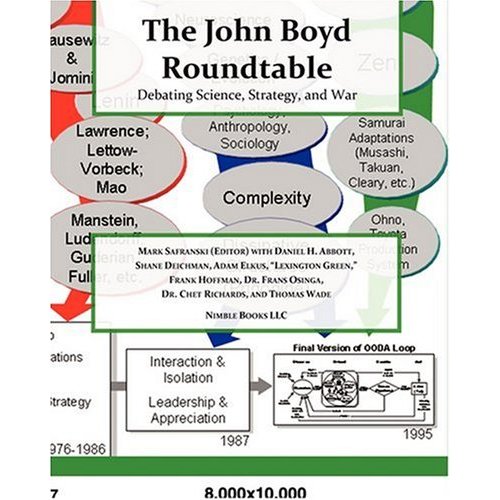
The John Boyd Roundtable: Debating Science, Strategy, and War – Mark Safranski (Ed.)


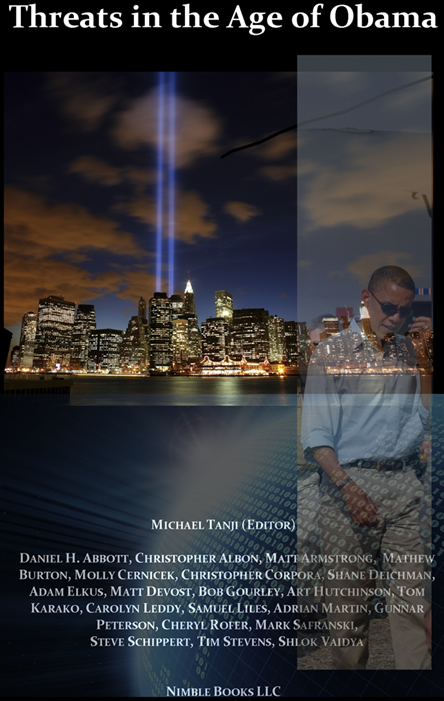
Threats in the Age of Obama – Michael Tanji (Ed.)

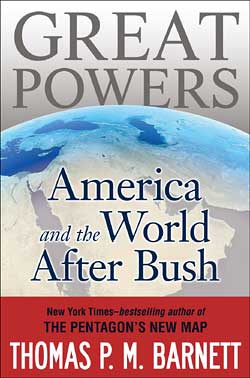
Great Powers: America and the World After Bush – Thomas P.M. Barnett

Brave New War: The Next Stage of Terrorism and the End of Globalization – John Robb

Science, Strategy and War: The Strategic Theory of John Boyd – Frans Osinga


The Genius of the Beast: A Radical Re-Vision of Capitalism  by Howard Bloom

Intelligence and How to Get It: Why Schools and Cultures Count  by Richard Nisbett

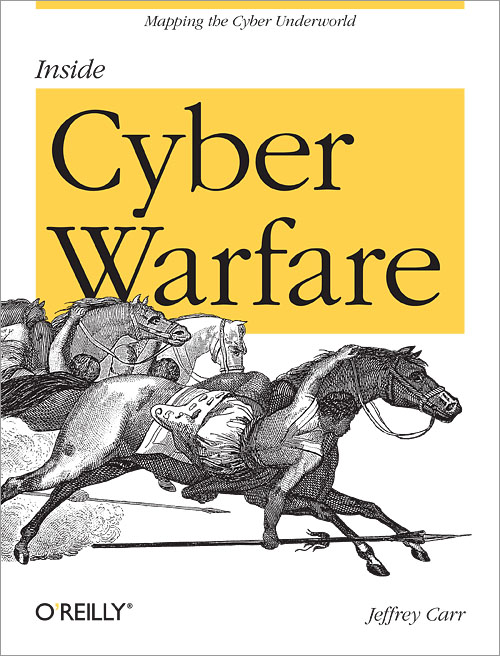
Inside Cyber Warfare: Mapping the Cyber Underworld  by Jeffrey Carr

This Is for the Mara Salvatrucha: Inside the MS-13, America’s Most Violent Gang  by Samuel Logan

Full Disclosure:

In copmpliance with new Federal regulations of dubious Constitutional merit, I hearby declare ZP does not accept money for publishing reviews or any paid advertising. Courtesy review copies were extended to me by authors or publishers acting on behalf of Sam Logan, Tom Barnett and Jeff Carr. I edited the first book in this post and was a contributing author to the second one. All of the books, with the exception of Cyber Warfare have been the subject of prior reviews or posts at ZP.

Brief Metacognition

Tuesday, December 1st, 2009

Very, very busy but the following two items struck me as useful advice for sharpening our mental edges.

First, John Robb linked to a series of posts by Eric Drexler of Metamodern. Al of them were good but I particularly liked the following one:

How to Understand Everything (and why)

….Formal education in science and engineering centers on teaching facts and problem-solving skills in a series of narrow topics. It is true that a few topics, although narrow in content, have such broad application that they are themselves integrative: These include (at a bare minimum) substantial chunks of mathematics and the basics of classical mechanics and electromagnetism, with the basics of thermodynamics and quantum mechanics close behind.

….To avoid blunders and absurdities, to recognize cross-disciplinary opportunities, and to make sense of new ideas, requires knowledge of at least the outlines of every field that might be relevant to the topics of interest. By knowing the outlines of a field, I mean knowing the answers, to some reasonable approximation, to questions like these:

What are the physical phenomena?
What are their magnitudes?
What are their preconditions?
How well are they understood?
How well can they be modeled?
What do they make possible?
What do they forbid?

And even more fundamental than these are questions of knowledge about knowledge:

What is known today?
What are the gaps in what I know?
When would I need to know more to solve a problem?
How could I find it?

It takes far less knowledge to recognize a problem than to solve it, yet in key respects, that bit of knowledge is more important: With recognition, a problem may be avoided, or solved, or an idea abandoned. Without recognition, a hidden problem may invalidate the labor of an hour, or a lifetime. Lack of a little knowledge can be a dangerous thing.

Secondly, reading through Richard Nisbett’s Intelligence and How to Get It: Why Schools and Cultures Count ( see this monster, two-partbook review by James McCormick at Chicago Boyz), the intriguing findings of the “Venezuela Project” run by none other than the late Richard Herrnstein of Bell Curve fame. Nisbett writes (74-75):

Herrnstein and his coworkers devised a very advanced set of materials geared to teaching seventh-graders fundamental concepts of problem solving that were not targeted to any particular subject matter. In effect they, they tried to make the children smarter by giving them handy implements for their intellectual tool kits.

What were those non-subject specific, cognitive skills?

  • Basics of Classification
  • Hypothesis Testing
  • Discovery of Properties of Ordered Dimensions
  • Analogies
  • Simple Propositions
  • Principles of Logic
  • Constructing and Evaluating Complex Arguments
  • Weighing opportunity costs vs. probability of success for a goal
  • Evaluating credibility and relevance of data

I would have added metaphors, pattern-recognition and intuitive thinking games but it was a fine set of skills and the results were remarkable, according to Nisbett:

The instruction resulted in big changes in children’s ability to solve problems that the new skills were designed to improve….for language comprehension, .62 SD [ standard deviation]; for learning how to represent ‘”problem spaces,” .46 SD; for decision making, .77 SD; for inventive thinking, .50 SD. In short, general problem solving skills can be taught, and taught moreover in a brief period of time.

In psychometric terms, for a 13 year old, these scores represent phenomenal improvements in cognitive performance and indicate the plasticity of some aspects of measured intelligence. Why have such activities not become commonplace in public schools? Or universities?

Why indeed?


Switch to our mobile site