zenpundit.com » security

Archive for the ‘security’ Category

History Will Judge Only if We Ask the Right Questions

Wednesday, April 18th, 2012
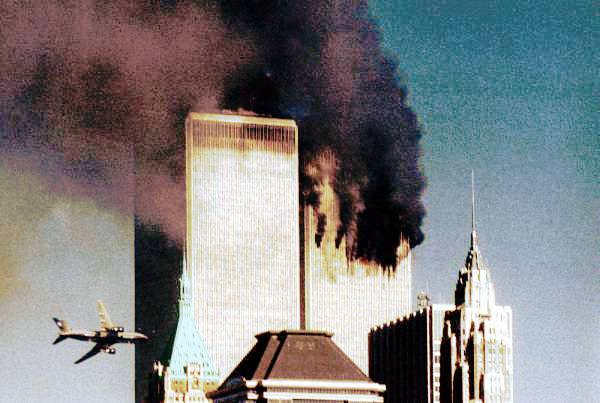
Thomas Ricks of CNAS recently had a historically-minded post at his Best Defense blog at Foreign Policy.com:

What Tom would like to read in a history of the American war in Afghanistan 

I think I’ve mentioned that I can’t find a good operational history of the Afghan war so far that covers it from 2001 to the present. (I actually recently sat on the floor of a military library and basically went through everything in its stacks about Afghanistan that I hadn’t yet read.)

Here are some of the questions I would like to see answered:

–What was American force posture each year of the war? How and why did it change?

–Likewise, how did strategy change? What was the goal after al Qaeda was more or less pushed in Pakistan in 2001-02?

–Were some of the top American commanders more effective than others? Why?

–We did we have 10 of those top commanders in 10 years? That doesn’t make sense to me. 

–What was the effect of the war in Iraq on the conduct of the war in Afghanistan?

–What was the significance of the Pech Valley battles? Were they key or just an interesting sidelight?

–More broadly, what is the history of the fight in the east? How has it gone? What the most significant points in the campaign there?

–Likewise, why did we focus on the Helmand Valley so much? Wouldn’t it have been better to focus on Kandahar and then cutting off and isolating Oruzgan and troublesome parts of the Helmand area?

–When did we stop having troops on the ground in Pakistan? (I know we had them back in late 2001.) Speaking of that, why didn’t we use them as a blocking force when hundreds of al Qaeda fighters, including Osama bin Laden, were escaping into Pakistan in December 2001?

–Speaking of Pakistan, did it really turn against the American presence in Afghanistan in 2005? Why then? Did its rulers conclude that we were fatally distracted by Iraq, or was it some other reason? How did the Pakistani switch affect the war? Violence began to spike in late 2005, if I recall correctly — how direct was the connection?

–How does the war in the north fit into this?

–Why has Herat, the biggest city in the west, been so quiet? I am surprised because one would think that tensions between the U.S. and Iran would be reflected at least somewhat in the state of security in western Afghanistan? Is it not because Ismail Khan is such a stud, and has managed to maintain good relations with both the Revolutionary Guard and the CIA? That’s quite a feat. 

Ricks of course, is a prize winning journalist and author of best selling books on the war in Iraq, including Fiasco and he blogs primarily about military affairs, of which Ricks has a long professional interest and much experience.  Ricks today is a think tanker, which means his hat has changed from reporter to part analyst, part advocate of policy. That’s fine, my interest here are in his questions or rather in how Ricks has approached the subject.

First, while there probably ought to be a good “operational history” written about the Afghan War – there’s a boatload of dissertations waiting to be born – I think that in terms of history, this is the wrong level at which to begin asking questions. Too much like starting a story in the middle and recounting the action without the context of the plot, it skews the reader’s perception away from motivation and causation.

I am not knocking Tom Ricks. Some of his queries are important – “What was the effect of the war in Iraq on the conduct of the war in Afghanistan?”  – rises to the strategic level due to it’s impact and the light it sheds on national security decision making during the Bush II administration, which I suspect, will not look noble when it is revealed in detail because it almost never is, unless you are standing beside Abraham Lincoln as he signs the Emancipation Proclamation.  Stress, confusion, anger and human frailty are on display. If you don’t believe me, delve into primary sources for the Cuban Missile crisis sometime.  Or the transcripts of LBJ and NIxon. Exercise of power in the moment is uncertain and raw.

But most of the questions asked by Ricks were “operational” – interesting, somewhat important, but not fundamental. To understand the history of our times, different questions will have to be asked in regard to the Afghan War. Here are mine for the far off day when documents are declassified:

What was the evolution of the threat assessment posed by Islamist fundamentalism to American national security by the IC from the Iranian revolution in 1979 to September 11, 2001?  Who dissented from the consensus? What political objections or pressures shaped threat assessment?

What did American intelligence, military and political officials during the Clinton, Bush II and Obama administrations know of the relationship between the ISI and al Qaida and when did they know it?

What did American intelligence, military and political officials during the Clinton, Bush II and Obama administrations know of the relationship between Saudi intelligence, the House of Saud and al Qaida and when did they know it?

What did American intelligence, military and political officials during the Clinton, Bush II and Obama administrations know of the relationship between the Taliban and al Qaida and when did they know it?

In the aftermath of 9-11, how did Saudi leverage over global oil markets effect American strategic decision making?

In the aftermath of 9-11, how did Pakistani nuclear weapons effect American strategic decision making?

In the aftermath of 9-11, how did the “Iraq problem”  effect American strategic decision making?

In the aftermath of 9-11, how did nuclear terrorism threat assessments effect American strategic decision making?  Did intelligence reports correlate with or justify the policy steps taken?

Who made the call on tolerating Pakistani sanctuaries for al Qaida and the Taliban and why?

Was there a net assessment of the economic effects of a protracted war in Afghanistan or Iraq made and presented to the POTUS? If not, why not?

Why was a ten year war prosecuted with a peacetime military and a formal declaration of war eschewed?

How did the ideological convictions of political appointees in the Clinton, Bush II and Obama impact the collection and analysis of intelligence and execution of war policy?

Who made the call for tolerating – actually financially subsidizing – active Pakistani support for the Taliban’s insurgency against ISAF and the Government of Afghanistan and why?

What counterintelligence and counterterrorism threat assessments were made regarding domestic Muslim populations in the United States and Europe and how did these impact strategic decisions or policy?

What intelligence briefs or other influences caused the incoming Obama administration to radically shift positions on War on Terror policy taken during the 2008 campaign to harmonize with those of the Bush II administration?

What discussions took place at the NSC level regarding the establishment of a surveillance state in the “Homeland”, their effect on our political system and did any predate September 11, 2001 ?

What were the origins of the Bush administration’s  judicial no-man’s land policy regarding “illegal combatants” and “indefinite detention”, the recourse to torture but de facto prohibition on speedy war crimes trials or capital punishment?

The answers may be a bitter harvest.

Pondering Transition Ops with Quesopaper

Monday, April 16th, 2012

One of the nice things about this blog is that periodically, smart folks will send me their unpublished material for feedback and private commentary. This comes in a wide variety of formats – manuscripts, articles, book chapters, powerpoint, sometimes an entire book or novel! It is flattering and almost always informative, so I try to help where I can or at least point the sender in the direction of someone more appropriate.

Recently, I was given a peek at a very intriguing paper on “Transition Operations” by Dr Rich Ledet, LTC Jeff Stewart and Mr. Pete Turner, who blogs occasionally at quesopaper.  Pete has spent a good chunk of the past ten years in a variety of positions and capacities in Iraq and Afghanistan, where he currently is with American troops in a remote rural district and it was he who passed their draft to me. They have taken a fresh look at the subject.

While I can’t give away their “secret sauce” in detail,  I particularly liked the fact that while the  focus and advice for executing transition operations is aimed at field grade officers and their civilian agency counterparts, their vision is in sync with the ideal of having policy-strategy-operations and tactics as a seamless “whole-of-government” garment. If only we could get our politicians to think in these terms, half the battle would be over.

Their paper is now headed to a professional journal; when it is published ( as I think it will be), I will definitely be linking to it here and hopefully, that will be soon.

My reason for my bringing this up – I have the permission of the authors to do so – is that the trio have put their finger on the major doctrinal problem faced by the United States military in Afghanistan – “transition operations” being a politically charged topic, laden as it is with implied foreign policy decision making by heavyweight policy makers, is treated in very scanty fashion by FM 3-24. Compared to other aspects of COIN, very little guidance is given to the the commander of the battalion or brigade in the effort to coordinate “turnover” of responsibilities and missions to their Afghan Army, police and government allies.

This at a time when the “readiness” of Afghan units and officials to accept these burdens in the midst of a war with the Taliban is questionable, variable, controversial at home and politically extremely sensitive in Afghanistan.

And at a point where, ten years after September 11, the US State Department is no more able in terms of personnel and vision or sufficiently funded by Congress, to step up their game and take the lead role in Afghanistan from the Pentagon than it was on September 10, 2001.  SECSTATEs Condi Rice and Hillary Clinton deserve great praise for making State do more with less, but State needs wholesale reform to fit the needs of the 21st century and the money and budgetary flexibility to split foreign policy tasks more equitably with the Defense Department.

State is not going to be playing a major role on the ground in our transition out of Afghanistan, which makes guidance to our majors and colonels – and in turn to their company and platoon leaders stationed there-  all the more important.

The Human Face of War, by Jim Storr, in paperback

Tuesday, February 14th, 2012

[by J. Scott Shipman]

The Human Face of War, by Jim Storr

This extraordinary book is now available in paperback for considerably less than the original $100 price tag.

This book has been reviewed twice at zenpundit:

Zen wrote the first review here.

I followed up with a dust-off of a long review written just after reading, find that here.

This is a very important book and strongly recommended.

ADDENDUM:

Zen here – I am intruding on Scott’s post to add my strong endorsement. If you are serious about strategy, particularly if you are a member of the armed forces with responsibility for operational planning or unit leadership,  The Human Face of War by Colonel Storr is on the short list of must-read books. It no longer costs a zillion dollars, so go buy it.

Justice, Coercion, Legitimacy, State-Building and Afghanistan

Tuesday, January 17th, 2012

Discussion has been emerging in the foreign policy blogosphere of   late  regarding sovereignty and the other day, Afghanistan scholar Antonio Giustozzi opined on coercion, a necessary tool of a state seeking to wield a monopoly of force.

Theory is good and the discussion is an important one with implications for US foreign policy, but it helps when debate is informed by empirical examples from practitioners.  Quesopaper, a blog by  someone out in the field  in Afghanistan has been dormant for a while, but sprang alive again with a timely post:

Rule of Law, The Afghan Springer Show 

….Rule of Law is one of the key aspects to “fixing” Afghanistan. When the Taliban dominated the country, they controlled the “courts.” As Taliban influence waned, the US and partner nations have sought to create a more traditional court system. I can’t speak intelligently on why “WE” decided to create a more western form of law in Afghanistan, but I can say, it’s not the correct approach.

I work in a remote district. It’s over an hour to the main provincial (think state) government center. The difference between the two places is about as extreme as possible. The villages, even the district center (think country govt) lack ANY essential services. There are no plumbing systems, no electricity, no garbage service…nothing. Yet, the people here survive; and dare I say? Thrive.

Like most farming folks, the people here like to be left alone. The people appreciate the Govt–Government of the Islamic Republic of Afghanistan aka “GIRoA”–but they only want so much help. Rule of Law doesn’t fit into their needs.

So, how do rural locals settle disputes?

I just recently worked with a local governor as he negotiated the resolution of a 25 year dispute. Dispute doesn’t really describe what happened…feud is more appropriate. Each side had multiple murders, one family had 1300 fig trees destroyed. Decades of money in dispute. The feud was complicated enough that the Taliban failed to resolve the issue in nearly seven years of negotiations. Negotiations require buy-in from many parties…I could go on about this, but I doubt I can make it any clearer…

Land disputes are among the thorniest local civil society issues in Afghanistan, and one where the generally corrupt and inept Karzai regime draws a particularly poor comparison with the Taliban insurgency’s ability to provide “rough justice” where the richer, more influential party to the dispute does not automatically win through bribery. Land claims are blood issues in peasant-agrarian societies in general and all the worse in honor cultures that tolerate vendettas – that the brutal Taliban could not force a settlement in this case, or did not dare to try – speaks volumes.

….Finally, our district (county govt) governor is called upon to start the process of reconciliation. This BTW is MAJOR progress for the legitimacy of GIRoA. It means the people trust this man to handle this dispute. It might become national news (for Afghanistan) though you will never hear this story on any US network or .com site (except quesopaper.com). After weeks of massaging each side, pulling out their story, commitments (commitment to settle is vital in these things) and “evidence.”

An aside about evidence…in a society that is mostly verbal and illiterate, nearly anything written can become something that it is not…WTF are you talking about Pietro? What I mean is, give someone who can’t read a document. That paper is written in a foreign language, with foreign letters. Tell him its a deed to a piece of land…wait 35 years. Now, tell that man’s grandson that the land he’s been farming for 10 years; that his family has worked for generations, isn’t actually his.

Now he has nothing; he can’t provide for his family. Tell him, his paper is a receipt for a Persian rug, not a deed…explain that he owes the real land owner for the use of that property and revenues generated. Let me know how that goes…if you smell cordite it probably didn’t go to well.

For very poor people who live at the margins of subsistence, the stakes could not be higher, which can make rolling the dice on private violence attractive (this is also why land reform programs are only a short term stopgap in economic development and reform. Agrarian population almost always exceeds arable land and as the plots get smaller, they are less productive).  Dying on your feet with a weapon in hand looks a lot more honorable to a hard-pressed farmer than watching your children waste away from starvation as the other villagers gossip about your plight.

A state with legitimate authority can preempt or suppress such private violence, but is also expected to solve the problem.

….Back to our story…The governor calls in Sharia/Islamic law experts and elders from both tribes and other community elders. Mix that group into a bunch of small rooms and start shifting groups from room to room…hours of discussions (which looks like arguing to me). Don’t forget, this thing hasn’t been settled before, it’s serious business, and here serious business is settled with an AK. At anytime the whole ordeal can melt into violence.

Success is fleeting. I have a gun, no fooling…I’m armed….

Go to quesopaper to find out what happened next. 🙂

Part of the problem is, as quesopaper indicates, our Western framework. We began experimenting with rule of law to settle property claims and commons rights starting, oh, in 14th century England with land enclosures and we did not really finish for good until after Reconstruction in the very late 19th century. That’s 500 years for the “Rule of Law” as we understand it to become the standard for 100 % of the population, 100% of the time.

And along the way, there was blood. Rivers of it. From the Highlands of Scotland, to the piney woods upcountry of Appalachia to the Black Hills and the great Western Range Wars. The gavel of the judge had to be preceded by the soldier’s rifle, the settler’s six shooter, the rebel’s musket and knives used in the dead of night.

Are Afghans in far rural villages closer to a Manhattan attorney or an English tenant whose access to the pasture has been closed off by his noble lord against all custom and ancient right? What quesopaer is seeing is “state building” from scratch, from the bottom up. Slow, painful, difficult to be certain, but more likely to be durable than imported abstractions imposed from the top down.

We are leaving Afghanistan, it is clear. Any state that we leave behind that can resist the Taliban must be able to stand behind and enforce a rule of law as Afghans understand and accept it.


Elkus on The Sovereignty Solution

Friday, January 6th, 2012

Buried at work this week, but I wanted to take a moment to point to a review  by amigo Adam Elkus at Japan Security Watch of The Sovereignty Solution by Anna Simons:

Sovereignty and National Defense 

….their new book The Sovereignty Solution, Naval Postgraduate Institute (NPS) scholar Anna Simons and her co-authors develop an approach to global security rooted around an odd idea: every state should have the right to order itself internally under its own preferences and in turn bares responsibility for all acts of aggression that transgress the sovereignty of others. This implies tolerance for a range of governmental types, an end to expeditionary state-building (direct and indirect), and an approach to warfare built on breaking states that misbehave with conventional capabilities rather than a “whole of government” approach. While a national defense policy built around such ideas may or may not be sensible, it certainly is at variance with many cherished ideas in American and Western national security policy. To name a few, the strong and weak versions of the Responsibility to Protect and the commonly held philosophy that all foreign events are interconnected and thus of American concern.

Simons’ book, to a large extent, unintentionally describes the way that many non-Anglo Pacific governments view sovereignty and its relationship to national defense. As Amitai Etzioni noted, there is a kind of “back to the future” quality about China’s prioritization of sovereignty above all else. As the West moves away from the idea of sovereignty towards a post-Westphalian future, China has moved from a Maoist policy of sponsoring insurgencies in neighboring states to championing the idea that states should be the only legitimate force of national power within their own borders. China’s views, however, are representative of a common national security philosophy in Asia….

Hat tip to SWJ Blog


Switch to our mobile site

