A wise man once told me that a weakness of our Constitutional system was that the Framers implicitly presumed that people of a truly dangerous character, from bullies to bandits to political menaces to the community, would primarily be dealt with in age-old fashion by outraged neighbors whose rights had been trespassed and persons abused one time too many. They did not prepare for a time when communities would be prohibited from doing so by a government that also, as a whole, had slipped the leash. Indeed, having read Locke, Montesquieu, Cicero, Polybius, Aristotle and Plato, they expected that such a state of affairs was “corruption” of the sort that plagued the Old World and might happen here in time. A sign of cultural decadence and political decay. They gave Americans, in the words of Benjamin Franklin, “A republic, if you can keep it”. It remains so only with our vigilance.
It is happening now.
We have forgotten – or rather, deliberately been taught and encouraged to forget – the meaning of citizenship.
We have let things slip.
Joseph Fouche superbly captures this implicit element, the consequences of the loss of fear of informal but very real community sanction, in his most recent post:
….A classic American mob could exhibit any or all of these strategies. It could be a saint inciting a mob to attack others who deviated from a shared narrative. It could be a knave in saint’s clothing inciting an attack on personal rivals. It could be a moralist inciting a mob against the local knaves. The one constant is that an American mob was an expression of communal self-government by moralists seeking to punish what they saw as deviant, even if its manifestation was frequently unpleasant. It was a sign the local people were engaged.
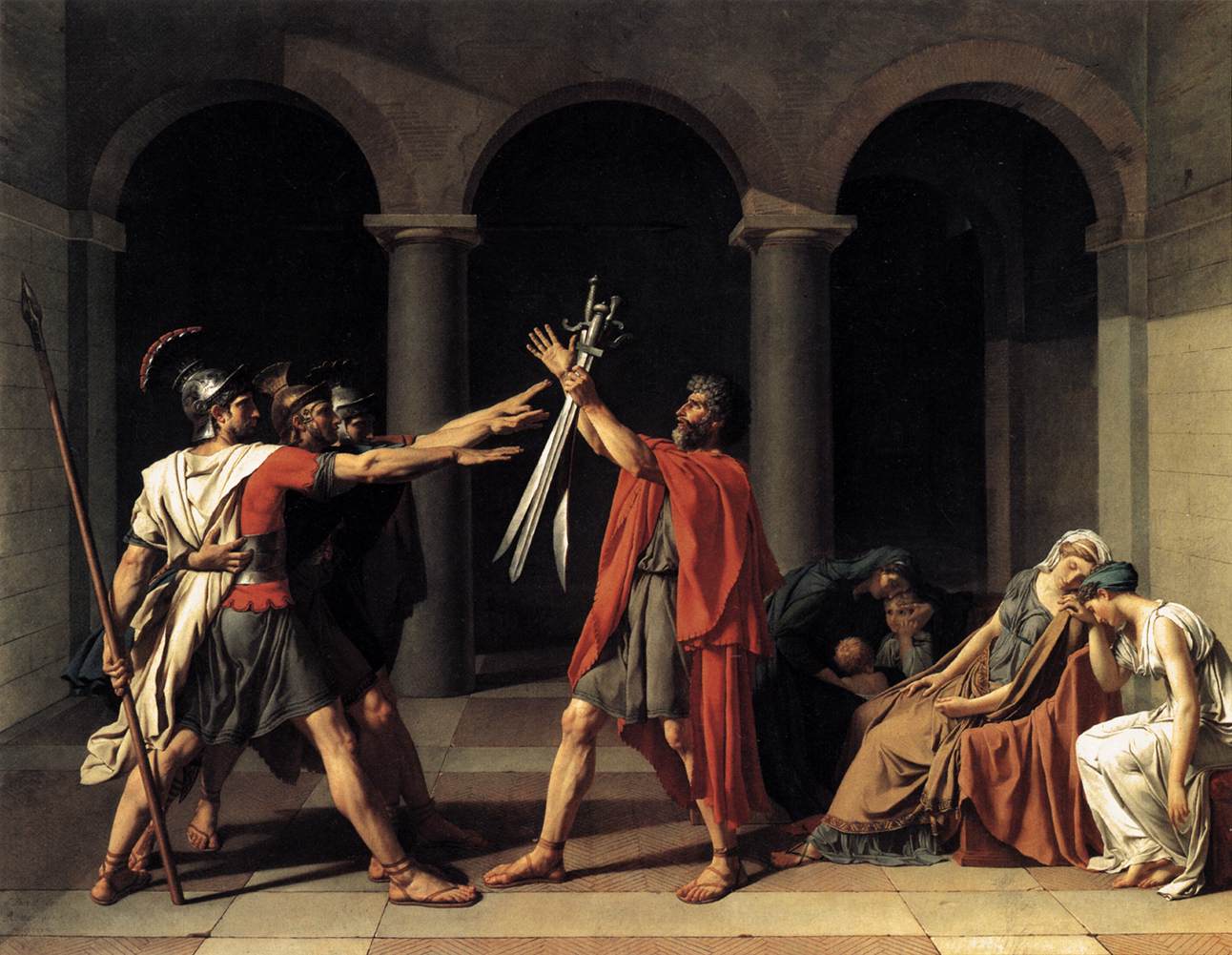
Samuel Adams was the Lenin of the American Revolution. He conceived a hatred for the British Empire and a desire for American independence well before anyone else did. Adams skillfully used mobs alongside legal pretense to incrementally spread his agenda. Others followed his example. In the Worcester Revolution of 1774, the local population shut down the normal operations of royal government in west and central Massachusetts and drove royal officials out of those regions (the book to read is Ray Raphael’sThe First American Revolution: Before Lexington and Concord). The British crown lost control of inland Massachusetts before Lexington and Concord were even fought.
However, eleven years later, when many of the same local residents attempted to do the same thing in protest of the policies of a now independent Massachusetts, the state government put down their rebellion with Samuel Adams’s strong support. The difference? An apocryphal remark attributed to Adams captures some of the truth behind his attitude: “the man who dares to rebel against the laws of a republic ought to suffer death”. Mobs protesting the actions of an unrepresentative government like the British Parliament, Adams argued, were valid. Mobs protesting the actions of a representative government like Massachusetts’s state government, on the other hand, were treasonous. This doctrine, supported by other Revolutionary leaders, especially the cabal behind the Order of the Cincinnati, was eventually enshrined as the higher law of the land in the slow motion coup d’etat that overthrew the Articles of Confederation and replaced it with the more authoritarian United States Constitution in 1787-1788.
While mobs continued to combine, they were gradually neutered by the conscious agenda of American elites who sought to replace informal norms enforced by communal censure with formal norms applied under the professional supervision of “wiser heads”. This was a collusion between saints and knaves against moralists. Saints got purer standards that were not reliant on the whims of moralists who got stirred up in unpredictable ways that might violate the saints’ prevailing narrative while knaves got credentials that allowed them to entrench their positions and agendas under the cover of serving a higher good. The same sense of community morality and punishment that gave nineteenth century self-government its vigor and occasional excess was weakened as moralists were tuned out by saints embedded in holy isolation and knaves concerned only with advancing personal priorities. Moralists saw the knaves getting away with free riding off of them and began to opt out, leaving room for more knaves to free ride. For a little formal pretense, the returns on rent seeking were enormous.
The ideal went from a citizenry engaged in self-government to a system designed to advance the best and brightest. Meritocracy sounds good in theory and has some positives in reality. However, a perfect meritocracy is a perfect tyranny. All of the leaders are on once side and all the followers are on the other. This tendency toward the separation of the best from the rest may only be checked by the tendency of those on the ascendant to favor their own children, whatever their merit, over strangers that are more meritorious. This will force some aspiring meritocrats to side with the followers and bring about a rotation of elites. But the transition may take a while and its best to start before you have a meritocratic problem….
Today’s circumstances, with the elite determinedly crafting rules for the mass but not for their class, have an ominous portent for the future of America as a democratic republic, but violence is not yet required.
Nimble Books has published the first authoritative book on the competing interpretations of the military and political theory referred to as “Fifth Generation Warfare“, edited by my friend and colleague Dr. Daniel Abbott. The many contributing authors include academics, journalists such as David Axe, and many blogfriends associated with the former theory site, Dreaming5GW.
My chapter was entitled “5GW: Into the Heart of Darkness“. It is oriented more toward historical case studies than theory and is not in any way, shape or form, a “feel-good” piece. Here is a snippet:
“….This brings us to the probability that for the aforementioned states, their actual options for their ruling elites for adapting to the threat of 4GW will be between accepting varying degrees of failure-from conceding a temporary autonomous zone (TAZ) to rebels, to being overthrown, to imploding into anarchy as insurgents encroach-or “taking the gloves off” and using the indiscriminate, unrestricted violence of genocide to annihilate real and potential enemies before the international community can mobilize to prevent it. History suggests they might well succeed.”
The views within The Handbook of 5GW vary widely, as does the disciplinary approach of the authors, intending to stimulate thought, explore possible scenarios that range from the pragmatic and real to the imaginative and ideal.
A former clandestine officer of the CIA who operated overseas without benefit of diplomatic cover, “Ishmael Jones” has painted one of the most damning insider accounts of a puportedly self-serving and risk-averse CIA’s management culture that has ever been written. Jones’ description of a mendacious and incompetent CIA headquarters bureaucracy has less in common with critical documents like the 9/11 Commission Report or the legendary Church Committee hearings than it does with the literature produced by Soviet dissidents and defectors during the Cold War.
Jones, who quotes from the iconic 1990’s film Glengarry Glen Ross, yearned to be in an aggressive covert intelligence service whose case officers would “Always Be Closing” . Instead, he finds a Central Intelligence Agency topheavy with career managers averse to approving operational approaches to potential sources, eager to recall effective and productive officers permanently home on the slightest pretexts, comfortable with padding their incomes through familial nepotism and not above lying to Congress or political superiors in the Executive Branch. Jones navigates successfully through three consecutive overseas assignments via a strategy of keeping HQ in the dark about his activities, never becoming known as an “administrative problem” to HQ paper-shufflers and advancing operational costs from his own pocket, with the CIA eventually in arrears to Jones to the tune of $ 200,000.
CIA management in The Human Factor resembles nothing so much as the Soviet nomenklatura crossbred with the Department of Motor Vehicles. Even if we were to allow for exaggeration for humorous effect, or frankly discount 50 % of Jones’ examples outright, the remainder is still a horrifying picture of Langley as an insular bureaucracy that excels far more at Beltway intrigue than at foreign espionage or covert operations. Jones also discusses the tenure of CIA directors George Tenetand Porter Goss, the Valerie Plamestory and the post-9/11 intelligence “reforms” that aggravated the CIA management culture’s worst tendencies. Jones concludes by stating flatly that the CIA cannot be fixed and should be abolished, with its useful operational personnel transferred to the Departments of State and Defense.
ADDENDUM:
An excellent – and more detailed – review of The Human Factor by by fellow Chicago Boyzblogger, James McCormick:
….Other reviews of this book have proclaimed Human Factor a rather boring recollection of examples of institutional ineptitude and better as a guidebook for potential employees than a useful description of the CIA but I feel this is in fact the most useful book on the CIA’s clandestine service since:
which covered clandestine case officer activities, first person, in Vietnam and Latin America.
Like these two aforementioned titles, Human Factor focuses on the day-to-day challenges of being a covert case officer … the “teeth” in any intelligence organization. It is noteworthy that the Director of Central Intelligence has rarely, if ever, been one of those covert (non-State Department) officers. It’s as if your dentist was being overseen by experts in small-engine mechanics.
Ishmael recounts the minutiae of what reports he needed to write, the porous e-mail systems he had to manipulate, and the permissions he needed to gain. The timing and delays of decisions from Langley … the phrasing and terminology that was necessary to get anyone back in the US to allow any activity whatsoever. As a former stock broker, Jones was entirely comfortable with the challenges of “cold-calling” and dealing with “No” over and over again. But this wasn’t the case for his fellow trainees or for any of his superiors. At every turn, he was able to contrast his experience in the Marines (and military culture), and with Wall Street’s “make the call” ethos, with what he was experiencing as one of the most at-risk members of the Agency
….The United States is suffering both the economic decline of its industry and the ongoing dismantling of the social welfare apparatus supporting the citizenry. In your opinion, will this inevitably lead to some form of armed insurgency in America?
Yes. The establishment of a predatory and deeply unstable global economic system – beyond the control of any group of nations – is in the process of gutting developed democracies. Think in terms of the 2008 crisis, over and over again. Most of what we consider normal in the developed world, from the middle class lifestyle to government social safety nets, will be nearly gone in less than a decade. Most developed governments will be in and out of financial insolvency. Democracy, as we knew it, will wither and the nation-state bureaucracy will increasingly become an enforcer for the global bond market and kleptocratic transnational corporations. Think Argentina, Greece, Spain, Iceland, etc. As a result, the legitimacy of the developed democracies will fade and the sense of betrayal will be pervasive (think in terms of the collapse of the Soviet Union). People will begin to shift their loyalties to any local group that can provide for their daily needs. Many of these groups will be crime fueled local insurgencies and militias. In short, the developed democracies will hollow out
Conventional wisdom holds that narco gang and drug cartel violence in Mexico is primarily secular in nature. This viewpoint has been recently challenged by the activities of the La Familia cartel and some Los Zetas, Gulfo, and other cartel adherents of the cult of Santa Muerte (Saint Death) by means of religious tenets of ‘divine justice’ and instances of tortured victims and ritual human sacrifice offered up to a dark deity, respectively. Severed heads thrown onto a disco floor in Michoacan in 2005 and burnt skull imprints in a clearing in a ranch in the Yucatán Peninsula in 2008 only serve to highlight the number of such incidents which have now taken place. Whereas the infamous ‘black cauldron’ incident in Matamoros in 1989, where American college student Mark Kilroy’s brain was found in a ritual nganga belonging to a local narco gang, was the rare exception, such spiritual-like activities have now become far more frequent.
These activities only serve to further elaborate concerns amongst scholars, including Sullivan, Elkus, Brands, Manwaring, and the authors, over societal warfare breaking out across the Americas. This warfare- manifesting itself in ‘criminal insurgencies’ derived from groups of gang, cartel, and mercenary networks- promotes new forms of state organization drawn from criminally based social and political norms and behaviors. These include a value system derived from illicit narcotics use, killing for sport and pleasure, human trafficking and slavery, dysfunctional perspectives on women and family life, and a habitual orientation to violence and total disregard for modern civil society and democratic freedoms. This harkens back to Peter’s thoughts concerning the emergence of a ‘new warrior class’ and, before that, van Creveld’s ‘non-trinitarian warfare’ projections.
Zenpundit is a blog dedicated to exploring the intersections of foreign policy, history, military theory, national security,strategic thinking, futurism, cognition and a number of other esoteric pursuits.
officials out of those regions (the book to read is Ray Raphael’s The First American Revolution: Before Lexington and Concord). The British crown lost control of inland Massachusetts before Lexington and Concord were even fought.

 – Dr. Daniel H. Abbott, Editor
 by
by  , Simon & Schuster, 1990, 294 pp.
  , Atheneum, 1977, 309 pp.