zenpundit.com » cold war

Archive for the ‘cold war’ Category

Book Review: Magic and Mayhem by Derek Leebaert

Monday, November 22nd, 2010

Magic and Mayhem: The Delusions of American Foreign Policy From Korea to Afghanistan by Derek Leebaert

As I mentioned previously, I enjoyed Derek Leebaert’s earlier Cold War history, The Fifty Year Wound, so I was pleased to be sent a courtesy review copy of his latest work, Magic and Mayhem:The Delusions of American Foreign Policy from Korea to Afghanistan. Leebaert, a professor of government who teaches foreign policy at Georgetown university, does not disapoint; Magic and Mayhem is a lively and highly provocative excoriation of of the dysfunctional political culture of making foreign and national security policy in America.  While I found many fine points of disagreement with Leebaert in Magic and Mayhem, his broad themes constitute a healthy challenge to a dolorous status quo in Washington.

In Leebaert’s view, American foreign policy suffers from being crafted under two related evils: a culture of “magical thinking” and a cadre of professional alarmists, the “Emergency Men” who constitute a kind of self-appointed, adrenalin-addicted, national security ecclesia who exploit the magical thinking of the public and labor under its delusions themselves. It is this dual embrace of ends without a priori examination of means or ways and a lust for action that leads our foreign policy elite to embrace all manner of costumed charlatans with polished English language skills who are allegedly willing and able to be America’s “partner” in dangerous neignorhoods. From South Korean autocrats to African kleptocrats to figures of a more recent vintage. Leebaert writes:

Afghan president Hamid Karzai, with his Western-style technocrats and talk of democracy, was immensely appealing to Washington after the Taliban was ousted.  For more than seven years, reports the Times Dexter Filkins, Karzai was a “White House favorite – a celebrity in a flowing cape and dark grey fez” a dramatic outfit that he had designed himself but that had no origin in Afghani dress…..

….”We thought we had found a miracle man” moaned one diplomat. On closer inspection, the sorcerer proved unconvincing as the opium trade and corruption flourished.

I have always wondered where the hell that cape came from.

Leebaert takes aim at a wide variety of targets. I definitely do not agree with his assessments of everything and everyone who has caught his ire, but it is a list that is breathtaking in expanse; a parade of names and terms that includes, but is not limited to:

George Kennan
Douglas MacArthur
Paul Nitze
Detente
Robert McNamara
McGeorge Bundy
Peter Rodman
Brinkmanship
Donald Rumsfeld
COIN
Richard Holbrooke
Henry Kissinger
The CIA
NSC-68
John McCain
Arms Control
John F. Kennedy

Richard Nixon
Curtis LeMay
Defense intellectuals
Lyndon Johnson
Maxwell Taylor
Dick Cheney
Cyrus Vance
George W. Bush
Neocons
Oliver North
Revolution in military affairs
Richard Perle
Crisis management
MAD theory
Strategic/Security Studies
Walt Rostow
Wiliam Westmoreland
Robert Kennedy
Bernard Lewis
Thomas P.M. Barnett
Lawrence Summers
George Tenet
Robert Kaplan
Samuel Huntington
John Abizaid
Stan McChrystal
Barack Obama
David Ignatius
Thomas Friedman
David Brooks
US Public Diplomacy
Jimmy Carter
Michael O’Hanlon

That, by the way, was not comprehensive.

It would be a much shorter list to cite those statesmen of whom Leebaert approved – men like Henry Stimson, Dean Acheson, Matthew Ridgway, Omar Bradley, George Marshall, Dwight Eisenhower, George Schultz and Ronald Reagan. The book is not flawless. There are minor factual errors. Not every person or doctrine in Magic and Mayhem is considered in depth.  At times, Leebaert comes across as glib or superficial in his criticism, but predominantly, as with the cases of Kissinger or Rumsfeld, his bitter jeremiads are skewering their targets.

Leebaert argues for a considered retreat from policy alarmism and the cult of emergency, and for a reduction of ambitious American policy grandiosity that would flow from recognizing and respecting the agency of other nation’s leaders and peoples. Implicitly, a call not so much for isolationism, as for restraint and a sense of proportion, coupled with a dimunition of status and power for national security “celebrities” and the cottage industry of think tank consultancy for which they stand.

Magic and Mayhem is a book that was written to demystify shibboleths and smash idols.

Armstrong on “Making American Public Diplomacy Safe for Americans”

Tuesday, August 3rd, 2010

Blogfriend and public diplomacy expert Matt Armstrong of MountainRunner has a new op-ed at World Politics Review:

Reforming Smith-Mundt: Making American Public Diplomacy Safe for Americans

American public diplomacy has been the subject of many reports and much discussion over the past few years. But one rarely examined element is the true impact of the Smith-Mundt Act of 1948, which for all practical purposes labels U.S. public diplomacy and government broadcasting as propaganda. The law imposes a geographic segregation of audiences between those inside the U.S. and those outside it, based on the fear that content aimed at audiences abroad might “spill over” into the U.S. This not only shows a lack of confidence and understanding of U.S. public diplomacy and international broadcasting, it also ignores the ways in which information and people now move across porous, often non-existent borders with incredible speed and ease, to both create and empower dynamic diasporas.

The impact of the “firewall” created by Smith-Mundt between domestic and foreign audiences is profound and often ignored. Ask a citizen of any other democracy what they think about this firewall and you’re likely to get a blank, confused stare: Why — and how — would such a thing exist? No other country, except perhaps North Korea and China, prevents its own people from knowing what is said and done in their name.

But in hiding from the public, Congress, and even the rest of the government what the U.S. government says and does abroad, this imaginary separation between foreign and domestic audiences reduces awareness of the State Department’s effectiveness (as well as that of USAID and the Millennium Challenge Corporation), increases the cost of engagement while decreasing overall effectiveness, and limits accountability. Its negative impact on the State Department, in particular, helped propel the militarization of U.S. public diplomacy, as the Defense Department stepped in, clumsily, to fill gaps left by ineffectual or absent civilian efforts. Overall, Smith-Mundt is a lose-lose scenario for the American public and people around the world.

Read the rest here.

Angelo Codevilla – America’s Milovan Djilas

Tuesday, July 20th, 2010


Older readers may recall the once famous but now largely forgotten Cold War figure of Milovan Djilas. While other dissidents from Communism like Andrei Sakharov, Aleksandr Solzhenitsyn and Whittaker Chambers acheived a more epic historical stature, Djilas was the first high Communist official, the adviser and likely successor to Yugoslavian dictator Tito, to turn against Communism as a system. More importantly, Djilas wrote New Class in 1957, a damning analysis that accurately castigated the hierarchy of Communist Party and government officials an exploitive and tyrannical ruling class that in the Soviet context was later termed “Nomenklatura“. For this act, Djilas would suffer in Tito’s prisons, but he outlived both Tito and Communism and his Party enemies were never able to shake off the truth of his bitter critique.

Claremont scholar and Boston U. international relations professor Angelo Codevilla has published in The American Spectator a very lengthy, often brilliant, sometimes meandering, essay that is part analysis, part cri de coeur, but primarily the most devastating attack on America’s emerging, bipartisan, technocratic Oligarchy that I have ever read:

America’s Ruling Class — And the Perils of Revolution

….Never has there been so little diversity within America’s upper crust. Always, in America as elsewhere, some people have been wealthier and more powerful than others. But until our own time America’s upper crust was a mixture of people who had gained prominence in a variety of ways, who drew their money and status from different sources and were not predictably of one mind on any given matter. The Boston Brahmins, the New York financiers, the land barons of California, Texas, and Florida, the industrialists of Pittsburgh, the Southern aristocracy, and the hardscrabble politicians who made it big in Chicago or Memphis had little contact with one another. Few had much contact with government, and “bureaucrat” was a dirty word for all. So was “social engineering.” Nor had the schools and universities that formed yesterday’s upper crust imposed a single orthodoxy about the origins of man, about American history, and about how America should be governed. All that has changed.

Today’s ruling class, from Boston to San Diego, was formed by an educational system that exposed them to the same ideas and gave them remarkably uniform guidance, as well as tastes and habits. These amount to a social canon of judgments about good and evil, complete with secular sacred history, sins (against minorities and the environment), and saints. Using the right words and avoiding the wrong ones when referring to such matters — speaking the “in” language — serves as a badge of identity. Regardless of what business or profession they are in, their road up included government channels and government money because, as government has grown, its boundary with the rest of American life has become indistinct. Many began their careers in government and leveraged their way into the private sector. Some, e.g., Secretary of the Treasury Timothy Geithner, never held a non-government job. Hence whether formally in government, out of it, or halfway, America’s ruling class speaks the language and has the tastes, habits, and tools of bureaucrats. It rules uneasily over the majority of Americans not oriented to government.

The two classes have less in common culturally, dislike each other more, and embody ways of life more different from one another than did the 19th century’s Northerners and Southerners — nearly all of whom, as Lincoln reminded them, “prayed to the same God.” By contrast, while most Americans pray to the God “who created and doth sustain us,” our ruling class prays to itself as “saviors of the planet” and improvers of humanity. Our classes’ clash is over “whose country” America is, over what way of life will prevail, over who is to defer to whom about what. The gravity of such divisions points us, as it did Lincoln, to Mark’s Gospel: “if a house be divided against itself, that house cannot stand.”

That passage captures the zeitgeist. Read Dr. Codevilla’s article in in its’ entirety here.

I am not in harmony with everything Codevilla has written. Neither is Dr. James Joyner. Codevilla’s personal, very socially conservative, cultural preferences are not mine and, like Joyner, I would quibble with some of his descriptions as immoderate. In general, this essay would have benefited from either having been edited down to be more concise or expanded into a book to leverage greater evidentiary support of diverging political worldviews, which is out there. What is hard to deny though, is that Codevilla is pointing a finger at a visceral problem of a self-aware ruling class in the process of ossifying and separating itself culturally and legally away from and over the ruled – an alien thing in American history. Something the ancient Greeks as well as the Founding Fathers would recognize as anoligarchy“, a threat to democratic self-government and constitutional liberties.

Unlike Milovan Djilas, Angelo Codevilla will not face prison or lose his job for his criticism. Our oligarchy is in its newborn infancy, but it is hungry for power, venal in its corruption, covetous of security, impatient of democratic accountability and intolerant of dissent. Beware of legislative moves, cloaked in high-sounding phrases, to regulate speech, circumscribe criticism of public officials, grant police powers to private corporations like BP, tax farm the many to benefit the few, and generally exclude the public from important policy decisions by making citizen participation in governmental process more complex, opaque, indirect, financially burdensome and personally risky.

If any proposed government action would seem likely to legitimize an activity that would be unethical or illegal if an ordinary person did it, that is a time to make your voice heard against going down the slippery slope.

Expanding the Antilibrary

Wednesday, May 19th, 2010

Posts have been slow here lately because my real-life workload has temporarily increased. Irrationally, I’ve attempted to compensate for my lack of blogging by ordering yet more books; perhaps I should order more free time instead!

 In any event, esteemed readers, @cjschaefer and @CampaignReboot have requested a full accounting of what is new and here it is:


 Blood and Rage: A Cultural History of Terrorism by Michael Burleigh

Koran, Kalashnikov and Laptop by Antonio Giustiozzi

The Collapse of Complex Societies by Joseph Tainter

Street Without Joy by Bernard Fall


The Third Reich at War by Richard J. Evans

The War Lovers by Evan Thomas

The Death and Life of the Great American School System by Diane Ravitch

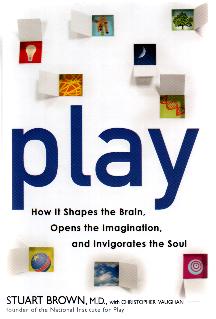
Play: How it Shapes the Brain, Opens the Imagination and Energizes the Soul by Stuart Brown


Rewired by Larry D. Rosen

The Human Factor: Inside the CIA’s Dysfunctional Intelligence Culture by “Ishmael Jones

Coupled with what was leftover from last year, my 2010 summer reading list is set.

Book Review: The Forty Years War

Tuesday, February 2nd, 2010

The Forty Years War: The Rise and Fall of the Neocons, from Nixon to Obama by Len Colodny and Tom Shachtman

I mentioned this book previously, expressing some serious skepticism of the authors’ core argument of a struggle between President Richard Nixon and the Neocons. Nevertheless, I ordered a copy and found The Forty Years War to be an absorbing read; for those with an interest in the administration of Richard Nixon, the history of the late Cold War period or the politics of American foreign policy, this book is a must read. I have a good working knowledge from my own research of primary and secondary source material related to Richard Nixon and his battle to re-shape American foreign policy and national strategy; yet I can say that and Colodny and Shachtman, working with newly transcribed archival material, demonstrated that we still have much to learn about the inner workings of the Nixon administration.

The authors have three important themes in The Forty Years War:

1. The intellectual legacy of militarist- moral idealism of Fritz G.A. Kraemer, the German-born Defense Department geopolitical theorist who was a mentor, adviser or ally to a glittering constellation of policy makers including Henry Kissinger, Alexander Haig, James Schlesinger, Fred Ikle, Andrew Marshall, Paul Wolfowitz, Donald Rumsfeld and others. Shachtman and Colodny call Kraemer:

“….the unacknowledged godfather of the George W. Bush administration’s ways of relating the United States to the rest of the world – more so than the philosophies of the university of Chicago’s Leo Strauss or those Trotskyites turned conservatives who founded the neocon movement”

2. That there has been a “forty years war” for the control over U.S. foreign policy not between Left and Right or Hawks and Doves but between foreign policy “Pragmatists” in the mold of Richard Nixon and “Neocons” or more broadly (and accurately in my view), “Hardliners” adhering to the rigid moralism and supreme confidence in military supremacy of Fritz Kraemer.

3. That Watergate, contrary to the orthodox historiography (argued by historians like Stanley I. Kutler and Robert Dallek), was exploited and aggravated by Kraemerites and proto-Neocons, especially General Al Haig, specifically to bring down Richard Nixon in an attempt to smash detente and institute more aggressive U.S. posture in the Cold War. Haig emerges as a central villain in the Watergate conspiracy in The Forty Years War and Nixon’s ability to inspire disloyalty in his closest aides is breathtaking.

While illuminating and deeply provocative, The Forty Years War is a quirky book, almost two different books with the first half devoted to the Nixon era and the second half sailing from Gerald Ford to Barack Obama. In a sense, this is unavoidable because it is the Nixon administration docs that are being rapidly declassified and subsequent administrations will not be releasing similar material for years or decades. Equal depth of treatment for every administration would also have swelled the number of pages to a staggeringly unmanageable size for authors and readers alike.

I am also not comfortable with the authors’ casual use of the label “Neocon” to describe a range of policy makers on the right, some of whom are not at all neoconservatives in a tight or ideological sense of the term. Toward the end of The Forty Years War, Colodny and Shachtman draw more nuanced distinctions that I think, is a more precise rendering of the positions of various figures in Republican administrations or Congress.

The Forty Years War is a book that deserves to have a much higher public profile as Colodny and Shachtman are marshalling new evidence to challenge conventional interpretations of late Cold War political history and foreign policy.

Strongly recommended.


Switch to our mobile site