zenpundit.com » historians

Archive for the ‘historians’ Category

Book Bonanza

Sunday, October 10th, 2010

Courtesy review copies that arrived this week from authors and publishers. Sweet!


Magic and Mayhem: The Delusions of American Foreign Policy From Korea to Afghanistan by Derek Leebaert

Operation Dark Heart: Spycraft and Special Ops on the Frontlines of Afghanistan by Anthony Shaffer

Without Hesitation: The Odyssey of an American Warrior by Hugh Shelton

Soft Spots: A Marine’s Memoir of Combat and Post Traumatic Stress Disorder by Clint van Winkle

I really enjoyed Leebaert’s early Cold War history, The Fifty Year Wound and therefore, have high hopes for Magic and Mayhem.  By contrast, Operation Dark Heart has already been the subject of controversy when the Pentagon bought up the entire first edition in order to wheedle an idiosyncratic list of redactions from the publisher for the second edition.

A note to readers, General Shelton, the former Chairman of the Joint Chiefs of Staff, and LTC Anthony Shaffer are both associated with the new military affairs and history site, Command Posts.

In addition to review copies, I shelled out some hard-earned cash for a few other titles:


The Ruin of the Roman Empire: A New History  by James J. O’Donnell

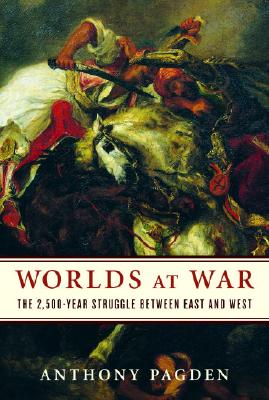
Worlds at War: The 2,500-Year Struggle Between East and West by Anthony Pagden

The House of Medici: Its Rise and Fall by Christopher Hibbert

What new books have you just picked up?

Summer Series 2010: Koran, Kalashnikov and Laptop by Giustozzi

Wednesday, September 15th, 2010

Summer Series 2010: Reviewing the Books! has begun. This review was originally posted in July, 2010 and is being re-posted as part of Summer Series:

Koran, Kalashnikov and Laptop by Antonio Giustozzi

I just finished reading Koran, Kalashnikov and Laptop: The Neo-Taliban insurgency in Afghanistan by historian Antonio Giustozzi who has subsequently gone on to write in rapid succession, Decoding the New Taliban: Insights from the Afghan Field and Empires of Mud, which I intend to read as well. Giustozzi is doing something important with his study of the Neo-Taliban insurgency that twenty years ago, a professional historian would have eschewed: applying his his historical expertise and methodology in a disciplinary synthesis to understand a dynamic, emerging, phenomenon at the center of current policy.

At the outset, Giustozzi writes:

This book is written by a historian who is trying to understand contemporary developments making use of not just the historical method, but also drawing from other disciplines such as anthropology, political science and geography. As a result, this book combines an analysis of the development of the insurgency based on available information with my ongoing work, focused on identifying the root causes of the weakness of the Afghan state.

This is a useful investigative methodological approach. “Useful” in the sense that while adhering to scholarly standards, Giustozzi offers readers the benefit of his capacity as a professional historian to evaluate new information about the war with the Neo-Taliban, while orienting it in the appropriate cultural-historical context. Not all of the information dealt with is reliable; Giustozzi candidly explains the disputes around particular unverified claims or accusations before offering his educated guess where the truth may be or the probabilities involved in a fog of war and ethno-tribal animosities.

Koran, Kalashnikov and Laptop is an academic book with a fairly detached tone and heavily endnoted chapters, which Giustozzi divided in the following manner:

1. Sources of the insurgency

2. How and why the Taliban recruited

3. Organization of the Taliban

4. The Taliban’s strategy

5. Military tactics of the insurgency

6. The counter-insurgency effort

The chapters have a wealth of detail, bordering at times on minutia, on Afghanistan’s complex and personalized system of politics which help shed light on why the effort at providing effective governance, a key COIN tenet, is so difficult. One example:

“….Strengthened as it was by powerful connections in Kabul, Sher Mohammed’s ‘power bloc’ proved quite resilient. Some of the Kabul press reported ‘criticism’, by former and current government officials from Helmand, of Daoud, whose attempts to restrain and isolate the rogue militias and police forces of helmand were described in terms of collaborationism with the Taliban. Daoud reacted by accusing the local ‘drug mafia’ of plotting against him and tried to convince President Karzai to leave him in his post, but not even British Prime Minister Tony Blair’s efforts sufficed to save him. Karzai sacked Daoud in the autumn of 2006. His replacement, Asadullah Wafa, was widely seen as a weak figure who for several months even refused to deploy to Lashkargah.”

This example is a typical one for political life in the provinces. Karzai’s counterinsurgency strategy does not have much to do with ours, and is largely antithetical to it. What we call “corruption”, Karzai sees as buying loyalty; what we call good governance, Karzai views as destabilizing his regime. We are not on the same page with Hamid Karzai and perhaps not even in the same playbook.

Giustozzi is exceptionally well-informed about Afghanistan and the political and military nuances of the old Taliban and the Neo-Taliban insurgency and the structure of Koran, Kalashnikov and Laptop is clear and well-organized. Giustozzi is informed about COIN in this context but less so generally (in a minor glitch, he posits Mao as primarily waging guerrilla war against an Imperial Japan – Mao didn’t – which did not have much of a “technological edge” – which Japan certainly did over Chinese forces, Nationalist or Communist, for most of the war) but Giustozzi is not writing to add to COIN theory literature, as he specifically noted. What the reader will get from Giustozzi is a grasp of who the Neo-Taliban are as a fighting force and the convoluted, granular, social complexity of Afghan political life in which the US is attempting to wage a COIN war.

Koran, Kalashnikov and Laptop is strongly recommended.

Summer Series 2010: Reviewing the Books!

Saturday, September 4th, 2010

Every year I make an effort to increase my reading of books during the summer months. Inevitably, I fail at completing whatever overambitious reading list that I compose while somehow finding time to read other books that were never on the list. This year was no exception.

Starting this weekend, I am going to be reviewing all the books I did read from late May to early September. It was an eclectic collection and I hope to complete this series of posts by mid-September. A few reviews that have already appeared in this time period will be re-posted to make the series complete.

Readers are free to offer comments and recommendations about their own favorite summer books or their idiosyncratic reading habits as the series rolls along……

Book Review: Koran, Kalashnikov and Laptop

Wednesday, July 7th, 2010

Koran, Kalashnikov and Laptop by Antonio Giustiozzi

I just finished reading Koran, Kalashnikov and Laptop: The Neo-Taliban insurgency in Afghanistan by historian Antonio Giustozzi who has subsequently gone on to write in rapid succession, Decoding the New Taliban: Insights from the Afghan Field and Empires of Mud, which I intend to read as well. Giustozzi is doing something important with his study of the Neo-Taliban insurgency that twenty years ago, a professional historian would have eschewed: applying his his historical expertise and methodology in a disciplinary synthesis to understand a dynamic, emerging, phenomenon at the center of current policy.

At the outset, Giustozzi writes:

This book is written by a historian who is trying to understand contemporary developments making use of not just the historical method, but also drawing from other disciplines such as anthropology, political science and geography. As a result, this book combines an analysis of the development of the insurgency based on available information with my ongoing work, focused on identifying the root causes of the weakness of the Afghan state.

This is a useful investigative methodological approach. “Useful” in the sense that while adhering to scholarly standards, Giustozzi offers readers the benefit of his capacity as a professional historian to evaluate new information about the war with the Neo-Taliban, while orienting it in the appropriate cultural-historical context. Not all of the information dealt with is reliable; Giustozzi candidly explains the disputes around particular unverified claims or accusations before offering his educated guess where the truth may be or the probabilities involved in a fog of war and ethno-tribal animosities.

Koran, Kalashnikov and Laptop is an academic book with a fairly detached tone and heavily endnoted chapters, which Giustozzi divided in the following manner:

1. Sources of the insurgency

2. How and why the Taliban recruited

3. Organization of the Taliban

4. The Taliban’s strategy

5. Military tactics of the insurgency

6. The counter-insurgency effort

The chapters have a wealth of detail, bordering at times on minutia, on Afghanistan’s complex and personalized system of politics which help shed light on why the effort at providing effective governance, a key COIN tenet, is so difficult. One example:

“….Strengthened as it was by powerful connections in Kabul, Sher Mohammed’s ‘power bloc’ proved quite resilient. Some of the Kabul press reported ‘criticism’, by former and current government officials from Helmand, of Daoud, whose attempts to restrain and isolate the rogue militias and police forces of helmand were described in terms of collaborationism with the Taliban. Daoud reacted by accusing the local ‘drug mafia’ of plotting against him and tried to convince President Karzai to leave him in his post, but not even British Prime Minister Tony Blair’s efforts sufficed to save him. Karzai sacked Daoud in the autumn of 2006. His replacement, Asadullah Wafa, was widely seen as a weak figure who for several months even refused to deploy to Lashkargah.”

This example is a typical one for political life in the provinces. Karzai’s counterinsurgency strategy does not have much to do with ours, and is largely antithetical to it. What we call “corruption”, Karzai sees as buying loyalty; what we call good governance, Karzai views as destabilizing his regime. We are not on the same page with Hamid Karzai and perhaps not even in the same playbook.

Giustozzi is exceptionally well-informed about Afghanistan and the political and military nuances of the old Taliban and the Neo-Taliban insurgency and the structure of Koran, Kalashnikov and Laptop is clear and well-organized. Giustozzi is informed about COIN in this context but less so generally (in a minor glitch, he posits Mao as primarily waging guerrilla war against an Imperial Japan – Mao didn’t – which did not have much of a “technological edge” – which Japan certainly did over Chinese forces, Nationalist or Communist, for most of the war) but Giustozzi is not writing to add to COIN theory literature, as he specifically noted. What the reader will get from Giustozzi is a grasp of who the Neo-Taliban are as a fighting force and the convoluted, granular, social complexity of Afghan political life in which the US is attempting to wage a COIN war.

Koran, Kalashnikov and Laptop is strongly recommended.

H-Diplo’s Roundtable: On “Politics and Scholarship”

Friday, June 11th, 2010

H-Diplo, the H-Net listserv for Diplomatic History, has an outstanding set of essays by prominent historians and political scientists on the subject of “Politics and Scholarship” (hat tip to Bruce Kesler and the Warlord Loop):

NOTE TO READERS: I am having some difficulty fixing the links, notably to Jervis and Cumings, due to site problems at H-Diplo so I am going with Phil’s suggestion in the comments and posting a link to the PDF VERSION here.

Commissioned for H-Diplo/ISSF by Robert Jervis, Columbia University

….This is a slippery slope, and as academics we should worry about it.  Perhaps the most important thing we can do is to remind ourselves that our policy judgment is likely to be considerably more fallible than our scholarly expertise. Most intelligent people know this, which is why mass letters to the editor by professors protesting or advocating some policy carry so little weight.  By and large, the policy world does not think of professors as being any wiser than any other class, and they are correct to do so.  The ancient distinction between theoretical and prudential wisdom holds as strongly as ever. Humility is not, alas, a common academic virtue, and someone involved in the hurly burly of political discourse should try to make a clear distinction, at least in his or her own mind, about what he knows as a professor, and what he thinks as a citizen or policymaker.  The most troubling area of pseudo-scholarship is likely to be that kind which nominally deals with policy in a scholarly way, but is, in fact, nothing more than a polemic masquerading as something else.

….We are told by many people – for example by Nobel scientist E. O. Wilson in his best-selling book Consilience – that the hard sciences and the social sciences are coalescing in the use of mathematical modeling, computers, game theory, and various other methods to finally get to the bottom of what makes human beings tick. I would argue the exact opposite: both the hard and soft sciences are in crisis. From my point of view the social sciences should have seen this crisis coming long ago (in fact many did – long ago, but they did not redefine the disciplines), but much more significant is the turn toward uncertainty in the hard sciences, as Newtonian mechanics, empiricism, and the scientific method show themselves incapable of comprehending the complexities of the physical world.

Q: Does being in the minority ever annoy you?A: Yes, some aspects of this minority status are annoying.  For instance, it is annoying that my peers presume that I “have an ideology” whereas they do not.  It is very reminiscent of African-Americans in the academy several decades ago; they were presumed to have “race” and “racially tinged views” whereas Caucasians did not.  For that matter, the racial analogy suggests another curious burden: being assigned the role of token on panels.  Some of my peers believe that a balanced panel on foreign policy is one that has a critique of Democrats from the left along with two shades of Democratic perspective, say center-left and center.  However, most recognize that it would be better if they could find just one person, me, to offer the “whacky conservative view” – here they hope I will represent not just my own actual views but also cover, or be held responsible for, everything to the right.  And this leads to my biggest gripe: feeling obligated to defend, or at least explain, the position of anyone to the right of Joe Biden, because if I don’t then no one will.  Because liberals do not have a monopoly on nonsense, there is plenty of bone-headedness from conservatives and Republicans for my colleagues to highlight and go after.  Often the attacks are legitimate and fair, but when they cross over into caricature and canard I am left with a tough choice: do I inject a clarification or do I let it pass?

….Instead of this kind of variation, however, what we typically see is stability both across time and across issues that are at most loosely connected.   For example, during the Cold War, hawks and doves rarely changed their assessment of Soviet motives, which had decisive impacts on their policy prescriptions, with hawks favoring many variations of competitive military and political policies and doves favoring none.  Proponents and opponents of ballistic missile defense have rarely changed their assessments of the feasibility of effective defense: proponents have consistently found significantly greater prospects for technically feasible defenses, which they believe would provide substantial strategic advantages; in contrast, opponents have as regularly found that the prospects for  effective defenses have been poor, and worried that these missile defenses would generate strategic dangers whether or not they were effective.  And Cold War hawks were more likely than doves to believe the effective missile defense were feasible, even though their hawkishness stemmed primarily from assessments of Soviet motives, not technology.  Scholars’ overall assessments of the danger posed by nuclear proliferation appear to be stubbornly constant in the face of evolving circumstances and possibilities, reinforcing their established preferences for adopting more or less costly policies in response. 

….The scholarly critics’ stance is predicated on a crucial, often unacknowledged, assumption (shared by my American students and their parents): that they themselves are non-ideological, personally and in their analysis of events, though they may hold personal ideological beliefs.   This is even true of many self-identified orthodox Marxists, liberals, socialists, political religionists, realists, and other believers with universalist truth claims or political goals: they personally are not ideologists because what they believe is true, not some metaphysical scheme that only the foolish or the dangerous could believe. 

It is my contention that this assumption of non-ideological pragmatism, or presumed normative detachment, in the critics’ point of view is not sustainable upon examination.  Scholars have found that even in the natural sciences certain beliefs can be held or supported largely because they are congruent with ideological norms, e.g., in liberal societies the assumed symmetrical, random distribution of human intelligence.

Presumably Niebuhr would have seen what so many fail to see still today, that by becoming a “science,” DPT-in conjunction with democratic transition theory and liberal international jurisprudence-blinded American policy makers to many dangers they might otherwise have perceived.  In this respect we might recall how the “Washington Consensus,” the package of ideas behind economic globalization that included deregulation, privatization, and openness, contributed to the blindness that allowed the economic crash of 2008 to occur. In each case, the wounds have been self-inflicted; American hubris has been our own worst enemy. How united the American economics profession seemed at the time and indeed for the most part still today, just as political science seems unwilling to recognize the damage its theorizing underwrote. Democratic Peace Theory, like the Washington Consensus, reminds us of the famous words of John Maynard Keynes:The ideas of economists and political philosophers, both when they are right and when they are wrong, are more powerful than is commonly understood.  Indeed the world is ruled by little else.  Practical men, who believe themselves to be quite exempt from any intellectual influence, are usually the slaves of some defunct economist.


Switch to our mobile site