zenpundit.com » geopolitics

Archive for the ‘geopolitics’ Category

Possible Shifts in AfPak

Tuesday, July 12th, 2011

afpak.jpg

On Pakistan policy, credit where credit is due: the Obama administration has found the stones to respond to evidence of systemic and brazen bad faith on the part of our Pakistani “allies” and show their displeasure by witholding $ 800 million dollars in aid from Islamabad. There are already squeals of Pakistani unhappiness at this modest decrease of aid that all too frequently gets diverted to preparing to make war on India or, for that matter, on American soldiers and Marines. Former dictator General Pervez Musharraf, who cannot go back home to Rawalpindi for fear his brother officers will assassinate him, told a well appointed crowd in Houston that the aid cut “will be disastrous….if Pakistan is weakened, how will it fight terrorism?“.

Cynics might note that we could replace “fight” with “fund” in the former Pakistani ruler’s question and achieve greater historical accuracy.

On Afghanistan, it might be advisable for the new American commander, Lieutenant General John Allen, in carrying out his extremely difficult mission of “Afghanization” and “punitive raiding” the Taliban, to first ponder history and  “Remember Herat“.

In 1979, before the Soviet invasion of Afghanistan, the entire garrison of Soviet advisers in Herat was slaughtered, including the dependent women and children, by an angry mob that was aided by the local Afghan Communist Army units who, led by Ismail Khan, conveniently revolted and turned on their Russian allies. If British military history is more to Lt. General Allen’s taste, the Afghans massacred British garrisons in Kabul twice in the 19th century, Major Cavagnari’s in 1878 and that of Sir William McNaghten and Sir Alexander Burnes in 1841, though most of the British died to all but the last man on the retreat to Jalalabad in 1842.

The cape wearing, election-stealing, lotus-eater whom we thanklessly prop up, may be more incompetent than Nur Mohammed Taraki and less legitimate a client than Shah Shuja, but he has a demonstrated talent for inciting anti-western violence exceeded only by his enterprise in looting aid money. Is crazy Karzai above lighting a match to a tense situation the US military itself has already described as a “rapidly growing systemic threat“? Not in my view.

When the American drawdown begins in earnest, General Allen will need to watch the backs of his troops

ADDENDUM:

Ahmed Wali Karzai, the notorious fixer and feared enforcer of the Afghan regime and the brother of President Hamid Karzai was assassinated today. The Taliban claimed credit, but AWK has too many enemies to be certain yet.

The East Rising

Sunday, July 3rd, 2011

Gifts from a generous Meatball:


Hardcovers too. Nice.

The Party: The Secret World of China’s Communist Rulers by Richard McGregor

Monsoon: The Indian Ocean and the Future of American Power by Robert D. Kaplan

I have already dived a few chapters into the McGregor book and it is very good. What makes it good is that is running counter to the message of the herd in terms of popular Sinology, which is to emphasize that China is a) uniquely Chinese with deeply introspective Confucian civilizational traditions (that’s modern PC-speak for “inscrutable”) and b) the brave new world of liberal, globalized, capitalism with a benign technocratic face.

Now there’s important truths in both of the popular mass messages on China, incompatible as they can be with one another. The economic rise of China in a globalized economy is the most important story of the last quarter of the 20th century and the first quarter of the 21st ( collapse of the USSR is second; the Soviets were beaten before they imploded and imploded largely because they knew they were beaten). China is also not like America, not even when they imported stock options, blue jeans, McDonald’s and the American jobs that used to create all those things. China’s civilization is truly of a dizzying depth, complexity and scale that is best compared to Europe rather than a specific country. That in itself, is important because it points to how ignorant the average American policy maker is, never mind the average American, about what makes their Chinese counterpart tick.

[ Sidebar: Perhaps the Obama administration assembling a new senior “China/East Asia” diplomatic and national security team that does not include a single official with any professional knowledge of China was unwise? How is that better than the Bush II administration shunning Arabists during the run up to and occupation of Iraq? It is not that these diplomats and officers are poor, they are smart and experienced, but none of them are China specialists. Or Japan specialists, for that matter and only one has expertise in Korean affairs. These are the region’s great powers! This is like turning EU/NATO policy over to diplomats who speak Hindi and Swahili ]

What McGregor is doing in The Party that is important is reminding Westerners that the Soviet experience, particularly the Leninist Party model, is still deeply embedded in China’s political DNA. Not in an ideologically Marxist, Khrushchevian, shoe-pounding sense but in a functional sense. In a structural sense. In an instrumental governance sense. In a networking theory sense. And all these characteristics, which are largely innately hostile or indifferent to the values of liberal democracy, continue to shape Chinese policy, leadership succession, national security, defense strategy and geopolitical outlook to this day.

That doesn’t mean China is itching for a war with the United States, but it means they are playing a longitudinal strategic game where the first goal is to stay in power forever and the next is to advance one’s position relative to others.

We are the other.

China is not an enemy but she is no friend or ally of the United States either, yet it is the most important relationship the US has to manage for the next thirty years – and that relationship in a strategic context with rising India, Japan, South Korea and Australia.

It might help if America brought a team to the table that included people who could tell Han Fei Tzu from Mencius or spoke Chinese.

Follow-Up on the “Astrategic” Discussion

Wednesday, June 22nd, 2011

The real value was in the comment thread. Original post here.

That caused Joseph Fouche to post Overgrown Comment, Short Post from which I will excerpt relevant comments from JF, Dave Schuler and Seydlitz89:

Dave Schuler comments:

I think that the Obama Administration’s actions are less an instance of only an indirect relationship between means and ends than a disagreement with you on ends, Mark. Just as one example, the primary objective of the Obama Administration (as in all administrations) is a second term. Consider the actions through that lens.

Also, isn’t it possible that the Administration is really sincere about the “international support” trope that marked the Libyan intervention? International support will never be forthcoming for intervention against the Syrian regime. I don’t think that either the Russians or Chinese would stand for it. The Russian relationship with Syria at least is much cozier than that between Russia and Libya.

Noted Clausewitzian seydlitz89 comments:

Zen-

Good thought-provoking post, you actually got me out of my hiatus from blogs/blogging, just don’t tell anyone over at milpub ;-)>

While I agree with Joseph’s comment, I would add a few other points to consider:

First, “strategy”, is a specific concept in terms of strategic theory which can be linked to “strategic effect”, but not necessarily so.  Force and personality alone (which are not “strategy” the way I define it -see http://milpubblog.blogspot.com/2010/11/when-strategy-is-not-strategy.html) can achieve strategic effect.  So we need to be clear how we  are using this particular adjective, which need not be linked to a specific strategy at all.  Also the strategy in question might be bad, even self-defeating, as Joseph points out and still be a strategy.

Second, when has our Middle Eastern policy ever been consistent, in terms of treating all countries the same?  Perhaps under Bush I during 1990-91, but we have always treated the different Arab countries differently in line with our different interests involved.  Bahrain gets a pass, whereas Libya gets NATO intervention, and Syria gets referred to the ICC .  .  . In each case the US interest is seen as different so the response is different.

Third, the real root cause of the problem is imo our dysfunctional political system which is unable to implement policies which are in the best interests of the country as a political community.  The Iraq war was essentially a collapse of US strategic thought and rather was based on narrow and corrupt interests, deceptive politics and notions of unlimited US power (force) and exceptionalism (personality)  which triggered a still ongoing strategic disaster for US interests in the region, but not limited to it.

We have a long way to go and I don’t see us getting there any time soon, unfortunately.

The Committee comments posts:

Scottish historian Niall Ferguson, just before transmogrifying into Scottish celebrity historian Niall Ferguson, proposed an approach that serious credentialed historians could use if venturing to write the generally silly and uncredentialed genre of counter-factual history:

To produce serious counter-factual history that is not utter bollocks, your point of departure from our factual timeline has to be a documented and real credible alternative raised by a documented and real credible person at a documented and real point in time prior to the moment when factual and the proposed counterfactual timelines diverge.

As Dave Schuler alludes, how Zen, I, or seydlitz interpret what is strategic, what is astrategic, and what is antistrategic is often determined by what we individually interpret as political, apolitical, or antipolitical. We put events in boxes and eventually there is a box beyond which we do not stray because we don’t know this outer box is there. We can perhaps use Ferguson’s approach to separate which of the Administration’s factual alignment of ends to means are impossible and which are merely improbable and which of our various counterfactual alternative alignments of ends to means are impossible or merely improbable.

….I’ll close my observations on this post and its comment thread with two points:

  • Whatever framework you use to analyze human actions, especially those actions your framework categorizes as war or conflict, it should be equally capable of shedding light (and defining) “good” or “successful” actions and “bad” or “failed” actions. Categorizing one lump of actions as Actions while excluding another lump of actions as less than actions does not a good framework make. For those frameworks that aspire to pass as “strategic theory”, this means that they should be just as capable of analyzing Hitler’s strategy of dividing Germany into bloodied, burned out, and thoroughly wrecked fragments occupied by foreigners as they are of analyzing Bismarck’s strategy of creating a unified and independent Germany. A proposed strategic analytic framework that accepts some strategic phenomena into the garden of strategy while consigning others to the outer darkness of non-strategy does serve a useful purpose. Strategic effect rains on both righteous and wicked alike. Neither can be barred from opening an umbrella to shield themselves from strategic fallout because an observer runs up and commands them to stop because theory forbids it. One of the fundamental principles of strategic theory is that theory cannot absolutely forbid umbrella opening: the umbrella opener will inevitably seek to subvert any theory that seeks to unnaturally restrict their freedom to open umbrellas.

That was very interesting and thought provoking. I have, in fact, thought about these comments for several days and I do not have a neat, plausible rejoinder so much as some thoughts in regard to epistemology, which is the level where this discussion really is taking place.

Dave, I think, is correct that are a jumble of motivations in play within the Obama administration, not least of which is the overriding focus of domestic politics in an administration where the national security and foreign policy apparat is heavy with politicos. There is an internationalist faction in the administration too, though they are hardly dominant. They win some and lose some.  Incidentally, most administrations, from transcripts and memoirs I have read operate in a state of crisis management much of the time – tightly focused sessions like ExComm during the Cuban Missile Crisis are exceptions. Oval Office convos and meetings as a rule, ramble like meetings do everywhere except when the POTUS (like Eisenhower) demands otherwise.

So, is it proper to categorize this behavior as something other than strategy? Yes – at least when you want to discern conscious strategic thinking about geopolitics and military operations, or absence thereof, you’d refer to what the administration is doing currently as “politics” insofar as their eye seemed to be primarily concerned with domestic political effects rather than strategic effects in the international arena. Strategy requires conscious effort because it is pro-active and often, what passes for strategy is brilliantly intuitive tactical reactions coupled with a fair piece of luck that generated fortunate outcomes that were strategic in their effect, if not intent.

I am pretty much in agreement with Seydlitz89 that the root of our inability to think and act in a strategic fashion is our dysfunction as a political community and his caution regarding strategic effects. There’s a number of reasons for this dysfunction but even if that was instantly remedied by the Good Civics Fairy, we would have to make a conscious effort to build a rational strategic culture.

Regarding Joseph Fouche’s comment on frameworks, he has a logical point regarding strategic theory that works….in theory. By that I mean that I don’t disagree, he’s right in the abstract sense that such a comprehensive and consistent structure would be preferable. My impression though – and I think this is in line with what he is arguing above – is that strategic theory as a field itself may not be quite up to the high standard to which Fouche aspires.  Strategic theory in practice, rarely demonstrates the concise  elegance of Newtonian physics. In terms of explanatory power, strategic theory used by practitioners or created by modern day theorists rarely rises beyond being situationally “good enough” for the problem at hand. An intellectual tool, like a sharp rock or a pointy stick in the fist of a paleolithic hunter-gatherer. For that matter, if strategic theory proves to be situationally accurate and useful, that is often a cause for celebration!

Going beyond “good enough” to “universally” or “generally” applicable strategic theory is an intellectual feat of the first order. That kind of system -building is usually the result of a life’s work and cannot be called into being on a moment’s notice. Aside from the fact that most people are not capable of rising to becoming a Clausewitz or Sun Tzu, the time constraints make it impossible for state decision makers to think and act within such a framework unless they have arrived into office with one already inculcated as part of their worldview (and even then, it is of great help if they spent years out of office thinking through real and hypothetical problems using that framework, internalizing the principles without losing the ability to observe and think critically).  This is why in matters of strategy, our decision makers are usually wielding the intellectual equivalent of stone tools – the statesman with the cognitive flintlock musket or strategic steam engine is few and far between.

So, we are often left with a fractured mess, analytically speaking. Entrails to root through, looking for signs from the gods.

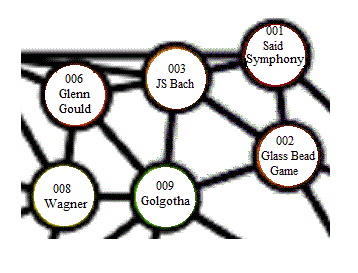
The Said Symphony: moves 6-9

Saturday, June 18th, 2011

[ by Charles Cameron – extended analytic game on Israeli-Palestinian conflict — continuing ]

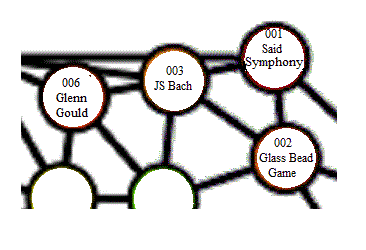
Move 6: Glenn Gould

move-006.gif

Move content:

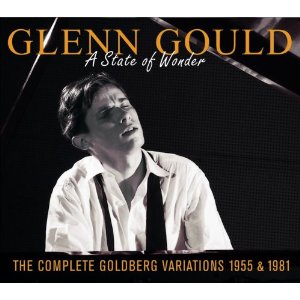
51pewuz2vyl__sl500_aa300_.jpg

Glenn Gould was a great pianist whose two recordings of Bach‘s Goldeberg Variations alone would prove both the brilliance of his skill, which could draw forth the individual lines in Bach’s counterpoint in a way no earlier pianist had the technique to pull off, and the depth of his musical understanding.

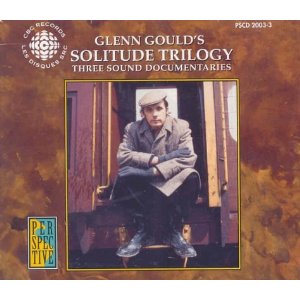
glenn-gould-solitude-trilogy.jpg

Late in life, Gould began “composing” radio works for the Canadian Broadcasting Corporation — he calls them “contrapuntal radio” — which revealed his interest in listening not just to Bach and other music but to life in general with an ear for counterpoint:

Gould set himself up to hear the world in a new way. In diners he ate his lunch alone, eaves dropping closely on the voices around him. He learned to hear conversation as music, the lilting lines, the rhythms everywhere up, down, and around, what Bach does to our sense of talk. There are two part inventions in words, themes and variations in the quarrels of couples and the tales told by friends. Gould met the world on his own terms, and he was fascinated by this way of listening to human voices as if they were a musical interplay, not participating in a conversation but taking it all in, as an audience.

It is that manner of listening which I am attempting in this game…

Links claimed:

To Bach, because Gould is Bach’s great interpreter, taking his interpretation of Bach’s counterpoint not just into the deep riches of Bach’s music for keyboards, but also out into the depth and riches of the world…

Comment:

I see this move as concluding the first, quiet introductory section of the game, setting forth the mode of understanding in which it is played, and honoring those those work has preceded, comforted and confirmed my own.

We shall return to this theme of counterpoint no doubt — the whole work falls under the aegis of Bach, as all of Bach’s work falls under his familiar motto: Soli Deo Gloria.
____________________________________________________________________________________________

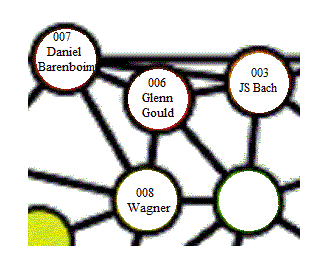
Move 7: Daniel Barenboim

move-007.gif

Move content:

Daniel Barenboim is another celebrated musician, a brilliant Argentinian-Israeli pianist and conductor, in whose biography we read:

In the early 1990s, a chance meeting between Mr. Barenboim and the late Palestinian-born writer and Columbia University professor Edward Said in a London hotel lobby led to an intensive friendship that has had both political and musical repercussions. These two men, who should have been poles apart politically, discovered in that first meeting, which lasted for hours, that they had similar visions of Israeli/Palestinian possible future cooperation. They decided to continue their dialogue and to collaborate on musical events to further their shared vision of peaceful co-existence in the Middle East. This led to Mr. Barenboim’s first concert on the West Bank, a piano recital at the Palestinian Birzeit University in February 1999, and to a workshop for young musicians from the Middle East that took place in Weimar, Germany, in August 1999.

The West-Eastern Divan Workshop took two years to organize and involved talented young musicians between the ages of 14 and 25 from Egypt, Syria, Lebanon, Jordan, Tunisia and Israel. The idea was that they would come together to make music on neutral ground with the guidance of some of the world’s best musicians. … There were some tense moments among the young players at first but, coached by members of the Berlin Philharmonic, the Chicago Symphony and the Staatskapelle Berlin, and following master classes with the cellist Yo-Yo Ma and nightly cultural discussions with Mr. Said and Mr. Barenboim, the young musicians worked and played in increasing harmony.

From the orchestra’s current news page:

In 2005, the orchestra realized the impossible: a concert with Israelis, Palestinians, and other Arab musicians in the Palestinian territory of Ramallah.

Links claimed:

To Edward Said: because they were friends, because the West-Eastern Divan is a a human analog to Said’s view of a symphonic understanding of the Israeli-Palestinian conflict, and because he stands as an Israeli Jew in counterpoint to Said, the Palestinian.  Indeed, it is Barenboim, not Said, who is quoted here:

Drawing on the fundamentality of counterpoint in music, Barenboim describes how ‘in the act of challenging each other, the two voices fit together’ and that ‘music is always contrapuntal, in the philosophical sense of the word’ – indeed, ‘joy and sorrow can exist simultaneously in music’. He further argues that ‘acceptance of the freedom and individuality of the other is one of music’s most important lessons’. And this is the philosophy that underpins the phenomenon of the Divan orchestra: ‘You can’t make peace with an orchestra’, but one can ‘create the conditions for understanding’ and ‘awaken the curiosity of each individual to listen to the narrative of the other’.

To Bach, because as he writes:

I was reared on Bach. My father was virtually my only teacher, and he attached great importance to my growing up with Bach’s keyboard music. He considered it to be very important, not only for its musical and pianistic aspects, but also for everything else that is played on the piano. For him polyphonic music-making was simply one of the most important issues concerning everything relating to piano-playing. … The music can only be of interest if the different strands of the polyphonic texture are played so distinctly that they can all be heard and create a three-dimensional effect – just as in painting, where something is moved into the foreground and something else into the background, making one appear closer to the viewer than the other, although the painting is flat and one-dimensional.

And to Glenn Gould because —

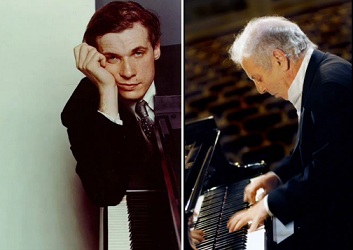
gould-barenboim.jpg

well, you may consider it a duel or a duet (a decision which shadows all differences, no?) but the two men are both celebrated for their renditions of the Bach Goldberg Variations, which are compared in excerpts back to back here on YouTube for our delight.

Comment:

I have only a couple of things to note here — the name West-Eastern Divan hearkens back to Goethe‘s poetry, and thus to the western world’s discovery of the sufic poetry of Hafez and Rumi — we find here a brief allusion to Yo-Yo Ma — and in the friendship of Said and Barenboim we see personified both the Israeli-Palestinian conflict and its transcending — in which a potential duel becomes a realized duet..

[ My thanks to Howard Rheingold for a pointer ]

____________________________________________________________________________________________

Move 8: Richard Wagner and antisemitism

move-008.gif

Move content:

barenboim-ring.jpg

With Richard Wagner, the ugly shadow of antisemitism falls across our play:

The idea of racial decline, and of German mentality being inherently superior, is integral to everything Wagner stood for. He saw himself as a redeemer, a notion his wife Cosima and her acolytes adopted as their creed. He gave the Aryan saviour-hero a dominant role in his operas. Siegfried is the incarnation of the sun-hero who would set Germany back on the true path – an idea that had existed in German mythology since the Middle Ages. Parsifal has characteristics of an Aryan Jesus.

European high culture had long had a disdain for the Jews, the merchants, the lenders — in Wagner’s writings, in his essay Judaism in Music and arguably in his operas too, he argues for the purity of the German race and the inability of the Jew, talented though he may be, to do more than ape that culture:

Our whole European art and civihisation, however, have remained to the Jew a foreign tongue; for, just as he has taken no part in the evolution of the one, so has he taken none in that of the other; but at most the homeless wight has been a cold, nay more, a hostile looker-on. In this Speech, this Art, the Jew can only afterspeak and after-patch — not truly make a poem of his words, an artwork of his doings.

It is a shadow that will touch, a virus that will infect Hitler — who will visit the Wagner family long after the Master’s death, attend and protect the Master’s playhouse in Bayreuth, cause the Master’s music to be played at the Nuremberg Rallies — and in so doing, teach European high culture itself that it is not immune to genocidal fantasies nor their execution in fact — enthrall and revolt and disgust and be deafeated — thus leading to the foundation in 1948 of the State of Israel, the Yom Ha’atzmaut of the Israelis, the Yawm an-Nakbah of the Palestinians…

Consider this press report, from which I have already quoted above:

Until the final scene, the Hamburg State Opera’s November 2002 production of Die Meistersinger von Nurnberg had proceeded without comment. Everyone was primed to applaud the hymn to “holy German art” that brings Richard Wagner’s four-hour pageant to a climax. Then came the bombshell. Midway through Hans Sachs’s monologue about honouring German masters over “foreign vanities”, the music came to an abrupt halt. Suddenly one of the mastersingers started speaking: “Have you actually thought about what you are singing?” he asked.

The virulence of antisemitism, and the shadow side of our common humanity, are not to be excluded from our game.

Links claimed:

To Daniel Barenboim, because he, a Jew and a musician, had the temerity to conduct the Berlin Staatskapelle orchestra in the Overture to Wagner’s Tristan und Isolde, in Jerusalem, in July 2001.

And to Glenn Gould, because…

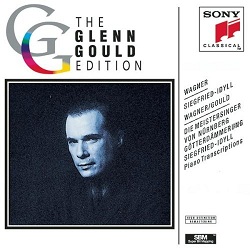
gould-wagner.jpg

his piano transcription and performance of the Prelude to Die Meistersinger is a revelation: you might like to purchase it.

Comments:

I will confine myself to saying that Wagner’s concept of the gesamtkunstwerk or “work of total art” with its combination of poetry, drama, dance, song and even architecture is, in its own way, a precursor to many modern cross-disciplinary endeavors — the experimental works of Scriabin, whose “unrealized magnum opus Mysterium was to have been a grand week-long performance including music, scent, dance, and light in the foothills of the Himalayas” (Wikipedia), the Orphic poetry-in-film of Jean Cocteau, the crossover between poetry and the visual arts in Guillaume Apollinaire‘s Calligrammes — and not least, in Hermann Hesse‘s great Glasperlenspiel

____________________________________________________________________________________________

Move 9: Golgotha

move-09.gif

Move content:

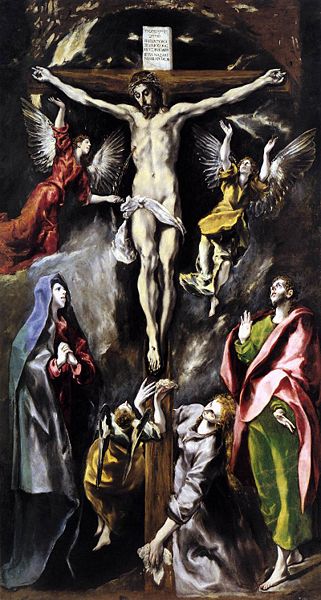
Specifically, Golgotha refers to the small hill outside the Jerusalem city walls where Christ was crucified — our word “Calvary” is derived from the name:

And when they were come unto a place called Golgotha, that is to say, a place of a skull, They gave him vinegar to drink mingled with gall: and when he had tasted thereof, he would not drink. And they crucified him, and parted his garments, casting lots: that it might be fulfilled which was spoken by the prophet, They parted my garments among them, and upon my vesture did they cast lots. And sitting down they watched him there…

Matthew 27: 33-36

321px-crucifixion_prado.jpg
El Greco, The Crucifixion, The Prado, Madrid

Figuratively, Golgotha is the nadir, the lowest point — as in this powerful observation by the soldier-poet Capt. Wilfred Owen, describing the carnage of trench warfare in World War I in a letter to Osbert Sitwell, dated 4 July 1918.

For 14 hours yesterday, I was at work-teaching Christ to lift his cross by the numbers, and how to adjust his crown; and not to imagine he thirst until after the last halt. I attended his Supper to see that there were no complaints; and inspected his feet that they should be worthy of the nails. I see to it that he is dumb, and stands mute before his accusers. With a piece of silver I buy him every day, and with maps I make him familiar with the topography of Golgotha.


Links claimed:

To Wagner, in a manner that continues the motif of his antisemitism: Rudolf Steiner, founder of the Waldorf schools and anthroposophist, gave a lecture on the mythic underpinnings of Wagner’s Parsifal in 1906, which he said:

How was it that Wagner was able to find the right mood for his Parsifal? It is most important for us to recognize that Wagner was able to do this because he knew that what happened on Golgotha had especially to do with the blood, he knew that we had to see there not only the death of the Saviour but we had to see what took place there with the blood, how the blood was purified on Golgotha and became something quite different from ordinary blood. Wagner has spoken of the connection of the Saviour’s blood with the whole of mankind. In his book “Paganism and Christianity” we read these words: “Having found that the capacity for conscious suffering is a capacity peculiar to the blood of the so-called white race, we must now go on to recognize in the blood of the Saviour the very epitome, as it were, of voluntary conscious suffering that pours itself out as divine compassion for the whole human race.”

To Glenn Gould — introducing a contemporary instance of the nadir of human consciousness — because Hannibal Lecter, the insane psychiatrist of Thomas Harris‘ novel The Silence of the Lambs, has a copy he made from memory (“Memory, Officer Starling, is what I have for a view”) of Duccio‘s painting Golgotha after the Deposition on the walls of his cell, and listens to the Bach Goldberg Variations on his tape recorder — Glenn Gould is specified as the performer.

To the Glass Bead Game, because Hermann Hesse in what can only be an autobiographical passage in Demian writes:

The teacher had spoken of Golgotha. The Biblical account of the suffering and death of the savior had made the deepest impression upon me from my earliest childhood. Often as a small boy I had, after my father had read the story of the passion on Good Friday, lived in this painfully beautiful, pale, ghostly and still powerfully living world of Gethsemane and on Golgotha. I had experienced it listening to Bach’s St. Matthew Passion, it had flooded me with the somber, powerful tones of this mysterious world, with its mystical drama. Even today I find in this music, and in Actus Tragicus the essence of all that is poetical and of all artistic expression.

and there is no less surely an echo of that in a comment made by Joseph Knecht — the Magister Ludi of Hesse’s novel —

Nowadays, for example, we do not think much of the theology and the ecclesiastical culture of the eighteenth century, or the philosophy of the Enlightenment; but we consider the cantatas, passions, and preludes of Bach the ultimate quintessence of Christian culture.

For Hesse at least, and Knecht himself by implication, the Golgotha of Bach’s St Matthew Passion is “the essence … of all artistic expression”.

And to Bach, finally, for those sections (58-9 in Part II of the Passion) which deal with Golgotha and the crucifixion:

58a. Rezitativ (Evangelist): “Und da sie an die Stätte kamen”
58b. Chor: “Der du den Tempel Gottes zerbrichst”
58c. Rezitativ (Evangelist): “Desgleichen auch die Hohenpriester”
58d. Chor: “Andern hat er geholfen”
58e. Rezitativ (Evangelist):”Desgleichen schmäheten ihn auch die Mörder”
59. Rezitativ: “Ach Golgatha”

all of which can be heard in John Eliot Gardiner‘s performance here on YouTube, although I’d highly recommend Gardiner’s Bach: Sacred Vocal Works: the Christmas Oratorio, St. Matthew Passion, St. John Passion and Mass in B Minor as a boxed set — a stunning treasure.

Comment:

Hesse recommends the practice of meditation between moves in the Glass Bead Game, and rather than comment on this move briefly here, I shall next write a more extended meditation on the game thus far, and on this move in particular.

Here we approach the very walls of Jerusalem.
____________________________________________________________________________________________

The Said Symphony: moves 1-5

Saturday, June 18th, 2011

[ by Charles Cameron – extended analytic game on Israeli-Palestinian conflict ]

.

In two previous posts (Intro, and Board and Gameplay), I have described my forthcoming attempt to “play” a 130-plus move game, in which I will use quotations, images and anecdotes to express something of the complex weave of thoughts and emotions that govern — in tense and tenuous fashion — the “Israeli-Palestinian problem”.

Here I will commence play, making my initial “moves” in this area of the board:
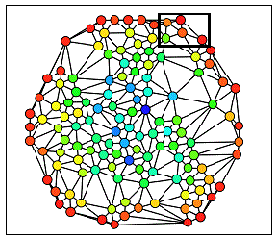
said-bd-zp-start.gif

____________________________________________________________________________________________

Move 1: The Said Symphony
move-001.gif

Move content:

When you think about it, when you think about Jew and Palestinian not separately, but as part of a symphony, there is something magnificently imposing about it. A very rich, also very tragic, also in many ways desperate history of extremes — opposites in the Hegelian sense — that is yet to receive its due. So what you are faced with is a kind of sublime grandeur of a series of tragedies, of losses, of sacrifices, of pain that would take the brain of a Bach to figure out. It would require the imagination of someone like Edmund Burke to fathom.

Edward W. Said, Power, Politics, and Culture, p. 447 — from the section titled “My Right of Return,” consisting of an interview with Ari Shavit from Ha’aretz Magazine, August 18, 2000.

Links claimed:

In his novel of the Glass Bead Game, Hermann Hesse writes:

Every transition from major to minor in a sonata, every transformation of a myth or a religious cult, every classical or artistic formulation was, I realized in that flashing moment, if seen with a truly meditative mind, nothing but a direct route into the interior of the cosmic mystery, where in the alternation between inhaling and exhaling, between heaven and earth, between Yin and Yang, holiness is forever being created.

It is in the links between moves, the creative leaps of the analogical mind, that the secret of the game can be found — so the “links claimed” sections of moves can be viewed as meditation points — architecturally, they are the “arches” of potential insight between the “pillars” of existing ideas. Here, no links are claimed, since this is the first move in the game.

Comment:

This is where it begins… with a vision of dissonant voices in counterpoint… ____________________________________________________________________________________________

Introductory moves

Before we get directly into the “meat” of the game, I want to explore its purpose via a few more moves that focus on what we might call the polyphony of ideas — thinking in terms of multiple voices.

Move 2: Hermann Hesse and the Glass Bead Game
Move 3: JS Bach and the Art of Fugue
Move 4: William Blake and Fourfold Vision
Move 5: Bob Dylan and One Too Many Mornings
Move 6: Glenn Gould

Then two moves nudging us in the direction of, then directly into — Israel:

Move 7: Daniel Barenboim
Move 8: Wagner

and specifically to the outskirts of Jerusalem / Al Quds:

Move 9: Golgotha

You might want to consider these nine moves a sort of overture.  Let’s see how that goes…

____________________________________________________________________________________________

Move 2: Move 2: Hermann Hesse and the Glass Bead Game
move-002.gif

Move content:

Hermann Hesse’s novel Das Glasperlenspiel (English title The Glass Bead Game, also published as Magister Ludi) won him the Nobel for Literature.
gbg-cover.jpg

The centerpiece of the novel is the Game itself. Hesse doesn’t spell out in detail how it is to be played, but his hints are enough to let us know that in play, different ideas from across world culture are combined as if in a virtual music of ideas:

The Glass Bead Game is thus a mode of playing with the total contents and values of our culture; it plays with them as, say, in the great age of the arts a painter might have played with the colors on his palette. All the insights, noble thoughts, and works of art that the human race has produced in its creative eras, all that subsequent periods of scholarly study have reduced to concepts and converted into intellectual values the Glass Bead Game player plays like the organist on an organ. And this organ has attained an almost unimaginable perfection; its manuals and pedals range over the entire intellectual cosmos; its stops are almost beyond number.

It is in an attempt to bring Hesse’s idea of a musical synthesis of ideas into practical application in helping us understand — and perhaps even, god willing, help us to resolve — the Palestinian-Israeli conflict that I am playing this game.

The idea is not to come up with a solution, but a richer sense of the interplay of motives and memories as they build the situation we all now face.

Link claimed:

To Edward Said, in that Hesse immediately precedes Said in his intuition that melodies are not the only kinds of thought that can be juxtaposed in counterpoint and thus integrated in a complex, sometimes tragic, often profound, always human music.

Comment:

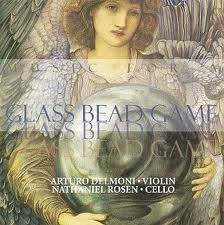
The graphic I have used is from the cover of a lovely CD, featuring Arturo Delmoni and Nathaniel Rosen, Music for a Glass Bead Game. ____________________________________________________________________________________________

Move 3: Move 3: JS Bach and the Art of Fugue
move-003.gif

Move content:

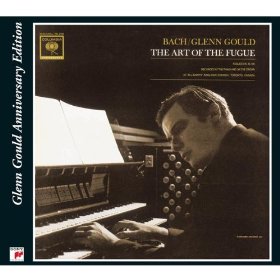
gould-art-of-fugue.jpg

Bach was my first great love in the arts, and when I applied to study at Christ Church, Oxford, it was essays on Hopkins, El Greco, and Bach — specifically the B Minor Mass — that got me in the door. Years later, when I lived in Warrenton and commuted to a think-tank job in Arlington, VA, I found myself muttering To hold the Mind of Bach over and over to myself like a mantram.

And that, I think, is the key to my games.

I want to think as Bach did, polyphonically — to see the world in terms of counterpoint, to read life musically. And my games, which involve holding related, sometimes harmonious and sometimes conflicting thoughts in the mind at the same time, invite and encourage me to do that. They also provide me with a method of notating (scoring, in the musical sense) such multi-thought patterns on the various HipBone boards.

It is Bach, therefore, who is grandfather to Said’s thought, as Hesse is its father — and Bach’s greates expressions of this approach are found in such great summary works as the B Minor Mass and the Art of Fugue.

The taste I offer here is from Contrapunctus IX, which you can hear played by Glenn Gould on the organ here (and download it for 99 cents)…

Links claimed:

To Hesse and the Bead Game, because Bach’s presence, and that of counterpoint whose greatest exponent he was, is fundamental to Hesse’s great Game. Indeed, as he writes in the book:

The Game was at first nothing more than a witty method for developing memory and ingenuity among students and musicians. … One would call out, in the standardized abbreviations of their science, motifs or initial bars of classical compositions, whereupon the other had to respond with the continuation of the piece, or better still with a higher or lower voice, a contrasting theme, and so forth. It was an exercise in memory and improvisation quite similar to the sort of thing probably in vogue among ardent pupils of counterpoint in the days of Schütz, Pachelbel, and Bach — although it would then not have been done in theoretical formulas, but in practice on the cembalo, lute, or flute, or with the voice.

To Edward Said and his call for a symphonic reading of the Israeli-Palestinian situation: because he invokes the mind of Bach himself in the passage quoted in move 1, speaking of the

sublime grandeur of a series of tragedies, of losses, of sacrifices, of pain that would take the brain of a Bach to figure out.

Comment:

It is said that every artist teaches us to see, listen, hear, read, understand in a fresh way, so that the artist’s own work, at first well-nigh incomprehensible, may gradually find its way first into clarity, and then into ease of access, obviousness, popularity, and “classical” status — later stages of the same process will bring it first obscurity and finally oblivion.

We are not yet in a position to hold many thoughts simultaneously in the mind as Bach’s mind held many melodies, but we are opening to the possibility…

Multi-tasking… this will be an early attempt at a game of musical multi-thinking. Please think it through with me… ____________________________________________________________________________________________

Move 4: William Blake and Fourfold Vision
move-004.gif

Move content:

Here’s what William Blake saw:
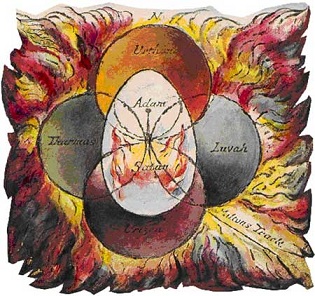
ogormanblake.jpg

Here’s what William Blake said, in his Letter to Thomas Butts:

Now I a fourfold vision see

And a fourfold vision is given to me

Tis fourfold in my supreme delight

And three fold in soft Beulahs night

And twofold Always.

May God us keep\

From Single vision & Newtons sleep.

Here’s a commentary on Blake’s notion from a fascinating paper by Marcel O’Gorman:

Several Blake critics have attempted to unravel Blake’s use of term “fourfold vision.” Accoring to Jerome McGann, beings of single vision see the world in absolutes. Life is a prison term that ends in a final, discrete annihilation. Men of twofold vision see the world dialectically, according to contraries. Threefold vision enables one to recognize the contraries and see that they are not absolute, but that the boundaries of good and evil shift according to each individual. In Milton, Blake defines threefold vision as a peaceful state, and he associates it with Beulah:

There is a place where Contrarieties are equally True This place is called Beulah, It is a pleasant lovely Shadow Where no dispute can come. Because of those who Sleep.  (M 30:1-3)

Beulah and threefold vision are identified with sleep, restfulness. But fourfold vision involves activity, not sleep. Fourfold vision is generation and destruction, life and death, or even life in death. Evidently, Blake’s understanding of death is unconventional, to say the least. For Blake, death is considered as part of the creative process, a part of life.

Links claimed:

To the Glass Bead Game: because Hesse writes:

I suddenly realized that in the language, or at any rate in the spirit of the Glass Bead Game, everything actually was all-meaningful, that every symbol and combination of symbols led not hither and yon, not to single examples, experiments, and proofs, but into the center, the mystery and innermost heart of the world, into primal knowledge. Every transition from major to minor in a sonata, every transformation of a myth or a religious cult, every classical or artistic formulation was, I realized in that flashing moment, if seen with a truly meditative mind, nothing but a direct route into the interior of the cosmic mystery, where in the alternation between inhaling and exhaling, between heaven and earth, between Yin and Yang, holiness is forever being created.

Yin and yang are the opposites of the dialectic, but in the yin-yang symbol or tai-chih we see them alternating and interpentrating in the subtle and fluid play between them (Blake’s threefold vision) from which, in Hesse’s words, “holiness is forever being created” — Blake’s fourth.

To the Said Symphony, because precisely that kind of fluid flowing between one perspective and another is what allows empathy to triumph over opposition, and the “other” to become “brother” — the condition in which alone “the peaceable kingdom” / “peace on earth” can prevail…

Comment:

Blake was the mentor of my own poetic mentor, Kathleen Raine, and my own early published poems appeared in a Penguin volume edited by Michael Horovitz and titled Children of Albion in Blake’s honor.

I am happy to remember such friends in writing this game — and amazed to find in the Blake illustration above, which I only ran across today in O’Gorman’s article, yet another visual precursor to the boards on which my games are played. ____________________________________________________________________________________________

Move 5: Bob Dylan and One Too Many Mornings
move-005.gif

Move content:

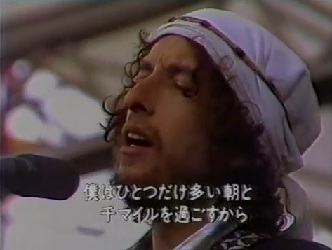
dylan.jpg

The Bob Dylan song, One too many mornings.

You’re right from your side

I’m right from mine

We’re both just one too many mornings

An’ a thousand miles behind

Links claimed:

To Fourfold Vision and William Blake: Dylan captures the utterly wrong double-rightness of conflict that features in Blake’s vision — at an intensely personal level. And I’d argue, personally, that Dylan does in music and poetry what Blake was doing in poetry and visual art — at greater depth than his Blakean friend (and companion on parts of the Rolling Thunder tour) Allen Ginsberg.

Comment:

I believe I was at the Colorado Rolling Thunder Revue concert where Dylan sang the version which YouTube presents here from a Japanese bootleg video tape. You can purchase the Hard Rain album — or just the one track — here. ____________________________________________________________________________________________

four more moves coming up shortly in a follow-up post, and then I’ll take a break.

Switch to our mobile site