One bead for a rosary
Friday, June 22nd, 2012[ by Charles Cameron — one bead from NASA for the glass bead game as rosary ]
.

photo credit: Norman Kuring, NASA’s Goddard Space Flight Center
.
Consider her sacred, treat her with care.
[ by Charles Cameron — one bead from NASA for the glass bead game as rosary ]
.
photo credit: Norman Kuring, NASA’s Goddard Space Flight Center
.
Consider her sacred, treat her with care.
[by J. Scott Shipman]
Recently, several notable posts have continued, or amplified the ideas introduced by Lt. Benjamin Kohlman’s post at Small Wars Journal calling on “disruptive thinkers.” I’ll be sharing five posts: three are serialized and offer a historical example of disruptive thinking in the U.S. Navy and the resultant lessons. The fourth is written by LTG Walter F. Ulmer, Jr. (USA, Ret) and defines a major obstacle to the disruptive thinker, namely, “toxic leaders.” The fifth is an current example of a young active duty officer, Richard Allain (USMC) thinking deeply about his profession and offering ideas on adaptability and innovation.

Navy Lieutenant Commander Benjamin “BJ” Armstrong wrote a three installment post at the US Naval Institute blog, and his topic was an example of not only disruptive thinking, but of courage, persistence, and what LCDR Armstrong calls (correctly) “grit.” Here is an excerpt from the first installment describing then-Lt. William Sims:
In 1900 he was a Lieutenant, fresh off staff duty in Europe as an intelligence officer. He had orders to China Station to join the U.S. Navy’s newest and most powerful battleship, the USS KENTUCKY. He arrived aboard the battleship having studied the early Dreadnaught battleships of Europe and the gunnery practices of both potential allies and potential adversaries alike.
Sims checked onboard and discovered that the Navy’s “newest and most powerful” may have been new, but it certainly wasn’t powerful. There were a number of problems with the ship. The hull was armored under the waterline, but the sides and gun turrets were open and un-protected. The gundecks were so low to the waterline that when the ship was fully loaded and took heavy seas water would pour into the turrets. And there was no separation of the magazines and the weatherdecks and gundecks, so a hit from an enemy shell could directly access the magazines.
Sims was incensed. He set about recording the deficiencies. In a letter to a friend he wrote: “The Kentucky is not a battleship at all. She is the worst crime in naval construction ever perpetrated by the white race.”
In the second installment, Lt. Armstrong describes then-Lt. Sims “grit:”
Sims had submitted 13 reports in all, over the span of two years, each one continually improving his method and technique. When he heard that the Bureau of Ordnance had completed a test and proved that what he claimed was impossible, he finally had enough. He knew that if the United States Navy went up against a force that was using continuous aim fire it would be decimated. Destruction of the fleet would open up the U.S. coast to invasion, as the Brits had done in the War of 1812 (a war that was roughly as distant to him as World War I is to us). He believed that the nation’s security depended on his success.
Lieutenant William Sims did something that he later characterized as “the rankest kind of insubordination.” He wrote a letter to the President.
Writing the President is is pretty disruptive, and the President read the letter and acted.
LCDR Armstrong, in his final installment called, Voice, Grit, and Listening…A Look at the Possible:
Finally, we all need to learn to listen. This is especially true as we become more senior. Today we may be the junior leaders, but that means tomorrow some of us will be the mid-grade leaders, and in the future some of us will be the senior leaders of the Navy. Sims is proof that when you remember it’s not about you but instead it’s about the idea and about the Service, you can continue to innovate as you are promoted.
These three posts are exceptionally relevant, and highly recommended.
LTG Ulmer’s essay in Army magazine, June 2012 issue, is titled: Toxic Leadership, What Are We Talking About? General Ulmer defines toxic leadership:
Defining toxic leader is the first priority before addressing numbers, impact, cause and solution. Webster’s defines toxic as poisonous, not far from destructive or harmful.
Toxic leaders are a major obstacle, and according to General Ulmer’s essay, make up almost 10% of the Army’s officer corps. General Ulmer goes on to define precisely toxic leaders in the military context, explain how they continue to survive, and offer solutions. His analysis is lucid and spot-on. The other services could learn from the Army’s lesson, and take positive action to separate toxic leaders using indigenous resources—essentially using the personnel system to weed these folks out:
A very good soldier and scientist, LTC Larry Ingraham, now deceased, commented on the dramatic differences among subordinate reputations of senior officers, saying that the personnel system that cannot distinguish between the revered and the despised must have a fundamental flaw.
The final essay comes from today’s Small Wars Journal. The title is Innovation in a Small War, and is truly an exercise in deep thinking on how the Marine Corps plans, adapts, innovates, and fights. On creativity, Allain says:
Current theories of creativity support a process consisting of four key themes. Creativity results from the invention and bounding of a problem, deconstruction of existing mental concepts, synthesis of these concepts in a new way, and test and development of the novelty to become valuable.
Allain recognizes the institutional obstacles to innovation:
It is clear that we need both innovators and adaptors within the Marine Corps to execute our doctrine. Without a balance we can stagnate or fluctuate wildly, rapidly finding ourselves unable to cope with structured or unstructured situations. While Marines are elite, they still have a spread in distribution of natural talents and attributes and exercise a spectrum of adaptive and innovative thought processes.
He concludes:
The field of military innovation studies must expand its orientation and re-examine the interconnectedness of adaptability and innovation, appreciation and leadership, and military effectiveness. Specific focus should be given to the aforementioned instances of resistance to innovation. It created stagnation and inhibited learning, a sign of ineffectiveness under this theory, and deserving of analysis.
Allain’s essay, along with the other posts, should be required reading for all are instructive, and all offer examples and solutions—and I would offer, an inspiration to those members on the fence about wading into the debate.
Well done to all!
ADDENDUM to original: Mark Tempest over at EaglesSpeak links to some insightful posts (duplicating a few above), and makes a good point about age (us old guys), illustrating you can teach an old dog new tricks—if the dog is paying attention…
Cross posted at tobeortodo.com
[ by Charles Cameron — cross-posted from Sembl ]
.
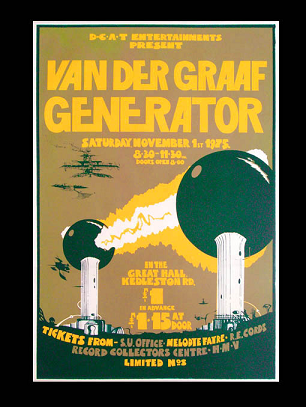
image credit The Movie Poster Art Gallery / http://www.rock-explosion.com/catpage2.html
1.
I’m always looking around for ways to describe the leap between two ideas (concepts, people, events, things) that occurs when you make a move in a Sembl game. On the game board, the ideas are shown as circles and the links as lines between them.
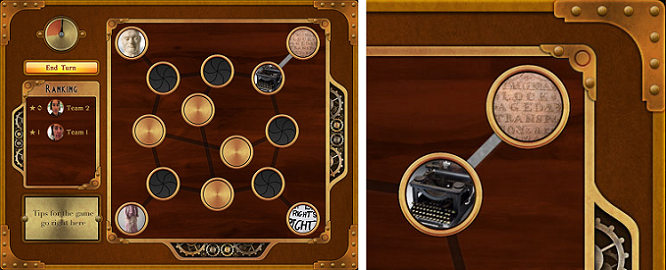
In the case of the museum version, the “ideas” are objects in the Museum’s collection – but the same principle applies whether we’re talking objects, concepts, events or people: entities of whatever type go in the circles, the lines between them signify the exploration of their resemblances and differences.
.
2.
Okay.
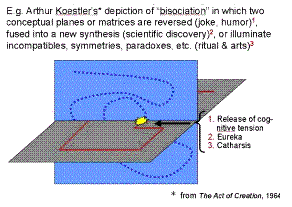
In more technical terms, Arthur Koestler in his classic book about the conceptual structure of creativity, The Act of Creation, diagrammed the intersection of two conceptual frames as representing the place where the joyous aha! of discovery, the gasped ah! of tragedy or the delightful ha! of laughter is generated, and this more recent version of his diagram gets the essence:
.
3.
But wait!
There’s a lot going on here, there’s a distinct leap – think: creative leap, even perhaps leap of faith.
It was the leap between two ideas – electricity and magnetism – that gave Faraday his dynamo, Maxwell his equations, and the modern world almost its whole existence. It was the leap between two ideas – modular forms and elliptic equations – that gave Taniyama his conjecture and Wiles his proof of Fermat‘s Last Theorem.
The leap that intuits similarities, particularly rich similarities between rich concepts in widely separated fields, is the most powerful tool of the thinking mind – and playing Sembl amounts to nothing more or less than a repeated, playful, delightful invitation to make leaps of exactly that kind.
So a Sembl leap of resemblance can be anything from training wheels for creativity to a prize-winning long-jump at the conceptual Olympics.
.
4.
Maria Popova at Brainpickings quotes Steve Jobs:
Creativity is just connecting things.
And she quotes James Webb Young, back in 1939:
Consequently the habit of mind which leads to a search for relationships between facts becomes of the highest importance in the production of ideas.
This isn’t some hidden secret, but it’s not exactly common knowledge either, it’s not something many schools teach — which is why the great anthropologist Gregory Bateson famously told his fellow Regents at the University of California:
Break the pattern which connects the items of learning and you necessarily destroy all quality.
Which is also why Eliot Eisner, Stanford professor and former President of the American Educational Research Association, said of Sembl’s precursor HipBone Games, “the cognitive processes you are interested in developing are critical to a decent education”.
.
5.
And just what does this have to do with Van der Graaf Generators, you might wonder?
There’s a cracking sense of energy discharged when you connect two ideas in a Sembl game move – not unlike the discharge of energy between the spheres of two Van der Graaf Generators picture here:
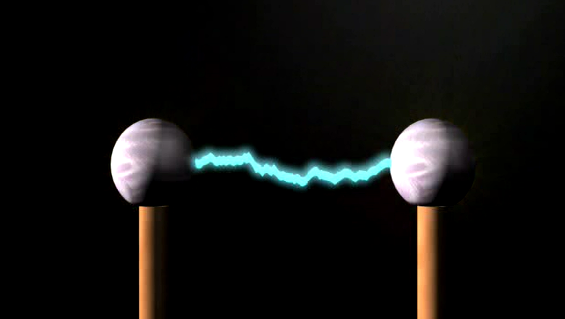
Imagine the spheres as two ideas in place on a Sembl game board, and the electrical discharge as the excitement of seeing how they mesh together to create that ah!, aha! or ha!
Or watch the whole, ultra-short video from which that image was taken, courtesy of the folks at MIT:
[ by Charles Cameron — from the Glass Bead Game via the HipBone Games to Sembl ]
.
 .
.
.
Play most assiduously is how Edgar Wind translates the motto of Marsilio Ficino — the man who more or less single-handed, built the Florentine Renaissance: studiossime ludere. Play most studiously.
Play as if your life depends on it.
*
Hermann Hesse crowned his life-work with the great, boring, utterly riveting novel Das Glasperlenspiel, The Glass Bead Game, sometimes better known in the English-speaking world by the (Latin) title, Magister Ludi — which means both school-teacher and Master of the Game.
And game there is: the Glass Bead Game itself, or GBG for short.
The book centers around a game of ideas — a game in which the most profound conceptual systems of all human cultures are brought together in a grand architecture that Hesse calls “the hundred-gated cathedral of Mind”:
A Game, for example, might start from a given astronomical configuration, or from the actual theme of a Bach fugue, or from a sentence out of Leibniz or the Upanishads, and from this theme, depending on the intentions and talents of the player, it could either further explore and elaborate the initial motif or else enrich its expressiveness by allusions to kindred concepts.
Here Hesse mentions astronomical, musical and textual concepts — the game, like the digital world of the internet, allows mathematical, textual, musical and visual elements to be juxtaposed and combined, just as Sven Birkerts described in an interview with Cliff Becker:
There are tremendous opportunities, and we are probably on the brink of the birth of whole new genres of art which will work through electronic systems. These genres will likely be multi-media in ways we can’t imagine. Digitalization, the idea that the same string of digits can bring image, music, or text, is a huge revolution in and of itself. When artists begin to grasp the creative possibilities of works that are neither literary, visual, or musical, but exist using all three forms in a synthetic collage fashion, an enormous artistic boom will occur.
Birkerts was concerned that these “tremendous opportunities” might drown out “the old quiet pastime of reading mere words” — but Hesse’s great game is a contemplative one, in which Hesse proposes:
Every transition from major to minor in a sonata, every transformation of a myth or a religious cult, every classical or artistic formulation was, I realized in that flashing moment, if seen with a truly meditative mind, nothing but a direct route into the interior of the cosmic mystery, where in the alternation between inhaling and exhaling, between heaven and earth, between Yin and Yang, holiness is forever being created.
*
Play…
We play, we play games, we play music… we play wargames… all the world’s a stage, and we are (merely) players.
Consider: Play is what children do to learn, so brilliantly, language, languages, geography, mathematics, history, chess, go, music, politeness, discipline, excess, consequences, moderation… And play is what masters do to express their mastery — Picasso plays, Casals plays, Einstein plays… And the motto of Ficino, mentor to the Florentine Renaissance, is play most assiduously.
*
The Glass Bead Game is a game, then, to compare with the greatest of games — Chess, Go, name your poison — indeed, with the greatest of intellectual endeavors — the Encyclopédie, the gesamtkunstwerk, the long-sought Theory of Everything…
All the insights, noble thoughts, and works of art that the human race has produced in its creative eras, all that subsequent periods of scholarly study have reduced to concepts and converted into intellectual values the Glass Bead Game player plays like the organist on an organ. And this organ has attained an almost unimaginable perfection; its manuals and pedals range over the entire intellectual cosmos; its stops are almost beyond number. Theoretically this instrument is capable of reproducing in the Game the entire intellectual content of the universe.
How can taking that idea and making it playable not be a worthy challenge, in this world that is daily more absorbed in digital play in its arcades and cinemas, on its consoles, tablets, phones, and computers?
*
Just reading the book made me want to play the game, but I like to keep things simple. I needed to be able to play it with a pencil and paper napkin over a cup of coffee — or on an email list or in the online forums that were beginning to spring up while I was figuring out some early boards and rules. I took Hesse’s basic concept of juxtaposing ideas and applied it on simple graph-like boards, on which each circle represents an idea, and each line a resemblance. I called my playable variants the HipBone Games.
More recently, my friend and colleague Cath Styles has been working on the development of iPad and web-playable versions of the games. We call them Sembl, because they explore the resemblances between things, ideas — and at a deeper level, the patterning of the world itself.
But the game remains the same: to juxtapose one thing — an idea, an object, a work of art, song, person or event — with another, in a way that generates the aha! of creativity. And to do that repeatedly, weaving an architecture of related ideas, on our way to weaving Hesse’s cathedral of Mind.
Our world has never been in greater need of creativity and connectivity — our future depends on them — and in the Sembl game, every move you make is a further link in the pattern that connects, every move you make is a creative leap. More on that in my follow up post, The crackling energy of a Sembl move.
[ by Charles Cameron — cross posted from Sembl — creativity as the blending of ideas ]
.
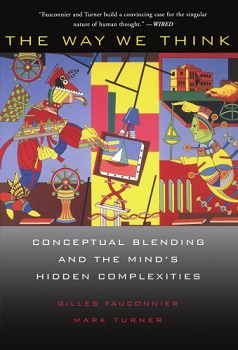
Gilles Fauconnier and Mark Turner‘s The Way We Think: Conceptual Blending and the Mind’s Hidden Complexities gives us a fascinating look at the way the human mind weaves a world out of seemingly disparate elements — in a very similar manner to that in which the creative mind weaves an aha! out of seemingly disparate ideas. The book deals with the formation of perceptions as well as ideas, but it was a specifically conceptual blend that intrigued me the other day.
First, they note that when we use expressions like “I had reached the boiling point. I was fuming. He exploded.” we are making a metaphorical mapping in which “a heated container maps to an angry individual, heat maps to anger, smoke and steam (signs of heat) map to signs of anger, explosion maps to uncontrolled rage.” Then they add in the “folk theory of physiological effects of anger” including ” increased body heat, blood pressure, agitation, redness of face” – and thus we have a threefold scheme, in which physiology, emotions and the physics of heat are intricately cross-correlated, so that we can say without much thought “He was so mad I could see smoke coming out of his ears”.
Here Fauconnier and Turner describe the mechanics of this remarkable conceptual blending process – which can yield such a seemingly unremarkable phrase:
In addition to the metaphoric mapping between Heat and Emotions and the vital-relation connection between Emotions and Body, there is a third partial mapping between Heat and Body. In this mapping, steam as vapor that comes from a container connects to perspiration as liquid that comes from a container, the heat of a physical object connects to body heat, and the shaking of the container connects to the body’s trembling.
The three partial mappings set the stage for a conventional multiple blend in which the counterparts in the inputs are fused, yielding, for example, a single element that is heat, anger, and body heat and a different single element that is exploding, reaching extreme anger, and beginning to shake. Once we have this blend, we can run it to develop further emergent structure and we can recruit other information to the inputs to facilitate its development.
*
What interests me here is the phrase:
the inputs are fused, yielding, for example, a single element that is heat, anger, and body heat
and what it reminds me of is CS Lewis writing in The Allegory of Love:
It must always be remembered … that the various senses we take out of an ancient word by analysis existed in it as a unity.
Thus the King James Version of the Bible, John 3.8, reads:
The wind bloweth where it listeth, and thou hearest the sound thereof, but canst not tell whence it cometh, and whither it goeth: so is every one that is born of the Spirit.
In the Greek, the word here translated wind is pneuma, and the sentence accordingly means “the pneuma blows where it wills, and you hear its sound but can’t tell where it comes from or is going: and so it is with all those born of pneuma“…
Recalling Lewis’ remark about the “various senses we take out of an ancient word”, this in turn means simultaneously and without separation:
the wind blows where it wills, and you hear its sound but can’t tell where it comes from or is going: and so it is with all those born of wind…
the breath blows where it wills, and you hear its sound but can’t tell where it comes from or is going: and so it is with all those born of breath…
and:
spirit blows where it wills, and you hear its sound but can’t tell where it comes from or is going: and so it is with all those born of spirit…
Take this a step further, realize that spirit can be defined as what inspires us, and we have:
inspiration blows where it wills, and you hear its sound but can’t tell where it comes from or is going: and so it is with all those born of inspiration…
Four meanings, all making good sense, and all present simultaneously and inseparably in the one gospel phrase…
*
Now consider that Fauconnier and Turner are speaking of how “three partial mappings set the stage for a conventional multiple blend in which the counterparts in the inputs are fused, yielding, for example, a single element that is heat, anger, and body heat” and compare it with Lewis’ “unity” from which we take out “the various senses” by “analysis”, as applied to the “ancient word” pneuma, with its meaning encompassing wind, breath, spirit… inspiration.
Are wind, breath and spirit or inspiration in fact three “primitives” that conceptual mapping in ancient Greek thought has brought together? What do we gain, and what do we lose if we view them this way?
And what do we lose, what do we gain if we view them as a single rich concept, now reduced to three or four separate — and separately less complexly interesting — ideas?

Zenpundit is a blog dedicated to exploring the intersections of foreign policy, history, military theory, national security,strategic thinking, futurism, cognition and a number of other esoteric pursuits.
Customized Web Site & Blog Design

