Fabius Maximus, Futurist
Thursday, June 24th, 2010This is good.
Bonus points for subtle sarcasm on FM’s part.
This is good.
Bonus points for subtle sarcasm on FM’s part.
One of the great COIN seminars of all time:
Counterinsurgency: A Symposium April 16-20, 1962
And….this:
Shameless Self-Promotion Department:
In an unusual turn of events, I was the subject of an interview by novelist and historian Steven Pressfield, author of Gates of Fire and The War of Art.
Steve has an interview section on his newly redesigned site and I join a series of bloggers and authors like Instapundit Glenn Reynolds, Tim O’Brien and Seth Godin who have sat down, in a virtual sense, with Steve for a discussion about writing and creativity. Having done such interviews of others in the past, it was a good experience to be on the receiving end of questions, for which I thank Steve:
The Creative Process: Mark Safranski
SP: Mark, what is the ZenPundit philosophy? Howdo you decide which stories or posts (or even guest bloggers) you want to include? What criteria do you use?
MS: Good question. My philosophy is something I also try to impart in my teaching.
Marcus Aurelius said “Look beneath the surface; let not the several qualities of a thing nor its worth escape you.” Most phenomena have many dimensions, multiple causes and second and third order effects. To deal with all of this complexity, we simplify matters by looking at life through an organizing frame, which we might call a worldview, a schema, a paradigm or a discipline. Whatever we call our mental model, we tend to become wedded to it because it “works.” It helps us understand some of what we are looking at-and in getting good at applying our model, advances us professionally and brings prestige or material rewards. So we will defend it to the death, from all challengers!
That’s getting carried away. Our mental model is just a tool or, more precisely, a cognitive lens. We need to be less attached to our habitual and lazy ways of looking at the world, put down our magnifying glass and pick up a telescope. Or, bifocals. Or, a microscope. Stepping back and applying different perspectives to a problem or an issue will give us new information, help us extrapolate, identify unintended consequences or spot connections and opportunities. When I do analytical pieces, I try to take that approach….
Read the rest here.
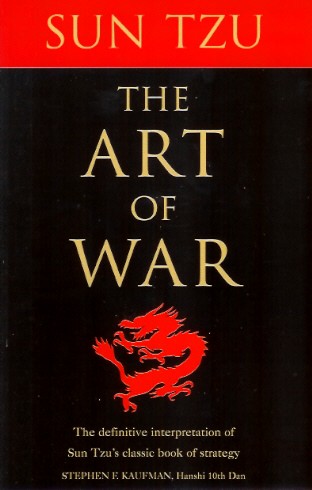
The Art of War by Sun Tzu
A BBC podcast on Sun Tzu’s classic The Art of War. Perhaps the most sublime work on strategy of all time ( Hat tip to The Warlord)
Next, and unrelated:
Via blogfriend Robert Paterson, a new talk by educational and creativity thought leader, Sir Ken Robinson. The ritual TED bowing to Al Gore notwithstanding, if you are interested in education issues, this is a must see video.
Posts have been slow here lately because my real-life workload has temporarily increased. Irrationally, I’ve attempted to compensate for my lack of blogging by ordering yet more books; perhaps I should order more free time instead!
In any event, esteemed readers, @cjschaefer and @CampaignReboot have requested a full accounting of what is new and here it is:


Blood and Rage: A Cultural History of Terrorism by Michael Burleigh
Koran, Kalashnikov and Laptop by Antonio Giustiozzi
The Collapse of Complex Societies by Joseph Tainter
Street Without Joy by Bernard Fall


The Third Reich at War by Richard J. Evans
The Death and Life of the Great American School System by Diane Ravitch
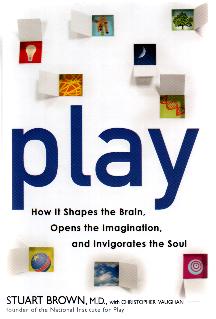
Play: How it Shapes the Brain, Opens the Imagination and Energizes the Soul by Stuart Brown


Rewired by Larry D. Rosen
The Human Factor: Inside the CIA’s Dysfunctional Intelligence Culture
Coupled with what was leftover from last year, my 2010 summer reading list is set.

Zenpundit is a blog dedicated to exploring the intersections of foreign policy, history, military theory, national security,strategic thinking, futurism, cognition and a number of other esoteric pursuits.
Customized Web Site & Blog Design


