zenpundit.com » Communism

Archive for the ‘Communism’ Category

More Books!

Friday, November 26th, 2010

Just picked up a few new reads…..


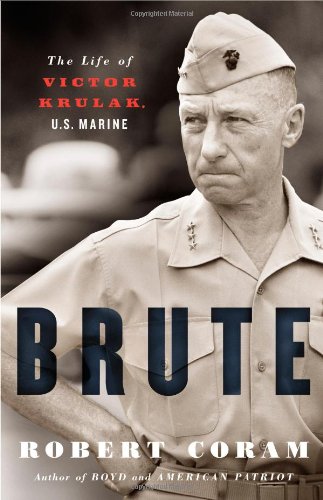
Brute: The Life of Victor Krulak, U.S. Marine by Robert Coram

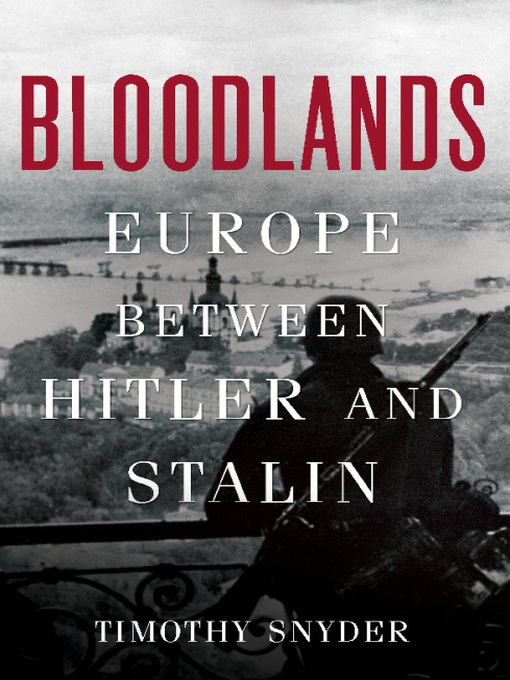
Bloodlands: Europe Between Hitler and Stalin by Timothy Snyder

Robert Coram, whom I had the pleasure of meeting at Boyd ’07, has a new biography of the legendary military visionary and Marine Lt. General Victor “Brute” Krulak, reviewed here by Max Boot and here by Tony Perry (Hat tip to Dr. Chet Richards). Having thumbed a few pages, Krulak appears a complicated man – gifted, dauntless and extremely driven but also possessed of a mean streak, edging at times toward petty cruelty.

Bloodlands I intend to read in a “Hitler-Stalin/Nazi-Soviet Comparison” series along with Richard Overy’s The Dictators: Hitler’s Germany, Stalin’s Russia, Robert Gellately’s Lenin, Stalin, and Hitler: The Age of Social Catastrophe , Richard J. Evans’ The Third Reich at War and Alan Bullock’s classic dual biography Hitler and Stalin: Parallel Lives.  I’d also recommend, for those with the stomach for historiographic commentary, Robert Conquest’s Reflections on a Ravaged Century and John Lukac’s The Hitler of History

CURRENTLY READING:

Human Face of War by Jim Storr

After reading approxmately a third of The Human Face of War by  Dr. Jim Storr, a retired Lt. Colonel, King’s Regiment and an instructor at the UK Defence Academy, I will say that if you are going to read only one book on modern military thought this year, it should be The Human Face of War. It’s that good.

Aside from a reflexive hostility toward John Boyd’s OODA Loop ( though not, strangely enough, toward the substantive epistemology advocated by Boyd that the diagram represented), Storr’s tome is an epistle of intellectual clarity on military theory that deserves to be widely read.

ADDENDUM:

NDU Press recommends, and I concur, this review of The Human Face of War by Col. Colonel Clinton J. Ancker III. Ancker, like Storr, is an expert on military doctrine, so it is a well-informed review by a professional peer.

Galula and the Maoist Model

Monday, November 15th, 2010

Counterinsurgency Warfare: Theory and Practice

SWJ Blog has been featuring Octavian Manea talking to COIN experts about counterinsurgency godfather David Galula:

Interview with Dr. John Nagl

“Counterinsurgencies are after all learning competitions.”

What is the legacy of David Galula for US Counterinsurgency doctrine? Is he an intellectual father?

The most important thinker in the field is probably Mao whose doctrine of insurgency understood that insurgency is not a component or a precursor of conventional war but could by itself accomplish military objectives. The greatest thinker in my eyes in COIN remains David Galula who has the enormous advantage of having studied and seen the evolution of insurgency in France during WW2, then spending a great deal of time in Asia, and really having thought through the problem for more than a decade before he practiced COIN himself for a number of years. His book is probably the single biggest influence on FM 3-24, the COIN Field Manual. David Galula is the best COIN theoretician as Kennan was for containment.

Interview with Dr. David Ucko

What was the role of David Galula in shaping the mind of the US Army or the Army Concept? Could we see him as an intellectual founding father? And what specific beliefs do you have in mind when you assess his role in shaping the organizational culture of the US military?

As certain individuals and groups within the US military again became interested in counterinsurgency, this time as a result of the persistent violence in ‘post-war’ Iraq, one of the more immediate reference points for how to understand this type of political violence were the scholars and theorists who had marked the US military’s previous ‘counterinsurgency eras’, during the 1960s primarily, but also during the 1980s. In the former camp, the thinkers of the 1960s, David Galula stands as an intellectual forefather to much that was finally included in the US Army and Marine Corps’ FM 3-24 counterinsurgency field manual; indeed I believe his book is one of the three works cited in the manual’s acknowledgements. I think it is fair to say far fewer people have read than heard of Galula, and it would be an interesting study to go through his writings more carefully and see to what degree they apply to our understanding of counterinsurgency today. Nonetheless, even at a cursory level, Galula has been extremely helpful in conceptualizing some of the typical conundrums, dilemmas and complexities of these types of campaigns: the civilian capability gaps in theater; the political nature of counterinsurgency; the importance of popular support, etc. These were issues that US soldiers and Marines were confronting in Iraq and struggling to find answers to; Galula’s seminal texts were in that context helpful.

In terms of influencing US counterinsurgency doctrine, perhaps one of Galula’s main contributions is the emphasis on the political nature of these types of campaigns, and – importantly – his concomitant warning that although the fight is primarily more political than military, the military will be the most represented agency, resulting in a capability gap. Galula’s answer to this conundrum is explicitly not to restrict military forces to military duties, a notion picked up on in US doctrine, which also asks the US military to go far beyond its traditional remit where and when necessary. In a sense, this line of thinking is one of the greatest distinctions between the Army’s first interim COIN manual in 2004 and the final version in 2006: in doctrine (if not necessarily in other areas, such as force structure), Galula’s view of military forces filling civilian capability gaps had been accepted. Of course, it should be added that all of this is much easier said than done, and perhaps some of the implications of involving military forces in civilian tasks (agriculture, sewage, project management) have not been thoroughly thought through – do the armed forces have the requires skills, the training, and how much civilian capability can one realistically expect them to fill? Also, the danger with following Galula on this point is that by doing what’s necessary in the field, the armed forces may also be deterring the development of the very civilian capabilities they reluctantly usurp.

How relevant is Galula’s “Maoist Model” of insurgency anymore?

It is certainly possible for a Maoist insurgency to be successful in today’s world under the right conditions. This was proved, ironically, by Maoists in Nepal who managed to shoot their way, if not into power, into a peace agreement with other Nepalese political parties who united with the Communists to topple Nepal’s monarchy in 2006. Conditions were nearly ideal for an insurgent victory: Nepal is a poor, isolated, landlocked nation which had an unpopular and tyrannical king who was, at best, an accidental monarch; and who lacked an effective COIN force in the Royal Army. Nor was India, which passed for the Royal Nepal goverment’s foreign patron, willing to consider vigorous military intervention or even military aid sufficient to crush the rebellion. For their part, the Maoists were highly disciplined with a classic Communist hierarchical system of political-military control and were relatively-self-sufficient as a guerrilla force.

How well does such a “Maoist Model” of revolutionary warfare reflect conditions of insurgency that we see today in Mexico, Afghanistan, Iraq, Somalia or Yemen? Or in central Africa

Not very well at all.

For that matter, how relevant was “the Maoist Model” for Mao ZeDong in actual historical practice as opposed to retrospective mythologizing and theorizing that lightly sidestepped the approximately 4 million battlefield casualties inflicted on Chiang Kai-shek’s Nationalists at the hands of the Imperial Japanese Army? Prior to the invasion of China proper by Imperial Japan, Chiang Kai-shek’s “extermination campaigns” had a devastating effect on Mao’s forces and had Chiang been free to concentrate all his strength against the Communists, it is difficult to see how Mao’s revolution would have survived without significant Soviet intervention in China’s civil war.

If David Galula were alive today, I suspect he’d be more interested in constructing a new COIN model from empirical investigation than in honing his old one.

The Father of Sovietology

Sunday, September 13th, 2009

Great piece of intellectual history here by Dr. David Engerman, writing in Humanities on Philip Mosley, who was to Cold War Sovietology what Vannevar Bush was to the Manhattan Project:

The Cold War’s Organization Man How Philip Mosely helped Soviet Studies moderate American policy

When Winston Churchill ominously announced in March 1946 that an “Iron Curtain had descended over Europe,” the United States government employed around two dozen experts on the Soviet Union and even fewer on Central and Eastern Europe. Two years later, after a steady drumbeat of Cold War crises, the young Central Intelligence Agency employed thirty-eight Soviet analysts, only twelve of whom spoke any Russian. The few university-based Russia specialists varied tremendously in intellect and energy; only a handful were willing and able to contribute to shaping policy. How could American officials chart a foreign policy without knowing what was going on inside the Soviet Union, let alone inside the Kremlin? As Geroid Tanquary Robinson, head of the USSR analysis for wartime intelligence and the founding director of Columbia’s Russian Institute, put it, “Never did so many know so little about so much.”

Into this breach stepped a handful of scholars, including Philip Edward Mosely, the man who would become the most influential Sovietologist of the Cold War. He lacked the name recognition and elegant writing style of the diplomat George Kennan, whose 1947 “X” article introduced the concept of containment to the world. Nor could he rival the publication record and scholarly reputation of Harvard professor Merle Fainsod, whose 1953 book How Russia Is Ruled introduced generations of readers to Soviet politics. And Mosely was nowhere near as colorful a character as the economic historian Alexander Gerschenkron, whose 1952 essay on “economic backwardness” remains a subject of debate into the twenty-first century. Mosely’s contributions to the development of Soviet Studies have received little attention. But in a field of study that emphasized its practical application to policymaking, no one else was so adept at working the lines of influence and power that connected America’s campuses and its capital.

Read the rest here.

Hat tip to Meredith Hindley.

Pipes on Russia, Barnett on Pipes

Tuesday, September 8th, 2009

Professor Richard Pipes, the Harvard University political scientist, is a seminal figure among sovietologists, historians and scholars of Soviet Studies. I highly recommend his trilogy, Russia under the Old Regime, The Russian Revolution and Russia Under the Bolshevik Regime ( I would pair the first with W.Bruce Lincoln’s The Romanovs Autocrats of All the Russias to see the differences between the way eminent historians and political scientists handle the same topic). Dr. Pipes has written an op-ed for WSJ.com and it was reviewed by his former student, Dr. Thomas P.M. Barnett.

First the Pipes op-ed, then Tom’s assessment and then my comments:

Pride and Power: Russia is caught between continents and haunted by its past,”

One unfortunate consequence of the obsession with “great power” status is that it leads Russians to neglect the internal conditions in their country. And here there is much to be done. To begin with: the economy. The Russian aggression against Georgia has cost it dearly in terms of capital flight. Due to the decline in the global prices of energy, which constitute around 70% of Russian exports, exports in the first half of 2009 have fallen by 47%. The stock market, which suffered a disastrous decline in 2008, has recovered, and the ruble has held steady, but the hard currency reserves are melting and the future does not look promising: The latest statistics indicate that Russia’s GDP this year will fall by 7%. It is this that has prompted President Dmitry Medvedev recently to demand that Russia carry out a major restructuring of her economy and end her heavy reliance on energy exports. “Russia needs to move forward,” he told a gathering of parliamentary party leaders, “and this movement so far does not exist. We are marking time and this was clearly demonstrated by the crisis… as soon as the crisis occurred, we collapsed. And we collapsed more than many other countries.”

….Today’s Russians are disoriented: they do not quite know who they are and where they belong. They are not European: This is attested to by Russian citizens who, when asked. “Do you feel European?” by a majority of 56% to 12% respond “practically never.” Since they are clearly not Asian either, they find themselves in a psychological limbo, isolated from the rest of the world and uncertain what model to adopt for themselves. They try to make up for this confusion with tough talk and tough actions. For this reason, it is incumbent on the Western powers patiently to convince Russians that they belong to the West and should adopt Western institutions and values: democracy, multi-party system, rule of law, freedom of speech and press, respect for private property. This will be a painful process, especially if the Russian government refuses to cooperate. But, in the long run, it is the only way to curb Russia’s aggressiveness and integrate her into the global community.

Read the rest here.

Now, Tom on Pipes:

Pipes the Elder on Biden comments: so impolite because they are so true

The biggest issue, like with China, is official corruption. The second is the pervasive depoliticization of the populace: they’ve never really had any experience picking their own leaders over the past 1,000 years. That fend-for-yourself mentality pervades the political system and its foreign policy. All citizens want from the state is order, and what they miss most about the Soviet past was that it preserved Russia’s contiguous empire beyond that of any in Europe or Asia.

Russians have no idea who they are today: they don’t feel either European or Asian. Eventually, they’ll come to some conclusion about what sitting between those civilizations means in terms of identity.

So patience and care is required.

Very nice piece by Pipes.

Read the rest here.

Russia has had repeated bouts of historical, “geographic schizophrenia”: the long Tatar Yoke, the age-old conflict between Petrine westernization and Orthodox slavophilism, the iron Soviet dictatorship, especially Stalin’s democidal rule. Russia has neither joined the West nor considered itself to be fully Asiatic. Instead, the Russians inherited a “Third Rome” complex from Byzantium that has helped keep them isolated from their own best opportunities as a great power. Fringe groups of ideologues promoting nutty “neo-Eurasianism” in Russia play upon this historical legacy.

To the extent that the cold-blooded Vladimir Putin and the Siloviki clan have made their nation into “Russia, Inc.” – a gas and energy monopoly in the tattered rags of a nation- state, the long term trend will be accepting globalization and integration, regardless of any deep cultural angst and Ivan Q. Public Great Russian nationalist-chauvinism along the way.

ADDENDUM:

The Western View of Russia” by George Friedman

I have a mixed opinion on STRATFOR’s analytical products but Friedman is playing to his strengths here in a piece that is measured and thoughtful. Hat tip to Lexington Green.

Forget Me Not. Obama’s Russian “Reset” Risks Alienating Eastern European Allies by Mike Wussow

Adds some regional context to Friedman’s post .

Book Review: The Bloody White Baron

Wednesday, July 29th, 2009

The Bloody White Baron: The Extraordinary Story of the Russian Nobleman Who Became the Last Khan of Mongolia by James Palmer

The 20th Century was remarkable for its voluminous bloodshed and civilizational upheaval yet for inhuman cruelty and sheer weirdness, Baron Roman Nikolai Maximilian Ungern von Sternberg manages to stand out in a historical field crowded with dictators, terrorists, guerillas, revolutionaries, fascists and warlords of the worst description. Biographer James Palmer has brought to life in The Bloody White Baron an enigmatic, elusive, monster of the Russian Civil War who is more easily compared to great villains of fiction than real life war criminals. Palmer’s bloodthirsty Mad Baron comes across like a militaristic version of Judge Holden from Cormac McCarthy’s Blood Meridian or perhaps more like Hannibal Lecter with a Mongol Horde.

Ill-tempered, impulsively violent, insubordinate and socially isolated even among fellow aristocratic officers, Baron Ungern was, as Palmer admits, without much wit or charm, a complete failure in Tsarist society and the Imperial Army until the coming of the Great War. As with many “warlord personalities“, the chaos and ruin of the battlefield was the Baron’s natural element and for the first time in his life, he experienced great success, his maniacal bravery under fire winning Ungern promotions and the highly coveted St. George’s Cross. This is an eerie parallel with the life of Adolf Hitler, and numerous times in the text, Palmer alludes to similarities between the Baron’s apocalyptic views on Communists and Jews, and that of Baltic-German refugees like Alfred Rosenberg and Max Scheubner-Richter who contributed eliminationist anti-semitism and theories about “Jewish- Bolshevism” to Nazi ideology.

A fanatical monarchist and philo-Buddhist fascinated with far-off Mongolia and Tibet, the Baron regarded the Russian Revolution as the greatest of calamities and joined the Whites under the leadership of the gangster-like Ataman Semenov to rape, loot, torture and murder with a hodgepodge Cossack horde across the Transbaikal region of Siberia. The Baron’s fiefdom under Semenov was a macabre, bone-littered, execution ground ruled by reactionary mysticism and ghoulish exercises in medieval torture visited upon the Baron’s own soldiers scarcely less often than on hapless peasants or captive Reds.

Dismayed by Semenov’s corruption and dependence on the Japanese and the collapsing fortunes of Russia’s White armies, Palmer recounts how the Baron fled with a ragtag band of followers to Chinese occupied Mongolia, where, in a series of bizarre circumstances, the Baron managed to destroy a sizable Chinese army (charging on horseback straight into enemy machine gun fire and emerging unscathed), seized the fortified capital, restored the “living Buddha” the Bogd Khan to the throne and become celebrated the eyes of the Mongolians, variously as the reincarnation of Ghengis Khan and/or the prophesied coming of the “God of War”. Naturally, to further his dream of building a pan-Asian Buddhist Empire, Baron Ungern unleashed a nightmarish reign of terror in Mongolia, taking especial and personal delight in the executions of Jews and captured commissars.

Ungern’s final foray in battle, before his capture, trial and execution at the hands of the Bolsheviks, is like something out of the Dark Ages:

With this final defeat, Ungern shed any trace of civilization. He rode silently with bowed head in front of the column. he had lost his hat and most of his clothes. On his naked chest numerous Mongolian talismans and charms hung on a bright yellow cord. He looked like a prehistoric ape-man. People were afraid to look at him.

Despite the best efforts of the Bolshevik prosecutor to focus upon political motives, even the Soviet revolutionary tribunal that condemned him to death on Lenin’s orders, considered the Baron to be a dangerous madman.

James Palmer has shed a great deal of light on one of the darkest corners of the Russian Civil War, Baron Ungern von Sternberg, a subject that largely eluded prominent historians like W. Bruce Lincoln, Orlando Figes and Richard Pipes. The Bloody White Baron is a fascinating read and a window into the life of the 20th century’s strangest warlord.

Switch to our mobile site