zenpundit.com » state department

Archive for the ‘state department’ Category

Putin and Syria: Siloviki Realism in Geopolitical Strategy

Thursday, July 12th, 2012
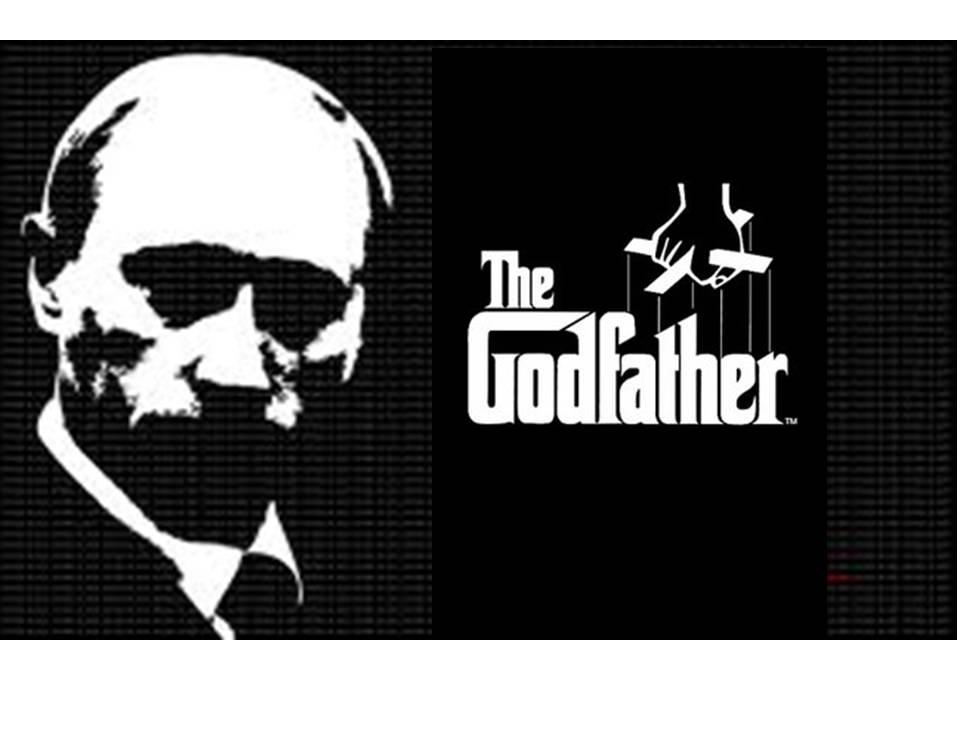

Russian President Vladimir Putin made a foreign policy speech to Russia’s ambassadors and Foreign Ministry officials that is very much worth reading in context of his dispatch to Syria of a fleet of warships, including a battleship, to the modest Russian naval base in Tartus. Under Putin’s hand, Russian support for the bloody regime of Bashar Assad has consistently been more about safeguarding and expanding Russia’s strategic place in world than about Syria:

….We are forced to admit that no reliable solution for overcoming the global economic crisis has been found yet. Indeed, the prospects are looking more and more worrying. The debt problems in the Eurozone and its slide towards recession are just the tip of the iceberg as far as the global economy’s unresolved structural problems go. The traditional powerhouses of global development – the USA, the EU, and Japan – are seeing their leadership erode, but the absence of new development models is putting a brake on global growth. There is increasing competition for access to resources, and this provokes abnormal fluctuations on the raw materials and energy markets. The traditional Western economic powers are being weakened by the crisis, which has exacerbated social and economic problems in the developed economies, and by the multi-vector nature of global development today. We can already see this for a fact now. 

Colleagues, this is no cause for joy. We should not take delight in this turn of events, and much less feel malicious glee. On the contrary, we cannot but worry over these developments, because the consequences of these tectonic shifts in the global economy are not yet clear, nor are the inevitable shifts in the international balance of power and in global policy that will follow. 

We are all the more worried when we see attempts by some actors in international relations to maintain their traditional influence, often by resorting to unilateral action that runs counter to the principles of international law. We see evidence of this in so-called ‘humanitarian operations’, the export of bomb and missile diplomacy, and intervention in internal conflicts.

We see how contradictory and unbalanced the reform process is in North Africa and the Middle East, and I am sure that many of you still have the tragic events in Libya before your eyes. We cannot allow a repeat of such scenarios in other countries, in Syria, for example. I believe that we must do everything possible to press the parties in this conflict into negotiating a peaceful political solution to all issues of dispute. We must do all we can to facilitate such a dialogue. Of course this is a more complex and subtle undertaking than intervention using brute force from outside, but only this process can guarantee a lasting settlement and future stable development in the region, and in Syria’s case, in the country itself….

It would be harder for Putin to have been more clear about what his priorities were, or that for Russia, R2P as a doctrine has no standing whatsoever in international law [ incidentally, he’s correct on that point] and Syria is not going to be allowed to go the way of Libya, if the Kremlin can prevent it.

Generally, the media reported this speech, highly misleadingly, as Putin’s prediction of “Western decline” when the message was Russia’s opposition to Western military intervention in Syria to remove Assad from power. Putin neither overestimates the means at Russia’s disposal to accomplish his limited objective (blocking intervention) nor inflates his objective to an unrealizable, vaguely defined, abstraction.

Contrast, with the speech on Syria made recently by SECSTATE Hillary Clinton. Here is a snippet that gives the tenor of her remarks:

….What was accomplished in Geneva by the action group was, for the very first time, to enlist not only all five permanent members of the Security Council including Russia and China, but also important leaders in the region and in the Arab League in support of such a transition. The issue now is to determine how best to put into action what was accomplished there and is continuing here. And I really hope everyone reads the communique from Geneva, because for example, one of the earlier speakers from Syria expressed concern there was nothing about political prisoners. Well, indeed there is. And a call for the release from detention. So it would be very helpful to get everybody on the same page if we’re going to work together about what we have already done and what we need to be doing as we move forward.

Under the Geneva communique, the opposition is for the first time put on an even basis with the government. They are given equal power in constituting the transition governing entity that will have, as we just heard, full executive authority. That could not have been imagined three months ago, let alone a year ago.

So although none of us here is satisfied or comfortable with what is still going on inside of Syria, because it is against every norm of international law and human decency for a government to be murdering its own people, there has been in the last several months, starting in Tunisia, a steady, inexorable march toward ending this regime. What we need to do is to follow through on what each of us can contribute to the end of the Assad regime and the beginning of a new day for Syria. 

….Now what can every nation and group represented here do? I ask you to reach out to Russia and China and to not only urge, but demand that they get off the sidelines and begin to support the legitimate aspirations of the Syrian people. It is frankly not enough just to come to the Friends of the Syrian People, because I will tell you very frankly, I don’t think Russia and China believe they are paying any price at all – nothing at all – for standing up on behalf of the Assad regime. The only way that will change is if every nation represented here directly and urgently makes it clear that Russia and China will pay a price, because they are holding up progress – blockading it – that is no longer tolerable. 

First of all, the Secretary of State needs a more effective speechwriter. Period.

Secondly, there is a substantive problem here with an obsession with the minutia of process, possibly because the legal principle behind American policy on Syria is a novelty of intellectuals and is not accepted by two veto-wielding great powers that sit on the UN Security Council. Moreover this focus on minutia of process obstructs clear thinking in regard to the larger geopolitical picture and the ways to get to the end in mind – the removal of Assad’s regime – or the consequences for opposing American policy. Russia and China are told their continued support for the Assad regime, which they see as being in their own interests, is “intolerable” – an outburst of unseemly frustration as we have no stick and strangely offer no carrots for these states to change their positions. Instead we choose to moralize  in public, a diplomatic technique with a long pedigree of failure.

The comparison of statecraft between Russia and the United States is unflattering. Russia has vastly fewer cards to play, but because  Putin has grounded his policy in a siloviki assessment the realities of power, has limited his objectives to those within Russia’s means and related those to the larger diplomatic context that would appeal to other powers, he has played those cards well. Moreover, Putin has positioned Russia to be an indispensable party in a peaceful resolution of the conflict in Syria at very little cost, as Secretary Clinton herself has admitted and capped it off with a naval show of force in the eastern Mediterranean.

We, who have a wealth of resources to employ, have squandered them ineffectively and navigate the ship of state with our heads in the clouds. We forced a vote in the UNSC on Syria, ignoring all signals that the end result would be failure. Syria shoots down a Turkish warplane intruding in it’s airspace (likely at our request) and we had no plan to capitalize on the incident. We gratuitously leak information or disinformation about covert operations that serves more to make us look amateurish than to intimidate our opponents. We do not even appear to be well-informed about the Syrian opposition we are aiding inside Syria, as opposed to expatriate organizations. Some of the fighters in the opposition are as morally objectionable as Assad’s militia thugs and secret police killers.

We play at tactical geopolitics while the Russians do strategy.

The Anti-Strategy Board Cometh

Wednesday, April 25th, 2012

President Barack Obama has established by an executive order an Atrocity Prevention Board.  After the 120 day study and planning period (which will determine the writ of the APB), the board will be chaired by Samantha Power, a senior White House foreign policy adviser, NSC staffer and an aggressive advocate of R2P .

This is not likely to end well.

Presidential boards, commissions, study groups and other executive branch bodies are political agendas that power has made into bureaucratic flesh. Some, like the Warren Commission or the Iraq Study Group were transient for an instrumental purpose; others, like the Defense Policy Board put down roots and become real institutions. Some are killed for partisan reasons by new administrations (as Rumsfeld did to DACOWITS by letting it’s charter expire and then remolding it) or from congressional pique (this terminated the Public Diplomacy Commission) while some linger on for decades in zombie status, politically irrelevant but still animate, due to the inertia of bureaucracy.

What is interesting about these various bodies is that without the statutory powers granted to agencies created by legislation, they are merely empty shells unless filled with influential figures with clout or blessed by the patronage of high officials. If this is the case, even very obscure bodies can be platforms for impressive political action. Creepy and cloying old Joe Kennedy parlayed a minor post on a maritime commission and his vast fortune to become successively FDR’s SEC Chairman and the Ambassador to the Court of St. James, where he dispensed bad geopolitical advice and pushed the future careers of his sons, netting a president and two senators. The role of the Defense Policy Board in the run-up to the Iraq War is well known and I am told that one can even launch a constellation of careers and a powerhouse think tank from something as mundane and thankless as writing a COIN manual 😉

It is safe to say that the new Atrocity Prevention Board is not going to be window decoration.

Many people who are seeing what I am seeing in this move are now uneasily prefacing their critical comments with “Well, who can be against stopping atrocities, right?”. Let me say with complete candor: I can. The Atrocity Prevention Board is a great sounding  bad idea that represents an impossible task in terms of Ways, unaffordable in terms of Means and unacheivable in relation to Ends. Worse, by holding the national security community hostage to the serendipity of governmental cruelty on a global scale, the intelligent pursuit of national interests are effectively foreclosed  and the initiative ceded to random, unconnected,  events. This worst kind of institutionalized crisis management time horizon also comes weighted with implicit theoretical assumptions about the end of national sovereignty that would, I expect, surprise most Americans and which we will soon regret embracing.

Given the ambitions and missionary zeal of some R2P advocates and their ADHD approach to military intervention, it is unsurprising that this new entity was not titled “The Genocide Prevention Board”. Genocide, which the United States has definitive treaty obligations to recognize and seek to curtail, is too narrowly defined and too rare an event for such a purpose. “Atrocities” can be almost any scale of lethal violence and could possibly include “non-lethal” violence as well. This is a bureaucratic brief for global micromanagement by the United States that makes the Bush Doctrine appear isolationist and parsimonious in comparison.

A while back, while commenting on R2P, I wrote:

…As Containment required an NSC-68 to put policy flesh on the bones of doctrine, R2P will require the imposition of policy mechanisms that will change the political community of the United States, moving it away from democratic accountability to the electorate toward “legal”, administrative, accountability under international law; a process of harmonizing US policies to an amorphous, transnational, elite consensus, manifested in supranational and international bodies. Or decided privately and quietly, ratifying decisions later as a mere formality in a rubber-stamping process that is opaque to everyone outside of the ruling group.

The president is entitled to arrange the deck chairs as he sees fit, and in truth, this anti-strategic agenda can be executed just as easily through the NSC or offices in the West Wing, but the creation of a formal board is the first step to institutionalizing and “operationalizing a R2P foreign policy” under the cover of emotionalist stagecraft and networking machinations. A doctrine of which the American electorate is generally unaware and the Congress would not support legislatively (if there was a hope in Hell of passage, the administration would have submitted a wish-list bill).

This will not be a matter of just going abroad looking for monsters to slay but of a policy machine that can spew out straw monsters at need even when they don’t exist.

ADDENDUM:

What others are saying about the APB:

Foreign Policy (Walt) –Is the ‘Atrocity Prevention Board‘ a good idea?

Duck of Minerva (Western) –Institutionalizing Atrocity Prevention 

Pondering Transition Ops with Quesopaper

Monday, April 16th, 2012

One of the nice things about this blog is that periodically, smart folks will send me their unpublished material for feedback and private commentary. This comes in a wide variety of formats – manuscripts, articles, book chapters, powerpoint, sometimes an entire book or novel! It is flattering and almost always informative, so I try to help where I can or at least point the sender in the direction of someone more appropriate.

Recently, I was given a peek at a very intriguing paper on “Transition Operations” by Dr Rich Ledet, LTC Jeff Stewart and Mr. Pete Turner, who blogs occasionally at quesopaper.  Pete has spent a good chunk of the past ten years in a variety of positions and capacities in Iraq and Afghanistan, where he currently is with American troops in a remote rural district and it was he who passed their draft to me. They have taken a fresh look at the subject.

While I can’t give away their “secret sauce” in detail,  I particularly liked the fact that while the  focus and advice for executing transition operations is aimed at field grade officers and their civilian agency counterparts, their vision is in sync with the ideal of having policy-strategy-operations and tactics as a seamless “whole-of-government” garment. If only we could get our politicians to think in these terms, half the battle would be over.

Their paper is now headed to a professional journal; when it is published ( as I think it will be), I will definitely be linking to it here and hopefully, that will be soon.

My reason for my bringing this up – I have the permission of the authors to do so – is that the trio have put their finger on the major doctrinal problem faced by the United States military in Afghanistan – “transition operations” being a politically charged topic, laden as it is with implied foreign policy decision making by heavyweight policy makers, is treated in very scanty fashion by FM 3-24. Compared to other aspects of COIN, very little guidance is given to the the commander of the battalion or brigade in the effort to coordinate “turnover” of responsibilities and missions to their Afghan Army, police and government allies.

This at a time when the “readiness” of Afghan units and officials to accept these burdens in the midst of a war with the Taliban is questionable, variable, controversial at home and politically extremely sensitive in Afghanistan.

And at a point where, ten years after September 11, the US State Department is no more able in terms of personnel and vision or sufficiently funded by Congress, to step up their game and take the lead role in Afghanistan from the Pentagon than it was on September 10, 2001.  SECSTATEs Condi Rice and Hillary Clinton deserve great praise for making State do more with less, but State needs wholesale reform to fit the needs of the 21st century and the money and budgetary flexibility to split foreign policy tasks more equitably with the Defense Department.

State is not going to be playing a major role on the ground in our transition out of Afghanistan, which makes guidance to our majors and colonels – and in turn to their company and platoon leaders stationed there-  all the more important.

More on Strategy

Friday, March 30th, 2012

Two posts worth your attention:

Gulliver at Inkspots continues the strategy convo between myself and Jason Fritz with a major post of extended commentary:

Let’s just be up front with each other: this is a really long rant about strategy 

….I’m willing to concede that the line between civilian and military reponsibilities in strategy formation and the associated operational planning is a blurry and unstable one, and that what I’ve laid out as the normative standard isn’t always the way things play out in reality. You certainly shouldn’t take anything I’ve written above as an exculpatory argument for our elected officials. But more on this a bit later.

As for our man Carl: Jason’s choice of Clausewitz quote is simultaneously interesting and surprising to me. Committed students of the sage will recognize it from perhaps the most remarked-upon pages of On War: Book Eight, Chapter 6B. (If it were an episode of “Friends,” they’d call it The One With the Politics By Other Means.) The language Jason excerpted is from the 19th-century Graham translation; just for the purpose of clarity, let’s look at the somewhat more fluent Paret/Howard version:

In making use of war, policy evades all rigorous conclusions proceeding from the nature of war, bothers little about ultimate possibilities, and concerns itself only with immediate probabilities. Although this introduces a high degree of uncertainty into the whole business, turning it into a kind of game, each government is confident that it can outdo its opponent in skill and acumen. (606)This is a pretty difficult passage (especially as I present it here, mostly out of context) but I take it to mean that governments are little interested in ruminations on war’s escalatory momentum in the direction of its absolute form, but rather in how violence may be used to achieve concrete political goals. But the paradoxical reality is that addition of violence to politics – violence that is fueled in part by hatred and enmity, violence that is fundamental to war’s nature and sets it off as distinct from all other human activity – actually re-shapes the character of the political contest. War’s essential violence pressures the political contest to take on the character of a duel or a sporting event; without the harness of policy, war risks becoming a self-contained competition conducted according to its own rules, one where victory is not the mere accomplishment of political objectives but rather a revision of the relationship between the two competitors such that the victor is free to enact his preferences. 

The “high degree of uncertainty” that Clausewitz concedes is introduced “into the whole business” is produced by divergence between the things we do in war and the things they are meant to achieve. In limited war, our actions are conceived as violent but discrete and purposive acts of policy, while as war moves toward its absolute form our actions are increasingly divorced from discrete political objectives short of the destruction of our enemy. To put it simply, shit gets crazy in war. [….] 

In a different strategic venue, Matt Armstrong at MountainRunner analyzes  The President’s National Framework for Strategic Communication (and Public Diplomacy) for 2012 :

It should be common knowledge that the “information consequences of policy ought always be taken into account, and the information man ought always to be consulted. This statement, from 1951, is reflected in Eisenhower’s dictum of the next year that “everything we say, everything we do, and everything we fail to say or do will have its impact in other lands.” It was understood then that words and deeds needed more than just synchronization: public opinion could be leveraged to support and further the execution of foreign policy.

What was true then is more so in a modern communication environment of empowerment. The interconnected systems of Now Media, spanning offline and online mediums, democratizes influence, and undermines traditional models of identity and allegiance as demands on assimilation fade as “hyphens” become commas. What emerges is a new marketplace for loyalty that bypasses traditional barriers of time, geography, authority, hierarchy, culture, and language. Information flows much faster; at times it is instantaneous, decreasing the time allowed to digest and comprehend the information, let alone respond to it. Further, information is now persistent, allowing for time-shifted consumption and reuse, for ill or for good. People too can travel the globe with greater ease and increased speed.

It is in this evolving environment that the President issued an updated “National Framework for Strategic Communication” for 2012 (3.8mb PDF, note: the PDF has been fixed and should be once again visible to all). This report updates the 2010 report issued last March that was little more than a narrative on how the Government was organized for strategic communication. The report is required under the National Defense Authorization Act of 2009.

Some highlights from the 2012 Framework: [….]

New Book Review up at PRAGATI: George F. Kennan: an American Life

Thursday, February 16th, 2012


PRAGATI – the Indian National Interest Review has published my review of John Lewis Gaddis’ biography George F. Kennan: An American Life 

The creative art of strategy 

….Into the breach strides eminent diplomatic historian John Lewis Gaddis, offering a magisterial 784 page biography, a quarter- century in the making, George F. Kennan: An American Life. Gaddis, a noted historian of the Cold War and critic of revisionist interpretations of American foreign policy, has produced his magnum opus, distilling not only the essence of Kennan’s career, but the origins of his grand strategic worldview that were part and parcel the self-critical and lonely isolation that made Kennan such an acute observer of foreign societies and a myopic student of his own.

Gaddis, who is a co-founder of the elite Grand Strategy Program at Yale University, had such a long intellectual association with his subject, having been appointed Kennan’s biographer in 1982, that one wonders on theories of strategy at times where George Kennan ends and John Lewis Gaddis begins. Giving Kennan the supreme compliment among strategists, that he possessed in the years of the Long Telegram and the Policy Planning Staff, Clausewitz’s Coup d’oeil, Gaddis does not shy away from explaining Kennan’s human imperfections to the reader that made the diplomat a study in contradictions….

Read the rest here.


Switch to our mobile site

