zenpundit.com » series

Archive for the ‘series’ Category

Next notables, metaphors and bright ideas included

Sunday, December 9th, 2018

[ by Charles Cameron — next in the long series beginning with sports and game metaphors, and extending to include miscellaneous memorable items — nb, includes a Tibhirine section, Jim Gant pls note ]
.

Here’s a DoubleQuote in images of considerable interest, from David Metcalfe — with the esteemed William Dalrynple DoubleQuoting goddesses in Kerala:

**

Ancilliary to my interest in mapping complex realities..

**

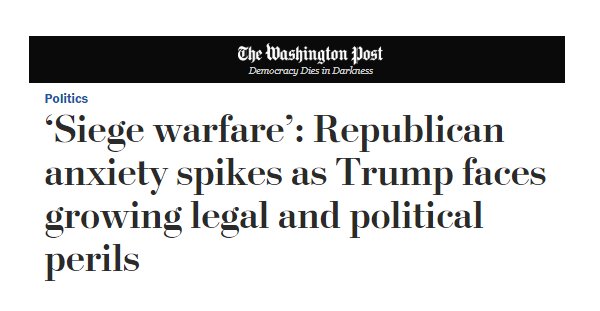
First “siege warfare” metaphor:

**

Something to read alongside John Kiser‘s superb The Monks of Tibhirine: Faith, Love, and Terror in Algeria :

I would be most happy to publish any comments John Kiser has on Kyle Orton‘s blog post, Algeria’s ‘Years of Blood’: Not Quite What They Seem on ZP should he or Jim Gant notice this somewhat obscure entry..

**

Good grief:

Key comment:

I will explain all in due course but for now all I want to say is be VERY careful when dabbling in spirituality, it’s not something to mess with.

**

And how’s this?
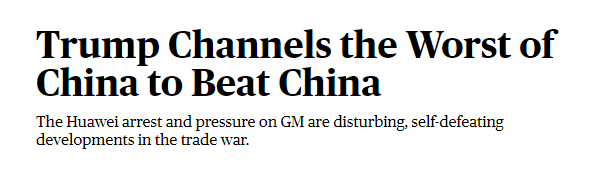
Trump Channels the Worst of China to Beat China

A double ouroboros, methinks: the Worst of China to Beat China, arguably, and self-defeating, axiomatically, no?

**

Venkatesh Rao, Quiver Doodles:

I don’t know if this is still true, but I once read about exploited workers in the ship-breaking industry who were worked so hard, and paid so little, they could not even afford to buy enough calories to sustain themselves. They were slowly starving to death. I call this phenomenon entropic ruin, a generalization of the idea of gambler’s ruin to open-ended games that can be non-zero-sum and need not involve gambling. In this case, it’s a deterministic death march. If you systematically consume fewer calories than you expend long term, you will die a premature death.

Via John Kellden

**

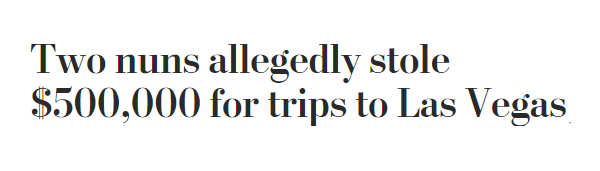
Did Venkatesh mention “the idea of gambler’s ruin“? How about nuns’ ruin as a subset?

Two nuns allegedly stole $500,000 for trips to Las Vegas

We do know that they had a pattern of going on trips, we do know they had a pattern of going to casinos, and the reality is, they used the account as their personal account,” Marge Graf, an attorney representing St. James, told a group of parents at a meeting last Monday night, according to the Beach Reporter.”
**

Mask dancers, Bhutan:

21 Breathtaking Photos Of Isolated Tribes From All Around The World

The dancers are gorgeous, but look to the left and see the monasteries perched on plateaus in a towering rock-face..

I’m pretty sure “isolated tribes” are of particular interest about now because of the evangelical boundary-pusher killed (martyred? now there’s a koan) because he hoped to bring the gospel to Andaman tribal peoples whose isolation is protected by the Indian government.. see my tweet:

**

A whole lot more..

This Nancy Pelosi chyron, for instance:

Which brings me to #2 below:
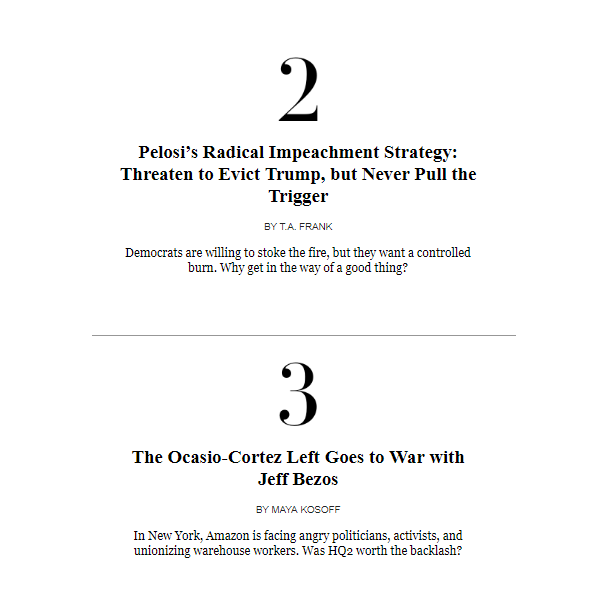
— with #3 also deserving a metaphor-mention..

And we might as well go for the revolt chyron here:
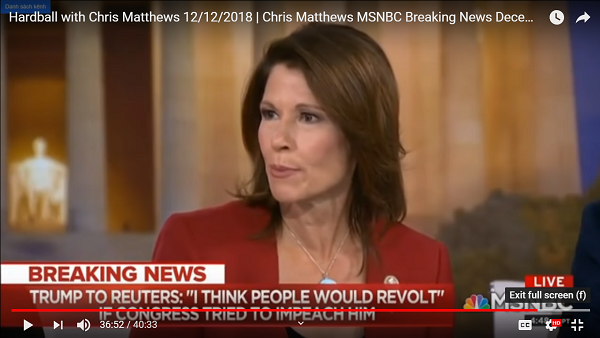
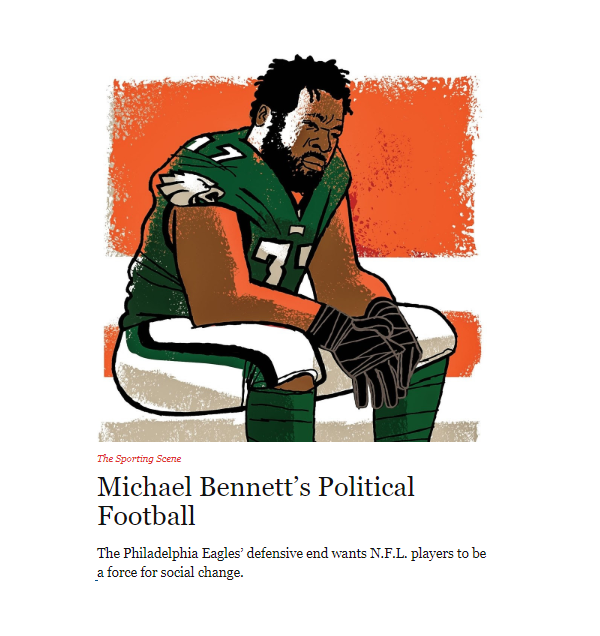
And that in turn allows for a splendid graphic with both metaphorical and real resonance..
**

That should be enough. I’ll collect further items of interest in the comments section.

It’s not yet noon here

Tuesday, December 4th, 2018

[ by Charles Cameron — but this crop of sports metaphors, game refs and other items of interest seems quite extraordinary for a single morning.. ]
.

Best cat-and-mouse game reference, and a fight, war instance while we’re at it:

Sources:

  • Vanity Fair, TRUMP DROPS HIS FIGHT WITH MUELLER TO WIN THE WAR
  • Vanity Fair, “MUELLER IS GOING TO GET WHAT HE WANTS”
  • **

    Here’s part of what I assume is an ongoing Babish-Bateman colloquy — philosophy fresh off the branch:

    **

    Mueller Is Laying Siege to the Trump Presidency:

    It happens this way every time: A big news event in the Trump-Russia investigation takes place, and commentators talk about it as though a house of cards were collapsing or a row of dominoes were falling. Each time, it’s the beginning of the end. Each indictment or plea is the “big one.” And then those expectations are disappointed. The sun rises the next day—in the east, as expected—and it sets in the west, as it did the day before. The Trump presidency endures.

    I’m thinking “house of cards” and or “row of dominoes” equates to one or more game metaphors, eh? Is an “and or” formulation plurl or singular?

    And then there’s this:

    But the underlying metaphors are wrong. There is no sudden bend in the path of the investigation. There is no house of cards. The dominoes will not fall if gently tipped. The administration is not going to come crashing down in response to any single day’s events. The architecture of Trump’s power is more robust than that.

    **

    **

    Velshi & Ruhle chyron 12/4/2018:

    **

    Bolivia’s Gory Patiño Exposes Human Trafficking in ‘The Goalkeeper’

    His next project, “Rock Paper Scissors,” penned like “Pseudo” with Luis Reneo, promises to be more ambitious as he plans to film it in English in Los Angeles. Patiño describes the thriller as “three stories of couples whose lives intersect as they obey the logic of the game: Love kills jealousy, jealousy kills ambition, but ambition kills love.”

    Excellent instance of three-way games, which are interesting because they “defeat:” binary logic — see, eg, Rock paper scissors lizards geese

    More metaphor &c

    Monday, October 22nd, 2018

    [ by Charles Cameron — continuing the series, with a choice gobbet of Updike ]
    .

    from Meet the Press, 10/21/2018

    **

    I continue to find the close reading of metaphors an invaluable analytic tool, and one that is also of interest to me personally, for writerly, poetic purposes. I’ve expanded my search from its original focus on games — specifically including sports, theater, war games &c as metaphors for politics — to cover something I’ll characterize as fine writing — giving me the ability to note and quote across a wider range of topics and usages.

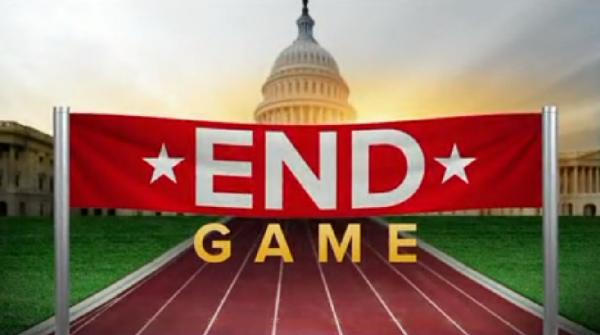
    My last post in the series ran to 18 comments, each one containing a couple of dozen or so instances of metaphor or fine writing, and I don’t expect my expanded search criteria to expand my actual collection — if anything I hope to cut back in favor of writing other things. But when MSNBC’s Meet the Press splashes a great End Game banner on my screen, as it did today, see above, I still won’t be able to resist.

    **

    On the subject of fine writing, though, how’s this?

    Dorothy Dotto, thirty-eight, happily married for nineteen years, the mother of three, a member of the Methodist Church, the Grange, and the Ladies’ Auxiliary. She lives, and has lived all her life, in the town of Elm Corners, somewhere in the Corn Belt; as a child, she won seven consecutive pins for perfect Sunday school attendance, and she graduated with good grades from a public school where the remarkable truthfulness of George Washington and the durable axioms of Benjamin Franklin were often invoked. Her father, Jesse, who is retired but still alive (bless him), for forty years kept above his desk at the feed mill a sign declaring, “Honesty Is the Best Policy.”

    That’s John Updike, describing “the unimaginably tactful and delicate process whereby the housewife next door was transmogrified into a paid cheat” in what in retrospect looks like a major turning point in the American psyche — the loss of innocence that occurred when it was revealed that many hundreds of Dorothy Dottos had been suborned into a grand cheating system in what’s now known as the 1950s quiz show scandals:

    The American quiz show scandals of the 1950s were a series of revelations that contestants of several popular television quiz shows were secretly given assistance by the show’s producers to arrange the outcome of an ostensibly fair competition. The quiz show scandals were driven by a variety of reasons. Some of those reasons included the drive for financial gain, the willingness of contestants to “play along” with the assistance, and the lack of then-current regulations prohibiting the rigging of game shows.

    Back to Updike:

    Now, as we remember the flavor and ethos of that innocent era, we realize that the contestants, aside from their freakish passion for Hittite history or skeet-shooting statistics, were meant to be us — you and me and the bright boy next door. This was America answering. This was the mental wealth behind the faces you saw in a walk around the block.

    **

    Okay, game shows, in addition to Updike’s undoubtedly fine writing, that’s a game reference. But a loss of American innocence? That’s not nothing. That’s something worth pondering..

    In fact, a loss of innocence is fundamentally a loss of the default assumption of trust — and isn’t it precisely the loss of trust that leads to all those conspiracist theories of a mysterious “They” who run “our” world, Skull and Bones, the Bohemian Club, No Such Agency, whoever — and the ensuing distrust of and between political paetiues, leading us eventually to today’s:

    **

    And how’s that for a delicious paradox? The United States are now Divided as to whether they’re divided or united — with divided in the majority..

    Okay, loss of innocence, let alone loss of virginity, may be strong language to describe the impact of those 1950s quiz show scandals on the American psyche — but something broke, a ratchet slipped, and perhaps we haven’t been quite the same since.

    In any case, I’ll be collecting my usual snippets and gobbets of this and that — often sports, politics, war or strategy related, but also just plain curious or fine stuff — here in the comments section. And oh, btw, I’ve been misspelling gobbet as gobbit for years hereabout: forgive me, it’s spelt (spelled?) with an e, and means a chunk, primarily of meat or writing — no Gandalfian echo intended.

    Ad now, as my friend David Ronfeldt would say, Onwards!

    Wittgenstein’s language games and the public sphere

    Monday, May 7th, 2018

    [ by Charles Cameron — suggesting a lessening of TV Trumpery and its critiques ]
    .

    In a tweet earliee today, I suggested that the close reading of a text can be highly rewarding, a point I made most forcefully in Close reading, Synoptic- and Sembl-style, for parallels, patterns.

    Key to a close reading is the “language” in which a given writer or speaker clothes their words.. “language” here being used both in the sense of their metaphors and forms (which is why I’ve been collecting sports and other metaphors, ouroboroi and other forms) and in the sense formulated by Witty Wittgenstein in his Philosophical Investigations (PI).

    The Stanford Encyclopedia of Philosophy offers us a list of regular language games as Wittgenstein uses the term in PI:

    reporting an event, speculating about an event, forming and testing a hypothesis, making up a story, reading it, play-acting, singing catches, guessing riddles, making a joke, translating, asking, thanking

    I want to suggest that we could usefully think of language games in terms of the philosophical, ideological, partisan, religious or psychological drivers that propel them.

    Further, in the case of Trump, we might observe that the language game he is playing is not the one his critics on, say, MSNBC, are basing their own critiques on.

    And here’s the great advantage: once we’ve analyzed the differences between Trump’s language game and aims and those of his critics, we could close shop. We wouldn’t need this constant barrage of Fox and MSNBC news on the topic — any new utterance of his or Giulianis of note could simply be indexed to the sub-para describing that particular disjunction in language game, and basta! — the rest of the news “oxygen” would be available for the discussion of other topics.

    As a subset of that para — I don’t suppose Mueller xxwill want to take every piece of “off the cuff” Trumpery as intended as real “truth” — “all that is the case” –he’ll surely see it as entertainment and distraction — chuff and chaff — and zero in on the key statements of the President’s worldview, viewing them as exemplars not of “truth” but of a language game to be analyzed and evaluated as such. Having zeroed in on these relatively few key phrases, many of the many critiques offered by Trump’s accusers.

    **

    Wittgenstein asks what all that we consider to be games have in common, and decides they share a family resemblance but — in my words, here — the cousins on one side of the family have little (a polite word for “nothing”) in common with the cousins at the other end of thr spectrum.

    If the Olympic Games included language games in their list of sports, Giuliani‘s reference to FBI agents as stormtroopers wight win long jump gold.

    Here’s Jonathan Chait in Giuliani’s FBI ‘Stormtroopers’ Smear Is the Key to Trump’s Authoritarian Mind-set”>:

    In 1995, National Rifle Association president Wayne LaPierre signed his name to a fundraising letter referring to Bureau of Alcohol, Tobacco and Firearms agents as “tjack-booted government thugs.” The implicit association of American federal law enforcement with fascists provoked a furor. Former president George H. W. Bush publicly resigned his NRA membership in protest; LaPierre had to apologize.

    Last night, in the midst of a long, deeply incriminating interview, Rudy Giuliani called FBI agents “stormtroopers.” Here was the president’s lawyer, not an outside lobbyist, comparing federal law enforcement to Nazis directly, rather than indirectly.

    Stormtrooper vs jack-booted government thugs is an interesting comparison (& makes a fine DoubleQuote), and Chait’s “implicit association of American federal law enforcement with fascist” in hth cases exemplify just the kind of language extremism we should be avoiding in our policy debates.

    Chait’s continuing half-paragraph illminates the arcane workings of the media machine in processing such things:

    The Washington Post’s account of Giuliani’s interview noted the remark in a single sentence, in the 30th paragraph of its story. The New York Times, Wall Street Journal, and Politico accounts of Giuliani’s interview did not even mention the stormtrooper remark at all.

    There are times I wish for sanity.

    **

    Okay, that was third and last in this series.. Previously:

  • On negative space in the painting..
  • On negative space, private morality in the public square
  • This:

  • Wittgenstein’s language games and the public sphere
  • For Jim Gant, On the Resurrection, 02

    Monday, April 9th, 2018

    [ by Charles Cameron — this is really the opening salvo, bracketing the ineffable ]
    .

    Question #2 is the real shaker, though..

    Did the Resurrection really happen?

    **

    Here’s the key para from Tolkien:

    I would venture to say that approaching the Christian Story from this direction, it has long been my feeling (a joyous feeling) that God redeemed the corrupt making-creatures, men, in a way fitting to this aspect, as to others, of their strange nature. The Gospels contain a fairystory, or a story of a larger kind which embraces all the essence of fairy-stories. They contain many marvels—peculiarly artistic, beautiful, and moving: “mythical” in their perfect, selfcontained significance; and among the marvels is the greatest and most complete conceivable eucatastrophe. But this story has entered History and the primary world; the desire and aspiration of sub-creation has been raised to the fulfillment of Creation. The Birth of Christ is the eucatastrophe of Man’s history. The Resurrection is the eucatastrophe of the story of the Incarnation. This story begins and ends in joy. It has pre-eminently the “inner consistency of reality.” There is no tale ever told that men would rather find was true, and none which so many sceptical men have accepted as true on its own merits. For the Art of it has the supremely convincing tone of Primary Art, that is, of Creation. To reject it leads either to sadness or to wrath.

    **

    What happens, in other words, when imagination enters factual reality?


    Switch to our mobile site