The news trickling out of Haitiis apocalyptic. The president of Haiti is homeless. Hundreds of thousands may be dead. The Haitian state, rickety and corrupt at the best of times, has collapsed along with the government buildings. Gangs of machete-wielding looters rule the capital city as supplies of food and clean water run dangerously low. The magnitude of the disaster may exceed the capacity of even the U.S. to respond unilaterally.
A humanitarian crisis of epic proportions is brewing and anything short of a speedy and massive response in the next 48 hours and a restoration of order in Haiti will inevitably draw comparisons between Haiti and New Orleans under Bush.
In a burst of raw self-interest – and also a little love for my blogfriends – these books make nifty gifts for any war nerd or deep thinker on your Christmas list:
In copmpliance with new Federal regulations of dubious Constitutional merit, I hearby declare ZP does not accept money for publishing reviews or any paid advertising. Courtesy review copies were extended to me by authors or publishers acting on behalf of Sam Logan, TomBarnett and Jeff Carr. I edited the first book in this post and was a contributing author to the second one. All of the books, with the exception of Cyber Warfare have been the subject of prior reviews or posts at ZP.
Sam sent me an advance copy and I have read the first few chapters, which begins at the most granular level of an outlier cell or street crew of MS-13 and a crime committed that ultimately allows law enforcement to penetrate what had been a highly secretive, as well as extremely violent, transnational street gang rooted in Central American immigrant communities.
The book is tightly written with an edge for gritty reality and will be of great interest to readers interested in criminal networks and insurgency; I will be looking to see how, from Logan’s depiction, MS-13 meshes with John Sullivan and Robert J. Bunker’s concept of3rd Generation gangs.
John has been taking time away to work on unrelated business projects and this diversion seems to have sparked a burst of creative and innovative thinking in his field of expertise. This is an excellent technique for improving productivity as the mental shifting of gears from tackling new subjects is neuropsychologically stimulating.
Secondly, there have been a couple of new responses to my earlier “Kilkullen Doctrine” post to which I want to draw your attention:
The identity question may be the key to grand strategy and the meta-vision behind it – a la John Boyd’s “Theme of Vitality and Growth” as well as the reason why the USG, the bipartisan elite, the COINdinistas all shrink from it. Grand strategy is not merely about externalities, but shaping one’s own. Here America is deeply and bitterly divided.
….Then there is a third war being waged in Mexico, though because of its nature it is a bit more subdued. It does not get the same degree of international media attention generated by the running gun battles and grenade and RPG attacks. However, it is no less real, and in many ways it is more dangerous to innocent civilians (as well as foreign tourists and business travelers) than the pitched battles between the cartels and the Mexican government. This third war is the war being waged on the Mexican population by criminals who may or may not be involved with the cartels. Unlike the other battles, where cartel members or government forces are the primary targets and civilians are only killed as collateral damage, on this battlefront, civilians are squarely in the crosshairs.
There are many different shapes and sizes of criminal gangs in Mexico. While many of them are in some way related to the drug cartels, others have various types of connections to law enforcement – indeed, some criminal groups are composed of active and retired cops. These various types of criminal gangs target civilians in a number of ways, including, robbery, burglary, carjacking, extortion, fraud and counterfeiting. But of all the crimes committed by these gangs, perhaps the one that creates the most widespread psychological and emotional damage is kidnapping, which also is one of the most underreported crimes. There is no accurate figure for the number of kidnappings that occur in Mexico each year. All of the data regarding kidnapping is based on partial crime statistics and anecdotal accounts and, in the end, can produce only best-guess estimates. Despite this lack of hard data, however, there is little doubt – based even on the low end of these estimates – that Mexico has become the kidnapping capital of the world.
….Between these extremes there is a wide range of groups that fall somewhere in the middle. These are the groups that might target a bank vice president or branch manager rather than the bank’s CEO, or that might kidnap the owner of a restaurant or other small business rather than a wealthy industrialist. The presence of such a broad spectrum of kidnapping groups ensures that almost no segment of the population is immune from the kidnapping threat.
Colombia went through a similar cycle, opportunistic criminal gangs taking advantage of the accelerating civil war between the Colombian government, FARC and ELN in order to kidnap 25,000 + people per year. We can speculate that this state of affairs, where the civilian population was being chronically terrorized, was a precursor to the formation of the AUC Loyalist paramilitaries by the small businessmen and big landowner class, and promptly began clearing rural areas and small towns of rebels, rebel sympathizers, habitual criminals and family members of the same by savagely killing them off.
I will wager that Mexico is going to hit this phase in less than a year.
Zenpundit is a blog dedicated to exploring the intersections of foreign policy, history, military theory, national security,strategic thinking, futurism, cognition and a number of other esoteric pursuits.

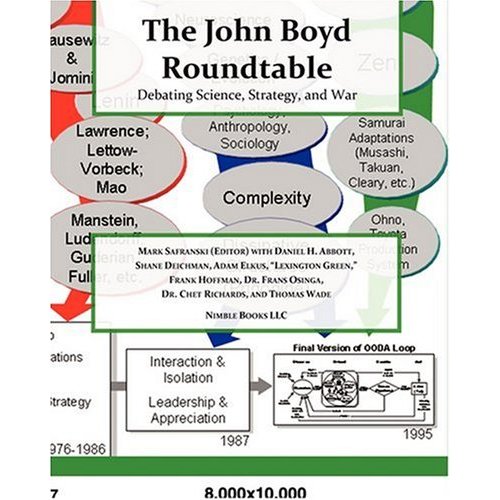
 – Mark Safranski (Ed.)


 – Michael Tanji (Ed.)
 – Thomas P.M. Barnett
 – John Robb
 – Frans Osinga


 by Howard Bloom
 by Richard Nisbett
 by Jeffrey Carr
 by Samuel Logan
 crew of MS-13 and a crime committed that ultimately allows law enforcement to penetrate what had been a highly secretive, as well as extremely violent, transnational street gang rooted in Central American immigrant communities.


