zenpundit.com » 21st century

Archive for the ‘21st century’ Category

Justice, Coercion, Legitimacy, State-Building and Afghanistan

Tuesday, January 17th, 2012

Discussion has been emerging in the foreign policy blogosphere of   late  regarding sovereignty and the other day, Afghanistan scholar Antonio Giustozzi opined on coercion, a necessary tool of a state seeking to wield a monopoly of force.

Theory is good and the discussion is an important one with implications for US foreign policy, but it helps when debate is informed by empirical examples from practitioners.  Quesopaper, a blog by  someone out in the field  in Afghanistan has been dormant for a while, but sprang alive again with a timely post:

Rule of Law, The Afghan Springer Show 

….Rule of Law is one of the key aspects to “fixing” Afghanistan. When the Taliban dominated the country, they controlled the “courts.” As Taliban influence waned, the US and partner nations have sought to create a more traditional court system. I can’t speak intelligently on why “WE” decided to create a more western form of law in Afghanistan, but I can say, it’s not the correct approach.

I work in a remote district. It’s over an hour to the main provincial (think state) government center. The difference between the two places is about as extreme as possible. The villages, even the district center (think country govt) lack ANY essential services. There are no plumbing systems, no electricity, no garbage service…nothing. Yet, the people here survive; and dare I say? Thrive.

Like most farming folks, the people here like to be left alone. The people appreciate the Govt–Government of the Islamic Republic of Afghanistan aka “GIRoA”–but they only want so much help. Rule of Law doesn’t fit into their needs.

So, how do rural locals settle disputes?

I just recently worked with a local governor as he negotiated the resolution of a 25 year dispute. Dispute doesn’t really describe what happened…feud is more appropriate. Each side had multiple murders, one family had 1300 fig trees destroyed. Decades of money in dispute. The feud was complicated enough that the Taliban failed to resolve the issue in nearly seven years of negotiations. Negotiations require buy-in from many parties…I could go on about this, but I doubt I can make it any clearer…

Land disputes are among the thorniest local civil society issues in Afghanistan, and one where the generally corrupt and inept Karzai regime draws a particularly poor comparison with the Taliban insurgency’s ability to provide “rough justice” where the richer, more influential party to the dispute does not automatically win through bribery. Land claims are blood issues in peasant-agrarian societies in general and all the worse in honor cultures that tolerate vendettas – that the brutal Taliban could not force a settlement in this case, or did not dare to try – speaks volumes.

….Finally, our district (county govt) governor is called upon to start the process of reconciliation. This BTW is MAJOR progress for the legitimacy of GIRoA. It means the people trust this man to handle this dispute. It might become national news (for Afghanistan) though you will never hear this story on any US network or .com site (except quesopaper.com). After weeks of massaging each side, pulling out their story, commitments (commitment to settle is vital in these things) and “evidence.”

An aside about evidence…in a society that is mostly verbal and illiterate, nearly anything written can become something that it is not…WTF are you talking about Pietro? What I mean is, give someone who can’t read a document. That paper is written in a foreign language, with foreign letters. Tell him its a deed to a piece of land…wait 35 years. Now, tell that man’s grandson that the land he’s been farming for 10 years; that his family has worked for generations, isn’t actually his.

Now he has nothing; he can’t provide for his family. Tell him, his paper is a receipt for a Persian rug, not a deed…explain that he owes the real land owner for the use of that property and revenues generated. Let me know how that goes…if you smell cordite it probably didn’t go to well.

For very poor people who live at the margins of subsistence, the stakes could not be higher, which can make rolling the dice on private violence attractive (this is also why land reform programs are only a short term stopgap in economic development and reform. Agrarian population almost always exceeds arable land and as the plots get smaller, they are less productive).  Dying on your feet with a weapon in hand looks a lot more honorable to a hard-pressed farmer than watching your children waste away from starvation as the other villagers gossip about your plight.

A state with legitimate authority can preempt or suppress such private violence, but is also expected to solve the problem.

….Back to our story…The governor calls in Sharia/Islamic law experts and elders from both tribes and other community elders. Mix that group into a bunch of small rooms and start shifting groups from room to room…hours of discussions (which looks like arguing to me). Don’t forget, this thing hasn’t been settled before, it’s serious business, and here serious business is settled with an AK. At anytime the whole ordeal can melt into violence.

Success is fleeting. I have a gun, no fooling…I’m armed….

Go to quesopaper to find out what happened next. 🙂

Part of the problem is, as quesopaper indicates, our Western framework. We began experimenting with rule of law to settle property claims and commons rights starting, oh, in 14th century England with land enclosures and we did not really finish for good until after Reconstruction in the very late 19th century. That’s 500 years for the “Rule of Law” as we understand it to become the standard for 100 % of the population, 100% of the time.

And along the way, there was blood. Rivers of it. From the Highlands of Scotland, to the piney woods upcountry of Appalachia to the Black Hills and the great Western Range Wars. The gavel of the judge had to be preceded by the soldier’s rifle, the settler’s six shooter, the rebel’s musket and knives used in the dead of night.

Are Afghans in far rural villages closer to a Manhattan attorney or an English tenant whose access to the pasture has been closed off by his noble lord against all custom and ancient right? What quesopaer is seeing is “state building” from scratch, from the bottom up. Slow, painful, difficult to be certain, but more likely to be durable than imported abstractions imposed from the top down.

We are leaving Afghanistan, it is clear. Any state that we leave behind that can resist the Taliban must be able to stand behind and enforce a rule of law as Afghans understand and accept it.




Wishcraft as Statecraft a.k.a The “And a Pony!” Doctrine

Wednesday, January 11th, 2012

A short and cranky diatribe.

Adam Elkus and his amigo Dan Trombly of Slouching Towards Colombia have been busy  poking holes into the ill-considered and/or poorly reasoned strategic conceptions of victory-free but credible influence. Dan gets very close to something important, something worth contemplating for the welfare of our Republic:

…..Rather than a world where normal victory and political decision through force of arms give way to a world of credible influence, I see this concept ushering in a world where America’s objectives remain expansive – seeking to create social and political change – but where “twentieth century” warfare continues as usual, obscured by multilateral efforts and prosecuted as much as possible by local forces. Because the objectives are essentially unchanged – overthrow of criminal regimes, integration of societies into a dynamic liberal international order, protection of civilians – one of my real fears about the Defense Strategic Guidance is that, confronted with conflicts and challenges to our interests, and with a paradigm of military aims just as expansive as before, we will slouch inevitably towards unsustainable ways of war. Already, the new objectives of civilian protection are blurring into the old objectives of democracy promotion and liberalization – just look at the title of the new State Department Office of Civilian Security, Democracy, and Human Rights.

When a statesman selects Ends that have no rational relationship to available Ways and Means we might take that as a sign of possible incompetence as a strategist.

While that’s not good it is at least normal – most politicians in a democratic society are on average, poor strategists but pretty good intuitive tacticians. After all, acquiring and keeping political power for long periods of time requires more than luck and a large checkbook. While there are always some buffoons decorating the halls of Congress, as individuals, Members of Congress are usually pretty shrewd and a minority are exceptional people.

If the Ends selected are fantastically broad open-ended, undefined or, worse, undefinable, convoluted and insensible in their context, we are left with two even less savory conclusions:

First, that the statesman has a fundamental political immaturity and narcissism the leads them to articulate their emotively generated whims as policy objectives without regard to empirical reality. Sort of a wishcraft of state that substitutes rhetorical expressions and sloganeering for thought and analysis. We see this effect on a much larger scale in the ideological atmosphere of totalitarian regimes where 2+2= 5 and only Right-deviationist mathematician, counterrevolutionary wreckers would dare suggest the answer is 4. Geopolitical goals that are created by political fantasists – like the creation of a modern, liberal democratic state in Afghanistan in a few years time – can be appended with “And a Pony!” and still be just as likely to come to pass.

American statesmen seem to be particularly predisposed to this condition in foreign affairs (and arguably, in fiscal affairs as well). Perhaps this is an intellectual legacy of Wilsonian excess but the problem was not acute until the past decade and a half, which indicates that the driving force may be, in part, generational. Men and women born into a time of record-breaking standards of living have reached the apex of power and they are no more inclined to act with restraint, responsibility or realism now than they did in ’68.

The second conclusion is that the Ends are purposefully incoherent and recklessly broad because the real strategic objective is not in our relations with country X, but for the statesman to wrest for their faction as large a grant of unaccountable power as possible.

New Books…..

Saturday, December 31st, 2011


George F. Kennan: An American Life by John Lewis Gaddis

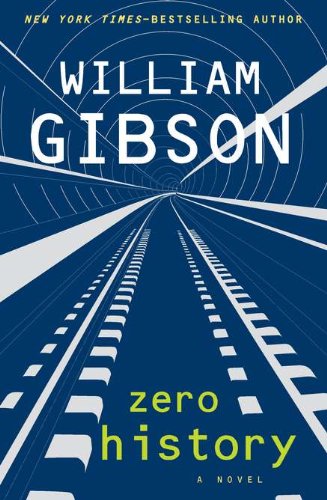
Zero History by William Gibson 

Just picked these up.

Zero History will have to wait until I read Spook Country, which sits on my shelf. Gibson is good; along with Steven Pressfield he is one of the few living writers of fiction that I will take the time to read.

The Kennan bio is a long awaited and much talked about book about the prickly and difficult father of Containment.  Gaddis, an eminent diplomatic historian and a conservative in a field that still tilts leftward and where many of his peers count opposition to the Vietnam War as the formative political experience of their lives, has probably written the most important book of his career as Kennan’s official biographer.

Will review in the future.


The Networks of Nations

Wednesday, December 28th, 2011

Military theorist John Arqilla offers a provocative piece in Foreign Policy:

The (B)end of History

….How the new pattern will unfold is still unclear, but just as the first nation-states were often tempted to become empires, there may be a pattern in which nations and networks somehow seek to fuse rather than fight. Iran, in its relations with Hezbollah, provides perhaps the best example of a nation embracing and nurturing a network. So much so that, in parsing the 2006 Lebanon war between Israel and Hezbollah, most of the world — and most Israelis — counted it as a win for the network. China, too, has shown a skill and a proclivity for involving itself with networks, whether of hackers, high-sea pirates, or operatives who flow along the many tendrils of the Asian triads’ criminal enterprises. The attraction may be mutual, as nations may feel more empowered with networks in their arsenals and networks may be far more vibrant and resilient when backed by a nation. All this sets the stage for a world that may have 10 al Qaedas operating 10 years from now — many of them in dark alliances with nations — a sure sign that the Cold War–era arms race has given way to a new “organizational race” to build or align with networks.

Can’t say that I disagree with that in big picture terms. Looking long term to 2100, I wrote in Threats in the Age of Obama that the geopolitical position of nation-states would undergo a transformation:

….Nation-states in the 21st century will face a complex international ecosystem of players rather than just the society of states envisioned by traditional Realpolitik. If the predictions offered by serious thinkers such as Ray Kurzweill, Fred Ikle or John Robb prove true, then  technological breakthroughs will ensure the emergence of “Superempowered Individuals”[1] on a sizable scale in the near future.  At that moment, the reliance of the State
on its’ punitive powers as a weapon of first resort comes to an end.  Superemepowered individuals, separatist groups, insurgents and an “opting-out” citizenry will nibble recalcitrant and unpopular states to death, hollowing them out and transferring their allegiance elsewhere.

While successful states will retain punitive powers, their primary focus will become attracting followers and clients in whom they can generate intense or at least dependable, loyalty and leverage as a networked system to pursue national interests.  This represents a  shift from worldview of enforcement  to one of empowerment, coordination and collaboration. States will be forced to narrow their scope of activity from trying to supervise everything  to  flexibly providing or facilitating core services, platforms, rule-sets and opportunities – critical public goods – that the private sector or social groups cannot easily replicate or replace.  Outside of a vital core of activity, the state becomes an arbiter among the lesser, interdependent, quasi-autonomous, powers to which it is connected. 

States and their oligarchic elites seem to be attempting to counter this trend of eroding omnipotence by increasing omniscience by building panopticon societiesof 24 hour surveillence. Rulers will (theoretically) have the awareness to strike first and break up opposition movements or dissent before they can crystallize and gain the critical mass to overthrow a regime or accumulate enough countervailing power to force concessions or honest negotiation in place of stage-managed, political kabuki theater

Going 3D

Wednesday, December 14th, 2011


Switch to our mobile site