zenpundit.com » authors

Archive for the ‘authors’ Category

Book Mini-Reviews to Clear a Boundless Bibliographic Backlog!

Friday, December 10th, 2010

I have too many books that I have read that I would like to review that, realistically, I will never get to post on in conventional fashion. A fair number belong with Summer Series which seems ridiculous as it is two weeks to Christmas! Therefore, brace yourselves, as I commence the first, and hopefully only, Mini-Reviews post:

Play: How It Shapes the Brain, Opens the Imagination, and Invigorates the Soul by Stuart Brown, MD

Dr. Stuart Brown, scientist and psychiatrist, has written a short tome on the nature and cognitive value of play. While there is plenty of child social development information and “pop”self-helpish type chapters, ZP readers wil gravitate to the chapters on play’s vital role in creaivity and innovation ( which are not the same thing), scientific discovery and work. Also of interest are the spectrum of “play personalities” and the “dark side of play”. Not an academic book but a reasonable read on a deceptively complex subject.

The Collapse of Complex Societies by Joseph Tainter

A superb academic book, previously featured and reviewed in the blogosphere by John Robb and Joseph Fouche, The Collapse of Complex Societies embarks upon a critical examination and partial de-bunking of theories that purport to explain the “sudden” fall of great empires, such as Rome or the vanishing of the Mayans. With caveats, Tainter settles on declining marginal returns from increasing societal investment in complexity as a rough proximate cause capable of subsuming a ” significant range of human behavior, and a number of social theories” under it’s rubric. Highly recommended.


The Bin Ladens: An Arabian Family in the American Century by Steve Coll

A biography of the Bin Laden family, this book does not come close to matching the impact or importance of Coll’s previous instant classic, Ghost Wars. There are many interesting trivialities about the divergences between the “religious and the hard Rock Cafe wings” of the Bin Laden families, and intriguing nuggets about political matters such as the 1979 takeover of the Grand Mosque and the connections between the Bin Ladens and elite figures inside the beltway but anyone looking for insight into Osama bin Laden will be disappointed. The most infamous member of Saudi Arabia’s dominant non-royal business clan is a subdued figure in this biography. Coll’s superior skills as a wordsmith and reporter manage to make the book a pleasant page turner.
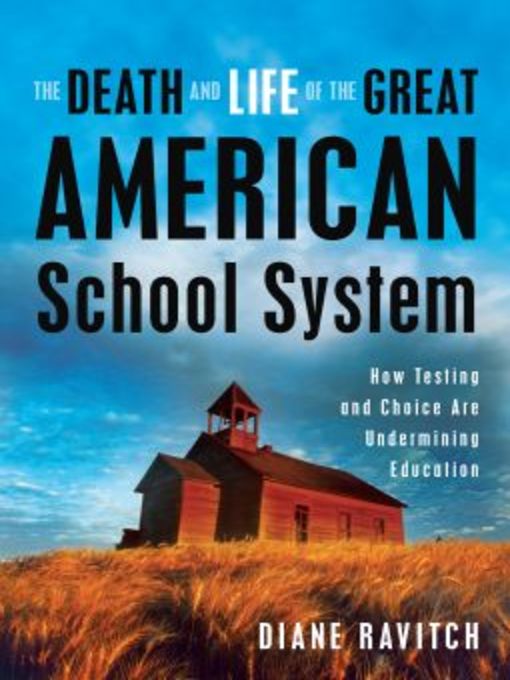
The Death and Life of the Great American School System: How Testing and Choice Are Undermining Education by Diane Ravitch

Conservative education scholar and historian Diane Ravitch lays out the demise of the movement for high curricular standards in public education that she once championed and it’s transmogrification under NCLB into a punitive system that is slowly imposing an unprecedentedly narrow and dumbed down national curriculum focusing on basic math and reading skills, featuring gamed  test results, highly paid lawyer-consultant insiders and perverse incentives for public and charter schools alike. A depressing but important read.
More Books!

Friday, November 26th, 2010

Just picked up a few new reads…..


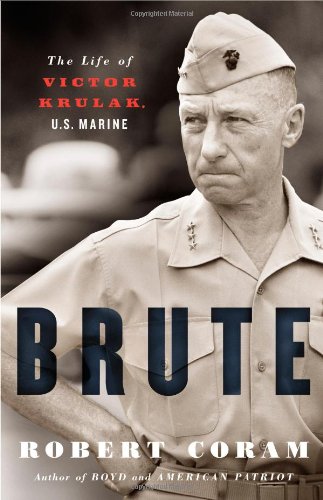
Brute: The Life of Victor Krulak, U.S. Marine by Robert Coram

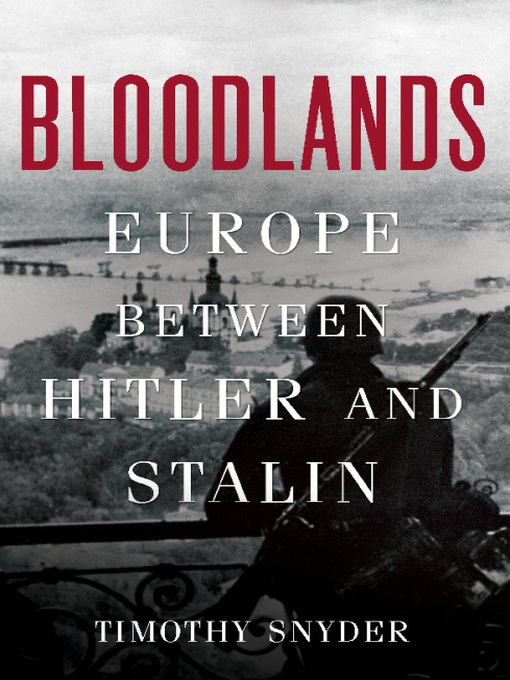
Bloodlands: Europe Between Hitler and Stalin by Timothy Snyder

Robert Coram, whom I had the pleasure of meeting at Boyd ’07, has a new biography of the legendary military visionary and Marine Lt. General Victor “Brute” Krulak, reviewed here by Max Boot and here by Tony Perry (Hat tip to Dr. Chet Richards). Having thumbed a few pages, Krulak appears a complicated man – gifted, dauntless and extremely driven but also possessed of a mean streak, edging at times toward petty cruelty.

Bloodlands I intend to read in a “Hitler-Stalin/Nazi-Soviet Comparison” series along with Richard Overy’s The Dictators: Hitler’s Germany, Stalin’s Russia, Robert Gellately’s Lenin, Stalin, and Hitler: The Age of Social Catastrophe , Richard J. Evans’ The Third Reich at War and Alan Bullock’s classic dual biography Hitler and Stalin: Parallel Lives.  I’d also recommend, for those with the stomach for historiographic commentary, Robert Conquest’s Reflections on a Ravaged Century and John Lukac’s The Hitler of History

CURRENTLY READING:

Human Face of War by Jim Storr

After reading approxmately a third of The Human Face of War by  Dr. Jim Storr, a retired Lt. Colonel, King’s Regiment and an instructor at the UK Defence Academy, I will say that if you are going to read only one book on modern military thought this year, it should be The Human Face of War. It’s that good.

Aside from a reflexive hostility toward John Boyd’s OODA Loop ( though not, strangely enough, toward the substantive epistemology advocated by Boyd that the diagram represented), Storr’s tome is an epistle of intellectual clarity on military theory that deserves to be widely read.

ADDENDUM:

NDU Press recommends, and I concur, this review of The Human Face of War by Col. Colonel Clinton J. Ancker III. Ancker, like Storr, is an expert on military doctrine, so it is a well-informed review by a professional peer.

Book Review: Magic and Mayhem by Derek Leebaert

Monday, November 22nd, 2010

Magic and Mayhem: The Delusions of American Foreign Policy From Korea to Afghanistan by Derek Leebaert

As I mentioned previously, I enjoyed Derek Leebaert’s earlier Cold War history, The Fifty Year Wound, so I was pleased to be sent a courtesy review copy of his latest work, Magic and Mayhem:The Delusions of American Foreign Policy from Korea to Afghanistan. Leebaert, a professor of government who teaches foreign policy at Georgetown university, does not disapoint; Magic and Mayhem is a lively and highly provocative excoriation of of the dysfunctional political culture of making foreign and national security policy in America.  While I found many fine points of disagreement with Leebaert in Magic and Mayhem, his broad themes constitute a healthy challenge to a dolorous status quo in Washington.

In Leebaert’s view, American foreign policy suffers from being crafted under two related evils: a culture of “magical thinking” and a cadre of professional alarmists, the “Emergency Men” who constitute a kind of self-appointed, adrenalin-addicted, national security ecclesia who exploit the magical thinking of the public and labor under its delusions themselves. It is this dual embrace of ends without a priori examination of means or ways and a lust for action that leads our foreign policy elite to embrace all manner of costumed charlatans with polished English language skills who are allegedly willing and able to be America’s “partner” in dangerous neignorhoods. From South Korean autocrats to African kleptocrats to figures of a more recent vintage. Leebaert writes:

Afghan president Hamid Karzai, with his Western-style technocrats and talk of democracy, was immensely appealing to Washington after the Taliban was ousted.  For more than seven years, reports the Times Dexter Filkins, Karzai was a “White House favorite – a celebrity in a flowing cape and dark grey fez” a dramatic outfit that he had designed himself but that had no origin in Afghani dress…..

….”We thought we had found a miracle man” moaned one diplomat. On closer inspection, the sorcerer proved unconvincing as the opium trade and corruption flourished.

I have always wondered where the hell that cape came from.

Leebaert takes aim at a wide variety of targets. I definitely do not agree with his assessments of everything and everyone who has caught his ire, but it is a list that is breathtaking in expanse; a parade of names and terms that includes, but is not limited to:

George Kennan
Douglas MacArthur
Paul Nitze
Detente
Robert McNamara
McGeorge Bundy
Peter Rodman
Brinkmanship
Donald Rumsfeld
COIN
Richard Holbrooke
Henry Kissinger
The CIA
NSC-68
John McCain
Arms Control
John F. Kennedy

Richard Nixon
Curtis LeMay
Defense intellectuals
Lyndon Johnson
Maxwell Taylor
Dick Cheney
Cyrus Vance
George W. Bush
Neocons
Oliver North
Revolution in military affairs
Richard Perle
Crisis management
MAD theory
Strategic/Security Studies
Walt Rostow
Wiliam Westmoreland
Robert Kennedy
Bernard Lewis
Thomas P.M. Barnett
Lawrence Summers
George Tenet
Robert Kaplan
Samuel Huntington
John Abizaid
Stan McChrystal
Barack Obama
David Ignatius
Thomas Friedman
David Brooks
US Public Diplomacy
Jimmy Carter
Michael O’Hanlon

That, by the way, was not comprehensive.

It would be a much shorter list to cite those statesmen of whom Leebaert approved – men like Henry Stimson, Dean Acheson, Matthew Ridgway, Omar Bradley, George Marshall, Dwight Eisenhower, George Schultz and Ronald Reagan. The book is not flawless. There are minor factual errors. Not every person or doctrine in Magic and Mayhem is considered in depth.  At times, Leebaert comes across as glib or superficial in his criticism, but predominantly, as with the cases of Kissinger or Rumsfeld, his bitter jeremiads are skewering their targets.

Leebaert argues for a considered retreat from policy alarmism and the cult of emergency, and for a reduction of ambitious American policy grandiosity that would flow from recognizing and respecting the agency of other nation’s leaders and peoples. Implicitly, a call not so much for isolationism, as for restraint and a sense of proportion, coupled with a dimunition of status and power for national security “celebrities” and the cottage industry of think tank consultancy for which they stand.

Magic and Mayhem is a book that was written to demystify shibboleths and smash idols.

What the Dickens? Symbolic details in Inspire issue 3

Sunday, November 21st, 2010

by Charles Cameron
.
It’s easily missed. It’s part of the “small print” that most small-format paperbacks carry on the copyright page:

The sale of this book without its cover is unauthorized. If you purchased this book without a cover, you should be aware that it was reported to the publisher as “unsold and destroyed.” Neither the author nor the publisher has received payment for the sale of this “stripped book.”

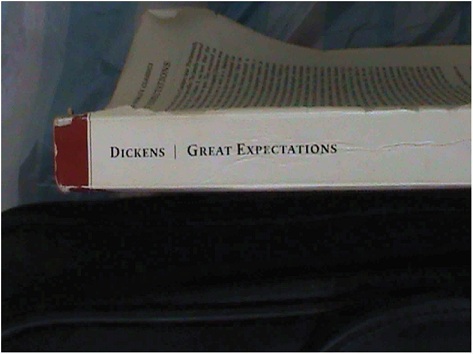
Here’s the picture that AQAP took of the copy of Dickens’ novel Great Expectations they inserted into one of their bombs recently – which they then published in issue 3 of their English language magazine Inspire:

Dickens

And here’s the explanation that accompanies that photo, in a piece titled “The Objectives if Operation Hemorrhage” by their “Head of the Foreign Operations Team”:

This current battle fought by the West is not an isolated battle but is a continuation of a long history of aggression by the West against the Muslim world. In order to revive and bring back this history we listed the names of Reynald Krak and Diego Diaz as the recipients of the packages. We got the former name from Reynald de Chatillon, the lord of Krak des Chevaliers who was one of the worst and most treacherous of the Crusade’s leaders. He fell into captivity and Salahuddeen personally beheaded him. The name we used for the second package was derived from that of Don Diego Deza, the Inquisitor General of the Spanish Inquisition after the fall of Granada who along with the Spanish monarchy supervised the extermination and expulsion of the Muslim presence on the Iberian Peninsula employing the most horrific methods of torture and done in the name of God and the Church. Today we are facing a coalition of Crusaders and Zionists and we in al Qaeda of the Arabian Peninsula will never forget Palestine. How can we forget it when our motto is: “Here we start and in al-Aqsa we meet”? So we listed the address of the “Congregation Or Chadash”, a Gay and Lesbian synagogue on our one of our packages. The second package was sent to “Congregation B’nai Zion”. Both synagogues are in Chicago, Obama’s city.
.
We were very optimistic about the outcome of this operation. That is why we dropped into one of the boxes a novel titled, Great Expectations.

They may not have read the book or seen the movie, as Ibn Siqilli comments at the link above, but they do have long memories and/or a taste for history, and they are indeed sending signals with small details like the fictitious names of their addressees.

*

This is in line with one of the basic premises of Islamic thought: that the world we inhabit is a world of ayat or symbols (the singular is ayah, and the word is also used to refer to the verses of the Qur’an, each of which is viewed as a symbolic utterance). Here, for instance, is a passage from Fazlun Khalid’s paper, Islam and the Environment, from the website of Jordan’s Royal Aal al-Bayt Institute for Islamic Thought:

The Qur’an refers to creation or the natural world as the signs (ayat) of Allah, the Creator, and this is also the name given to the verses contained in the Qur’an. Ayat means signs, symbols or proofs of the divine. As the Qur’an is proof of Allah so likewise is His creation. The Qur’an also speaks of signs within the self and as Nasr explains, “… when Muslim sages referred to the cosmic or ontological Qur’an … they saw upon the face of every creature letters and words from the cosmic Qur’an … they remained fully aware of the fact that the Qur’an refers to phenomena of nature and events within the soul of man as ayat … for them forms of nature were literally ayat Allah”. As the Qur’an says, “there are certainly signs (ayat) in the earth for people with certainty; and in yourselves. Do you not then see?” (Adh-Dhariat, 51:20, 21).

*

BTW, I don’t think Penguin (or, for that matter, Charles Dickens) got paid for that book… whatever their expectations may have been.

Blood and Rage by Burleigh

Tuesday, November 16th, 2010

After an extended hiatus, Summer Series 2010: Reviewing the Books! re-starts……

Blood and Rage: A Cultural History of Terrorism by Michael Burleigh

British historian Michael Burleigh brings the same kind of unsparingly brutal prose to the history of terrorism that he previously delivered on National Socialism in his acclaimed, The Third Reich: A New History. There is a wealth of detail about terrorists, their casual atrocities and the warped morality that terrorists habitually employ to rationalize their crimes; a nihilistic mentalite shared with their intellectual groupies in universities and political law firms that will shock and inform the reader. The scattered nature of the case studies that comprise modern terrorism though, makes Blood and Rage more of a kaleidescope than microscope.

Burleigh set out to chronicle a comprehensive examination of the evolution of terrorism in the last two centuries. There are Feinians and radicalized Russian Narodniks, murderous FLN Algerians and their pied noir OAS blood enemies, Irgun gunmen and Black September, ETA, IRA and Baader-Meinhoff gangsters consorting with Palestinian radicals and Herbert Marcuse. Burleigh dissects the psychopathology of ultraviolent degenerates like Hugh “Lenny” Murphy, Abu Musab al-Zarqawi and Andreas Baader. Terrorists, statistically speaking, are generally not madmen in a clinical sense, but Burleigh records a noteworthy exception regarding Germany’s Baader-Meinhoff Gang:

….With their numbers by now reduced to about a dozen people, the group was desperate for new recruits. Salvation came from an unlikely quarter. The mad. A radical psychiatrist at Heidelberg University, influenced by the anti-psychiatry of R.D. Laing and the anti-institutionalisation theories of Franco Basaglia, had formed a socialist collective among the mainly student clientele he was treating for various mental disturbances common to that age cohort including depression, paranoia and mild schizophrenia. In early 1971 Baader and Ensslin visited Heidelberg where they met some of the radicalized patients. In the following years, about twelve of the latter, including Gerhard Muller, Siegfried Hausner, Sieglinde Hofmann, Lutz Taufner and others became the second generation of RAF terrorists, initially under the slogan “Crazies to Arms”.

Blood and Rage makes for a grim read, with the recurring pattern of terrorism and counterterrorist response erupting to demoralize societies until the terrorists in question are either dead, imprisoned or mellowed by paunchy middle-age and political irrelevance as the times pass their maniacal political passions by. Only in a few instances, notably South Africa and Northern Ireland are political settlements a more feasible option than methodical police and intelligence work followed by tough-minded prosecution and a steely societal rejection of grandiose moral claims of terrorists and their fellow-travelling left-wing lawyer-advocates. Burleigh also makes clear his disdain for militarized CT and multiculturalist enablement alike.


The weakness of Blood and Rage, unlike some of Burleigh’s other works, is a lack of a strong analytical theme, focus or grand theory to explain and unite the relentless and gory march of geographically diverse case studies in terrorism, though an intelligent reader should be able to discern patterns present well enough for themselves. Given Burleigh’s stature as a scholar, one can envision him having taken the ball further down field for a deeper level of analysis of terrorism as a societal phenomena. Burleigh would probably reply that such is not the proper job of a historian, which while true enough, still leaves me wishing he had.

As a popular history, Blood and Rage makes a page turner out of rancorous destruction.


Switch to our mobile site