zenpundit.com » government

Archive for the ‘government’ Category

Guest Post: Cameron on Millenarianism and the Paranoid Style

Saturday, December 19th, 2009

Charles Cameron has been guest blogging here in a series on radical Islamism and terrorism and is now branching out in to more general posts that touch upon apocalyptic or esoteric religious movements.. A former researcher with the Center for Millennial Studies at Boston University, his most recent essay, an analysis of the powerpoint presentation of Ft. Hood shooter Nidal Malik Hasan, appeared in the Small Wars Journal.

Personally, I found this post very interesting because I have seen repeated – and in my view, nutty – speculation or argument by progressives that the U.S. military has a secret fundamentalist Christian agenda. Charles highlights a flipside form of paranoia below reminiscient of Richard Hofstadter:

Millenarianism and the Paranoid Style

by Charles Cameron

A major writing his thesis for the MMAS degree at SAMS / Fort Leavenworth a couple of years back took for his topic “Strategic Implications of American Millennialism”. He wrote about the impact that  (eg) the expectation of Christ’s soon return to Jerusalem implying that the Israelis should rebuild the Temple on Temple Mount (and thus arguably displace the al-Aqsa Mosque and Dome of the Rock which currently stand there) might have on peace talks in the ME. And he thought that thinking of this kind was a poor foundation on which to build US foreign policy. I imagine he got the degree, since his monograph has been available on the web along with 2,500 others.

Strategic Implications of American Millennialism

It seems that early this week, a pre-millennialist Christian ran across the document an began to alert others. If you search Google for “Strategic Implications of American Millennialism” today, you’ll get 13,000 hits, including one on the blog of a prominent “prophecy” writer, John McTernan, and another on the “Worldview Matters” podcast of Christian Worldview Network, which offers an interview with McTernan. McTernan claims:

This … is an United States Army report about the literal believers of the Bible and how they affect American foreign policy. It is the most dangerous document to believers that I have ever read in my entire life. After reading this document, it is easy to see the next step would be to eliminate our Constitutional rights and herd us into concentration camps.

So a grad student’s monograph is being taken for something with the authority of a Field Manual, and thousands of Christians are concerned enough that their government is about to intern them that they read the monograph as strong evidence of that theory.
 
This ties in with late 1990s concerns that FEMA was about to herd people into camps. Indeed, a commenter on McTernan’s blog writes:

Why would the National Guard need so many “Internment/ Resettlement Specialist” for “FEMA camps”…in the USA? This administration recognizes there will be those who WILL NOT compromise their faith, military members included (about 25-50 million Americans according to some articles). So, these people (we) will have to be dealt with. Put two and two together: the radical thinking of this administration and the “FEMA camps” for those that need “reeducation

The FEMA concentration camp story has long legs — I first wrote about it in a paper on “web-based conspiracist and apocalyptic interpretations of the U.S. Federal Emergency Management Agency” back in 1999, when it was routinely tied in with Y2K concerns — and the degree of  “connecting the dots” can be pretty impressive: one commenter on a FEMA camp scare site proclaims:

….the Bush Family are very strong supporters of the new world order and if viewed closely; resembles the Communest [sic] Manifesto

I don’t think we should read the sudden interest in concentration camps for evangelicals as pointing inexorably to some terrifying outcome, but it is becoming part of the scenery. What its impact on military personnel who regard people like McTernan as prophetic voices will be is hard to estimate — but Maj. Stuckert who as far as I can tell is currently deployed to Kabul, is in for a shock when he finds out that a paper he wrote now has him figuring as a principal spokesman for the US Army’s preparations to serve the Antichrist. And the same is presumably true for Col. Stefan J. Banach, the Director of SAMS, who is named as “Responsible Person” on the monograph’s “Report Documentation Page” — who has already fielded at least one irate phone-call on the subject, and is suggested as a target for such calls by McTernan.
 
One thing that might really help ease the situation would be for DOD or the School of Advanced Military Studies to post a note attached to Maj. Stuckert’s monograph, stating unequivocally that it does not represent Army policy but is one of 2,500 similar theses explored by students in the course of obtaining a degree, and as such presents one student officer’s views only.
Reader Recommended Reading

Tuesday, December 15th, 2009

From reader Chris, of the USMC. Ties in well with prior discussions here of the need for cultural-educational-cognitive renovation in American society and the marked inadequacy of the current elite: 

National Affairs -“Keeping America’s Edge” – Jim Manzi

….Reconciling these competing forces is America’s great challenge in the decades ahead, but will be made far more difficult by the growing bifurcation of American society. Of course, this is not a new dilemma: It has actually undergirded most of the key political-economy debates of the past 30 years. But a dysfunctional political dynamic has prevented the nation from addressing it well, and has instead given us the worst of both worlds: a ballooning welfare state that threatens future growth, along with growing socioeconomic disparities.

Both major political parties have internal factions that sit on each side of the divide between innovation and cohesion. But broadly ­speaking, Republicans since Ronald Reagan have been the party of innovation, and Democrats have been the party of cohesion.

Conservatives have correctly viewed the policy agenda of the left as an attempt to undo the economic reforms of the 1980s. They have ­therefore, as a rhetorical and political strategy, downplayed the problems of cohesion – problems like inequality, wage stagnation, worker displacement, and disparities in educational performance – to emphasize the importance of innovation and growth. Liberals, meanwhile, have correctly identified the problem of cohesion, but have generally proposed antediluvian solutions and downplayed the necessity of innovation in a competitive world. They have noted that America’s economy in the immediate wake of World War II was in many ways simultaneously more regulated, more successful, and more equitable than today’s economy, but mistakenly assume that by restoring greater regulation we could re-create both the equity and prosperity of that era.

The conservative view fails to acknowledge the social costs of unrestrained economic innovation – costs that have made themselves ­powerfully apparent in American politics throughout our history. The liberal view, meanwhile, betrays a misunderstanding of the global economic environment.

…. The level of family disruption in America is enormous compared to almost every other country in the developed world. Of course, out-of-wedlock births are as common in many European countries as they are in the United States. But the estimated percentage of 15-year-olds living with both of their biological parents is far lower in the United States than in Western Europe, because unmarried European parents are much more likely to raise children together. It is hard to exaggerate the chaotic conditions under which something like a third of American children are being raised – or to overstate the negative impact this disorder has on their academic achievement, social skills, and character formation. There are certainly heroic exceptions, but the sad fact is that most of these children could not possibly compete with their foreign counterparts.As the lower classes in America experience these alarming regressions, wealthier and better-educated Americans have managed to re-create a great deal of the lifestyle of the old WASP ascendancy – if with different justifications for it. Political correctness serves the same basic function for this cohort that “good manners” did for an earlier elite; environmentalism increasingly stands in for the ethic of controlling impulses so as to live within limits; and an expensive, competitive school culture – from pre-K play groups up through graduate school – socializes the new elite for constructive competition among peers. These Americans have even re-created the old WASP aesthetic preference for the antique, authentic, and pseudo-utilitarian at the expense of vulgar displays of wealth. In many cases, they live in literally the same homes as the previous upper class.

Read the rest here.

Stocking Stuffers……

Saturday, December 12th, 2009

In a burst of raw self-interest – and also a little love for my blogfriends – these books make nifty gifts for any war nerd or deep thinker on your Christmas list:

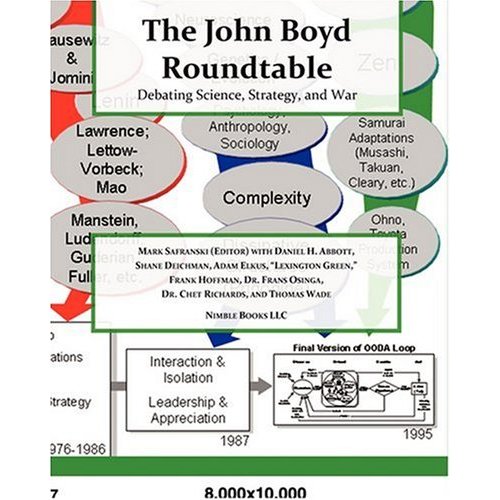
The John Boyd Roundtable: Debating Science, Strategy, and War – Mark Safranski (Ed.)


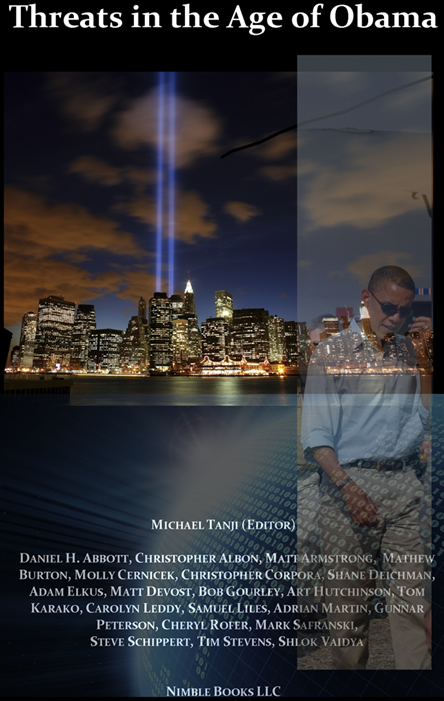
Threats in the Age of Obama – Michael Tanji (Ed.)

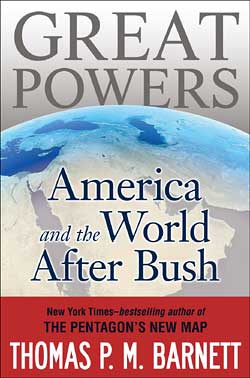
Great Powers: America and the World After Bush – Thomas P.M. Barnett

Brave New War: The Next Stage of Terrorism and the End of Globalization – John Robb

Science, Strategy and War: The Strategic Theory of John Boyd – Frans Osinga


The Genius of the Beast: A Radical Re-Vision of Capitalism  by Howard Bloom

Intelligence and How to Get It: Why Schools and Cultures Count  by Richard Nisbett

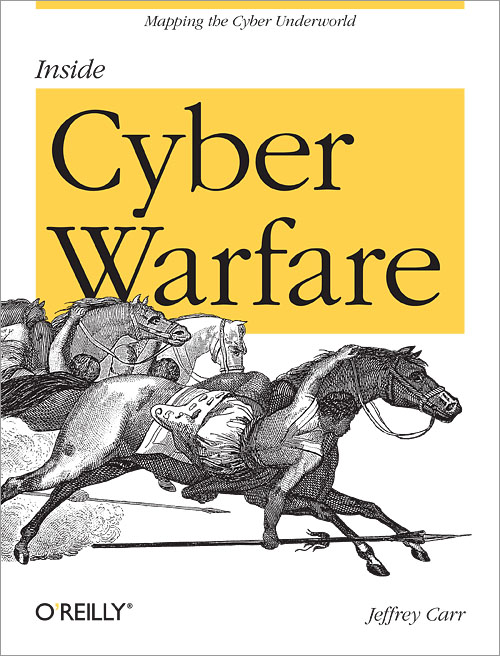
Inside Cyber Warfare: Mapping the Cyber Underworld  by Jeffrey Carr

This Is for the Mara Salvatrucha: Inside the MS-13, America’s Most Violent Gang  by Samuel Logan

Full Disclosure:

In copmpliance with new Federal regulations of dubious Constitutional merit, I hearby declare ZP does not accept money for publishing reviews or any paid advertising. Courtesy review copies were extended to me by authors or publishers acting on behalf of Sam Logan, Tom Barnett and Jeff Carr. I edited the first book in this post and was a contributing author to the second one. All of the books, with the exception of Cyber Warfare have been the subject of prior reviews or posts at ZP.

Nixon vs. The Neoconservatives?

Friday, December 11th, 2009


Some interesting, if oddly interpreted, background at HNN on Fritz Kraemer, the influential hardliner and  intellectual mentor of Henry Kissinger and Al Haig, and Kraemer’s influence in American foreign policy:

Luke A. Nichter: Who Was Fritz Kraemer? And Why We Should Care.

Whether Vietnam, Iraq, or now Afghanistan, wars come and go, but the real battle is a philosophic one between two sects of conservatives. In The Forty Years War: The Rise and Fall of the Neocons from Nixon to Obama, authors Len Colodny and Tom Shachtman challenge readers to examine the role of a little-known Pentagon figure named Fritz G.A. Kraemer. Colodny and Shachtman argue that Kraemer was the leading intellectual behind what became known as the neo-conservative movement, witnessed by the fact that Kraemer influenced so many high-ranking conservative figures over the course of  six decades.….This meeting was probably the only one to have occurred during the Nixon presidency in which Nixon and Kissinger permitted a rigorous debate, in the Oval Office no less, over the merits of not just Vietnam policy, but Nixon foreign policy more generally. Kraemer knew the issues well enough that both Nixon and Kissinger were forced to defend themselves to someone who represented an increasingly disenchanted sect of conservatives. Kraemer believed, as other conservatives did, that the conduct of Nixon foreign policy had became tainted by short-term political considerations, and that politicians had acted as a restraining influence on military leaders who believed they were capable of achieving a military victory.. 
The Nixon Quartet

….At the heart of the dance was a fundamental philosophic difference between Kraemer’s ideologically purist, militarist, anti-diplomacy stance, and Nixon’s quintessential pragmatic stance.  Kissinger and Haig were caught between these antipodal poles.  Kraemer had “discovered” Kissinger in 1944 at Camp Claiborne, had superseded his goal of becoming an accountant and readied him intellectually for Harvard.  As Kissinger would later acknowledge, “Kraemer shaped my reading and thinking, influenced my choice of college, awakened my interest in political philosophy and history, inspired both my undergraduate and graduate theses and became an integral and indispensable part of my life.”  In the Pentagon in 1961, Kraemer had similarly discovered Haig, and recommended him for greater responsibilities in the office of Secretary of Defense Robert McNamara.  At the moment of entering the White House in 1969, both Kissinger and Haig subscribed largely to Kraemer’s tenets.…..There’s much more to the story of this quartet, including Haig’s efforts to push Nixon up the plank toward resignation, and how those who detested Nixon’s foreign policies became the neocons in the Ford and Carter years, when they continued and magnified their efforts to undermine those presidents’ Nixonian foreign policies.

The two articles have a lot of interesting snippets of information but I am finding the ideological spin to be strange. The neoconservatives moved from the Left to the Right, starting roughly in this period, but they would not be identifiably so until the mid to late 1970’s. Nor are most of the conservative figures like Alexander Haig in the neoconservative group. When Haig was Secretary of State under Ronald Reagan, his relationship with the administration’s actual neoconservatives like Jeanne Kirkpatrick was very poor ( they were also poor with the administration’s moderates). The authors, in my view, are also overestimating Kraemer’s influence on Richard Nixon, who entered office with a firm vision of his foreign policy objectives.

Nevertheless, of serious interest to the Nixon scholar.

None Dare Call it a Rogue State

Wednesday, December 9th, 2009


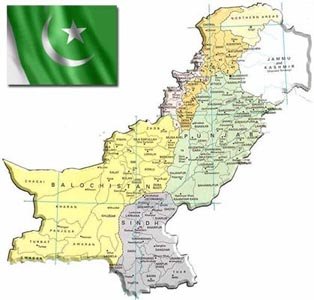
Reader Isaac, points to an excellent analytical overview of Pakistan’s national nervous breakdown at Dawn.com, by Nadeem F. Paracha. It is a lengthy but stupendous post with some 200 + comments:

Little monsters

There is nothing new anymore about the suggestion that over a span of about 30 odd years, the Pakistani military and its establishmentarian allies in the intelligence agencies, the politicised clergy, conservative political parties and the media have, in the name of Islam and patriotism, given birth to a number of unrestrained demons which have now become full-fledged monsters threatening the very core of the state and society in Pakistan.

A widespread consensus across various academic and intellectual circles (both within and outside Pakistan), now states that violent entities such as the Taliban and assorted Islamist organisations involved in scores of anti-state, sectarian and related violence in the country are the pitfalls of policies and propaganda undertaken by the Pakistani state and its various intelligence agencies to supposedly safeguard Pakistan’s ‘strategic interests’ in the region and more superficially, Pakistan’s own ideological interest.

….The 1980s and the so-called anti-Soviet Afghan jihad is colored with deep nostalgic strokes by the Islamists and the military in Pakistan. Forgetting that the Afghans would have remained being nothing more than a defeated group of rag-tag militants without the millions of dollars worth of aid and weapons that the Americans provided, and Zia could not have survived even the first MRD movement in 1981 had it not been due to the unflinching support that he received from America and Saudi Arabia, Pakistani intelligence agencies and its Afghan and Arab militant allies were convinced that it was them alone who toppled the Soviet Union.

The above belief began looking more and more like a grave delusion by the time the Afghan mujahideen factions went to war against one another in the early 1990s and Pakistan was engulfed with serious sectarian and ethnic strife. But the post-1971 narrative that had now started to seep into the press and in many people’s minds, desperately attempted to drown out conflicting points of views about the Afghan war by once again blaming the usual suspects: democracy, secularism and India.

Many years and follies later, and in the midst of unprecedented violence being perpetrated in the name of Islam, Pakistanis today stand more confused and flabbergasted than ever before.

The seeds of the ideological schizophrenia that the 1956 proclamation of Pakistan being an ‘Islamic Republic’ sowed, have now grown into a chaotic and bloody tree that only bares delusions and denials as fruit.

Read the rest here.

There has been an ocean of ink spilled about the Obama administration’s Hamlet-like deliberation over a war strategy for Afghanistan and on the implications of agreeing to 30,000 rather than the 40,000 new troops for the “Afghan Surge”, as Gen. McChrystal had originally requested. The 10,000 difference in boots is not the salient strategic point, though it is the one that excites political partisans on the Right, Left and anti-war Far Left. It also distracts us from debating our fundamental strategic challenge.

The horns of our dilemma is that our long time “ally” whom we have hitched ourselves to in a grand war effort against revolutionary Islamist terrorism is not our ally at all, but a co-belligerent with our enemy. By every policy measure that matters that causes the United States – justifiably in my view – to take a tough stance against North Korea and Iran, applies in spades to Islamabad. Yet none dare call Pakistan a rogue state.

It is the elephant in our strategy room – if the elephant was a rabid and schizophrenic trained mastodon, still willing to perform simple tricks for a neverending stream of treats, even as it eyes its trainer and audience with a murderous kind of hatred. That Pakistan’s deeply corrupt elite can be “rented” to defer their ambitions, or to work at cross-purposes with Pakistan’s perceived  “interests”, is not a game-changing event. Instead, it sustains and ramps up the dysfunctional dynamic we find ourselves swimming against.

We play a bizarre game, our leaders being more concerned about Pakistan’s “stability” than Pakistan’s own generals and politicians who egg on, fund and train the very militant Islamist groups spreading death and chaos inside Pakistan and beyond its borders. Why can we not find Osama bin Laden or Mullah Omar ? Because they are high value clients of the ISI which is no more likely to give them up than the KGB was to hand over Kim Philby.  

Until America’s bipartisan foreign policy elite grapple with the fact – and it is an easily verifiable, empirical, fact – that Pakistan’s government is in chronic pursuit of policies that destabilize Central Asia, menace all of Pakistan’s neighbors, generate legions of terrorists and risk nuclear war with India, no solutions will present themselves.

A strategy will only have a chance of success when it is grounded in reality.


Switch to our mobile site