zenpundit.com » analytic

Archive for the ‘analytic’ Category

Bunker and Sullivan’s One-Stop Narco-Insurgency Shop

Thursday, January 13th, 2011

Actually, an article at SWJ with an impressive list of resources on Mexico’s burgeoning cartel war:

Criminal Insurgencies in Mexico: Web and Social Media Resources by Dr. Robert Bunker and John Sullivan

The authors of this piece, individually, collectively, and in cooperation with other scholars and analysts, have written about the criminal insurgencies in Mexico and various themes related to them in Small Wars Journal and in many other publications for some years now. The Small Wars publications alone include “State of Siege: Mexico’s Criminal Insurgency,” “Plazas for Profit: Mexico’s Criminal Insurgency,” “Cartel v. Cartel: Mexico’s Criminal Insurgency,” “The Spiritual Significance of ¿Plata O Plomo?,” “Explosive Escalation?: Reflections on the Car Bombing in Ciudad Juarez,” and “The U.S. Strategic Imperative Must Shift From Iraq/Afghanistan to Mexico/The Americas and the Stabilization of Europe.” Certain truths have become evident from such writings and the raging conflicts that they describe and analyze.

First, the criminal insurgencies in Mexico have been increasing in intensity since the formal declaration of war-penned with the initial deployment of Army units into Michoacán and Ciudad Juárez against the insurgent gangs and cartels-by the Calderón administration in December 2006. Over 30,000 deaths in Mexico, just over ten-times the death toll from the 9-11 attacks, have now resulted from these conflicts with 2010 surpassing the earlier end of year tallies with almost 13,000 total killings. While most of these deaths have been attributed to cartel on cartel violence, an increasing proportion of them include law enforcement officers (albeit many of them on cartel payroll), military and governmental personnel, journalists, and innocent civilians. While some successes have been made against the Mexican cartels, via the capture and targeted killings of some of the capos and ensuing organizational fragmentation, the conflicts between these criminal groups and the Mexican state, and even for neighboring countries such as Guatemala, is overall not currently going well for these besieged sovereign nations. Recent headlines like those stating “Mexico army no match for drug cartels” and “Drug gang suspects threaten ‘war’ in Guatemala” are becoming all too common. Further, it is currently estimated that in Mexico about 98% of all crimes are never solved-providing an air of impunity to cartel and gang hit men and foot soldiers, many of whom take great delight in engaging in the torture and beheading of their victims.

“Whoever took religion seriously?”

Saturday, January 8th, 2011

[ by Charles Cameron — cross-posted from the DIME/PMESII boards at LinkedIn ]

I’ve been hammering away at the importance of a nuanced understanding of religious drivers in successful modeling of our world, and today I ran across some paragraphs from a book by Gary Sick that explain, forcefully and briefly, just why this seems like a big deal to me.

1

Sick, who was the National Security Council’s point man on Iran at the time of the Ayatollah Khomeini‘s Iranian Revolution, recounts how totally unprepared we were for the sudden emergence of a theocracy in his book, All Fall Down:

Vision is influenced by expectations, and perceptions — especially in politics — are colored by the models and analogies all of us carry in our heads. Unfortunately, there were no relevant models in Western political tradition to explain what we were seeing in Iran during the revolution. This contradiction between expectation and reality was so profound and so persistent that it interfered fundamentally with the normal processes of observation and analysis on which all of us instinctively rely.

On one level, it helps to explain why the early-warning functions of all existing intelligence systems — from SAVAK to Mossad to the CIA — failed so utterly in the Iranian case. Certainly, US intelligence capability to track the shah’s domestic opposition had been allowed to deteriorate almost to the vanishing point. But even if it had not, it would probably have looked in the wrong place. Only in retrospect is it obvious that a good intelligence organization should have focused its attention on the religious schools, the mosques and the recorded sermons of an aged religious leader who had been living in exile for fourteen years. As one State Department official remarked in some exasperation after the revolution, “Whoever took religion seriously?”

Even after it became clear that the revolution was gaining momentum and that the movement was being organized through the mosques in the name of Khomeini, observers of all stripes assumed that the purely religious forces were merely a means to the end of ousting the shah and that their political role would be severely limited in the political environment following the shah’s departure, The mosque, it was believed, would serve as the transmission belt of the revolution, but its political importance would quickly wane once its initial objectives had been achieved.

2

The blissful ignorance didn’t end back there in 1979. Right at the end of 2006, reporter Jeff Stein asked Rep. Silvestre Reyes (Dem, TX), the incoming head of the House Intelligence Committee (which has oversight of the entire US Intelligence Community) whether Al-Qaida was Sunni or Shiite – noting in two asides, “Members of the Intelligence Committee, mind you, are paid $165,200 a year to know more than basic facts about our foes in the Middle East” and “To me, it’s like asking about Catholics and Protestants in Northern Ireland: Who’s on what side?”

Reyes guessed wrong – not good – and so did a lot of other senior people in the FBI, Congress and so forth. Understandable perhaps, but still, not good.

The popular media keep many of the rest of us confused, too. Glenn Beck has been misinformed by the Christian thriller writer Joel Rosenberg, and refers to the “Twelvers” when he means the “Anjoman-e Hojjatieh” -which, to extend Stein’s point, is the equivalent of saying “Catholic Church” when you mean “Legionnaires of Christ”.

3

Okay, we know that religion has something to do with all this Iran – and Afghanistan and Pakistan and Iraq, and Yemen, and Somalia, and Nigeria — and maybe even homegrown — mess. And I agree, other people’s religions really aren’t our business normally, and it’s not surprising if we don’t know much about them.

Except, I’d say, when religions take up the sword, or have significant power to influence decisions about the use of nuclear weapons — at which point it’s appropriate to get up to speed…

My Asynchronous COIN Debate with Dr. Bernard Finel

Friday, January 7th, 2011

Actually, we are probably not that far apart, really.

Originally, in a past year, Dr. Finel wrote this.

I am not wholly convinced as a matter of ontology that there exists a coherent phenomena that can be termed “insurgency.” My sense, instead, is that there are various sub-state armed threats that exists to states, several of which we usually lump in together under the rubric of insurgency, but which have very different causes and consequences, and hence require different strategic approaches.  I am not just referring, by the way, to the various motivations for “insurgency” – i.e. religious vs. leftist vs. ethnic – but also that there are at least some groups that have strategic orientations quite at odds from the image of an organized group with ambitions to replace the existing government.

My curiousity piqued, I responded here:

Why are submaximum strategic goals (i.e. something < regime change) an indicator of “non-insurgency” ? I think this standard would eliminate most of the popular uprisings in recorded history – for every Taiping Rebellion or Emelian Pugachev, there’s a dozen smaller, hopeless, desperate, peasant revolts.

Why the implicit use of the Maoist model as the defining characteristic of “insurgency”? That is, to the extent Bernard considers insurgency to exist

Dr. Finel replied yesterday with this ( I will intersperse my comments to make it easier on the readers):

I guess I should have been clearer.  I have no interest in debates over semantics. My interest is in ensuring that terms we use actually have a useful and coherent meaning and analytical utility.  You want to call the “Maoist model” a “war of national liberation” rather than insurgency, go ahead.  You want to call narcoviolence, “insurgency,” fine go ahead.  But don’t call a Maoist model and narcoviolence by the same name because if you, you confuse the issue.  I really don’t care what terms is applied to the various phenemena under consideration, but I do care that before we lump things together we make sure the analytic containers are, in fact, meaningful.

I am all for analytical clarity. Narco-cartels in Mexico were originally engaged in purely economically motivated violence, mostly against each other and corrupt officials in their pay. That is in my view, criminal activity. When the narcos changed their goal to encompass establishing TAZs that supplant the political authority of the Mexican state and engaged in systematic campaigns of assassination, intimidation and infiltration of local, state and Federal Mexican goverment entities they evolved from organized criminals into an insurgency.

Is there a calculated political challenge to state power by non-state actors manifested in organized violence? If so, that to my mind is an insurgency, regardless of whether they seek to topple the state or carve out some sort of niche where they can dominate.

Why is this relevant? Because, as a practical matter there are actually insurgencies that grow out of legitimacy gaps and that are best fought – perhaps – by population-centric counter-insurgency measures designed to provide good governance. But not all forms of sub-state violence are that sort of insurgency, and as a result, not all forms of sub-state violence require (or are even usefully addressed) by the sort of clear-hold-build model of integrated military operations and development initiatives.

We are facing a world with a great deal of sub-state disorder. The mistake is assuming that all of this reflects a unified dynamic (e.g. insurgency) that can be addressed with a single response (e.g. population-centric counter-insurgency).

Tend to agree with Bernard here, but with a more generous inclination to Pop-centric COIN. It isn’t a silver bullet but it has some uses. Frankly, if a regime lacks all moral scruples, democidal assault against probable supporters of insurgents (i.e.  death squads, reigns of terror) is often successful in short order. Not always. Rwanda’s genocide of the Tutsi contributed to the overthrow of the radical Hutu government by Tutsi rebels but it worked in Guatemala in the 1970’s, in French Indochina and El Salvador in the 1930’s.

Or there is a middle ground. El Salvador in the 1980’s fought a brutal war against the Communist FMLN with a focus on kinetics and extrajudicial murder but the government abandoned an oligarchical military junta for a representative democracy, addressing concerns about legitimacy. Colombia in the 1990’s combined unleashing vicious loyalist paramilitaries with an aggressive effort to establish competent governance, in order to push back against the marxist rebels of  FARC and the ELN. At a minimum, if counterinsurgents want better intelligence, they need to win the trust of locals, at least some of them, most of the time.

This is not just a theoretical critique. The situation in Iraq was not an “insurgency” in the classic meaning of the term.  Indeed, much of what we considered insurgency was actually little more than a terror campaign aimed at maximizing political leverage.  Other parts involved contestation for power between various Shi’a factions.  And a third, was a simple, and straight-forward sectarian conflict over a relatively small slice of contested territory. None of those conflicts required a comprehensive COIN/Development strategy to manage.

The classic insurgency, the “Maoist model”, should probably have ceased being regarded as definitive twenty years ago. Decentralized, quasi-anarchic “open source insurgency” as conceptualized by John Robb, are more probable in multicultural, weak states with artificial borders drawn by long dead colonialists.

Just to be clear. I am not, as a matter of analytical commitments, always a “splitter.” It is not my desire to disaggregate these domestic conflicts simply for the sake of disaggregating them. Personally, coming out of a mainstream political science orientation, I actually prefer to be a “lumper.” Lumping is how you get the most powerful and parsimonious theories.  But in this case, we’re lumping too many dissimilar concepts together into the basket of insurgency and it is hurting both the academic study of the phenemenon as well as leading to inappropriate policy recommendations.

Insurgency, like terrorism, is both a tactic and a categorical classification. Some movements will combine insurgency with terrorism, peaceful political activities and economic development. Or with criminal enterprises. But does the violence in sum have a political objective? Is it directed against the state?

These are the key questions.
Doc Madhu on “Sweet Strategery of Strategic Depth”

Thursday, January 6th, 2011

Onparkstreet, a.k.a. Dr. Madhu has a post I rather liked on Pakistan’s maniacal quest for “strategic depth” in Afghanistan, over at Chicago Boyz:

The Super Sweet Strategery of Strategic Depth

Pakistan’s beliefs in the value of seeking strategic depth in Afghanistan were influenced by two factors. The support it received from the U.S. in waging an armed response against the Soviet occupation triggered the belief. The success of that endeavour with no apparent costs to itself, gave Islamabad the illusion of being able to play a major role in the geo-politics of Central Asia. This more than anything else led to the belief that Afghanistan provided the strategic leverage Pakistan had long been seeking. The energy-rich Muslim states of Central Asia beckoned both Pakistan and the energy-seeking multi-nationals. Iran’s standing up to western pressures was proving an obstacle to long-term plans for energy extraction from the region. Afghanistan offered both shorter energy routing and political control through Pakistan.

V. R. Raghavan (The Hindu, 2001)

Pakistan’s intelligence agency, the ISI, “wants a reliable proxy that has territorial control of the P2K area,” Mr. Dressler adds. This desire is the result of Pakistan’s historic conflict with India. “If India comes across the border, Pakistan can fall back into Afghanistan and drive them out. It’s about strategic depth vis-à-vis India. As long as that continues to be a driving concern, Pakistan’s support for the Haqqani network will continue.”

The Christian Science Monitor (via Small Wars Journal)

A highly plausible future scenario indeed (regarding the second quoted item). In the event that the Indians decide on a massive ground invasion into Pakistan and march sturdily through the landscape of jihadi-networks and scattering Pakistani troops – with nary a nuke in sight and the US sitting idly by – it sounds like a winner of strategy. The supply lines to the Indians will, of course, be Bollywood unicorns pooping ammunition and some sort of MREs.

On the other hand, serious people seem to take Pakistani strategic depth worries seriously. The Indians are forever being told that they must take Pakistani fears of regional encroachment into account so that the United States (ISAF) may have a negotiated settlement in Afghanistan that is stable. Although….

Read the rest here.

The key to understanding Pakistan is that it does not really function like a state in the Westphalian sense, nor do it’s rulers want it to do so, the state merely being a vehicle for their own personal and class aggrandizement. Nor are the official borders of Pakistan the same as the borders that exist in elite Pakistani imaginations. Nor is Pakistan an ally of the United States in any sense that most normal people would use the term “alliance”, as allies are rarely the epicenter of one’s enemies in a shooting war. It is as if in 1944, as we jointly prepared for Operation Overlord, the British were raising volunteer Scottish Waffen SS divisions to kill American troops on the beaches of Normandy.

Strategy works within the confines of reality, strategy does not confine reality. We give Pakistan billions of dollars in military aid annually, and they use some of it to fund and train Taliban who have killed Americans, every year, for the last ten years, and continue to do so while their leadership is safely ensconced in Peshwar, Quetta and Rawalpindi.

Every year.

Think about that as you sign your 1040.

If we our leaders can’t recognize admit in public who America’s enemies really are, how can we win a war?

Our relationship with Pakistan is strategically toxic.

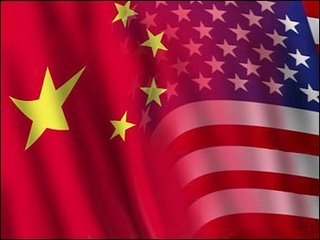
A Short Analysis on The Whyte-Barnett Sino-American Grand Strategy Proposal

Tuesday, January 4th, 2011


A few comments on the proposed Whyte-Min-Barnett Grand Strategy Executive Agreement for a Sino-American partnership that Dr. Barnett has been deeply engaged with the past few months.

First, a caveat: while Tom has involved me in aa few of his past projects, I was not involved in this one and know only what I have read recently. Secondly, while I know a bit about China in an academic sense, it is not an area of research for me nor am I up to speed on the  current politics of China’s generational transfer of power/power struggle. Those readers who are avid China watchers should chime in with comments.

As an overview, I think the proposal’s specific terms should be viewed less seriously individually than the gesture itself, which represents in my view a very significant trial balloon signal from China’s leadership that they see a need to negotiate a successor to the long outgrown cornerstone of Chinese-American relations, the Shanghai Communique, signed during Nixon’s historic summit with Mao. A new agreement would provide some updated “rules of the road” that would defuse potential and existing tensions and allow the US and China to tackle some urgent problems in the global economy. By using a semi-official independent set of pundits ( Whyte and Min) and a maverick private sector American geostrategist ( Tom) with close ties to the Pentagon, China can advance it’s talking points and interest in negotiating without any loss of face that an official inquiry risks as a result of America’s fractious domestic partisan politics.

Read up on the secret diplomatic minuet that ensued between the US and China 1969-1972.

China’s leadership seems to have invested a sizable heavyweight participation in this proposal, Tom cites:

– Former Minister of Foreign Affairs;
  – Former UN ambassador,
  – Former U.S. ambassador,
  – Former Deputy Chief of the General Staff of the PLA,
  – Former Military Attaché to North Korea and Israel,
  – Former Vice Minister of Commerce,
  – President of Shanghai Institutes of International Studies,
  – China’s Central Party School Institute of International Strategic Studies,
  – Chinese People’s Institute of Foreign Affairs,
  – China Center for International Economic Exchanges,
  – China Institute For International Strategic Studies,
  – China Foundation for International & Strategic Studies,
  – Boao Forum,
  – China Institutes of Contemporary International Relations.

This has resulted in a document that unsurprisingly leans strongly towards China’s interpretation of a good Sino-American partnership but this proposal is not holy writ, it is a red flag ( pun intended) for bargaining to begin. A plea, really by a leadership craving greater certainty, medium term security and “recognition” ( i.e. “face” or “respect” – this is very much like Brezhnev and Kosygin deeply desiring that the USSR be seen as an equal to the US, except unlike the Soviets, China actually has a productive economy) Imagine a US doc shepherded by a comparable set of former and current powerbrokers, the Council of Foreign Relations, CNAS, Carnegie, CNA, SSI, Brookings, AEI, Hoover, the chairmen of the Republican and Democratic Parties and the president of Harvard. Would that catch the attention of foreign observers?

I am not sure if it is being received that way over here. My perception – and I freely admit to having large gaps of knowledge – is that US policy toward China is determined below the NSC level and not in a strategic fashion by a) Treasury b) the Fed c) PACOM in that order , pursuing contradictory policy goals and without proper coordination while State, which should be taking a lead role, is a quiet secondary voice relegated to managing lower level, day to day, routine problems in ad hoc fashion. Some carping and special pleading from Congress is erratically inserted into the mix. If someone in the Obama administration is the China policy “czar” it is obscure to me. It must be obscure to Beijing as well or they would be having their ambassador or foreign minister pushing these proposals to their American counterparts in a normal fashion instead of Tom.

Barnett, Whyte and Min devote a great deal of space to bilateral and global economics relationships. They should. The magnitude of the Sino-American monetary and trade relationship and it’s evolved distortions between two nations that are radically dissimilar, understand one another poorly and are not allied are actually scary. Immense quanties of locked up capital – and we are talking epic figures  that dwarf the interwar period European “dollar gap” or even that of the postwar era remedied by the Marshall Plan – ultimately create money scarcity elsewhere in the global economy until trade breaks down in political reaction or the ebb of a medium of mutual exchange.  That money needs to begin circulating via productive investment and Chinese policies creating this structural imbalance need to be phased out. How exactly this should be done is beyond my ken, but that something needs to be done is obvious.

Dr. Barnett, as I understand his strategic thinking, takes the long view and is willing to concede in the short term what would be impossible to sustain in the long term anyway (“locking in tomorrow’s China at today’s prices” ) and is concerned about defense contractors eager to make China the justification for hyperexpensive weapons mega-platforms ultimately inculcating over time thinking that carelessly slides the United States toward a needless great power war with China. A position mirrored by China’s own ambitious self-dealing military asshats.

Is Tom’s view the last word? No. but it is disturbing to me that a strategic relationship as we have with China is not being handled by American officials with the same attention and degree long term focus we give to Europe.

What do the Sinologists out there say?


Switch to our mobile site

