zenpundit.com » IO

Archive for the ‘IO’ Category

Strategic Communication, Science, Technology

Wednesday, July 8th, 2009

Blogfriend Matt Armstrong had an important post regarding The Strategic Communication Science and Technology Plan, April 2009. An excerpt:

The plan describes current efforts within the Department of Defense, the military services, the combatant commands and other agencies on SC. In total, these efforts could be linked together to form the foundation of an S&T thrust area for strategic communication. The report also includes a macro-analysis of capability gaps not being addressed by ongoing initiatives and lays out potential areas for future S&T investment.

While the request for the plan itself represents recognition from Congress that SC plays a critical role in the public and private response to current and emerging threats, it also highlights that there is much research and development already underway and many tools available to increase the government’s effectiveness in global engagement. The rub today is the need for strong leadership and coordination to ensure: 1) awareness of the long list of capabilities; 2) incorporating these capabilities into plans; and 3) participation by stakeholders across the US government, NGO’s, industry, and private citizens.

The S&T plan sorts current efforts into the following categories:

  • Infrastructure: Enabling and facilitating access to information from news to markets to vocational
  • Social Media: Knowledge Management, Social Media, and Virtual Worlds
  • Discourse: Analysis of radical and counter-radical messages and ideas
  • Modeling and Forecasting: Gaming and anticipating adversarial messages and ideas as well as our counters and pre-emptive measures
  • Collaboration: Increasing collaboration and training across and beyond Government
  • First Three Feet: Empowering, Equipping, Educating, and Encouraging media and others to exist and freely report on events for what they really are
  • Understanding: Develop country, culture, and regional expertise, including polling
  • Psychological Defense: Planning and capacity building for dealing with critical strains on society in peacetime and wartime

The interesting thing here for me is that “strong leadership” is lacking because the people spread across and outside government who have the shared awareness of technology, social media and national security at a level of sophistication where they could actually craft a strategic communication policy, are usually many levels removed from the appointee policy deciders for whom these variables are (usually) fuzzily understood.

To use an analogy, the chefs are valet parking cars outside while trying to get the manager of the restaurant to acknowledge their recipes. Or, maybe that there should be cooking going on in the kitchen if they want to have any customers. Or that the business is, in fact, a restaurant and not a nicely organized room full of tables.

Scenario Thinking, Collaborative Futurism

Wednesday, May 6th, 2009


I recommend that you check out CounterStories, particularly readers interested in futurism, 5GW, IO and strategic thinking.

Edited by journalist, think tanker and long time blogfriend Paul Kretkowski, CounterStories develops scenarios for purposes of alternative analysis, counterintuitive thinking exercises, predictive futurism and good old fashioned fun. Scenarios are a very helpful complement to more quantitative futurist methodologies.

Strangling OSINT, Weakening Defense, Censoring Criticism: The Pentagon

Wednesday, April 29th, 2009

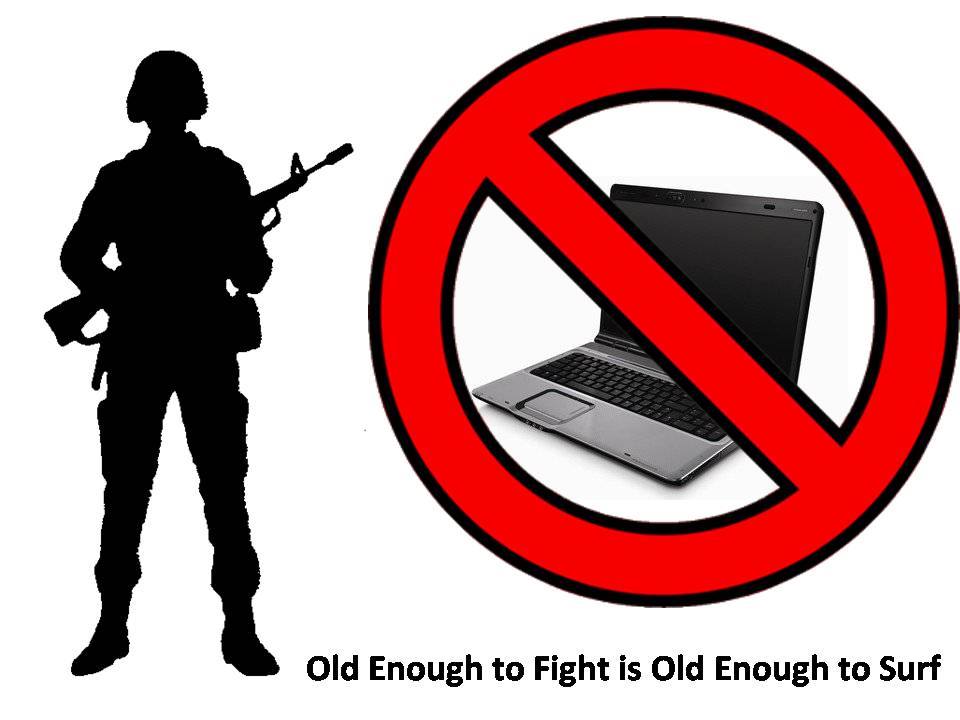
banned.jpg

William Lind has a new post up at Defense and The National Interest that addresses the issue of the IT restrictions on the use of the internet by military personnel. This topic has been touched on previous by others such as at the SWC, SWJ Blog, Haft of the Spear, Hidden Unities and many milbloggers, intel and cyberwonks but previously, IT policy varied across services and from command to command. That appears to be changing – for the worse.

On War #302: Blinders

At the height of the Cold War, a U.S. army corps commander in Europe asked for information on his Soviet opposite, the commander of the corps facing him across the inter-German border. All the U.S. intelligence agencies, working with classified material, came up with very little. He then took his question to Chris Donnelly, who had a small Soviet military research institute at Sandhurst. That institute worked solely from open source, i.e. unclassified material. It sent the American general a stack of reports six inches high, with articles by his Soviet counterpart, articles about him, descriptions of exercises he had played in, etc.

What was true during the Cold War is even more true now, in the face of Fourth Generation war. As we have witnessed in the hunt for Osama, our satellite-photo-addicted intel shops can’t tell us much. But there is a vast amount of 4GW material available open-source: websites by and about our opponents, works by civilian academics, material from think-tanks, reports from businessmen who travel in areas we are interested in – the pile is almost bottomless. Every American soldier with access to a computer can find almost anything he needs. Much of it is both more accurate and more useful than what filters down through the military intelligence chain.

Or at least he could. In recent months, more and more American officers have told me that when they attempt to access the websites they need, they find access is blocked on DOD computers. Is al Qaeda doing this in a dastardly attempt to blind American combat units?
Sadly, no. DOD is doing it. Someone in DOD is putting blinders on American troops.

I do not know who is behind this particular bit of idiocy. It may be the security trolls. They always like to restrict access to information, because doing so increases their bureaucratic power. One argument points to them, namely an assertion that the other side may obtain useful information by seeing what we are looking for. That is like arguing that our troops should be given no ammunition lest muzzle flashes give away their positions in a fire-fight.

But the fact that websites of American organizations whose views differ from DOD’s are also blocked points elsewhere. It suggests political involvement. Why, for example, is access to the website of the Center for Defense Information blocked? CDI is located in Washington, not the Hindu Kush. Its work includes the new book on military reform America’s Defense Meltdown, which has garnered quite a bit of attention at Quantico.

The goal of the website blockers, it seems, is to cut American military men off from any views except those of DOD itself. In other words, the blockaders want to create a closed system. John Boyd had quite a bit to say about closed systems, and it wasn’t favorable.

Read the rest here

What is disturbing to me is that Lind indicates that the previous policy, which left IT restrictions up to commanders, seems to be coalescing behind one of systemic, tight, restrictions on access for all uniformed personnel to all kinds of blogs or websites that do not jeopardize information security. Or may even be useful to the conduct of their mission. The previous excuse by DoD bureaucrats was “conserving bandwidth” but it’s hard to see how esoteric sites like the Center for Defense Information or some university PDF on Islamist madrassas in Pakistan clog up a combatant command’s skinny pipes.

Intel and cyber experts in the readership are cordially invited to weigh in here.

ADDENDUM:

Professor Sam Liles offered up this manifesto on cyberthreats and cybersecurity.

ADDENDUM II:

Fabius Maximus, Ubi war and Wings Over Iraq took a similar view ( Wings though, added “Curse you Zenpundit!”).

ADDENDUM III THE COUNTERPOINT:

Galrahn says Bill Lind does not understand the legitimate cybersecurity aspect that causes blogs and websites to be blocked and then offers some practical advice to the blocked bloggers (such as myself):

….but I’d bet at least 5 shots of Canadian Whiskey (I’m a Crown Royal fan until summer gets here) that the problem that triggered his rant doesn’t originate in the DoD or any government entity, rather the private sector.

But I will say this. There are several legitimate reasons why websites, blogs, and other forms of social media sites on the web are blocked. If your website or blog is blocked, please understand you can do something about it besides whine.

Use Feedburner, or some other form of syndication software to distribute your content, including by email. Organizations including the military may block Blogger but typically they do not block syndication service sites because from an IT perspective, syndication services like Feedburner is a better way to manage bandwidth for larger enterprises. If an organization is blocking syndication sites too, then your organization has a very strict IT policy, BUT if your favorite websites are distributing content by email, problem solved

I used Feedburner previously with my old blogger site when Feedburner was in beta but when it was purchased or absorbed by Google, that account went dormant. I think I will ressurect it and then look into Galrahn’s other suggestions.

The World According to Meatballs

Tuesday, February 10th, 2009

I have been remiss in linking but the off-color psyops analysts at Swedish Meatballs Confidential are back to posting again.

Where o’ where are the Imperating Kents though ?

Matt Armstrong on Public Diplomacy Reform in the MSM

Friday, December 19th, 2008

Blogfriend and IO/Public Diplomacy expert Matt Armstrong of MountainRunner can be found in the pages of The Washington Times.

Persuasive Politics: Revisit the Smith-Mundt Act

In the early years of the Cold War, the threat to the United States was not military invasion but subversion capitalizing on economic and social unrest in Europe and elsewhere. In 1947, America’s ambassador to Russia said the most important “fact in the field of foreign policy today … is the fact the Russians have declared psychological war on the United States, all over the world.” It was, he continued, “a war of ideology and a fight unto the death.” Bullets and bombs were secondary to the power of information and persuasion in the global struggle for the minds and wills of people.

Public Law 402, the United States Information and Educational Exchange Act of 1948, commonly called the Smith-Mundt Act, passed with bipartisan support in the House and Senate — with opposition primarily from the Midwest — and was signed into law by President Harry S. Truman on January 27, 1948. It was a collaborative effort by the State Department and Congress with significant and broad support from the media and academia. The final push to pass the law was swift and caused by the Communist reaction to the mother of all reconstruction and stabilization programs: the Marshall Plan. Like development programs today, the enemy hated it. Despite America’s role in liberating Europe, the increased volume and tempo of enemy propaganda meant “knowledge of the United States [was] being systematically blotted out.” Denying ideological and physical sanctuary to our enemy required more than deeds.

….The result was the transformation of what is now known as public diplomacy from a national security imperative aggressively targeting foreign public opinion to something more resembling a passive “beauty contest.” While Under Secretary of State for Public Diplomacy and Public Affairs James Glassman has been effective in resurrecting public diplomacy, more must be done. Sixty years after the Act was passed, rumor and disinformation play an even greater role in today’s 24/7 global information environment. First impressions matter more than ever and perceptions make or break confidence in everything from financial markets to issues of global health. The wealth of information is surpassed only by the poverty of attention to digest it. If the media is the oxygen of the terrorist, it is also the oxygen of the counterterrorist.

Read the rest here.


Switch to our mobile site

