zenpundit.com » metacognition

Archive for the ‘metacognition’ Category

The Human Face of War

Tuesday, December 22nd, 2009

storr.jpg

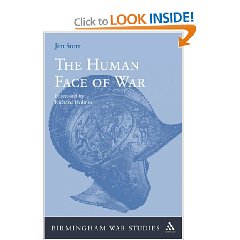
The Human Face of War by Dr. Jim Storr

An important new book on military theory and history by British defense expert Dr. Jim Storr, a retired Lt. Colonel, King’s Regiment and an instructor at the UK Defence Academy, was reviewed in Joint Forces Quarterly ( hat tip Wilf Owen) by Col. Clinton J. Acker III:

The Human Face of War

….Surveying an array of disciplines including history, psychology, systems theory, complexity theory and philosophy, Storr (a former British officer) looks at what a theory of combat should include, then provides one. He goes on to apply that theory to the design of organizations, staffs, leadership, information management and the creation of cohesion in units. In doing so, he takes on many currently popular theories such as Effects-Based Operations, the observe-orient-decide-act loop, the use of postmodern theory and language.

….Storr’s position is best summed up with this passage:”Critically, military theory should not be a case of ‘this is the right course of action’ but rather ‘doing this will probably have beneficial outcome’

I have not read this book, as it is new and not yet released over here but I have to stop here and comment that the ability to make effective, reasonable, probablilistic estimates based on uncertain or incomplete information is perhaps one of the most important cognitive skills for strategic thinking. This applies whether we are discussing decision making in business, sports, warfare or games of strategy.

….After developing his precepts in the first three chapters, Storr uses the rest of the book to deal with the specifics about how to apply those precepts to “Tools and Models”, “Shock and Surprise”, “Tactics and Organizations”, “Commanding the Battle”, “The Soul of the Army” ( a fascinating discussion of leadership styles) and “Regulators and Ratcatchers”….The discussion in these chapters presents a superb treatise on the use of examples and counterexamples to support points of view. A single counterexample is not sufficient to falsify an argument, for there are no absolutes. Rather we are looking for patterns that appear better than others…”

Read the rest here.

Stocking Stuffers……

Saturday, December 12th, 2009

In a burst of raw self-interest – and also a little love for my blogfriends – these books make nifty gifts for any war nerd or deep thinker on your Christmas list:

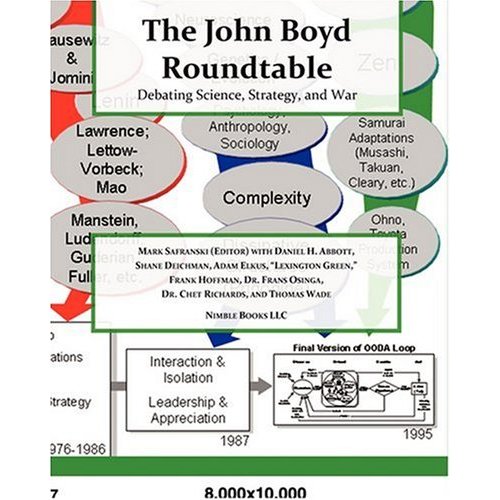
The John Boyd Roundtable: Debating Science, Strategy, and War – Mark Safranski (Ed.)


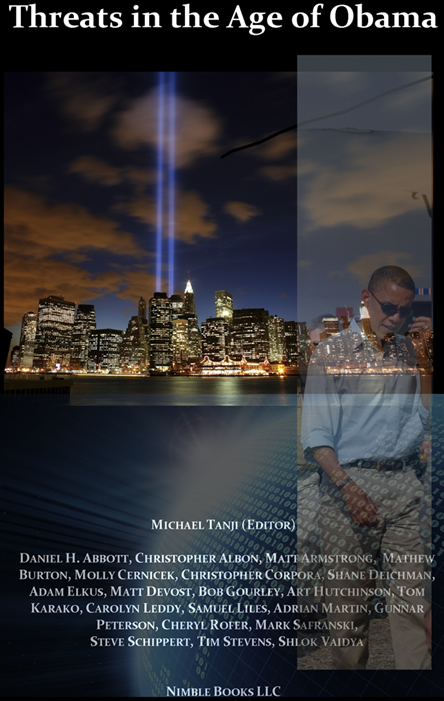
Threats in the Age of Obama – Michael Tanji (Ed.)

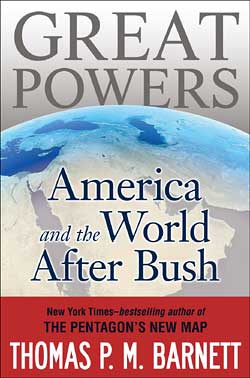
Great Powers: America and the World After Bush – Thomas P.M. Barnett

Brave New War: The Next Stage of Terrorism and the End of Globalization – John Robb

Science, Strategy and War: The Strategic Theory of John Boyd – Frans Osinga


The Genius of the Beast: A Radical Re-Vision of Capitalism  by Howard Bloom

Intelligence and How to Get It: Why Schools and Cultures Count  by Richard Nisbett

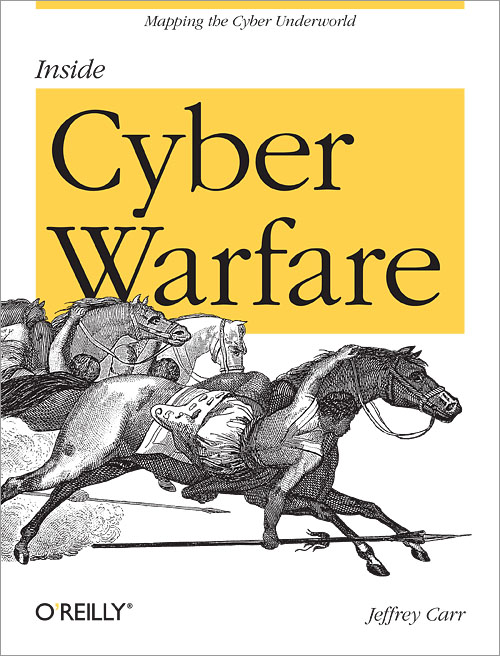
Inside Cyber Warfare: Mapping the Cyber Underworld  by Jeffrey Carr

This Is for the Mara Salvatrucha: Inside the MS-13, America’s Most Violent Gang  by Samuel Logan

Full Disclosure:

In copmpliance with new Federal regulations of dubious Constitutional merit, I hearby declare ZP does not accept money for publishing reviews or any paid advertising. Courtesy review copies were extended to me by authors or publishers acting on behalf of Sam Logan, Tom Barnett and Jeff Carr. I edited the first book in this post and was a contributing author to the second one. All of the books, with the exception of Cyber Warfare have been the subject of prior reviews or posts at ZP.

Brief Metacognition

Tuesday, December 1st, 2009

Very, very busy but the following two items struck me as useful advice for sharpening our mental edges.

First, John Robb linked to a series of posts by Eric Drexler of Metamodern. Al of them were good but I particularly liked the following one:

How to Understand Everything (and why)

….Formal education in science and engineering centers on teaching facts and problem-solving skills in a series of narrow topics. It is true that a few topics, although narrow in content, have such broad application that they are themselves integrative: These include (at a bare minimum) substantial chunks of mathematics and the basics of classical mechanics and electromagnetism, with the basics of thermodynamics and quantum mechanics close behind.

….To avoid blunders and absurdities, to recognize cross-disciplinary opportunities, and to make sense of new ideas, requires knowledge of at least the outlines of every field that might be relevant to the topics of interest. By knowing the outlines of a field, I mean knowing the answers, to some reasonable approximation, to questions like these:

What are the physical phenomena?
What are their magnitudes?
What are their preconditions?
How well are they understood?
How well can they be modeled?
What do they make possible?
What do they forbid?

And even more fundamental than these are questions of knowledge about knowledge:

What is known today?
What are the gaps in what I know?
When would I need to know more to solve a problem?
How could I find it?

It takes far less knowledge to recognize a problem than to solve it, yet in key respects, that bit of knowledge is more important: With recognition, a problem may be avoided, or solved, or an idea abandoned. Without recognition, a hidden problem may invalidate the labor of an hour, or a lifetime. Lack of a little knowledge can be a dangerous thing.

Secondly, reading through Richard Nisbett’s Intelligence and How to Get It: Why Schools and Cultures Count ( see this monster, two-partbook review by James McCormick at Chicago Boyz), the intriguing findings of the “Venezuela Project” run by none other than the late Richard Herrnstein of Bell Curve fame. Nisbett writes (74-75):

Herrnstein and his coworkers devised a very advanced set of materials geared to teaching seventh-graders fundamental concepts of problem solving that were not targeted to any particular subject matter. In effect they, they tried to make the children smarter by giving them handy implements for their intellectual tool kits.

What were those non-subject specific, cognitive skills?

  • Basics of Classification
  • Hypothesis Testing
  • Discovery of Properties of Ordered Dimensions
  • Analogies
  • Simple Propositions
  • Principles of Logic
  • Constructing and Evaluating Complex Arguments
  • Weighing opportunity costs vs. probability of success for a goal
  • Evaluating credibility and relevance of data

I would have added metaphors, pattern-recognition and intuitive thinking games but it was a fine set of skills and the results were remarkable, according to Nisbett:

The instruction resulted in big changes in children’s ability to solve problems that the new skills were designed to improve….for language comprehension, .62 SD [ standard deviation]; for learning how to represent ‘”problem spaces,” .46 SD; for decision making, .77 SD; for inventive thinking, .50 SD. In short, general problem solving skills can be taught, and taught moreover in a brief period of time.

In psychometric terms, for a 13 year old, these scores represent phenomenal improvements in cognitive performance and indicate the plasticity of some aspects of measured intelligence. Why have such activities not become commonplace in public schools? Or universities?

Why indeed?

Strategy, Dilemmas and Choices

Monday, November 2nd, 2009

Futurist Jamais Cascio on strategic forecasting:

Futures Thinking: Asking the Question

….”Asking the Question” is the first step in a formal futures thinking project. At first glance, it should be easy–after all, you should know what you’re trying to figure out. Unfortunately, while it may be simple to ask a question, asking the right question is much more challenging It’s easy to ask questions that are too vague, too narrow, or assume the answer; it’s much more difficult to ask a question that can elicit both surprises and useful results.

….It’s a subtle point, but I tend to find it useful to talk about strategic questions in terms of dilemmas, not problems. Problem implies solution–a fix that resolves the question. Dilemmas are more difficult, typically situations where there are no clearly preferable outcomes (or where each likely outcome carries with it some difficult contingent elements). Futures thinking is less useful when trying to come up with a clear single answer to a particular problem, but can be extremely helpful when trying to determine the best response to a dilemma. The difference is that the “best response” may vary depending upon still-unresolved circumstances; futures thinking helps to illuminate possible trigger points for making a decision.

Cascio’s framing of dilemmas is reminiscient of a discussion I had here a while back with Dave Schuler regarding “wicked problems” though dilemmas appear to be more generic a class of difficulties ( all dilemmas are not wicked problems but all wicked problems represent a dilemma). There is a lot of merit to the frame that Cascio is using and it points to the dysfunctionality present in top tier national security decision making.

Pakistan, for example, represents a serious dilemma for the United States.We need to begin, as Cascio suggests, by framing the right questions. A better question than “Is Pakistan an ally?” would be “Is Pakistan our enemy?”

Islamabad is a major state sponsor of terrorist groups, perhaps the largest on earth in that regard. It has a poor record – again one of the world’s worst – on nuclear nonproliferation and nuclear security issues. Pakistan’s civilian elite is amazingly corrupt and it’s thoroughly undemocratic senior officer corps of the Army only moderately less so. Pakistani public opinion borders on delusional with any issue tangentially connected to India and in the main, informed Pakistanis deeply resent it when their own policies of sponsoring terrorism cause other countries to become angry with Pakistan and take any kind of retaliatory action. It’s political system is polarized and unstable.

Yet while Pakistan is deeply hostile to America and cannot “be bought”, their deep corruption means that they can be “rented”. Pakistan is the major and irreplaceable conduit for supplies to US and NATO forces in Afghanistan and the Pakistani military will grudgingly cooperate in providing intelligence for drone attackson the militant terror groups that the ISI aids, directs and trains. Pakistan is ready to sacrifice many pawns but not any chesspiece of significance.

The American elite tend to speak of Pakistan as an “ally”, when the reality is that Pakistan is a sullen and coerced client, and to profess great concern about Pakistan’s “stability. This falsehood permits the illusion of “partnership” with Pakistan and makes it politically easier for the administration of the day to secure appropriations from the Congress for Afghanistan and Pakistan. Unfortunately, this facade creates a mental fog of unwarranted reassurance when clarity is most needed to assess our strategic choices and make any of them with decisiveness. A permanent preference for “muddling through” and crisis management has taken root.

Pakistan’s elite by contrast, tell visiting Secretaries of State how much they hate America and continue to endorse aiding the very violent Islamist groups that are eating away at the authority and legitmacy of the Pakistani state like a horde of termites. The elite regularly exercises its far smaller degree of national power with infinitely greater ruthlessness than its American counterparts, not appearing to care all that much about “stability”. The Pakistanis are willing to play hardball yet the USG shrinks from doing so.

Something does not compute here and that something is us.

ADDENDUM:

Tom Barnett views Karzai as an even worse strategic bet than dealing with Pakistan ( but also thinks our diplomatic play is hamfisted and obtuse), saying the Obama administration should “take advantage of this fiasco“.
The Grand Failure of my Summer Reading List

Saturday, October 10th, 2009

Ancient library

Ah, I am over a month late on a promised follow up post!

Back in early June, I composed a hyper-ambitious Summer Reading list that I wanted to plough through on those hazy, lazy, dog day afternoons. Here was my list:

THE SUMMER READING LIST:

Military History and Strategy

Wired for War: The Robotics Revolution and Conflict in the 21st Century – PW Singer (Finish, currently reading)
The Anabasis of Cyrus (Agora) – Xenophon
The Accidental Guerrilla: Fighting Small Wars in the Midst of a Big One – David Kilcullen
The Scientific Way of Warfare: Order and Chaos on the Battlefields of Modernity
 – Antoine Bousquet
The Culture of WarMartin van Creveld
Certain to WinChet Richards

Science, Futurism, Networks, Economics and Technology

How the Mind Works – Steven Pinker
Fooled by Randomness: The Hidden Role of Chance in Life and in the Markets
 – Nassim Nicholas Taleb
Emergence: The Connected Lives of Ants, Brains, Cities, and Software
 – Steven Johnson
The Singularity Is Near: When Humans Transcend Biology
 – Ray Kurzweil
The Hyperlinked Society: Questioning Connections in the Digital Age (The New Media World)
Lokman Tsui

Biography

Ho Chi Minh: A Life William J. Duiker

Philosophy and Intellectual History

The Open Society and Its Enemies, Vol. 1: The Spell of Plato
The Open Society and Its Enemies, Vol. 2: Hegel and Marx – Karl Popper
The Closing of the Western Mind: The Rise of Faith and the Fall of ReasonCharles Freeman

Fiction

Pattern Recognition – William Gibson
On the Road (Penguin Classics)Jack Kerouac

Pretty impressive, eh? It would be more so if I had actually done it. While I have all of these books on my shelf, I did not get to most of them and was frequently sidetracked by books that were never on the list in the first place. Here’s what I actually read this summer between Memorial Day and Labor Day:

The Books I Really Read Last Summer:

Emergence: The Connected Lives of Ants, Brains, Cities, and Software – Steven Johnson

Wired for War: The Robotics Revolution and Conflict in the 21st Century – PW Singer

The Bloody White Baron: The Extraordinary Story of the Russian Nobleman Who Became the Last Khan of Mongolia by James Palmer

This Is for the Mara Salvatrucha: Inside the MS-13, America’s Most Violent Gang by Samuel Logan

 Horse Soldiers: The Extraordinary Story of a Band of US Soldiers Who Rode to Victory in Afghanistan by Doug Stanton

The War of Art: Break Through the Blocks and Win Your Inner Creative Battles by Steven Pressfield

The Anabasis of Cyrus (Agora) by Xenophon. Translator,  Wayne Ambler

How Rome Fell: Death of a Superpower by Adrian Goldsworthy

The Books I Partially Read Last Summer but Have Yet to Finish:

The Culture of War – Martin van Creveld

 Certain to WinChet Richards

The Conquest of Gaul  by Julius Caesar on Kindle

Why didn’t I stick to my reading list ? Looking back, there’s a number of reasons.

Foremost would be a lack of discipline on my part to put in several hours plugging away, each day, without fail. While I can legitimately say that professional and family commitments were not inconsequential last summer, I’m sure if I counted up the time I frittered away online reading blogs, social media sites, PDFs, etc. it most likely exceeded the clock hours spent reading books.

A second reason was review copies. When a publisher or PR firm sends me a review copy, I feel an obligation to read the book in a timely fashion. The authors count on that during the roll-out phase and most recipients of review copies never bother to write two words. I tend to write reviews only for the books I feel confident recommending to ZP readers; I’m not a professional critic nor do I get paid to blog, so I’m not going to waste my limited blogging time slamming an author or nitpicking unless his views come across as nutty or dangerous. Review copies that are not at a level to merit a positive review ( I probably get sent 3 books for every review that you see posted here, and I refuse to accept books outside my core areas of interest. I also get embargoed drafts still in the writing process but cannot, for legal reasons, blog about them) are read and then are shelved or given away.

The final reason probably comes down to age. It’s much harder now to read four or five hours at a stretch; whether that is because the internet is re-wiring my brain, as Nick Carr argues, or that the hectic pace and noisy environment of my life lacks any such extended blocs of quiet time that I enjoyed at age 20, I’m not sure.  Regardless, for me, books are now read in brief snatches of time these days, with an uninterrupted hour of book reading being uncommon, unless it is done after everyone else in the house is asleep. Over time, that means reading fewer books.

A shame.


Switch to our mobile site