zenpundit.com » cultural intelligence

Archive for the ‘cultural intelligence’ Category

Social and Individual Components of Creativity

Thursday, April 14th, 2011

This is very good. And it is fast.

I have enjoyed several of Steven Johnson’s previous books, Emergence and Mind Wide Open and his latest one, Where Good Ideas Come From looks to be a must read, though I think those of you who have read Wikinomics or works like Flow by Mihaly Csikszentmihalyi will find some of Johnson’s points in the video to be familiar as will those long time readers who have seen my views on horizontal thinking   and  insight.

My students watched this and reacted by defining themselves as those who were creative mostly through social collaboration but a decided minority required solitude and an environmental filter to think clearly and creatively – not a catalyst of a series of  social-intellectual stimuli. For them, the cognitive load generated by the environment amounted to an overload, a distracting white noise that short-circuited the emergence of good ideas.

This suggests to me that there are multiple and very different neuronal pathways to creativity in the brain and a person’s predisposition in their executive function, say for example the classic “ADHD” kid at the back of the class, may have different requirements to be creative than a peer without that characteristic. It also means that creativity may be subject to improvement if we can cultivate proficiency in several “styles” of creative thinking.

A two part meditation, part i: scenario planning the end times

Wednesday, April 13th, 2011

[ by Charles Cameron ]
.

Some people like banking, I prefer religion.

I’m perennially fascinated by the way myths and rituals, meditations and sacraments can not just motivate and move people but change them. That’s just the way I am. I spent ten minutes this morning listening to a zen nun explaining on YouTube how to strike a bell (she preferred to think of it as “inviting” the bell), how to listen to it, how to wake up.

So when it comes time for scenario planning, I find the logistical and economic side of things less interesting than the tada! End of the World! excitement that seems to pop up all over the place from time to time. On billboards here in California (with a date certain: May 21st, 2011), for instance. In videos from Iran (coming soon to a theater of war near Jerusalem). And on Glenn Beck (ditto).

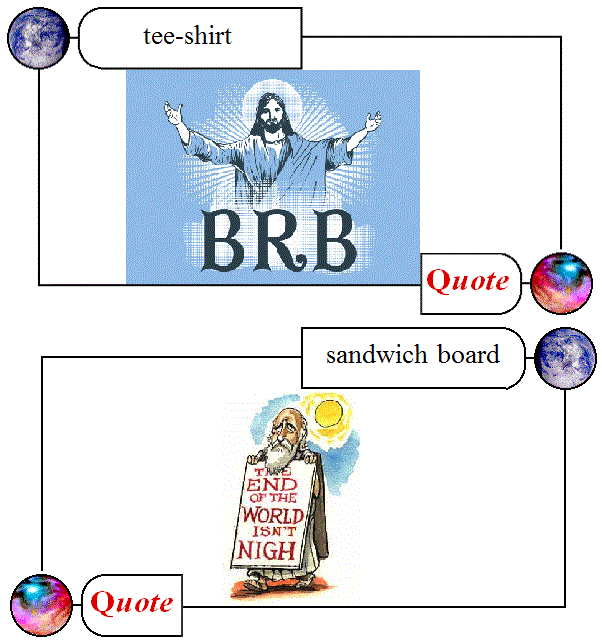
It seems to be a meme that cartoonists and satirists enjoy, too…

.
quo-end-times.gif

*

The thing is, there are two worldviews here, which we could conveniently label sacred and secular – though there’s no reason why one can’t hold a “sacred” view of the world (as I do) and not expect it to end any time soon (I don’t), or a “secular” view, and expect a new ice age or terminal global warming around the next bend in the road…

Two worldviews. And here’s where we get a “clash of cultures”.

Either there exists a definitive blueprint for the future of geopolitics – in Daniel, Ezekiel, and Revelation — or the future of geopolitics is something we’ll have to wrangle ourselves, using our best intelligence, wisdom and material resources.

On Sunday, you can go learn about the blueprint in an evangelical church – or you can kick back with the Sunday supplements and “Meet the Press”. And nobody much minds if you do one thing, and your neighbors do the other.

Things get interesting, however, when geopolitical decision times come around, and a great nation must decide what to do about the Palestinians, say, or Iran.

*

Okay.

Joel Rosenberg is a writer of popular, well-crafted thrillers – a Tom Clancy for the end times set.

Since his books are engaging, and since Glenn Beck frequently features Rosenberg on his show, his most recent novel, The Twelfth Imam, has been enjoying pretty decent sales, making it to #8 on the NYT best-seller list, #8 on Publisher’s Weekly and #10 on the WSJ hard-cover fiction lists in one week, not so long ago. And since I’m a student of comparative eschatology, I read his work with considerable interest, and follow his blog.

Today, he wrote:

As international support builds for the Palestinians to unilaterally declare their own state at the U.N. General Assembly opening session in September, I am growing increasingly concerned the President Obama is preparing to endorse such a move and even push for it. This would be a terrible mistake.Bible prophecy makes it clear that in the last days the nations of the world will divide up the land of Israel. But the Scriptures are also crystal clear that the nations will face the judgment of Almighty God for doing so. “For behold, in those days and at that time, when I restore the fortunes of Judah and Jerusalem, I will gather all the nations and bring them to the Valley of Jehoshaphat [“the Lord judges”]. Then I will enter into judgment with them there on behalf of My people and My inheritance, Israel, whom they have scattered among the nations; and they have divided up My land.” (Book of Joel 3:1-2).

Let the nations be warned by the God of Israel: they are on a dangerous and disastrous road. Let us pray they turn around before it is too late.

*

That’s actually a pitch for geopolitics by Biblical fiat — as Rosenberg explicitly points out:

One could wish the clear warning of the Bible would be enough to dissuade the President from dividing the land of Israel. I am not sure it will. Perhaps sheer politics will help.

If you believe in the sacred “Biblical blueprint” theory, and believe that the end times are very rapidly approaching, this should encourage you. If you believe in the secular “let’s hope our politicians don’t fubar this one” it might worry you – because you don’t trust some writers a couple of millennia ago to have an accurate appraisal of today’s Middle East, when even our intelligence services don’t claim to be able to predict the outcomes of various interventions in a complex situation, with unknown unknowns to boot.

And of course you might also be Israeli (and hold a sacred or secular viewpoint), Iranian (secular or sacred), or just not interested in geopolitics.

In Iran, the holders of a sacred, end times tradition are in power. In the US, the holders of a sacred, end times tradition exert some political influence. If you’re in Israel, you may hope and / or pray the Iranian end timers don’t visit their scenario on your head. If you’re a Palestinian, you may hope and / or pray the American end timers don’t visit theirs on yours.

I think it’s good to be aware of these things, but not get too excited.

*

More to follow in A two part meditation, part ii: of monks and maniacs.

Pantucci at Prospect: the glitter and the gold

Tuesday, April 12th, 2011

[ by Charles Cameron ]

*

Prospect magazine just published Raffaello Pantucci‘s piece Jihadi MCs — which is about Omar Hammami and his jihadist rap songs, and more generally, the use of pop culture and tech in jihadist recruitment.

Culture as recruitment: that interests me a great deal.

*

I keep an eye out for Pantucci’s work. He’s an Associate Fellow at the International Center for the Study of Radicalisation, and one of the people who writes about contemporary jihadism with insight. I follow his tweets and mostly click through up on the links he suggests, and we’ve exchanged emails a couple of times. So I clicked through to the Prospect site and read his piece.

And because I’m a writer, I tried to imagine his audience. Who, for instance, is this intended for?

But it is Somali group al Shabaab (“The Youth”) that is at the forefront of this new media approach. Omar Hammami’s recent hip-hop release is merely the latest from the jihadi MC. In his earlier work “First Stop Addis” he rapped about his earnest desire to become a martyr, over shots of him and his “brothers” training and fighting in Somalia. Released through extremist websites, but also widely available on YouTube, the MTV-inspired videos and songs seek to show kids how cool it is to be a mujahedin. Other videos released by the group show young warriors from around the world speaking happily into the camera as they boast, sometimes in perfect English, of how much fun it is to be fighting against the “kuffar” (unbeliever) government in Somalia.

First, like every researcher worth his salt, I imagine Pantucci peers into these things to inform himself, to figure out significant currents in the world he lives in: he’s interested, he’s engaged. Second, it seems to me, he must be writing with an eye to his peers in the field of jihadist studies, to inform them of what he’s been able to piece together, to alert and inform those who are actively engaged in decision-making as part of the war of ideas, and perhaps to hammer some sense into the pundits who routinely misinform the public.

But on this occasion he has a third audience: he’s also addressing interested parts of the general public himself — in this case, the readers of a British magazine.

*

For most of his Prospect readers, this article will be informative background reading – but not, so to speak, “actionable intelligence”.

Let’s say that the “actionable” part of what he writes – more accurately, the analytic content – is the gold, and everything else is the glitter.

The general reader of a magazine like Prospect takes in the gold with the glitter, but in all probability wouldn’t get the gold at all if there was no glitter surrounding it. If Prospect had published Pantucci’s paper, The Tottenham Ayatollah and The Hook-Handed Cleric: An Examination of All Their Jihadi Children (it appeared in the academic journal, Studies in Conflict & Terrorism) or his more recent ICSR paper A Typology of Lone Wolves: Preliminary Analysis of Lone Islamist Terrorists, I somehow doubt the readers of Prospect would have been so keen to read them. They contain, if you will, too high a ratio of “gold” to “glitter”.

The glitter is there in his Prospect piece on Hammami, we might say, to catch and hold those readers’ attention. To, if you will, recruit their interest.

Nothing new or bad about that, we all write for different audiences, with different ratios of anecdote and statistic, fact and anecdote, humor and persuasion…

*

Here’s what interests me.

The “glitter” in Pantucci’s piece isn’t from Pantucci – it’s the glitter that the jihadists themselves are adding to the “gold” of their Islamist message.

So if you read Pantucci’s piece not just to inform yourself on a few new data points about al-Shabaab but in the relaxed mode of your average magazine reader, all the bits that seem like the neat “glitter” that make the article well-written and readable …

hip-hop .. rap .. socially networked revolution .. funky imagery and slang .. fanzine .. videos and songs .. how cool it is to be a mujahedin .. other non-traditional means .. dial-in conference calls .. how much fun it is to be fighting against the “kuffar” .. Facebook messages .. “‘Sup dawg. Bring yourself over here” to “M-town.”

… are also the specifics that al-Shabaab is using to recruit the attention of those who more or less idly surf YouTube and run across one of their videos…

The glitter is the gold.

In this case, I mean, the cool is the recruitment.

__________________________________________________________________________________________

Update:

Of course, if the rap itself is uncool as rap, that’s not so cool after all…

Daveed Gartenstein-Ross @DaveedGR tweets: “Seriously, John Walker Lindh is a better rapper than Omar Hammami: http://bit.ly/ifoafQ” — and Adam Serwer @AdamSerwer: “The lyrics to Omar Hammami’s rap don’t do it justice. Dude just has absolutely no rhythm whatsoever.”

Dawg.

Martyrologies and the Undead

Saturday, April 9th, 2011

[ by Charles Cameron ]

*

How things stay the same, and change!

quo-martyrologies.jpg

The first book cover is that of Abdullah Azzam‘s account of miraculous events associated with shahids / martyrs among the mujahideen in Afghanistan during the fight against the Soviets, while the second is a Dar al-Murabiteen Publications compilation of stories of jihadist martyrdom. In effect, they are both devotional propaganda items, using the deaths of the fallen to inspire the actions of the living:

And call not those who are slain in the way of Allah “dead.” Nay, they are living, only ye perceive not.

Qur’an, 2. 154.

Two shifts are worth noting between the two of them:

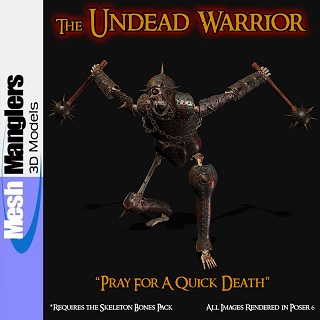
First, the Dar al-Murabiteen cover design betrays an awareness of the pop-cultural ubiquity of the undead meme – whether it’s applied in books, games or films, to vampires or zombies… as exemplified here:

undead-warrior-model.jpg

Second, the shift from a classic Islamic to a pop cultural title is accompanied by a shift from a local to a lunar graphic background and from a contemporary armored vehicle silhouette to a silhouette of a mythic horseman-warrior…

The Dar al-Murabiteen effort is thus both more contemporary and more archaic — hip and contemporary to catch the attention of western youth, archaic and mythic to give resonance to the idea that the glorious past, the past of Saladdin, the past of Ali, is lived again in present reality.

That’s master narrative in the form of imagery.

The Year of Living Memory

Wednesday, April 6th, 2011

[ by Charles Cameron ]

*

Some people’s — and more to the point, some peoples’ — living memory appears to be longer than others. China, for instance, has what you might call long term living memory.

*

But first, the Crusades. When Bush 43 first used the word “crusade” in reference to the US response to 9/11, I went to Google and checked, and the first listing for “crusade against” that came up was to The Crusade Against Dental Amalgam. I’m the suspicious type, and as I suspected, the word “crusade” simply doesn’t have the same valence for most twenty-first century Americans that it has for many in the twenty-first century Arab world. In the US, a crusade is a concerted effort to change just about anything, the use of mercury in dental fillings being just one example.

Across the Arab world, however, the word has very different connotations: thus Amin Maalouf writes in The Crusades through Arab Eyes:

The Turk Mehmet Ali Agca, who tried to shoot the pope on 13 May 1981, had expressed himself in a letter in these terms: I have decided to kill John Paul II, supreme commander of the Crusades. Beyond this individual act, it seems clear that the Arab East still sees the West as a natural enemy. Against that enemy, any hostile action — be it political, military, or based on oil — is considered no more than legitimate vengeance. And there can be no doubt that the schism between the two worlds dates from the Crusades, deeply felt by the Arabs, even today, as an act of rape.

That’s long term living memory for you.

*

I’m writing this because I just read a fascinating article by Robert Barnett on the New York Review of Books blog titled The Dalai Lama’s ‘Deception’: Why a Seventeenth-Century Decree Matters to Beijing — need I say more?

The title will suffice for those who don’t have much time today — I understand, we’re all under the fire-hose one way or another — while those with the ability to sneak in ten or fifteen minutes laterally while the clock’s not watching can and should definitely read the whole thing…

*

I have just one side-observation though — the article tells us, among many other things directly relating to Tibet and the history of the Dalai Lamas:

And again, when Jiang Zemin made a brutal decision to annihilate the basically harmless Falungong cult in 1999, it is believed that he saw it as analogous to the religious movement that had started the Taiping Rebellion and nearly toppled the Qing in the mid-19th century.

I think that’s right — but what Barnett doesn’t mention, since Taiping is only an aside for him, is that the rebellion was only eventually quelled at the cost of between twenty and thirty million lives…

I mentioned my own hunch that memories of Taiping were behind the Chinese government’s fierce response to Falun Gong in question time after Ali A Allawi‘s talk on Mahdist movements in Iraq at the Jamestown Foundation a few years back, and he responded that similarly, the reason the Iraqi government took such fierce action against a small Mahdist uprising near Najaf — even calling in US air support as I recall, for an incident perhaps best compared in US terms with Waco — was that they remembered the Babi movement in their own neck of the woods, and the tens of thousands who died back in the 1850s, around the same time as the Taiping in China.

*

Living memory — which could almost be a definition of history, or at least of what historical research aims to create — can itself be long term or short, perishable or perennial.

And then there’s Psalm 90, which declares “For a thousand years in thy sight are but as yesterday when it is past, and as a watch in the night.”

Now (and I’m being playful here, albeit with a touch of serious intent) does that suggest a Memory that reaches back in perfect detail through the eons to the Big Bang and perhaps before it? Or … “twentieth century? nineteenth? the Crusades?.. it’s all a bit of a blur, I’m afraid — it all rushes by so fast…”

*

There seems to be a choice set before us as individuals — and more to the point, as peoples:

Shall we choose Lethe, and the restfulness of oblivion, or Mnemosyne — the mother of all Muses? There are, you know, immediate educational implications, and serious geopolitical implications down the road, for the choice we make…


Switch to our mobile site