zenpundit.com » disinformation

Archive for the ‘disinformation’ Category

The al-Masri Dialogue

Tuesday, February 9th, 2010

Charles Cameron, in his latest guest post here, penned a beautiful essay regarding the ongoing exchanges between Australian counter-terrorism scholar Leah Farrall and Abu Walid al-Masri, an adviser to the Taliban and an experienced strategist of Islamist insurgency. Farrall has translated and posted this dialogue on her blog, All Things Counter Terrorism, which has received much attention, commentary and criticism in the blogosphere and on private listservs and quasi-official bulletin boards.

Generally, I leave this sort of subject to Charles, since he has the academic expertise to drill down to a granular level of Islamic theology and Islamist ideology, but al-Masri is an intriguing figure and his public conversation with Farrall is a novelty worth investigating. It would be hard to imagine during the Cold War, an open media debate between a Western CI official and a Soviet spymaster still engaged in espionage in the field ( Kim Philby hurled public jermiads it is true, but that was in retirement in Moscow and only after his long-suffering KGB handlers had managed to get his severe alcoholism under control). In that spirit, I want to offer a few observations.

While there is artifice present, as al-Masri is consciously speaking to a multiplicity of audiences in his remarks, the idea that we should therefore dismiss the dialogue with Farrall, as some suggest, is an error. There is also posturing in purely intra-Islamist-debates on which we eavesdrop and, frankly, within our own arguments inside government and out. We learn from what people do and do not do, from what they say and what is left unsaid. Being able to speak to multiple audiences is a constraint, as well as an advantage, as it shapes the parameters of the premises to be employed and the extent to which the underlying logic can be permissably extrapolated. To quote a Zen saying, if you wish to fence in a bull, give him a large meadow. 

The constraints, if correctly discerned, are illuminating and are analytically useful in constructing our own tactical responses and message strategy (assuming someone can convince the State Department bureaucracy that IO and public diplomacy are important and persuade Congressional leaders to fund such activities with more than pocket change). They are also useful in helping to understand the worldview and governing paradigms of our opponents in more complex and nuanced manner than reflexively saying “they hate our freedoms”. Well, many jihadi types do in fact, viscerally hate our freedoms or deny that democracy is a legitimate form of government in an abstract sense, much the same way they casually disparage Hindus as “cow worshippers” or Thais as “crazy Buddhists”; however those loose attitudes and spasms of hostility are not akin to operational principles or strategic doctrines.

For that, we have to dig deeper into the politico-religious motivations of violent Islamists and listen closely to what our enemies are saying – particularly when they are making an effort to speak to us directly, as al-Masri is doing, his determination to score propaganda points in his little elicitation dance with Farrall notwithstanding. Americans are not very good at listening and our elites are deeply uncomfortable with the entire subject of religion, tending to view pious expressions of Christianity with contempt and Islam as a completely taboo subject. There is a strong preference in government and academia for analytical models of terrorism or insurgency that dwell on DIME spectrum variables because these fit in the personal comfort zones and the educational, social and professional experiences of the American elite. This would be a perfect approach if al Qaida’s leadership were composed of Ivy League alumni and Fortune 500 CEOs.

Economics and military force are always factors in geopolitical conflict, the war of terror included, but until Islamist extremists oblige us by becoming secular Marxist revolutionaries waving little red books, it would behoove us to look with greater scrutiny at the curiously reified religious ideology with which they justify or eschew courses of action to themselves. Our own strategies might be more focused and effective if the operators across our intelligence, military, diplomatic and law enforcement agencies had something approaching a shared understanding of violent Islamism and if they could communicate this understanding along with the benefit of their experience and current intelligence to help political leaders shape American policy.

Information Operations Uber-Post

Wednesday, August 6th, 2008

Matt Armstrong has a must-read analytical, IO piece up at CTLab Review:

New Media and Persuasion, Mobilization, and Facilitation

…New Media is more than 24/7 news cycles. It is the ability to create trusted peer relationships, or the appearance of, to create legitimacy of information as well as depth and breadth of acceptance. This can be done as traditional media or other new media outlets pick up on a bit of “news” for redistribution, giving the impression of validity as the sources go up from one to many, often in excess of the three needed to create a “fact.” It is easier to see you’re not alone in the New Media environment, something that was not possible with radios and film (unless you risked gathering as a group).

There are several defining characteristics of the new media environment. The obvious are hyperconnectivity, persistence of information, inexpensive reach, and dislocation with speaker and listener virtually close but geographically distant. New Media also democraticizes information in the sense that hierarchies are bypassed, permitting both direct access to policy and decision makers and the possibility of “15-minutes of fame” (if even only one minute or less) to everyone. Information can be created and consumed by everyone regardless of “eliteness,” CV, and at minimal cost to any party.

All true and well said. Matt however points to a seldom recognized but critical variable here:

To the insurgent and terrorist, New Media’s capacity to amplify and increase the velocity of an issue that is critical. They increasingly rely on the Internet’s ability to share multiple kinds of media quickly and persistently to permit retrieval across time zones around the world from computers or cell phones. The value is the ability to not just persuade an audience to support their action, but to mobilize their support and to facilitate their will to act on behalf of the group (or not to act on behalf of another group, such as the counterinsurgent).

Velocity is very important in many senses. An accelerating message tempo heightens the sense of crisis in the mind of the audience so long as it does not move so quickly as to slide into unfiltered “noise”. Control of velocity also permits the exploitation of “information lag” in slower moving hierarchies or audiences. Finally, this velocity is really “alinear”; the ability of new media tools to “mash-up” entirely unrelated events separated by time, distance and circumstance and synthesize them out of context permits the scoring of tactical propaganda victories.

Read all of Matt’s post here.

A Call For Radical Transparency in Politics

Sunday, April 20th, 2008

My friend Bruce Kesler, who keeps a sharper eye on the fine details of American politics than I do, is dead square right in a recent post at Democracy Project that I reproduce here in full:

Hidden Foreign Contributions Affect US Elections

US election law forbids non-Americans to contribute directly to federal candidates, and qualified donations above $200 are available to public scrutiny. There is a huge loophole – or, more correctly, shroud – over contributions by foreigners to US non-profits, who heavily shape public discussion affecting our elections – and other policies. (There’s, also, some indication that the $200 cut-off for full disclosure of contributions to our campaigns may be another loophole being exploited by some foreigners.)

IRS Form 990 generally requires that non-profits list contributors and their addresses who give $5000 or more. However, non-profits are not required to publicly divulge who they are (with the exception of private foundations and 527’s).

Non-profits include 501(c)(4)’s, which are estimated to spend in 2008 well more than the $424-million that 527’s spent to influence the 2004 elections.

Another area of concern is donations made by foreigners to our universities. Although New York State requires that such contributions be revealed, there is no enforcement and filings are often not made.

In Britain, it is estimated, more funding comes from the MidEast for Islamic Studies departments than from the government.

Ministers labelled Islamic studies a “strategic subject” and said the “effective and accurate teaching” of it in universities could help community cohesion and counter extremism.

Similar concerns have been raised in the US about the influence of MidEast contributors on our universities’ curriculums, and the faculty who influence public discussion. See here and here, for examples.

Former presidents Carter and Clinton have received tens of millions in donations, and more, from foreign sources for their foundations, yet the public knows very little about from whom or how much. Meanwhile, Carter and Clinton take frequent public stands on public policy and candidates for office.

A draft has been released of a revised IRS Form 990. It increases exposure on governance issues, but retains the shroud over contributors to non-profits. At the very least, foreign contributors should be revealed publicly, at least for amounts over the $200 of election laws.

You can send your comments to the IRS during the comment period. It’s as simple as an email to Form990Revision@irs.gov

Bravo to Bruce for highlighting this important but generally unrecognized problem. 

One of the ironies of Beltway incumbent preferred campaign finance regulation like the odious McCain-Feingold law is that it manages to combine restrictions of the political activities and free speech rights of American citizens while granting opacity to wealthy foreigners who seek to influence political discourse here through generous donations to foundations, educational organizations, think tanks, universities, presidential libraries and other institutions that shape our intellectual life. It is completely understandable, given the potential impact of American policies on the rest of the world that other states and their sundry notables would seek to make their voice heard here. To a certain extent, when it’s above board public diplomacy and cultural exchanges, it’s even a good thing. What’s unacceptable is that foreign interests can often buy such influence – which is what they are really doing – under the radar or even behind the shield of legal secrecy. If some of our finest universities were people then they would have already had to register as foreign agents a long, long, loooooooong, time ago.

The same might be said of some former presidents. Or of presidential candidates.

The answer here is not to go on a fruitless legal jihad to ban foreign money, which at times does get turned toward humanitarian or genuinely educational purposes but to require radical transparency of our think tanks, universities, charities and other institutions enjoying tax deductible status but are dedicated to indirectly influencing the political process or policy formation. If an American institution or scholar wants to shill for the Wahabbi Lobby by working for a tank on the take from a senior Saudi prince, or accept grants from PLA-affiliated Chinese corporations, Japanese billionaires, mobbed-up  Russian “businessmen” or other foreign sources, fine, but a highly visible disclaimer to that fact ought to be mandatory. If Carnegie or AEI or Harvard departments are advising presidential candidates on Mideast policy then contributions emanating from that region are relevant to the discussion.

If accepting the check in public is cause for dismay then there’s a word for what’s really going on:

Graft.

On Synchronicity and Other Variables

Saturday, March 15th, 2008

Blogfriend Matt Armstrong was recently featured at the USC Center for Public Diplomacy where he had a very thorough and well-considered op-ed on Information Operations and New Media. Pretty much everything Matt had to say were things the USG should be doing in attempting to craft some kind of coherent narrative of it’s national objectives, policies and values:

SYNCHRONIZING INFORMATION: THE IMPORTANCE OF NEW MEDIA IN CONFLICT

Insurgents and terrorists increasingly leverage New Media to shape perceptions around the globe to be attractive to some and intimidating to others. New Media collapses traditional concepts of time and space as information moves around the world in an instant. Unlike traditional media, search engines and the web in general, enable information, factual or not, to be quickly and easily accessed long after it was created.The result is a shift in the purpose of physical engagement to increasingly incorporate the information effect of words and deeds. Thus, the purpose of improvised explosive devices, for example, is not to kill or maim Americans but to replay images of David sticking it to Goliath.

The U.S. military is actively and aggressively revising its role in shaping its own narrative in cyberspace, but this is falling short. While the U.S. is finally coming to grips with the centrality of information and perceptions, it remains confused as to how to use information effectively. American responses seem to stem from the belief that the message and the messenger we are countering are the same without regard for the target audience, intent, or how the message fits into a larger narrative, which perhaps mirrors our own perception of information as propaganda. ….A famous dead Prussian once said that war is a continuation of politics by other means, but the reality today is that war is not part of political intercourse with foes but an orchestrated, if loosely, effort to gain strategic influence over friends, foes, and neutrals. YouTube, blogs, SMS and traditional media, make every GI Joe and Jihadi a communicator, public diplomat, and persuader. Our adversaries understand and exploit this reality. Writing to Abu Musab al-Zarqawi in 2005, Ayman al-Zawahiri stated that “we are in a battle, and that more than half of this battle is taking place in the battlefield of the media [sic].”The U.S. military as reluctant heir to the information throne in an online world has several inherent challenges. First, operating in the environment of New Media requires awareness and agility inconsistent with the current organizational culture of the military. For example, in Iraq the military broke through the bureaucratic red-tape and started posting videos on YouTube. However, this small “victory” was incomplete: the group that uploaded to YouTube was still not permitted to view YouTube. In effect, they were posting information they were not authorized to see.”

Those quotes were snippets. Matt’s post is rich in detail and really requires being read in full.

I have tilted at the IO windmill a few times in the past. It’s a subject that is both easy as wel as difficult to analyze. Easy, because the USG has yet to initiate and/or master the fundamentals of good IO as Matt’s post makes clear ( there are genuine IO experts in the USG, perhaps even a large number of them, but the bureaucracies are not institutionally optimized to conduct IO with consistency or coordination) but difficult because the level of genuine sophistication and effective nuance in strategic communication remains so far off. Even if that level of “play” was achieved by our civil service and soldiers, any  IO campaign could be undone in an instant by some clumsy action or statement from a political appointee or elected official concerned primarily with fellating some domestic special interest group. 

Matt’s focus on “synchronicity” is apt. It will be a herculean task needing laser beam focus to get all of the USG players on the same message most of the time; even then some dissension and debate being showcased is itself a vital advertisement of the attractive nature of a liberal, open society and a sharp contrast with the dismally intolerant and brutally ignorant alternative our Islamist enemies have to offer. In pursuing that, I’d like to offer a few suggestions:

Credibility is the COIN of the Realm:

Matt touched on this but I want to give this principle added weight. For all our official, overt, communication by any spokesman representing the United States, the best long term strategy is a reputation of credibility. It may hurt to concede errors or enemy successes in the short run but having the global audience grdugingly concede that “the Americans speak the truth” adds momentum of every word, every idea and every action we undertake. It will not bring us love because oftentimes, our pursuing national interests will come at the expense of others but truth-telling will yield something more valuable, respect. No one cares to be treated as if they were a fool and most of the transparently self-serving gibberish official spokesmen offer up pays dividends only in contempt being added to the anger foreigners already feel at some of our policies.  Credibility is to the war of ideas what COIN is to guerilla warfare and it is a valuable and exceedingly rare quality because once your credibility is lost, it is lost.

Without Attention Being Paid All Our efforts Are Useless:

Credibility is not enough. Key messages or memes also have to be interesting. If people are not psychologically engaged in the presentation then they are not hearing it, much less reaching the points of comprehension, sympathy or agreement. American popular culture and commercial advertising is nothing short of an unrelenting global juggernaut that is eroding traditional mores of every society with which it comes into contact, yet our official proclamations remain starkly uninteresting even to most Americans so why should a Yemeni teen-ager or Afghan farmer tune in to what we are selling ? As long as our attempts at capturing attention remain at the level of dull mediocrity we can expect to fail.

Influence is a Long Term Investment:

The 1980’s saw a march toward capitalism and democracy in part because we were reaping the harvest of decades of student visas, cultural and scientific exchanges and consistent public diplomacy outreach. From Mongolia to Czechoslovakia Chile there were reformers taking power who were ” Chicago Boys” who had imbibed free markets at the feet of Nobel laureates. The National Endowment for Democracy, the USIA, VOA, Radio Free Europe and NGO’s like the AFL-CIO whose efforts and programs abroad were robust and self-confident. American society was permitted by the USG to sell itself. These things cost pennies on the dollar compared to having to  use hard power options and they lower our transaction costs when sanctions or military intervention is the order of the day.

Deception is Best Left to the Clandestine Operators :

HUMINT based strategic influence efforts, black propaganda and disinformation and various arts of deception will be better left to covert programs, plausibly deniable third parties and used sparingly and with subtlety. The increasingly “radically transparent” world ensures that too many sophisticated eyes with all sorts of agendas will be analyzing our official spokesmen 24/7. The best will can hope to accomplish is effectively framing our public message to be truthful and compelling. Any meme that is verifiably false, if we believe we must put it out into the global media environment, cannot have a return address.

IO is a secondary area of operations for the United States.  Good IO programs cannot remediate incompetent statecraft or poor military leadership or put a “happy face” on obvious disasters but poor or absent IO capabilities can fritter away the capital that successful diplomacy or military action can accrue when our enemies accusations go unanswered. 

Crossposted at Chicago Boyz

Monday, September 24th, 2007

ON WAR, COMPREHENSION AND PERSUASION


One end of the continuum: Ruth Benedict’s classic The Chrysanthemum and the Sword was a groundbreaking effort by the USG at attempting to understand the mass psychology of an enemy in wartime.

There must be something in the water lately as I have been getting an upsurge of inquiries and public comments regarding information operations, public diplomacy, “soft power” agents of influence, 5GW and similar matters. There are other blogs I can recommend as being better on this score – Beacon, MountainRunner, Kent’s Imperative, Swedish Meatballs Confidential and Whirledview to name but a few. Also, I would suggest that interested readers search the archives of Studies in Intelligence, PARAMETERS, The Strategic Studies Institute, Combined Arms Research Library and the threads at The Small Wars Council. Genuine expertise may be found there and for discussions of theory and emerging trends, I recommend Dreaming 5GW.

That being said, I will offer my two cents anyway.

One point of agreement across the political spectrum and that of informed opinion is that the USG has not done a particularly good job of managing “the war of ideas” in the conflict with Islamist terrorism. Or against state adversaries. Or with persuading neutrals and even our own allies to our point of view. When you are having difficulty drawing even in a global popularity contest with a crowd of bearded fanatics who put beheading videos on the internet, it’s time to admit there’s a problem.

Our difficulty did not start with the Bush administration, they simply ramped up a negative dynamic that began in the 1990’s with the budgetary dismantling of USG public diplomacy, information agencies and CIA clandestine operations, in order to “reinvent government” or to save “Peace Dividend” pennies for pork barrel expenditures. Official America’s withdrawal from the information playing field also happened to coincide with the rise of baby boom, New Left, ’68 er’s as the managing editors, producers and shapers of opinion in European media, as well is in places like South Korea, that had it’s own veteran cadres of dissenters against the ROK’s old military regimes.

Harboring relatively critical and anti-American views from the outset, this generational class interpreted clumsy, abrasive and at times deliberately antagonistic rhetoric from the second Bush administration through their own negative political lens. It was a particularly unfortunate combination as far as American interests in foreign policy were concerned. Nor has there been much interest or competence applied subsequently by Bush administration officials in order to make their ongoing global communication more effective.

Ironically, strategic communication was once a field in which Americans in the private and public sectors excelled. The First World War brought the management of news and propaganda through the Committee on Public Information under journalist George Creel, who had the help of two brilliant men who became giants in the field of influencing public opinion, Walter Lippmann and Edward Bernays. After WWI, Lippmann had a long career as an adviser to presidents and consensus-builder for the Eastern Establishment ( playing the role of America’s ur-Pundit) while Bernays virtually created the field of public relations, applying principles of mass and Freudian psychology to commercial advertising.
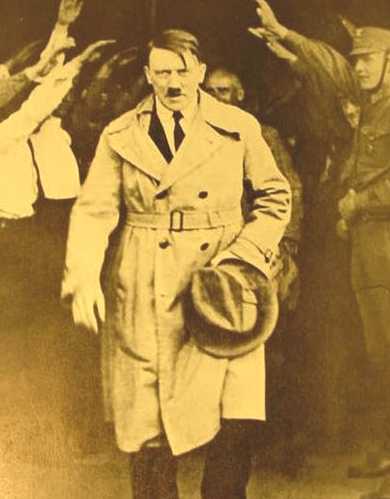

Psychoanalyst Walter C. Langer’s psychological profile of Nazi dictator Adolf Hitler, written for the OSS during WWII, represented a second major analytical departure for the USG.

Lippmann’s focus upon the elite and Bernays manipulation of the crowd represent two poles of communication with and comprehension of, an audience. In their case, the audience was primarily a domestic one while the exigencies of WWII and the Cold War forced American policymakers to look overseas and try to grasp the perspective of foreign worldviews boasting complex and alien ideologies of a militant character. Again, the dichotomy of examining elite leaders and the mass-society were followed in the respective landmark studies by Ruth Benedict and Walter C. Langer.

Benedict, a disciple of Franz Boas, carried out a cultural anthropological analysis of the Meiji-Taisho-Showa era Japanese mind, culminating in her book The Chrysanthemum and the Sword. Benedict characterized the Japanese people as “debtors to the ages” and explained the apparently suicidal fanaticism of the Imperial Army soldier as a psychological legacy of the “On-Giri” honor and debt social traditions of Japanese society. This technique of cultural analysis, which is also visible in Raphael’s Patai’s The Arab Mind, elevates deep-set cultural behavior patterns ( though it can also lead to distorting exaggerations and a misplaced attempt to apply aggregate stereotypes to explain individual behavior).

Langer and his team of psychoanalysts, likewise made their study from a distance and began the field of pychological profiling with their study of Adolf Hitler and other top Nazi leaders. While Benedict’s effort was explanatory, Langer’s was also intended to be predictive. In both instances, their work was available to high level policy makers for the making of strategy, propaganda and operations that were termed for the first time, “psychological warfare“. The integration of social science expertise into official and “black” USG communications and diplomacy would continue to evolve during the Cold War until the Vietnam War brought a serious break between the academic community and the CIA and Pentagon, that continues, for the most part, until this day.

While our political appointees, diplomats, CIA officers, military IO and PSYOPS specialists are getting a beating (often deserved) in the MSM and the blogosphere for the poor state of affairs in which they labor, fairness requires the observation that their task today is immeasurably more complex than that of their forerunners. This is a point that cannot at present time be overstressed. Set aside the deficit of trained linguists in “hard” languages, the paucity of firsthand HUMINT with which to work, the normal interagency obstructionism and bureaucratic warfare and the frustrations of out-of-touch management. Those are tactical and organizational difficulties which could be remediated.

Here are the daunting structural and strategic challenges faced in crafting a unified and persuasive “American message” in the war of ideas:

The cultural multiplicity of the global audience, which is/are:

– Tiered from real-time postmodern transnational elites down to pre-modern tribal villagers still relying upon an oral tradition who receive their information flow hours, days, weeks or later.

– Viewing events from worldviews based upon five or more major civilizational traditions and many times that number of major subnational or subcultural traditions .

– Often times the audience is locked into a feedback loop with relatively sophisticated and influential (or impoverished and alienated) expatriate communities in the West and United States.

A multiplicity of information platforms which are:

– Spreading access to information with increasing rates of economic efficiency in a way that leapfrogs people over Gutenberg and directly into the World Wide Web.

– Are evolving technologically both in terms of processing power and parameters of expression that defy linear trend predictions (there are really more usable app ideas than ever get fully developed for reasons of return on investment and IP issues).

– Are evolving at a speed beyond which bureaucratic acquisition and budgetary schedules can adjust in order to keep USG employees in line with the tech capabilities of the private sector.

A multiplicity of information messages in a net volume that:

– Creates sheer “Attention scarcity” problems in target audiences -usually elite – which have begun to operate psychologically under the dictates of the “attention economy“.

– Creates a deafeningWhite Noise” through which critical messages to the target audience can neither be seen nor heard nor reinforced with reliability or be perceived in the proportion or perspective desired.

– Ratchets up the Darwinian velocity of the marketplace of ideas to snuff out or mutate memes faster than IO planners can adjust while also trying to bring along the portion of the audience still processing at much slower rates of comprehension.

What is to be done? I fear that I have no silver bullet solution. Reader Dominic C. suggested yesterday in the comment section:

“On 4GW front, there is a constant debate about why “public diplomacy” and “information war” / propaganda is poor. Surely the basic reason is that there are very few top quality marketing professionals who understand psychology and the few who exist do not work for the govt/mil. To the extent they are involved in politics, they usually roll in for elections and roll out.


If I were in charge of a 4GW campaign, I wd integrate professionals like Cialdini in my comms structure. There is an abyss between (a) the subjects studied in traditional politics, history, military etc and (b) marketing, psychology, cog sci, evolutionary bio etc.

America plus allies needs a 21st Century version of Moltke’s Prussian General Staff that combines these two branches into a training system so that politicians and soldiers have inter-dsciplinary skills”

This seems quite sensible as a first step to gaining a strategic grasp over what is really an “information ecosystem as a battlespace”.


Switch to our mobile site