zenpundit.com » state terrorism

Archive for the ‘state terrorism’ Category

None Dare Call it a Rogue State

Wednesday, December 9th, 2009
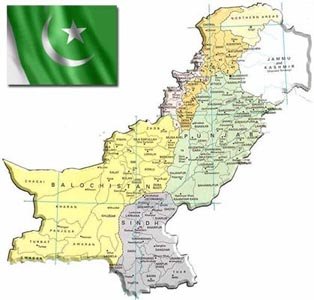
 

Reader Isaac, points to an excellent analytical overview of Pakistan’s national nervous breakdown at Dawn.com, by Nadeem F. Paracha. It is a lengthy but stupendous post with some 200 + comments:

Little monsters

There is nothing new anymore about the suggestion that over a span of about 30 odd years, the Pakistani military and its establishmentarian allies in the intelligence agencies, the politicised clergy, conservative political parties and the media have, in the name of Islam and patriotism, given birth to a number of unrestrained demons which have now become full-fledged monsters threatening the very core of the state and society in Pakistan.

A widespread consensus across various academic and intellectual circles (both within and outside Pakistan), now states that violent entities such as the Taliban and assorted Islamist organisations involved in scores of anti-state, sectarian and related violence in the country are the pitfalls of policies and propaganda undertaken by the Pakistani state and its various intelligence agencies to supposedly safeguard Pakistan’s ‘strategic interests’ in the region and more superficially, Pakistan’s own ideological interest.

….The 1980s and the so-called anti-Soviet Afghan jihad is colored with deep nostalgic strokes by the Islamists and the military in Pakistan. Forgetting that the Afghans would have remained being nothing more than a defeated group of rag-tag militants without the millions of dollars worth of aid and weapons that the Americans provided, and Zia could not have survived even the first MRD movement in 1981 had it not been due to the unflinching support that he received from America and Saudi Arabia, Pakistani intelligence agencies and its Afghan and Arab militant allies were convinced that it was them alone who toppled the Soviet Union.

The above belief began looking more and more like a grave delusion by the time the Afghan mujahideen factions went to war against one another in the early 1990s and Pakistan was engulfed with serious sectarian and ethnic strife. But the post-1971 narrative that had now started to seep into the press and in many people’s minds, desperately attempted to drown out conflicting points of views about the Afghan war by once again blaming the usual suspects: democracy, secularism and India.

Many years and follies later, and in the midst of unprecedented violence being perpetrated in the name of Islam, Pakistanis today stand more confused and flabbergasted than ever before.

The seeds of the ideological schizophrenia that the 1956 proclamation of Pakistan being an ‘Islamic Republic’ sowed, have now grown into a chaotic and bloody tree that only bares delusions and denials as fruit.

Read the rest here.

There has been an ocean of ink spilled about the Obama administration’s Hamlet-like deliberation over a war strategy for Afghanistan and on the implications of agreeing to 30,000 rather than the 40,000 new troops for the “Afghan Surge”, as Gen. McChrystal had originally requested. The 10,000 difference in boots is not the salient strategic point, though it is the one that excites political partisans on the Right, Left and anti-war Far Left. It also distracts us from debating our fundamental strategic challenge.

The horns of our dilemma is that our long time “ally” whom we have hitched ourselves to in a grand war effort against revolutionary Islamist terrorism is not our ally at all, but a co-belligerent with our enemy. By every policy measure that matters that causes the United States – justifiably in my view – to take a tough stance against North Korea and Iran, applies in spades to Islamabad. Yet none dare call Pakistan a rogue state.

It is the elephant in our strategy room – if the elephant was a rabid and schizophrenic trained mastodon, still willing to perform simple tricks for a neverending stream of treats, even as it eyes its trainer and audience with a murderous kind of hatred. That Pakistan’s deeply corrupt elite can be “rented” to defer their ambitions, or to work at cross-purposes with Pakistan’s perceived  “interests”, is not a game-changing event. Instead, it sustains and ramps up the dysfunctional dynamic we find ourselves swimming against.

We play a bizarre game, our leaders being more concerned about Pakistan’s “stability” than Pakistan’s own generals and politicians who egg on, fund and train the very militant Islamist groups spreading death and chaos inside Pakistan and beyond its borders. Why can we not find Osama bin Laden or Mullah Omar ? Because they are high value clients of the ISI which is no more likely to give them up than the KGB was to hand over Kim Philby.  

Until America’s bipartisan foreign policy elite grapple with the fact – and it is an easily verifiable, empirical, fact – that Pakistan’s government is in chronic pursuit of policies that destabilize Central Asia, menace all of Pakistan’s neighbors, generate legions of terrorists and risk nuclear war with India, no solutions will present themselves.

A strategy will only have a chance of success when it is grounded in reality.
Strategy, Dilemmas and Choices

Monday, November 2nd, 2009

Futurist Jamais Cascio on strategic forecasting:

Futures Thinking: Asking the Question

….”Asking the Question” is the first step in a formal futures thinking project. At first glance, it should be easy–after all, you should know what you’re trying to figure out. Unfortunately, while it may be simple to ask a question, asking the right question is much more challenging It’s easy to ask questions that are too vague, too narrow, or assume the answer; it’s much more difficult to ask a question that can elicit both surprises and useful results.

….It’s a subtle point, but I tend to find it useful to talk about strategic questions in terms of dilemmas, not problems. Problem implies solution–a fix that resolves the question. Dilemmas are more difficult, typically situations where there are no clearly preferable outcomes (or where each likely outcome carries with it some difficult contingent elements). Futures thinking is less useful when trying to come up with a clear single answer to a particular problem, but can be extremely helpful when trying to determine the best response to a dilemma. The difference is that the “best response” may vary depending upon still-unresolved circumstances; futures thinking helps to illuminate possible trigger points for making a decision.

Cascio’s framing of dilemmas is reminiscient of a discussion I had here a while back with Dave Schuler regarding “wicked problems” though dilemmas appear to be more generic a class of difficulties ( all dilemmas are not wicked problems but all wicked problems represent a dilemma). There is a lot of merit to the frame that Cascio is using and it points to the dysfunctionality present in top tier national security decision making.

Pakistan, for example, represents a serious dilemma for the United States.We need to begin, as Cascio suggests, by framing the right questions. A better question than “Is Pakistan an ally?” would be “Is Pakistan our enemy?”

Islamabad is a major state sponsor of terrorist groups, perhaps the largest on earth in that regard. It has a poor record – again one of the world’s worst – on nuclear nonproliferation and nuclear security issues. Pakistan’s civilian elite is amazingly corrupt and it’s thoroughly undemocratic senior officer corps of the Army only moderately less so. Pakistani public opinion borders on delusional with any issue tangentially connected to India and in the main, informed Pakistanis deeply resent it when their own policies of sponsoring terrorism cause other countries to become angry with Pakistan and take any kind of retaliatory action. It’s political system is polarized and unstable.

Yet while Pakistan is deeply hostile to America and cannot “be bought”, their deep corruption means that they can be “rented”. Pakistan is the major and irreplaceable conduit for supplies to US and NATO forces in Afghanistan and the Pakistani military will grudgingly cooperate in providing intelligence for drone attackson the militant terror groups that the ISI aids, directs and trains. Pakistan is ready to sacrifice many pawns but not any chesspiece of significance.

The American elite tend to speak of Pakistan as an “ally”, when the reality is that Pakistan is a sullen and coerced client, and to profess great concern about Pakistan’s “stability. This falsehood permits the illusion of “partnership” with Pakistan and makes it politically easier for the administration of the day to secure appropriations from the Congress for Afghanistan and Pakistan. Unfortunately, this facade creates a mental fog of unwarranted reassurance when clarity is most needed to assess our strategic choices and make any of them with decisiveness. A permanent preference for “muddling through” and crisis management has taken root.

Pakistan’s elite by contrast, tell visiting Secretaries of State how much they hate America and continue to endorse aiding the very violent Islamist groups that are eating away at the authority and legitmacy of the Pakistani state like a horde of termites. The elite regularly exercises its far smaller degree of national power with infinitely greater ruthlessness than its American counterparts, not appearing to care all that much about “stability”. The Pakistanis are willing to play hardball yet the USG shrinks from doing so.

Something does not compute here and that something is us.

ADDENDUM:

Tom Barnett views Karzai as an even worse strategic bet than dealing with Pakistan ( but also thinks our diplomatic play is hamfisted and obtuse), saying the Obama administration should “take advantage of this fiasco“.

Book Review: Engaging the Muslim World by Juan Cole

Wednesday, July 8th, 2009

Engaging the Muslim World by Juan Cole

I recently finished reading Engaging the Muslim World by Juan Cole, the influential academic, well known liberal-left blogger of Informed Comment, past president of the Middle East Studies Association and occasional media talking head. Cole has written an intriguing book on contemporary foreign policy that is of special interest to those readers concerned with public diplomacy, the Muslim world, terrorism and the domestic politics of American foreign policy, particularly the war in Iraq. I will state straight off that there are arguments in this book presented by Cole that I profoundly disagree with, or, national security related assertions that I consider questionable; but in other instances, when Cole is concentrating on the nuances of the Arab-Muslim world’s political-cultural lens, he is an illuminating and insightful analyst from whom I have learned new things. 

Engaging the Muslim World is…well….engaging. I found Cole’s prose flowed smoothly, as if the author was talking to the reader across a table, and I had a hard time putting the book down, albeit I was frequently scribbling furiously in the margins. This is a polemical -policy book written by an academic for a lay audience and the reader’s reaction to Engaging the Muslim World will depend in part on their own worldview. Liberals will cheer more than they disagree with Cole, while conservatives and supporters of Israel are likely to reject many of the book’s normative assumptions long before they read the conclusions – but Cole also offers some prescriptive advice that center-right COIN and public diplomacy advocates will warmly embrace.

The book  is divided into six chapters. The first, “The Struggle for Islamic Oil:The Truth About Energy Independence” which deals with energy markets, the Cold War history of the Mideast, global warming, environmental policy, alternative fuel technologies and globalization, is a necessary effort to concisely account for the geoeconomic importance of Muslim oil producing states and the future of fossil fuel economies.  Cole argues – correctly, I suspect – that there will be no short or medium term substitutes for oil and gas until solar power technology is cost-efficient enough (and efficient in a physics sense) to compete with fossil fuels in the marketplace. Not being a scientist or an expert in energy market issues, I am poorly placed by professional background to evaluate Cole’s claims in these areas and will leave those to others.

That said, chapter one remains the odd man out. It smacks of having been  compacted by an editor out of two or more chapters and consequently has disparate issues jumbled together with insufficient explanation; as a whole, chapter one fits uncomfortably with the subsequent chapters which flow together naturally and thematically. On the other hand, the topic of oil can hardly be dispensed with either in a geopolitical discussion of the Mideast, so Cole was right to tackle it and the primary problem is really one of sequence, not subject matter.

Chapters two through six are the heart of Engaging the Muslim World, where Juan Cole articulates a theme of “Islam anxiety” permeating Western, particularly American, media and public opinion. Poorly informed about even the most basic information regarding the Muslim world, such as the differences between Shia and Sunnis, secular Baathist nationalists and Islamist radicals, quietists and the politically militant, Arabs and non-Arabs, Cole asserts that Westerners tend to lump Muslims of all shades of political belief, religiousity and nationality into a homogenous, vaguely mysterious but ever dangerous entity. Cole cites as one example, Egypt’s Sunni Muslim Brotherhood, which has foresworn violence and has members who sit in Egypt’s legislature, being lumped uncritically by American commentators with al Qaida and Hezbollah (which is a radical Shiite group).

A better way to understand violent Islamist extremists in relation to normal Muslims, in Cole’s view, would be to see them as analogous to our homegrown, violent, far-Right, white racist underground that produced Timothy McVeigh, who carried out the Oklahoma City bombing or as cult-like movements. While smaller in size than Islamist radicalism, the racist Right shares with violent Islamists the trappings of a fringe, ostracized, quasi-religious, political cult with a conspiratorial worldview that diverges sharply from the nation’s mainstream religious life. Violent Islamists often make themeslves as unpopular with their co-religioinists as do neo-Nazi extremists here, through actions that horrify society, such as the bloody massacre of Western tourists and Egyptian workers at  Luxor, Egypt.

Cole’s analogy with cults and racial extremists I think is a useful one. Radical Islamists are difficult to classify on a traditional political spectrum as their political behavior has definite similarities with those of the fascist and communist totalitarians of the 20th century, but will not fit smoothly with either, given Islamist religious extremism and the fanatical atheism or at least radically secular nature of the Bolsheviks and Nazis. The psychological overlap however is certain, something akin to the 19th century Anarchist-terrorists or what Eric Hoffer captured in his classic work, The True Believer.

On Israel and Iran, Cole bends over backwards, like a circus sideshow contortionist, to try and explain the lunacy (and Cole admits it is, at best, a crackpot worldview) of Ahmadinejad’s violently antisemitic statements about the Holocaust and Iran’s generally defiant behavior toward the international community while giving Israel no similar benefit of the doubt.  Cole argues that Ahmadinejad’s oft-stated “wipe Israel off of the map” is a deliberate mistranslation by the Western media. Ok, possibly so. I do not speak Farsi, so I’ll take Cole’s word here. If it is the case though, Ahmadinejad is well aware of how his repeated statement is being mistranslated by Reuters and AP, yet he keeps using it. Again and again. That is an ominous statement in itself.

This uneveness regarding Iran and Israel will no doubt enrage conservatives and delight progressives, but in fairness to Juan, I must say that despite his partiality toward Iran in his book, as a blogger he was very quick to denounce the obvious stealing of the recent election by Khameini-Ahmadinejad-IRGC and my perception is that Cole views the apocalyptic Mahdist tendency in Twelver Shiism that Ahmadinejad embraces as a kooky deviation from mainstream Shiism. That not just Ahmadinejad holds this belief dear, but also many influential figures in the Iranian security apparatus as well, is in my view, a cause for alarm.

Despite his politics, Cole concludes Engaging the Muslim World with a very pragmatic prescription for American public diplomacy for engaging Arabs and Muslims in a more effective manner than in the past eight or eighteen or eighty years. If I do not agree with every aspect, it is a good deal better than what the State Department and the rest of the USG is doing now:

Once I saw an Iraqi tribal leader interviewed on al-Jazeera. He said. “There is good and bad in America”. I was struck by how pragmatic and realistic his response was, and how different it was from so much of the fundamentalist vigilantee propaganda about the United States posted on radical internet bulletin boards. If Washington could reach out to all Muslims and bring them around to a more nuanced -and clear-view, in which America was not simply demonized, it would be a major accomplishment. The point is not that they should see the West through rose colored glasses, but that they should be willing to see the good and bad.

That would represent a step up by an order of magnitude.

Escobar on the Hojjatiyeh behind Iran’s Pasdaran Clique

Friday, July 3rd, 2009

Pepe Escobar writing in the Asia Times had a very interesting article on Iran’s hardline faction, centered in the Pasdaran and security services, and the religious group behind them, the Hojjatiyeh, a term which I had not previously heard ( hat tip to Russ Wellen):

Requiem for a revolution 

An iron-clad cast
The key man to watch is Major General Mohammad-Ali Jafari. In 2006, he became the IRGC’s top commander. At the time he was already thinking in terms of the enemy within, not an external enemy. He was actively working on how to prevent a velvet revolution.
It’s essential to remember that only a few days before the election, Brigadier General Yadollah Javani – the IRGC’s political director – was already accusing Mousavi of starting a “green revolution”. He said the Guards “will suffocate it before it is even born”.The IRGC has always been about repression. They literally killed – or supported the killing of – all secular political groups in Iran during the 1980s, especially from the left. After the founder of the Islamic Republic, Ayatollah Ruhollah Khomeini, died in 1989 they split into two sides. One side thought Iran needed a (slight) opening; they were afraid of a popular counter-revolution. Today, they are mostly reformist leaders or reform sympathizers.

The other side was, and remains, ultra-conservative. They include the already mentioned Jafari and Javani, as well as Ahmadinejad and his current Minister of Interior, Sadegh Mahsouli, the man who oversaw the election.

The religious strand runs parallel and overlaps with the military strand – this is always about a military dictatorship of the mullahtariat. So one must refer to the Hojjatiyeh, an ultra-sectarian group founded in the 1950s. Khomeini banned them in 1983. But they were back in force during the 1990s. Their spiritual leader is Ayatollah Mesbah Yazdi, known as “the crocodile” in Iran. Two weeks before the elections, Yazdi issued a fatwa legitimizing any means necessary to keep Ahmadinejad in power.

That was the green light to steal the elections. It’s essential to remember that Ahmadinejad replaced no less than 10,000 key government bureaucrats with his cronies in these past four years. These people were in charge of the maze of official organizations involved in the election and the vote counting.

Ayatollah Mesbah Yazdi believes that Iran’s supreme leader is chosen by Allah – when Allah tells the 86 members of the Council of Experts to find the leader. That’s how Khamenei was “found” in 1989 – even though he was (and remains) a minor scholar, and never a marja (source of imitation). What Yazdi wants is an oukoumat islami – a hardline Islamic government sanctioned by none other than Allah.

An informative piece. Read the rest here.

Escobar is also the author of Globalistan: How the Globalized World is Dissolving Into Liquid War and Obama Does Globalistan, published by Nimble Books.

The U.S. is Not Going to Disengage from the Mideast

Tuesday, December 16th, 2008

Dave Schuler of the Glittering Eye is involved in a formal debate at Outside the Beltway with Dr. Bernard Finel over the role of the United States in the Mideast. Dr. Finel is arguing for a grand bug-out, or at least a serious reduction in “footprint” and “fingerprint”, and Dave is going to argue the negative.

Here is the introduction by Dave:

Pulling Out: Debating Middle East Disengagement (Intro)

One of my common patterns of thought is to frame any given proposition as a debate proposal, I did so in this specific context, and said as much in the comments to the post. Dr Finel was kind of enough to respond to my comment with enthusiasm, welcoming a debate with me on the subject.

Over the next week or so we’ll be debating the following proposition:

Resolved: that the United States should disengage from the Middle East

Dr. Finel will make the affirmative case; I will provide the negative.

Dr. Finel’s affirmative case will be posted in the next day or so; it will be followed by my cross-examination; I’ll state my negative case; Dr. Finel will cross-examine me; and so on.

Debating is a form seen only occasionally in the blogosphere and I think this is an exciting project. The longer format, extending over multiple posts, will enable us to explore the subject in more detail than is usually found in the hit-and-run blog post. It’s an important topic and, regardless of the immediate situations in Iraq and Afghanistan, is worthy of substantial reflection, rarely seen as a consequence of the poverty of our public discourse which is mainly limited to headlines, op-eds, and sound bites and is often enmeshed in partisan squabbling.

Dr. Finel, who is a senior fellow at the American Security Project, has opened with the following post:

Pulling Out: Debating Middle East Disengagement (Affirmative)

….The second issue is oil. The U.S. presence in the Middle East does serve to reduce some of the risks associated with the Western world’s reliances on Middle Eastern oil. It does not lower the cost necessarily, but it may reduce some potential for volatility in supply. But the cost of this risk mitigation is tremendous. We pay for lowering the supply risk with increased risk of terrorist attacks, greater hostility from the Arab population, and the costs of men and materiel associated with military commitments. Are there other ways to reduce those risks? Of course there are. They include investments in alternative energy, oil exporation at home, better fuel efficiency from cars. Certainly those are costly measures in the short-run, but so is deep involvement in a volatile region. In the long-run, the calculus is easy. Energy independence is a strategic imperative.

This excerpt shortchanges the breadth of Finel’s argument, which you should read in full here.

First, I’d like to commend both gentlemen for making use of the formal debate method. Construction of a reasoned argument in a civil debate is the blogosphere at it’s best. I intend to follow this debate as it evolves.

I know Dave to be a deeply thoughtful, well informed and even tempered commentator. I do not know Dr. Finel, though his c.v. seems impressive to me and he probably has a number of interesting things to say on terrorism policy. As a strategist however, he is not winning me over, though in terms of tactics, he accurately identifies many points of irritation that traditional U.S. policy has for the Arab World. The answer for that irritant is not amputation.

The thesis that regions of the world will move to a better state of polity with an absence of American presence or influence is not “counterintuitive” as Finel suggests – it’s a position lacking in real world evidence. The world’s absolute worst regimes have the least interaction with the United States or with globalization and movements like Islamism have intrinsic drivers, not simple Act-React mechanisms.

Alternate energy sources are a long term – a very long term – solution. In terms of technological application with immediate policy effect, it is the equivalent of Edward Teller’s vision of SDI in 1987. By all means, invest in alternative energy but even throwing $ 100 billion at the problem in fiscal year 2009 is not going to disconnect the United States, much less the West, from oil in 2010 or even 2020. Any reduction in our own oil consumption by the use of alternate energy sources in coming decades will more than be made up by rising Asian demand and the Gulf will increase, rather than decrease, in importance as a geopolitical “choke point”.


Switch to our mobile site

