zenpundit.com » Strategy and War

Archive for the ‘Strategy and War’ Category

Fouche on “Libeling Boyd”

Sunday, December 27th, 2009

Joseph Fouche blasts eminent scholar Dr. Colin S. Gray for doing to strategic theorist John Boyd what Gray’s fellow Clausewitzians complain that Martin van Creveld does to Carl von Clausewitz:

Libeling Boyd

Contrast this passage with two passages from Gray’s Another Bloody Century, published seven years later:

Air Force Colonel John Boyd touted a tactical insight derived from personal experience from aerial combat as a general theory  of conflict. His OODA loop, standing for Observation, Orientation, Decision, and Action, is revered by many as summarizing the wisdom of the ages on how to win. The core notion is that success rewards the warrior who can operate within the decision cycle of the enemy. It is a sound idea, but as the philosopher’s stone for victory for victory at all levels of warfare it is distinctly sub-Clausewitzian. A major problem with the OODA loop is that its devotees assume that a tactical insight, even principle, will be no less valid at the operational and strategic levels of warfare. It is fairly clear this is not the case.

…and…

As we noted earlier, Colonel John Boyd, USAF fighter pilot turned guru, applied his tactical knowledge of air combat to warfare at all levels  by means of his simple formula of the ‘OODA loop’. Unmatched speed in the sequence of observation, orientation, decision, and action is held to be the key to victory. This insight, banal statement of the obvious, or panacea-take your choice-is probably the most important concept undergirding the current US programme of long-term military transformation. The OODA loop is a formula for decisive success in a manoeuvering style of warfare. American technology, particularly in the realm of the real-time gathering, processing, and diffusion of information, enables US forces to act effectively with a speed that leaves their enemies gasping in their wake. At least, that is the theory.

This is like reading from Baby’s First Boyd Briefing and reflects a child’s understanding of Boyd’s theory. Dr. Gray, a distinguished strategist of the ultra-Clausewitzian school, often complains about the van Creveld School’s shallow (or, in my opinion, actively duplicitious) reading of Clausewitz. Keegan and van Crevald get taken out back for a well deserved whipping for their mis-characterization of Clausewitz and somehow John Boyd gets taken along in the same sordid ranks. Gray sees this:

Faster! FASTER!

Faster! FASTER!

and reduces Boyd to a child who runs along side a children’s carousel shouting “Faster! FASTER!”. If the carousel spins fast enough, victory is at hand. If it slows down, defeat is inevitable. This is the vulgar version of Boyd’s theory, the one that the marketing directors of defense contractors can understand and spout. If Dr. Gray is, as he frequently claims to be, a professional strategist, he should be able to see that Boyd’s OODA loop, inasmuch as it really is….

Much more here.

Outstanding post.

“Libeling Boyd” seems to me to be an accurate call by Joseph Fouche. I find it difficult to believe that a defense intellectual of Dr. Gray’s caliber does not know the difference between the ideas of John Boyd and Art Cebrowski. Or that there are Soviet antecedents of the Pentagon’s RMA. Or that Boyd’s history as an anti-defense contractor Pentagon gadfly is unknown to him. Or that Gray was too lazy to look up easily available material on the OODA Loop. If it would help, I’d be happy to send Gray a copy of Col. Frans Osinga’s Science, Strategy and War: The Strategic Theory of John Boyd .

Whether it would help though, is debatable.

Gaddis on Grand Strategy

Thursday, December 24th, 2009

Hat tip to Ian!

The Human Face of War

Tuesday, December 22nd, 2009

storr.jpg

The Human Face of War by Dr. Jim Storr

An important new book on military theory and history by British defense expert Dr. Jim Storr, a retired Lt. Colonel, King’s Regiment and an instructor at the UK Defence Academy, was reviewed in Joint Forces Quarterly ( hat tip Wilf Owen) by Col. Clinton J. Acker III:

The Human Face of War

….Surveying an array of disciplines including history, psychology, systems theory, complexity theory and philosophy, Storr (a former British officer) looks at what a theory of combat should include, then provides one. He goes on to apply that theory to the design of organizations, staffs, leadership, information management and the creation of cohesion in units. In doing so, he takes on many currently popular theories such as Effects-Based Operations, the observe-orient-decide-act loop, the use of postmodern theory and language.
….Storr’s position is best summed up with this passage:”Critically, military theory should not be a case of ‘this is the right course of action’ but rather ‘doing this will probably have beneficial outcome’

I have not read this book, as it is new and not yet released over here but I have to stop here and comment that the ability to make effective, reasonable, probablilistic estimates based on uncertain or incomplete information is perhaps one of the most important cognitive skills for strategic thinking. This applies whether we are discussing decision making in business, sports, warfare or games of strategy.

….After developing his precepts in the first three chapters, Storr uses the rest of the book to deal with the specifics about how to apply those precepts to “Tools and Models”, “Shock and Surprise”, “Tactics and Organizations”, “Commanding the Battle”, “The Soul of the Army” ( a fascinating discussion of leadership styles) and “Regulators and Ratcatchers”….The discussion in these chapters presents a superb treatise on the use of examples and counterexamples to support points of view. A single counterexample is not sufficient to falsify an argument, for there are no absolutes. Rather we are looking for patterns that appear better than others…”

Read the rest here.

Stocking Stuffers……

Saturday, December 12th, 2009

In a burst of raw self-interest – and also a little love for my blogfriends – these books make nifty gifts for any war nerd or deep thinker on your Christmas list:

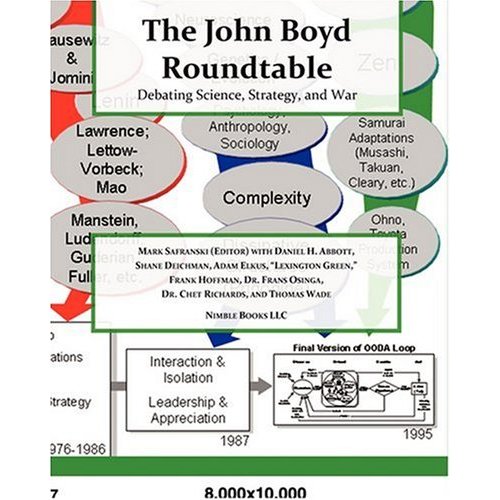
The John Boyd Roundtable: Debating Science, Strategy, and War – Mark Safranski (Ed.)


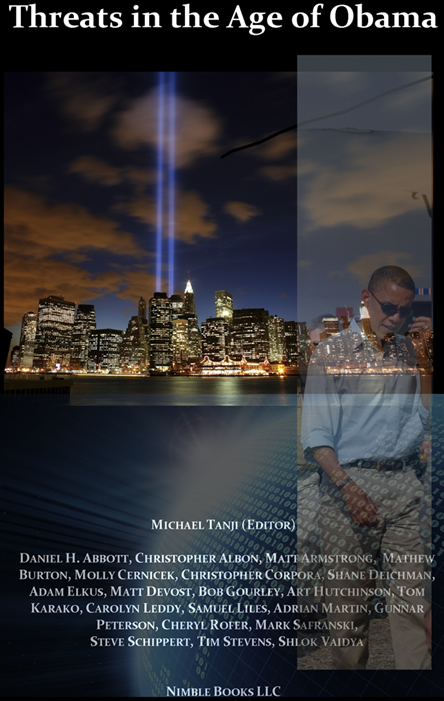
Threats in the Age of Obama – Michael Tanji (Ed.)

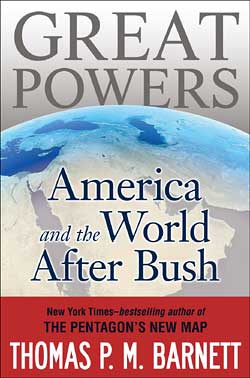
Great Powers: America and the World After Bush – Thomas P.M. Barnett

Brave New War: The Next Stage of Terrorism and the End of Globalization – John Robb

Science, Strategy and War: The Strategic Theory of John Boyd – Frans Osinga


The Genius of the Beast: A Radical Re-Vision of Capitalism  by Howard Bloom

Intelligence and How to Get It: Why Schools and Cultures Count  by Richard Nisbett

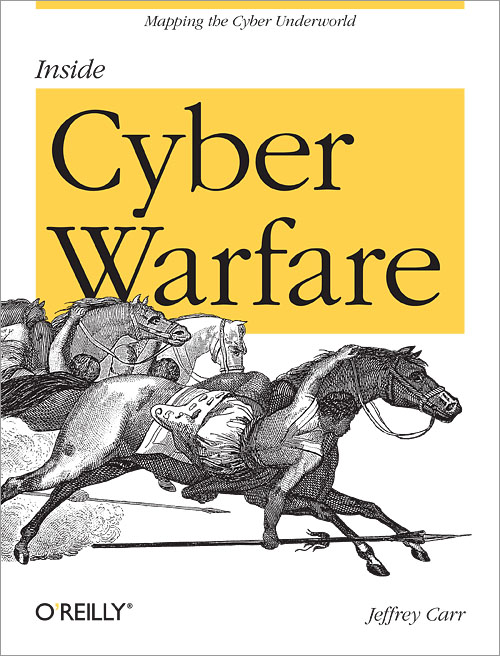
Inside Cyber Warfare: Mapping the Cyber Underworld  by Jeffrey Carr

This Is for the Mara Salvatrucha: Inside the MS-13, America’s Most Violent Gang  by Samuel Logan

Full Disclosure:

In copmpliance with new Federal regulations of dubious Constitutional merit, I hearby declare ZP does not accept money for publishing reviews or any paid advertising. Courtesy review copies were extended to me by authors or publishers acting on behalf of Sam Logan, Tom Barnett and Jeff Carr. I edited the first book in this post and was a contributing author to the second one. All of the books, with the exception of Cyber Warfare have been the subject of prior reviews or posts at ZP.

None Dare Call it a Rogue State

Wednesday, December 9th, 2009


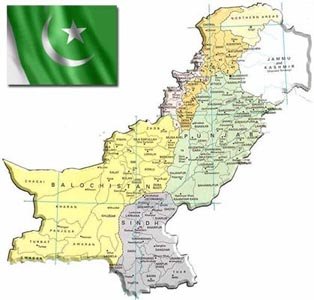
Reader Isaac, points to an excellent analytical overview of Pakistan’s national nervous breakdown at Dawn.com, by Nadeem F. Paracha. It is a lengthy but stupendous post with some 200 + comments:

Little monsters

There is nothing new anymore about the suggestion that over a span of about 30 odd years, the Pakistani military and its establishmentarian allies in the intelligence agencies, the politicised clergy, conservative political parties and the media have, in the name of Islam and patriotism, given birth to a number of unrestrained demons which have now become full-fledged monsters threatening the very core of the state and society in Pakistan.

A widespread consensus across various academic and intellectual circles (both within and outside Pakistan), now states that violent entities such as the Taliban and assorted Islamist organisations involved in scores of anti-state, sectarian and related violence in the country are the pitfalls of policies and propaganda undertaken by the Pakistani state and its various intelligence agencies to supposedly safeguard Pakistan’s ‘strategic interests’ in the region and more superficially, Pakistan’s own ideological interest.

….The 1980s and the so-called anti-Soviet Afghan jihad is colored with deep nostalgic strokes by the Islamists and the military in Pakistan. Forgetting that the Afghans would have remained being nothing more than a defeated group of rag-tag militants without the millions of dollars worth of aid and weapons that the Americans provided, and Zia could not have survived even the first MRD movement in 1981 had it not been due to the unflinching support that he received from America and Saudi Arabia, Pakistani intelligence agencies and its Afghan and Arab militant allies were convinced that it was them alone who toppled the Soviet Union.

The above belief began looking more and more like a grave delusion by the time the Afghan mujahideen factions went to war against one another in the early 1990s and Pakistan was engulfed with serious sectarian and ethnic strife. But the post-1971 narrative that had now started to seep into the press and in many people’s minds, desperately attempted to drown out conflicting points of views about the Afghan war by once again blaming the usual suspects: democracy, secularism and India.

Many years and follies later, and in the midst of unprecedented violence being perpetrated in the name of Islam, Pakistanis today stand more confused and flabbergasted than ever before.

The seeds of the ideological schizophrenia that the 1956 proclamation of Pakistan being an ‘Islamic Republic’ sowed, have now grown into a chaotic and bloody tree that only bares delusions and denials as fruit.

Read the rest here.

There has been an ocean of ink spilled about the Obama administration’s Hamlet-like deliberation over a war strategy for Afghanistan and on the implications of agreeing to 30,000 rather than the 40,000 new troops for the “Afghan Surge”, as Gen. McChrystal had originally requested. The 10,000 difference in boots is not the salient strategic point, though it is the one that excites political partisans on the Right, Left and anti-war Far Left. It also distracts us from debating our fundamental strategic challenge.

The horns of our dilemma is that our long time “ally” whom we have hitched ourselves to in a grand war effort against revolutionary Islamist terrorism is not our ally at all, but a co-belligerent with our enemy. By every policy measure that matters that causes the United States – justifiably in my view – to take a tough stance against North Korea and Iran, applies in spades to Islamabad. Yet none dare call Pakistan a rogue state.

It is the elephant in our strategy room – if the elephant was a rabid and schizophrenic trained mastodon, still willing to perform simple tricks for a neverending stream of treats, even as it eyes its trainer and audience with a murderous kind of hatred. That Pakistan’s deeply corrupt elite can be “rented” to defer their ambitions, or to work at cross-purposes with Pakistan’s perceived  “interests”, is not a game-changing event. Instead, it sustains and ramps up the dysfunctional dynamic we find ourselves swimming against.

We play a bizarre game, our leaders being more concerned about Pakistan’s “stability” than Pakistan’s own generals and politicians who egg on, fund and train the very militant Islamist groups spreading death and chaos inside Pakistan and beyond its borders. Why can we not find Osama bin Laden or Mullah Omar ? Because they are high value clients of the ISI which is no more likely to give them up than the KGB was to hand over Kim Philby.  

Until America’s bipartisan foreign policy elite grapple with the fact – and it is an easily verifiable, empirical, fact – that Pakistan’s government is in chronic pursuit of policies that destabilize Central Asia, menace all of Pakistan’s neighbors, generate legions of terrorists and risk nuclear war with India, no solutions will present themselves.

A strategy will only have a chance of success when it is grounded in reality.


Switch to our mobile site