zenpundit.com » ideas

Archive for the ‘ideas’ Category

The Russians are Not Coming….Nor are they Going Away

Monday, June 25th, 2012

Now that Vladimir Putin has resumed the Presidency of Russia, it merits looking at the defense discussion that appeared under his name in Rossiiskaya Gazeta. Virtually everyone agrees that the condition of the Russian Army is parlous and that Putin’s program of difficult military reform to transform the Russian military from a conscripted army to a modernized professional force has not borne fruit. Therefore it is interesting to look at how Putin’s regime articulates it’s defense challenges with a mixture of bravado and brutal strategic realism we would never hear from an American politician.

Excerpts of the article are in bold while my commentary is in normal text.

 Being Strong 

…..The world is changing, and the transformations underway could hide various risks, often unpredictable risks. In a world of economic and other upheaval, there is always the temptation to resolve one’s problems at another’s expense, through pressure and force. It is no surprise that some are calling for resources of global significance to be freed from the exclusive sovereignty of a single nation, and that this issue will soon be raised as a “matter-of-course.”

There will be no possibility of this, even a hypothetical one, with respect to Russia. In other words, we should not tempt anyone by allowing ourselves to be weak. 

While some of this is boilerplate, it does demonstrate Putin’s astute view of Western elite noises about “global governance” as an effort to erode historic Westphalian legal norms of sovereignty for a self-aggrandizing reasons.

I am including paragraphs here from different parts of the paper where President Putin deals with nuclear weapons, though the first one continues from where the last excerpt left off.:

It is for this reason that we will under no circumstances surrender our strategic deterrent capability, and indeed, will in fact strengthen it. It was this strength that enabled us to maintain our national sovereignty during the extremely difficult 1990s, when, lets’ be frank, we did not have anything else to argue with.

….I remember in 2002 when the Chief of the General Staff proposed liquidating a base for strategic ballistic missile submarines on the Kamchatka Peninsula. Understandably, this proposal was motivated by dire circumstances. This would have deprived Russia of its naval presence in the Pacific Ocean. I decided against this. Due to the lack of the required budgetary funding, we had to ask private companies for help. I would like to thank them for that. Both Surgutneftegaz and TNK stepped up to provide the required funding for the base’s initial reconstruction. Budgetary allocations were later disbursed. Today, we have a modern base in Vilyuchinsk where next-generation Borei class submarines will soon be deployed.

….We have greatly increased the capabilities of our early missile warning system. Tracking stations have been launched in the Leningrad and Kaliningrad Regions and in Armavir, and a similar facility is undergoing tests in Irkutsk. All aerospace defence brigades have been equipped with the Universal-1S automation systems, and the Glonass satellite group has been deployed.

The land, sea and air components of our Strategic Nuclear Forces are reliable and sufficient. The proportion of modern land-based missile systems has grown from 13% to 25% over the past four years. The rearmament of 10 missile regiments with the Topol-M and Yars strategic missile systems will be continued.  Long-range aviation will maintain the fleet of strategic Tu-160 and Tu-95MS bombers; work is underway to modernise them. They will be equipped with a new long-range cruise missile system. Russia’s strategic aviation resumed combat patrols in their zone of responsibility in 2007. A new aircraft is being designed for strategic long-range aviation.

New-generation Borei class strategic submarines are being put on combat duty. These include the Yury Dolgoruky and Alexander Nevsky which are undergoing state trials.

….In the coming decade, Russian armed forces will be provided with over 400 modern land and sea-based inter-continental ballistic missiles, 8 strategic ballistic missile submarines…. 

This does not sound  like Putin puts much stock in his predecessor’s endorsement of Global Zero or President Obama’s goal of eliminating nuclear weapons. Or that a drastic unilateral American cut in nuclear weapons proposed by Global Zero to “break the triad” contemplated by the Obama administration would be reciprocated by Russia. Or any other nuclear power state.

Given that Pakistan, India, North Korea, Israel and China are reportedly increasing and improving their nuclear arsenals, it begs the question of whether the Obama or the Putin administrations have the most realistic view about nuclear weapons and their currency in international relations. Or what the Obama administration would use as bargaining chips to negotiate reductions in foreign nuclear arsenals after making gratuitously slashing unilateral cuts. And if the paper was not clear enough, Putin was more blunt about the strategic situation two days ago:

“With regard to further steps in the sphere of nuclear weapons, these further steps should be of a complex character, and this time all the nuclear powers should be involved in this process. We cannot disarm indefinitely while some other nuclear powers are building up their arsenal. It is out of the question!” 

On the subject of Russia’s land forces:

….There are no undermanned units in the Russian armed forces any more. The Army has over 100 combined and special brigades. These are full-scale military units with the requisite personnel and equipment. Their alert reaction time is one hour and they can be deployed to a potential theatre of war within 24 hours.

In the past, it took up to five days to prepare for combat readiness. The deployment and equipment of all the armed forces to wartime conditions could take nearly a year, even though most armed conflicts now last from a few hours to several days.

Why have we chosen the brigade as the main tactical unit? First of all, we have relied on our own experience in the Afghan and other wars, where mobile combat and assault groups reinforced with air and other support units have proved  more efficient than regiments and divisions.

The new brigades are smaller than divisions in the number of personnel but have a bigger strike capability, better firepower and support, including artillery, air defence, reconnaissance, communications, and so on. Brigades can operate both autonomously and jointly with other units. I admit that the quality is not perfect in all instances. We need to achieve the required standards in the near future. 

A Russian Army brigade numbers slightly over 4000 soldiers (vs. 3000-5000 in American and NATO militaries) and moving to a brigade structure is intended to make the Russian Army more versatile, flexible, deployable and mobile. The US essentially did the same thing with the “modularity” reforms for a brigade team force structure. However, I find it dubious that the Russian version is anything other than an aspirational work in progress or that Russia today could muster a force remotely approaching 100 combat brigades on short notice or keep them in the field for more than thirty days.

The old Soviet Red Army in the 80’s at the peak of it’s power was a military long on officers and critically deficient in NCOs  and the 90’s cratered the main force quality of what remained of the Soviet armies. Russia will not have a deployable fighting army for anything other than brief Georgia type raids and SPETSNAZ operations until it builds a proportionate NCO corps and modernized logistical support system.

On future war and it’s strategic context:

….The probability of a global war between nuclear powers is not high, because that would mean the end of civilisation. As long as the “powder” of our strategic nuclear forces created by the tremendous efforts of our fathers and grandfathers remains dry, nobody will dare launch a large-scale aggression against us.

However, it should be borne in mind that technological progress in many varied areas, from new models of weaponry and military hardware to information and communications technology, has dramatically changed the nature of armed conflicts. Thus, as high-precision long-range conventional weapons become increasingly common, they will tend to become the means of achieving a decisive victory over an opponent, including in a global conflict.

The military capability of a country in space or information countermeasures, especially in cyberspace, will play a great, if not decisive, role in determining the nature of an armed conflict. In the more distant future, weapons systems based on new principles (beam, geophysical, wave, genetic, psychophysical and other technology) will be developed. All this will, in addition to nuclear weapons, provide entirely new instruments for achieving political and strategic goals. Such hi-tech weapons systems will be comparable in effect to nuclear weapons but will be more “acceptable” in terms of political and military ideology. In this sense, the strategic balance of nuclear forces will play a gradually diminishing role in deterring aggression and chaos.

We see ever new regional and local wars breaking out in the world. We continue to see new areas of instability and deliberately managed chaos. There also are purposeful attempts to provoke such conflicts even within the direct proximity of Russia’s and its allies’ borders.

The basic principles of international law are being degraded and eroded, especially in terms of international security. 

Here we see much of the same keen interest Western military experts have had in RMA/”transformation” but more as new domains in which to fight or weapons to fight with, but Putin’s assumptions about the roots of international conflict remain exceedingly traditional in Clausewitzian and Machiavellian realpolitik senses. There’s no idea here that war’s political nature is being transformed by technological advances or even that breakdowns in order in other nations flow primarily from indigenous social forces  than from strategic conspiracies and manipulations of foreign powers hell-bent on humiliating Russia.

This is a worldview of cynical realism salted with nationalism and a paranoia induced by the lessons of centuries of Russian history. International relations, it follows, hinge primarily on power in all it’s manifestations, a few rules that separate the law of nations from the law of the jungle and that states exert power to accomplish rational strategic objectives. Furthermore, in an echo of Tsarist Russia’s last modernizer, Petr Stolypin, what Putin has put forth as a political program for his domestic audience (sincere or not) is “a great Russia”.

The good news is that President Putin is, unlike his Soviet predecessors, is uninterested in grand ideological crusades that would destabilize the world order and that Russia currently would be incapable of carrying any out. The bad news is that Putin is a shrewd strategic thinker, one who views the US as a long-term adversary of Russia and one who is likely to be highly antagonized and partially misread (and thus miscalculate)  the tactical geopolitics of intervention pursued by America’s R2P moralizers.

From Putin’s perspective, we are currently crusaders rather than deal-cutters grounded in reality. America does not need to appease other power,s but we’d further our own interests faster if we spent a little time looking at the world through the eyes of others

Hat tip to Lexington Green

Fabius Maximus on Sumida on Clausewitz

Saturday, June 16th, 2012

Fabius Maximus has a nice round-up on an important book – Decoding Clausewitz by Jon Sumida  

Is Clausewitz Still Relevant? 

1)  Review from the Marine Corps Gazette

Decoding Clausewitz: A New Approach to On War
by Jon Tetsuro Sumida (2008)

Reviewed by J. Alex Vohr. Originally published in the Marine Corps Gazette, March 2009. Republished here with their generous permission.

Abstract

While primarily a naval historian, Dr. Sumidas decade-long foray into Clausewitz has resulted in a book uncovering issues significant to those whose professional interests involve either the formulation of our national military strategy or the professional education and development of military officers. Current prevailing wisdom holds that Clausewitz was concerned only with nation-state warfare, and modern military theorists like General Sir Rupert Smith, in his book, The Utility of Force (Vintage, 2008, reviewed in the August 2007 Gazette), have asserted that the Western world has seen the end of these types of conflicts. 

Professor Sumida is on my “to be read” list but I have not gotten to it yet. Readers who have are cordially invited to sound off in the comments.


The crackling energy of a Sembl move

Sunday, June 10th, 2012

[ by Charles Cameron — cross-posted from Sembl ]
.

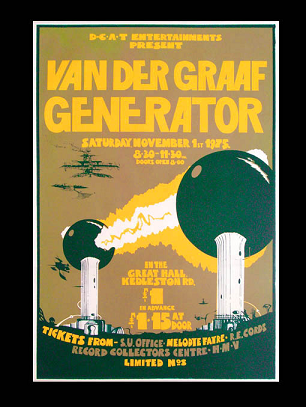
image credit The Movie Poster Art Gallery / http://www.rock-explosion.com/catpage2.html


.

1.

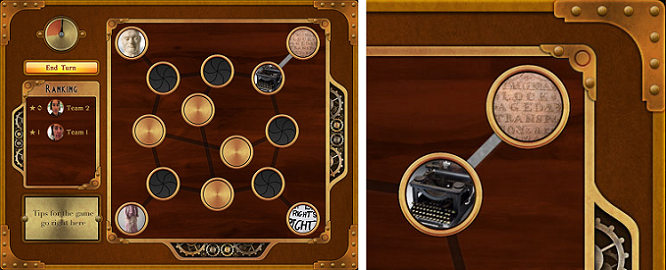
I’m always looking around for ways to describe the leap between two ideas (concepts, people, events, things) that occurs when you make a move in a Sembl game. On the game board, the ideas are shown as circles and the links as lines between them.

In the case of the museum version, the “ideas” are objects in the Museum’s collection – but the same principle applies whether we’re talking objects, concepts, events or people: entities of whatever type go in the circles, the lines between them signify the exploration of their resemblances and differences.
.

2.

Okay.

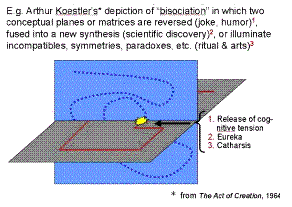
In more technical terms, Arthur Koestler in his classic book about the conceptual structure of creativity, The Act of Creation, diagrammed the intersection of two conceptual frames as representing the place where the joyous aha! of discovery, the gasped ah! of tragedy or the delightful ha! of laughter is generated, and this more recent version of his diagram gets the essence:


.

3.

But wait!

There’s a lot going on here, there’s a distinct leap – think: creative leap, even perhaps leap of faith.

It was the leap between two ideas – electricity and magnetism – that gave Faraday his dynamo, Maxwell his equations, and the modern world almost its whole existence. It was the leap between two ideas – modular forms and elliptic equations – that gave Taniyama his conjecture and Wiles his proof of Fermat‘s Last Theorem.

The leap that intuits similarities, particularly rich similarities between rich concepts in widely separated fields, is the most powerful tool of the thinking mind – and playing Sembl amounts to nothing more or less than a repeated, playful, delightful invitation to make leaps of exactly that kind.

So a Sembl leap of resemblance can be anything from training wheels for creativity to a prize-winning long-jump at the conceptual Olympics.
.

4.

Maria Popova at Brainpickings quotes Steve Jobs:

Creativity is just connecting things.

And she quotes James Webb Young, back in 1939:

Consequently the habit of mind which leads to a search for relationships between facts becomes of the highest importance in the production of ideas.

This isn’t some hidden secret, but it’s not exactly common knowledge either, it’s not something many schools teach — which is why the great anthropologist Gregory Bateson famously told his fellow Regents at the University of California:

Break the pattern which connects the items of learning and you necessarily destroy all quality.

Which is also why Eliot Eisner, Stanford professor and former President of the American Educational Research Association, said of Sembl’s precursor HipBone Games, “the cognitive processes you are interested in developing are critical to a decent education”.
.

5.

And just what does this have to do with Van der Graaf Generators, you might wonder?

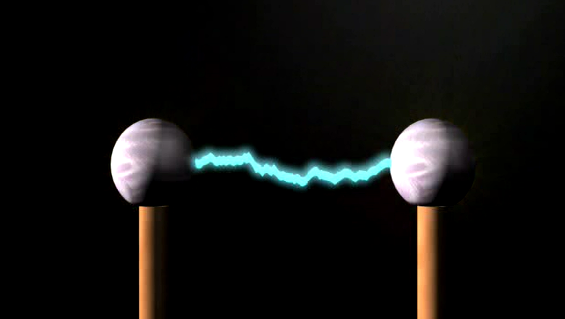
There’s a cracking sense of energy discharged when you connect two ideas in a Sembl game move – not unlike the discharge of energy between the spheres of two Van der Graaf Generators picture here:

Imagine the spheres as two ideas in place on a Sembl game board, and the electrical discharge as the excitement of seeing how they mesh together to create that ah!, aha! or ha!

Or watch the whole, ultra-short video from which that image was taken, courtesy of the folks at MIT:

Play as if your life depends on it

Sunday, June 10th, 2012

[ by Charles Cameron — from the Glass Bead Game via the HipBone Games to Sembl ]
.

.
.

Play most assiduously is how Edgar Wind translates the motto of Marsilio Ficino — the man who more or less single-handed, built the Florentine Renaissance: studiossime ludere. Play most studiously.

Play as if your life depends on it.

*

Hermann Hesse crowned his life-work with the great, boring, utterly riveting novel Das Glasperlenspiel, The Glass Bead Game, sometimes better known in the English-speaking world by the (Latin) title, Magister Ludi — which means both school-teacher and Master of the Game.

And game there is: the Glass Bead Game itself, or GBG for short.

The book centers around a game of ideas — a game in which the most profound conceptual systems of all human cultures are brought together in a grand architecture that Hesse calls “the hundred-gated cathedral of Mind”:

A Game, for example, might start from a given astronomical configuration, or from the actual theme of a Bach fugue, or from a sentence out of Leibniz or the Upanishads, and from this theme, depending on the intentions and talents of the player, it could either further explore and elaborate the initial motif or else enrich its expressiveness by allusions to kindred concepts.

Here Hesse mentions astronomical, musical and textual concepts — the game, like the digital world of the internet, allows mathematical, textual, musical and visual elements to be juxtaposed and combined, just as Sven Birkerts described in an interview with Cliff Becker:

There are tremendous opportunities, and we are probably on the brink of the birth of whole new genres of art which will work through electronic systems. These genres will likely be multi-media in ways we can’t imagine. Digitalization, the idea that the same string of digits can bring image, music, or text, is a huge revolution in and of itself. When artists begin to grasp the creative possibilities of works that are neither literary, visual, or musical, but exist using all three forms in a synthetic collage fashion, an enormous artistic boom will occur.

Birkerts was concerned that these “tremendous opportunities” might drown out “the old quiet pastime of reading mere words” — but Hesse’s great game is a contemplative one, in which Hesse proposes:

Every transition from major to minor in a sonata, every transformation of a myth or a religious cult, every classical or artistic formulation was, I realized in that flashing moment, if seen with a truly meditative mind, nothing but a direct route into the interior of the cosmic mystery, where in the alternation between inhaling and exhaling, between heaven and earth, between Yin and Yang, holiness is forever being created.

*

Play…

We play, we play games, we play music… we play wargames… all the world’s a stage, and we are (merely) players.

Consider: Play is what children do to learn, so brilliantly, language, languages, geography, mathematics, history, chess, go, music, politeness, discipline, excess, consequences, moderation… And play is what masters do to express their mastery — Picasso plays, Casals plays, Einstein plays… And the motto of Ficino, mentor to the Florentine Renaissance, is play most assiduously.

*

The Glass Bead Game is a game, then, to compare with the greatest of games — Chess, Go, name your poison — indeed, with the greatest of intellectual endeavors — the Encyclopédie, the gesamtkunstwerk, the long-sought Theory of Everything…

All the insights, noble thoughts, and works of art that the human race has produced in its creative eras, all that subsequent periods of scholarly study have reduced to concepts and converted into intellectual values the Glass Bead Game player plays like the organist on an organ. And this organ has attained an almost unimaginable perfection; its manuals and pedals range over the entire intellectual cosmos; its stops are almost beyond number. Theoretically this instrument is capable of reproducing in the Game the entire intellectual content of the universe.

How can taking that idea and making it playable not be a worthy challenge, in this world that is daily more absorbed in digital play in its arcades and cinemas, on its consoles, tablets, phones, and computers?

*

Just reading the book made me want to play the game, but I like to keep things simple. I needed to be able to play it with a pencil and paper napkin over a cup of coffee — or on an email list or in the online forums that were beginning to spring up while I was figuring out some early boards and rules. I took Hesse’s basic concept of juxtaposing ideas and applied it on simple graph-like boards, on which each circle represents an idea, and each line a resemblance. I called my playable variants the HipBone Games.

More recently, my friend and colleague Cath Styles has been working on the development of iPad and web-playable versions of the games. We call them Sembl, because they explore the resemblances between things, ideas — and at a deeper level, the patterning of the world itself.

But the game remains the same: to juxtapose one thing — an idea, an object, a work of art, song, person or event — with another, in a way that generates the aha! of creativity. And to do that repeatedly, weaving an architecture of related ideas, on our way to weaving Hesse’s cathedral of Mind.

Our world has never been in greater need of creativity and connectivity — our future depends on them — and in the Sembl game, every move you make is a further link in the pattern that connects, every move you make is a creative leap. More on that in my follow up post, The crackling energy of a Sembl move.

Book Review: The Snake Eaters by Owen West

Friday, June 8th, 2012

The Snake Eaters by Owen West 

Owen West, commodities trader, novelist and USMC Major in the Reserves has written a remarkable book in his war story of counterinsurgency in Khalidiya, a decaying rural town in the deadly Anbar province, heartland of Iraq’s Sunni insurgency. A success story for COIN, but also a very cautionary tale of the transformation of the Iraqi Brigade 3-1, from a dispirited, ill-equipped, poorly led unit distrusted and ignored by it’s American “partner” battalion and under siege by a hostile population into a self-confident, elite, combat force, “the Snake-Eaters”, feared by insurgents and respected by townspeople – and of their American advisors of Team Outcast who struggled to broker this transformation.

After reading The Snake-Eaters and reflecting, the book speaks to readers at different levels.

For the casual reader,  West has a narrative with no shortage of colorful characters – the inexperienced jundis, “Hater”, the grim Major Roberson, Colonel Troster, “Captain Bomb”, “Private Crazy”,  the treacherous police chief Shalal, the Superfriends, the beloved Doc Blakley, the indomitible Major Mohammed, Sheikh Abbas, the no-nonsense Huss, “Ogre” McCarthy, the Sadiqiya Sniper and some advisors who were “strange by any measure”.

The chronically undermanned, underesourced handful of  Team Outcast advisors in might resemble a Middle-eastern version of The Magnificent Seven, except that unlike Yul Brynner, Colonel Troster arrived in Khalidiya only to find Calvera and his bandits in control of the town, completely invisible and supported by a community that was implacably hostile:

….To protect a fellow Sunni was the duty of every Khalidiyan. Even if they didn’t love AQI, they were socially connected to and literally enriched by, the local insurgency. In the same way small Texas towns follow their football teams, everybody in Khalidiya knew an active resistance fighter and kept score. The Americans promised security but had brought a hurricane of damage. They passed through Khalidiya in their armored trucks like tourists on glass bottomed boats admiring exotic fish.

The Khalidiya sheikhs, a title loosely used in Anbar for any man with influence, implored the AQI fighters to remain cautious. If they paraded in their black balaclavas too prominently in town, mugging for pictures on al Jazeera, they would draw the attention of Marine headquarters in nearby Fallujah. It was best to inflict some casualties on each American unit that rotated through the area – enough to keep Americans on the defensive but not so many that the Marines would mass their forces and crush the city, as they had done to Fallujah in 2004.

The 3-1 of the New Iraqi Army in Khalidiya bore scant resemblance to a unit of the mighty, Soviet equipped, legions with which Saddam Hussein had daunted his neighbors, held off Iran for ten years of bloody combat or sacked and pillaged Kuwait. Or even the shadow version of Saddam’s Army, decimated by American arms  and hollowed out by a decade of UN sanctions after the Gulf War. West describes the Iraqi soldiers initially as a mendicant mob of ill-fed, untrained, Shia jundis without heavy arms, patrolling as seldom as possible, with beat-up Nissan junkers and a pray and spray shooting reaction to the frequent IED blasts that injured and killed them with regularity.

Like any underdog story, with much suffering and lessons learned counted in the lives of men, the American advisors bond with their Iraqi charges through a herculean effort at non-stop  patrolling of  Khalidiya’s bomb and sniper-ridden streets. Training Iraqis in aggressive tactics while learning Iraqi mores from them, the 3-1 evolves up into the Snake-Eaters, winning over the townspeople of Khalidiya and demoralizing, defeating and driving away the insurgents and gaining the respect of their American mentors. This is the level at which most readers will enjoy and be impressed with The Snake -Eaters.

A second level of reading will be for defense intellectuals, policy wonks, COIN and CT theorists, military historians and other academics. Despite West writing with tactful restraint, avoiding directly criticizing senior brass or national civilian leadership by name, The Snake-Eaters is, in it’s own way, an incredibly damning indictment by virtue of empirical observations of the conditions and restrictions under which Team Outcast labored, driving home the disconnect between leaders, indifferent bureaucrats or FOBbits and the men waging COIN on the ground.  Only in the last chapters, when West himself appears in the narrative, does the author permit himself something approaching real and embittered criticism of the Alice-in-Wonderland myopia that sometimes prevailed during the Iraq War:

“If he does this again, I will end his life! Dhafer threatened. “I will burn his house down!”

It was an empty threat. Every day in Iraq, troops encountered suspected insurgents who had previously been arrested. When I first joined the team, I had read Troster’s after-action report excoriating the “ridiculous evidentiary justice system” that “had no place in a wartime environment”. Most detainees were let go because their crimes could not be proved to the satisfaction of corrupt Iraqi judges, or to US military lawyers. We didn’t have prisoners of war in Iraq, only criminal suspects entitled to many of the same rights as in the States. Most detainees were set free within a few months. The advisors called it “catch and release”.

That’s an excellent of example of policy sabotaging strategy and undoing tactical success for transient to nonexistent political benefits for those in comfortable, clean offices far, far away from the crack of rifle fire and the cries of wounded men.

In his Epilogue, West is even more frank regarding counterinsurgency and respect for his efforts in Khalidiya and in the writing of this book require excerpting it here:

While writing this book over the past four years, I’ve tried to figure out how much influence an advisor team really has on it’s unit., and whether institutional expectations match those limitations. I have again read the field manuals taught in our Army and Marine schools where we train advisors. The manuals have an upbeat, culturally correct tone, suggesting that our soldiers and Marines will succeed as advisors based on their tact and sensitivity. The manuals need drastic revision: they are misleading a generation of advisors.

That the recent conference at Leavenworth on the COIN rewrite has been an insular affair may not bode well for the acceptance of critical, empirically-based, views of COIN being offered by Major West.

The final level of reading is one to which West alludes several times in the text, but one in which I cannot share, is that of the soldier or marine who was “outside the wire”. For those men, there is a poignancy in the stories of the figures portrayed in The Snake Eaters that goes beyond mere words, which West bluntly states comes with a sense of despair at the lack of comprehension in the civilian world. Perhaps these feelings of isolation are also shared by veterans of earlier wars, when they speak of Kasserine Pass, the Bulge,  Chosin or Khe Sanh; or perhaps not, as every war is horrible in it’s own way. But if we cannot understand these shades of grief and meaning that West indicates are harbored in our veterans, the rest of us can at least acknowledge them and respect it.

The Snake-Eaters is an important book that delivers a microcosm of the COIN war in Iraq, gritty and unromanticized, as experienced by jundis, marines, soldiers and Iraqis in sweltering and crumbling Khalidiya. It is a success story but it is where the phrase “winning ugly” comes to mind; dedication and valor, stubborness and cunning, pitted against dolorous bureaucracy and savage insurgency.

Strongly recommended.


Switch to our mobile site