zenpundit.com » 2015 » November

Archive for November, 2015

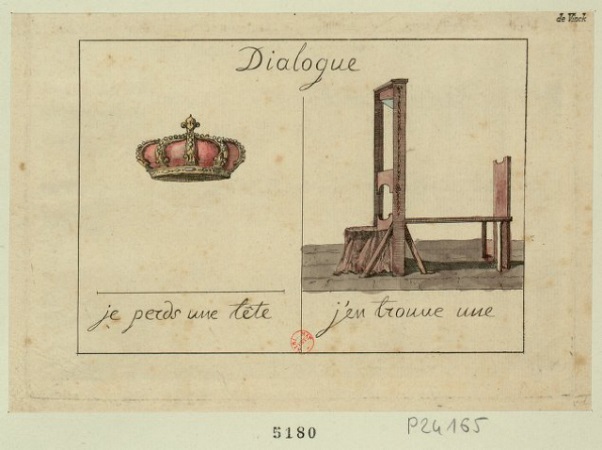
DoubleQuoting the French Revolution

Saturday, November 14th, 2015

[ by Charles Cameron — I was thinking of France yesterday, writing this in a happier mood before the evening’s news broke — up next, and tricky to write, a first response to the Paris outrage ]
.
frenchrevolutionarchive15

**

One of the great pleasures of my work on DoubleQuotes and the HipBone and Sembl Games is the discovery of earlier analogues to what I’m doing. My purpose, after all, is to take a common human cognitive practice and formalize it, thus sharpening it from a somewhat haphazard activity into a tool, a practice.

We have all had the thought, “and that reminds me” — it crops up without any special prompting whenever something happening in current time calls up the memory of something similar experienced in the past, and our store of memories is pretty significant. On that last point, the great American poet Robert Frost once said:

Scholars and artists thrown together are often annoyed at the puzzle of where they differ. Both work from knowledge? but I suspect they differ most importantly in the way their knowledge is come by. Scholars get theirs with conscientious thoroughness along projected lines of logic? poets theirs cavalierly and as it happens in and out of books. They stick to nothing deliberately, but let what will stick to them like burrs where they walk in the fields.

Thyat’s from Frost’s essay, The Figure A Poem Makes, and it’s fascinating to me how much of that essay seems to apply not just to poems but equally to DoubleQuotes, HipBone and Sembl. Frost continues:

Knowledge of the second kind is much more available in the wild free ways of wit and art. A schoolboy may be defined as one who can tell you what he knows in the order in which he learned it. The artist must value himself as he snatches a thing from some previous order in time and space into a new order with not so much as a ligature clinging to it of the old place where it was organic.

I’d remembered Frost’s remark about knowledge sticking to people “like burrs where they walk in the fields” because it’s the most concise statement I know that explains the extraordinary amount of knowledge, in the sense of available-if-required-memory, that each and every human, not just the university-credentialed kind, acquires across a lifetime — some people know gang colors, tats, and graffiti, or sexual hanky code as others know Herodotus and Ibn Khaldun, or the different colored scarves of the Oxford colleges.

I don’t believe that I’d read Frost’s whole essay before today, although I may have — but you can see how closely his artist who “snatches a thing from some previous order in time and space into a new order” corresponds with my basic cognitive motion of DoubleQuotes as described it above, when “something happening in current time calls up the memory of something similar experienced in the past” and its qualifying remark, “without any special prompting”!

GMTA, or just GTA — thought, or theft? Who knows.

**

One other quote from Frost’s essay amplifies the unexpected nature of a single HipBone or DoubleQuotes play:
move

For me the initial delight is in the surprise of remembering something I didn’t know I knew.

The passage continues, extending Frost’s description of the poem from a single initial linkage to the sort of web of linkages that characterize HipBone and Sembl games:

There is a glad recognition of the long lost and the rest follows. Step by step the wonder of unexpected supply keeps growing. The impressions most useful to my purpose seem always those I was unaware of and so made no note of at the time when taken, and the conclusion is come to that like giants we are always hurling experience ahead of us to pave the future with against the day when we may Want to strike a line of purpose across it for somewhere.

**

The natural response to the sequence from crown to guillotine at the head of this post is found in the motto “the king is dead; long live the king”. The sentiment is best known in French, as these two books attest:
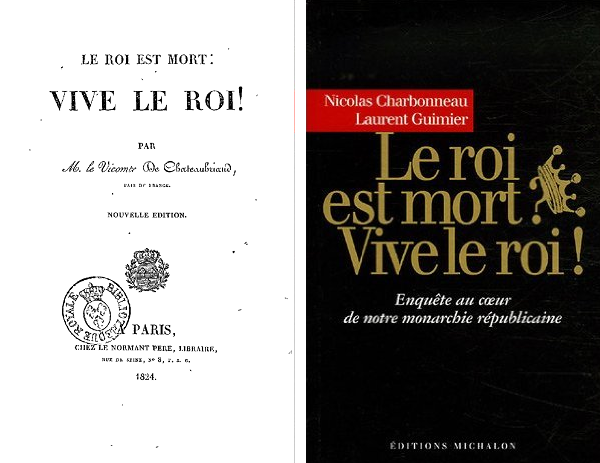
chateaubriand monardhie republicaine

The Vicomte Chateaubriand was a monarchist. Charbonneau and Guimier speak of a “republican monarchy” — “plus ça change, plus c’est la même chose”, perhaps?


It is more important to have equations in your beauty..

Tuesday, November 10th, 2015

[ by Charles Cameron — musings on PAM Dirac and Hedy Lamarr ]
.

PAM Dirac once famously said, “it is more important to have beauty in one’s equations that to have them fit experiment.” I was reminded of that quotation while musing over this DoubleQuote in the Wild celebrating the birthday yesterday of Hedy Lamarr — stunningly symmetrical movie star and frequency-hopping inventor:

Hedy Lamarr DQ Wild

To the left, the beauty herself, and to the right, the equations in the beauty — if one may take the liberty of saying that thoughts are “in” their thinker’s body — shown here in the form of the patent application Lamarr and composer George Antheil submitted fora “a system for the radio control of airborne torpedoes”.

I put that last phrase in quotes because that’s the way a New York Times piece described their joint invention. Me, I haven’t the foggiest about their inner workings, whereas the outer face of Hedy Lamarr I can see with utmost clarity.

The Astounding Case of the Unequal Equals

Tuesday, November 10th, 2015

[ by Charles Cameron — how two ideas beget a third ]
.

I’m a Brit, so the motto Mind the Gap is familiar to me — it warns people not to step between platform and train when entering or exiting the Tube

underground_2504657b mind the gap

— as is the London Underground symbol — and for that matter, the glyph for female, earlier the alchemical symbol of Venus.

**

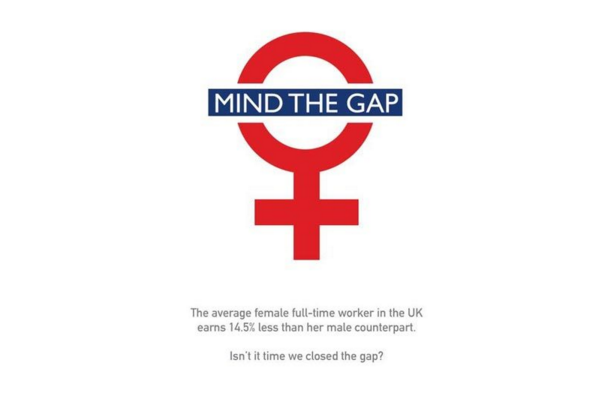
Today’s Telegraph contains a graphic that interests me a whole lot, under the title Equal Pay Day: 14 ways to visualise the gender pay gap:

telegraph mind the gap

**

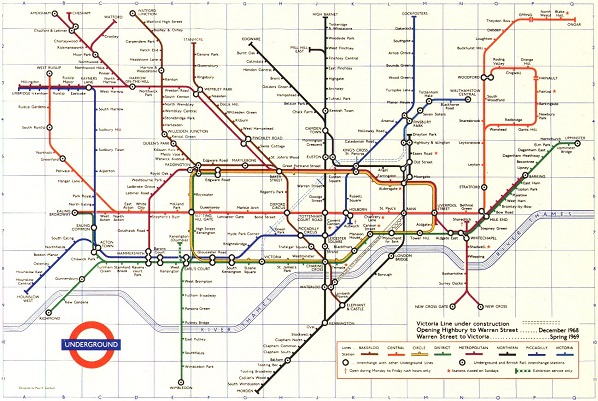
Does it interest me because I’m a fan of the London Underground? Not exactly. The Underground’s graphics, then? I’ll admit to an admiration for the Underground’s justifiably celebrated map

tube68

— which I’ve long thought would make a superb extended HipBone Game board, shown above in its 1968 incarnation. But that’s not it either. And although I don’t think gender should influence the pay a person receives for a given quantity or quality of work — Quant and Qualit again, one of the weirdst paradoxes my min d has ever encountered — it’s not the politics of the sign that interests and delights me.

**

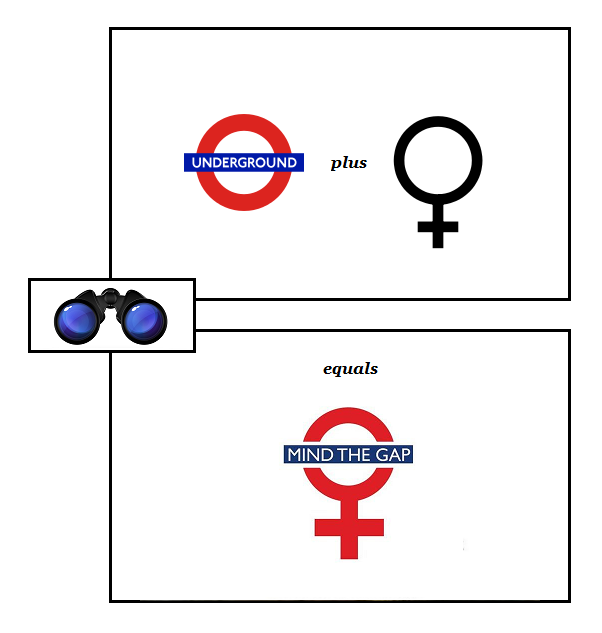
It’s the way two disparate elements — tube and gender graphics — are combined to create a remarkably powerful third:

SPEC DQ mind the gap

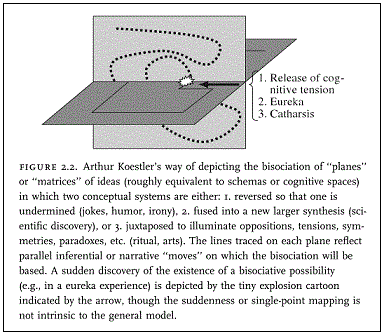
It’s a simple, elegant illustration of the intersection of two sets of ideas that Arthur Koestler talked about and that I’m constantly drawing on in my own work:

And yes, I’m aware that technically the equation I’m pointing to happened in two stages, with the substitution of the phrase “mind the gap” for the word “underground” in the blue bar of the tube logo — but the bar was also used, among other things, for the names of individual stations, so I don’t consider that much of a creative leap.

No, it’s the juxtaposition of underground logo with the gender sign by means of a conflation of their respective circles that’s impressive, coupled with the pun on the gender-specific and underground meanings of “mind the gap”.

That’s the very essence of the intersections Koestler was talking about, and illustrates as vividly as I know how, the power released by such an intersection.

**

Oh, and yes — fair play clearly requires fair pay.

And it’s Hedy Lamarr‘s birthday, dammit.

DEF 2015 – the People and the Ideas are the Magic

Tuesday, November 10th, 2015

[by Mark Safranski, a.k.a. “zen“]

“We’re starting an insurgency of critical thinkers” – Darya Pilram, Red Team Instructor

Last weekend was my first Defense Entrepreneurs Forum conference, DEF 2015 . I came away extremely impressed by the diverse talents and intellectual firepower of the participants and their dedication to being positive change agents. Entrepreneurs mixed with active duty military personnel, senior leaders with juniors, Silicon Valley with Beltway, veterans with academics, journalists and authors; despite such obvious differences of perspective, discussion commenced not just with great civility but a sense of fraternity and esprit de corps. “Like a reunion” was how most attendees of DEF 2015 described it.

The conference received special support from The Atlantic Council, The University of Chicago’s Booth School of Business and their Polsky Center for Entrepreneurship and Innovation and Bunker Labs.  Additionally, there was strong representation at DEF 2015 by the U.S. Naval Institute in the persons of USNI CEO VADM (ret) Pete Daly and LCDR BJ Armstrong, editor of the Institute’s 21st Century book series (Armstrong was kind enough to slip me some copies of Naval Strategy and Naval Tactics, edited by Thomas Cutler and Captain Wayne Hughes, Jr. respectively). DEF 2015 was held at the Booth School’s Gleacher Center and the itinerary can be viewed here:

1st Day Agenda

2nd Day Agenda

3rd Day Agenda

#DEF2015 twitter feed

The advantage of the DEF 2015 conference program was the array of interesting speakers and workshops available (more than are listed online) running different lengths of time; the downside was that at some point, you had to miss something cool to do something great. I invested the largest chunk of time in attending the excellent three-part Design Thinking workshop run by Major (ret) John Silk as this had the most added-value relevance to my job, but I would have liked to have also heard the Bitcoin case study, the DARPA talk and the DEF Consultancy by VADM Daly and Josh Marcuse of DoD. Fortunately, many talks were recorded and will be on the DEF site and YouTube once they are edited.

A few highlights from DEF 2015:

Embedded image permalink

August Cole of the Atlantic Council and co-author of Ghost Fleet gave the closest thing to a keynote speech with his talk Ghost Fleet and the Art of Future War. Cole delved into the utility of artists and science fiction writers in futurist theorizing about armed conflict (one such writer is ZP’s own managing editor, Charles Cameron whose contribution to Cole’s futurism project was War in Heaven) including ” urban warfare in mega-cities”.

Embedded image permalink

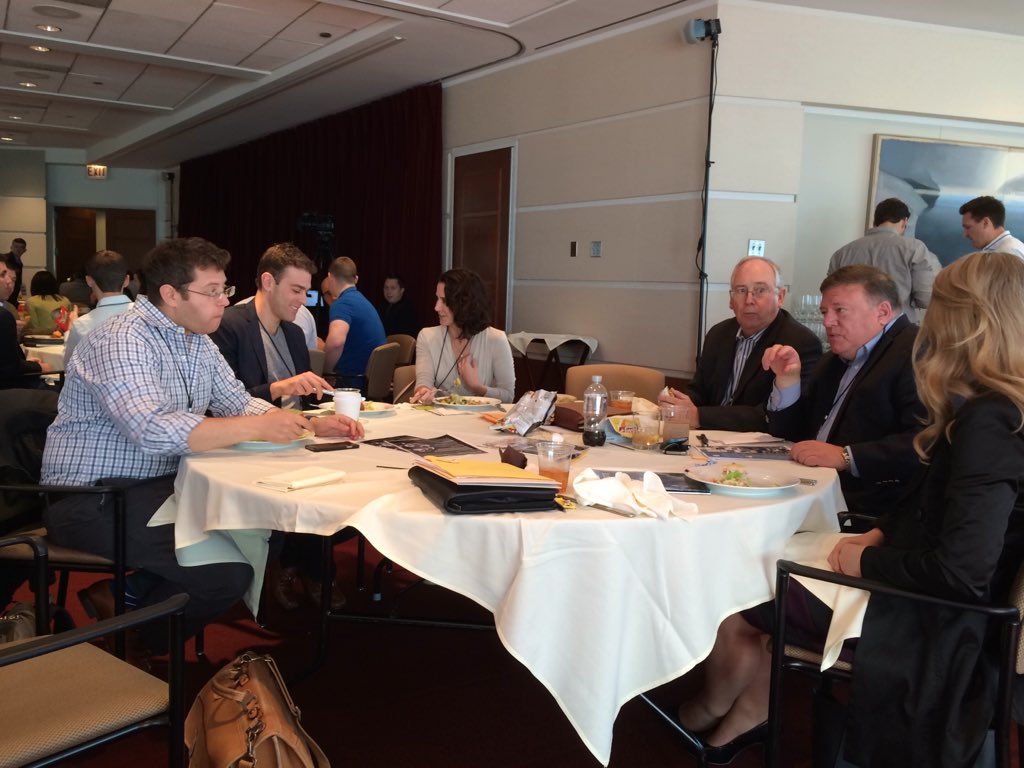
A textbook example of the high quality of F2F interaction at DEF 2015: A debate over the technical, tactical and strategic capacities of drones in non-permissive environments broke out during lunch between VADM Pete Daly (gesturing) and NDU researcher Joshua Steinman (far left) that drew in the rest of the table as well as August Cole and several passers-by.

Embedded image permalink

Richard Walsh of the U.S. Navy’s CNO Innovation cell advised everyone to “rock the boat” in a way that epitomized Boyd’s maxim of “Doing something” instead of “Being somebody”. Walsh explained his experience in terms of “grit” where people rise to an idea, a philosophy that resonated strongly with the audience.

Embedded image permalink

Embedded image permalink

William McNulty of Team Rubicon gave one of the most inspiring and moving of all the DEF 2015 talks regarding American veterans who have stepped up to forge one of the world’s most effective, first responder, humanitarian NGOs. I saw McNulty speak about Team Rubicon number of years ago at Boyd & Beyond and it was stunning to hear how the organization has since grown in its reach and capacity to make the world a better place.

It is important also to emphasize that great value of the informal networking times built into DEF 2015 both during the conference and at the evening socials, respectively at 25 Degrees and Moe’s Cantina (both located in the Chicago Loop). I made new friends and met old ones I have known from the strategy-sphere, Twitter and Facebook F2F for the first time. Stimulating convos were had with BJ Armstrong, Nate Finney, Joe Byerly, Josh Steinman, Mikhail Grinberg, Rich Walsh, August Cole, Nick Kesler, “Micah of West Point and “Emily of Loyola”.

Embedded image permalink Embedded image permalink

Finally, thanks needs to be given to the DEF leadership team for making DEF 2015 an outstanding success, including but not limited to Ben Kohlmann, J. P. Mintz, Mikhail Grinberg, Jen Walsh and Joe “the Leaderboard” Byerly. See you all next year!

Ben Kohlmann.jpg Mintz.jpg Embedded image permalink Jennifer Walsh Joe Byerly


Surprise, surprise, surprise

Monday, November 9th, 2015

[ by Charles Cameron — astronaut in a cathedral, nuclear reactor in Gabon ]
.

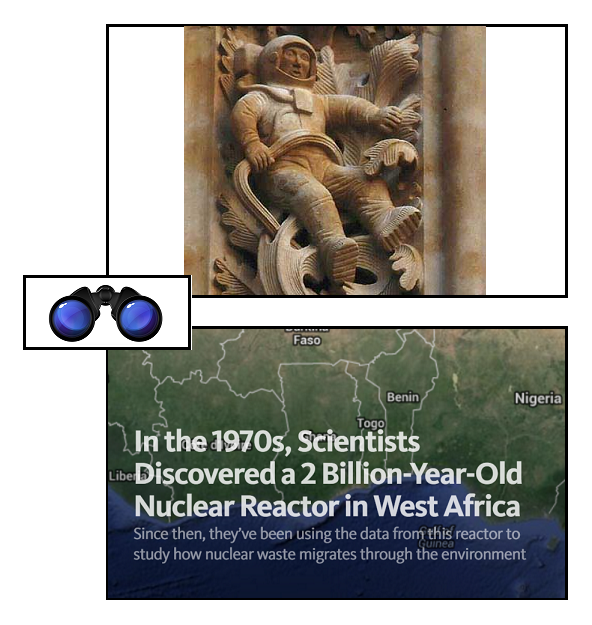
I enjoy scoping and snoping out strange claims, and had to check out possible anachronicities not once but twice today — first, to verify the presence of an astronaut in Salamanca’s seventeenth-century (1513-1733 to be more precise) “New Cathedral”:

SPEC DQ cathedral astronaut african reactor

and then, of a nuclear reactor from two billion years ago in Gabon, West Africa.

**

Neither one turned out to be von Däniken fool’s gold, but both certainly glisten enough to be worth a mention.

The Salamanca cathedral astronaut is there, carved in stone, all right — but as part of a 1992 renovation. And what’s most interesting to me is that it’s entirely in conformity with tradition for an artist working today on such a restoration to “sign” his work with a contemporary flourish of this sort. It is thus faithful to what Benedict XVI would call the hermeneutic of continuity.

And 2 billion year old nuclear reactor?

It’s not as old as the sun, of course, by about 3.6 billion years, nor as close to us, nor as vast — but it’s there, it’s there.

Hat tips:

  • for the astronaut, Jeff DeMarco
  • for the reactor, Cheryl Rofer

  • Switch to our mobile site