zenpundit.com » book

Archive for the ‘book’ Category

Heart Line — a response to Bill Benzon

Wednesday, October 12th, 2016

[ by Charles Cameron — design fascination — including a Mimbres rabbit with a supernova at its feet ]
.

Bill Benzon has been blogging a remarkable series of posts on Jamie Bérubé‘s drawings as recorded in the online illustrations to Michael Bérubé‘s book, Life As Jamie Knows It: An Exceptional Child Grows Up.

**

I wanted to respond to Bill’s latest, Jamie’s Investigations, Part 5: Biomorphs, Geometry and Topology, which included this illustration:
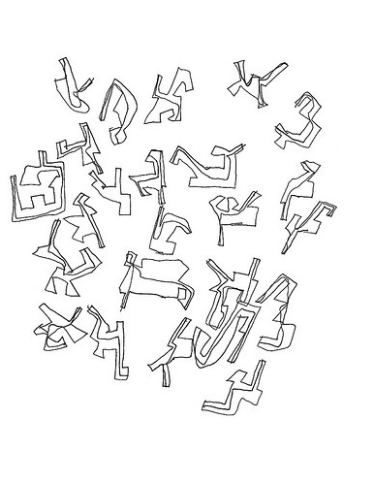
berube-benzon-5-biomorphs

and these comments, which I’ve edited lightly for clarity and simplicity:

I emailed Mark Changizi, a theoretical neuroscientist who has done work on letterforms. He has been making a general argument that culture re-purposes, harnesses (his term), perceptual capacities our ancestors developed for living in the natural world. One of his arguments is that the forms used in writing systems, whether Latinate or Chinese (for example), are those that happened to be useful in perceiving creatures in the natural world, such as plant and animal forms. I told him that Jamie’s forms looked like “tree branches and such.” He replied that they looked like people. His wife, an artist, thought so as well, and also: “This is like early human art.”

You’ll see why that-all interests me — letters and life forms — below.

And then:

Yes, each is a convex polygon; each has several ‘limbs’. And each has a single interior line that goes from one side, through the interior space, to another side. The line never goes outside the polygon .. Why those lines? I don’t know what’s on Jamie’s mind as he draws those lines, but I’m guessing that he’s interested in the fact that, given the relative complexity of these figures and the variety among them, in every case he can draw such a line.

**

Two thoughts cross my mind.

The first is that one of these forms, Benzon’s Biomorphic Objects 6a, bears a striking resemblance to the letter aleph, with which the Hebrew alphabet — or better, alephbeth — begins:
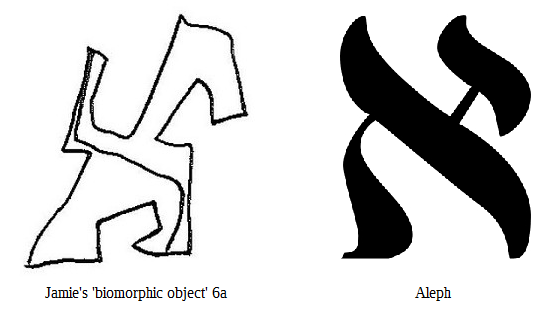
berube-benzon-5-biomorph-6a-aleph

There may be some connection there, I’m not sure — though Jamie also has a keen interest in alphabetic forms, as illustrated here:
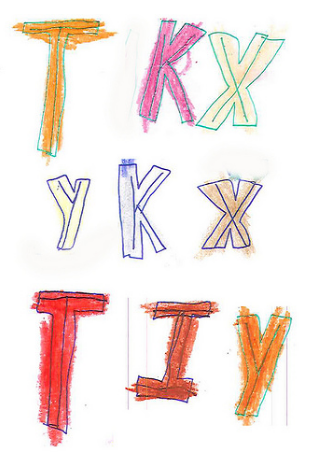
berube-benzon-5-letterforms

**

But it’s my second point that interests me more.

These “biomorphic objects” with “single interior line that goes from one side, through the interior space, to another side” remind me of nothing so much as the Native American style of representing animals with a “heart line” — best illustrated, perhaps, by this Acoma Pueblo Polychrome Olla with Heartline Deer:
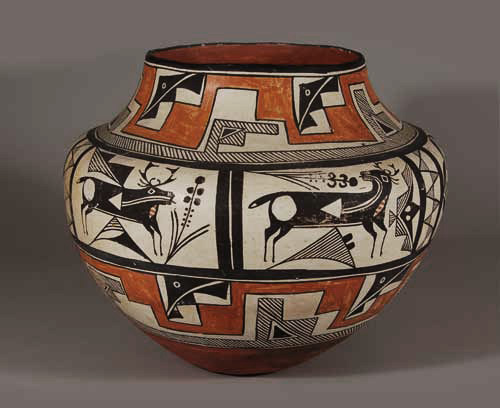
The image comment notes:

One generally associates the use of heartline deer with pottery from Zuni Pueblo and that is most likely the origin. The fact that it appears on Acoma Pueblo pottery has been explained in a number of fashions by a number of contemporary Acoma potters. Deer designs have been documented on Acoma pottery as early as 1880, but those deer do not feature heartline elements. Some potters at Acoma have indicated that Lucy Lewis was the first Acoma potter to produce heartline deer on Acoma pottery. She did this around 1950 at the encouragement of Gallup, New Mexico Indian art dealer Katie Noe. Lewis did not use it until gaining permission from Zuni to do so. Other potters at Acoma have stated that the heartline deer is a traditional Acoma design; however, there is no documented example to prove this. Even if the heartline deer motif is not of Acoma origin, potters at Acoma have expressed that it does have meaning for them. It is said to represent life and it has a spiritual connection to deer and going hunting for deer.

Here’s a “heartline bear” from David and Jean Villasenor‘s book, Indian Designs:
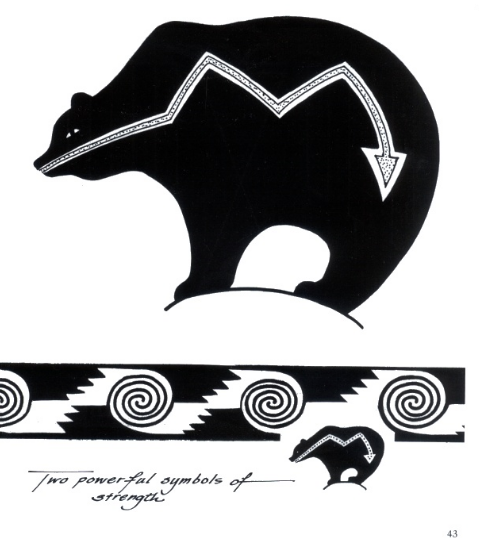
bear-heartline

And here’s an equivalent Mimbres design for a rabbit with heartline, in which the line passes completely through the body from one side to the other, as in Jamie’s biomorphs:
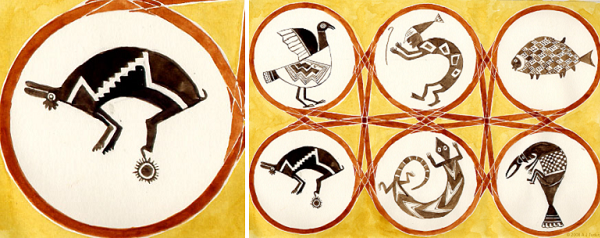
mimbres-rabbit

Again, the comment is interesting — it cites a 1990 New York Times article, Star Explosion of 1054 Is Seen in Indian Bowl:

When the prehistoric Mimbres Indians of New Mexico looked at the moon, they saw in its surface shading not the “man in the moon” but a “rabbit in the moon.” For them, as for other early Meso-American people, the rabbit came to symbolize the moon in their religion and art.

On the morning of July 5, 1054, the Mimbres Indians arose to find a bright new object shining in the Eastern sky, close to the crescent moon. The object remained visible in daylight for many days. One observer recorded the strange apparition with a black and white painting of a rabbit curled into a crescent shape with a small sunburst at the tip of one foot.

And so the Indians of the Southwestern United States left what archeologists and astronomers call the most unambiguous evidence ever found that people in the Western Hemisphere observed with awe and some sophistication the exploding star, or supernova, that created the Crab nebula.

That would be the sunburst right at the rabbit’s feet!

**

Posts in Bill’s series thus far:

  • Jamie’s Investigations, Part 1: Emergence
  • Jamie’s Investigations, Part 2: On Discovering Jamie’s Principle
  • Jamie’s Investigations, Part 3: Towers of Color
  • Jamie’s Investigations, Part 4: Concentrics, Letters, and the Problem of Composition
  • Jamie’s Investigations, Part 5: Biomorphs, Geometry and Topology
  • My previous comment on #1 in the series:

  • On the felicities of graph-based game-board design: nine
  • Electoral religion 2016

    Wednesday, October 12th, 2016

    [ by Charles Cameron — remembering the Ted Cruz Christ / Antichrist (and Obama ditto) rhetoric from an earlier post ]
    .

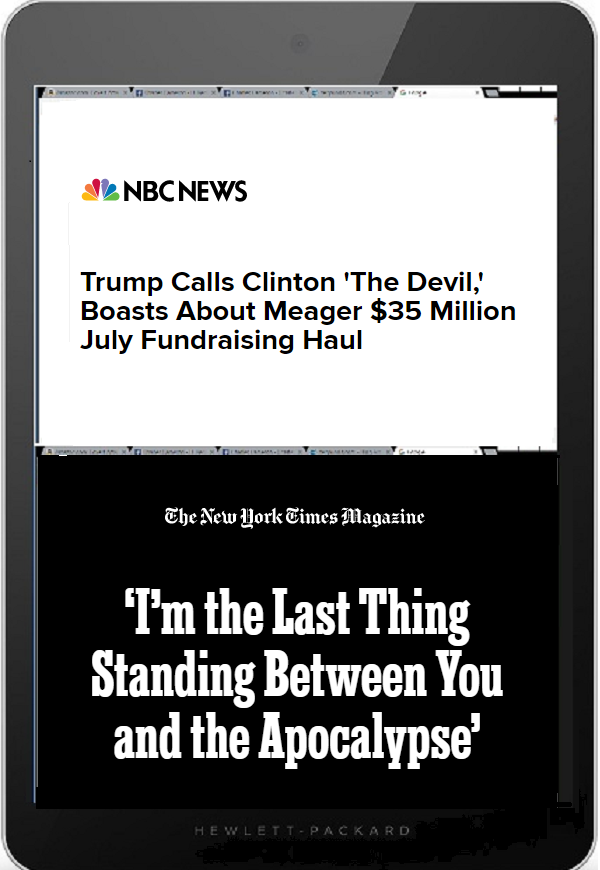
    Dismal, both of them:

    tablet-dq-electoral-religion

    Sources:

  • NBC News, Trump Calls Clinton ‘The Devil’
  • NYT Magazine, I’m the Last Thing Standing Between You and the Apocalypse
  • **

    I could be wrong, but I somehow doubt that either Trump or Clinton is using the terms “devil” or “apocalypse” (respectively) in their literal religious meanings here.

    For that I’m thankful.

    But then..

    In contrast to the two posts I’ve linked to above, these two below appear to me to be making overtly and deliberately religious appeals with respect to the current election.

  • Alex Jones, InfoWars, Hillary Clinton: Demonic Warmonger
  • Andy Crouch, Christianity Today, Speak Truth to Trump
  • I’ve included the InfoWars video clip because it makes it very clear that Alex Jones, at least, claims he is being “Biblical” — his own word — when he calls Hillary Clinton demonic — and the Christianity Today piece because it represents a distinguished Evangelical response to the general tendency of Evangelical Christians to support Donald Trump‘s candidacy.

    In somewhat related news, I am saddened to report that Christianity Today‘s literary magazine Books & Culture will close at the end of the year. John Wilson, the editor, is a long time and valued friend from Pasadena bookstore days — see his kind words about the late Bill Tunilla, the bookman who introduced us, in this Letter from the Editor.

    On the felicities of graph-based game-board design: ten

    Sunday, October 9th, 2016

    [ by Charles Cameron — a long, lazy Sunday post, packed with quirky interest and neat maps ]
    .

    Ten? What’s so special about ten, hunh? Just because you have ten fingers, you suppose that makes ten special?

    **

    One:

    As simple as a map can get:

    worry-line
    Simon Kirby, The Worry Line

    Two:

    As complex as one can get:

    most-complex-ny
    Eric Jaffe, The World’s 15 Most Complex Subway Maps

    And I mean complex, cognitively complex:

    When it comes to information processing, an average person’s “cognitive threshold” is about 250 connections, or the equivalent of roughly eight bits of data, according to the researchers. New York’s system neared that limit, with 161 total connections, and the most complicated two-transfer trip a person could make on the subway exceeded it—clocking in at 8.1 bits. Maps for the Paris Metro (with 78 total connections), Tokyo Metro (56), and London Tube (48) clustered around six bits of information.

    Three:

    Naked:

    naked-map
    Nick van Mead, Can you identify the world cities from their ‘naked’ metro maps?

    The Guardian wanted to know if you could recognize various cities if shown their metro maps without the stations markings.. and i could manage Chicago (above).

    Four:

    Coffee:

    coffee-shop-mapo
    Chris Ward, Coffee Stops

    Sadly, the map is not the territory, or I could get my Java from South Ken while sitting at my desk just outside Sacramento.

    The London Coffee Map, “Coffee Stops,” was designed by Chris Ward, who calls himself “the boss who works from coffee shops.” He recently published Out of Office: Work Where You Like and Achieve More, a best-selling guide to leading a successful working life outside an office building. Apparently, being properly caffeinated is one of his biggest tips. Now you can grab your joe at local London cafes with quaint names like Scooter and Electric Elephant.

    Five:

    Mug:

    I could then quaff it from an appropriately poetical Map Mug:

    50112-greater-shakespeare-map-mug-normal
    Royal Shakespeare Company, Greater Shakespeare Map Mug

    The map here representing affinities between characters in the Bard’s various plays:

    greater-shakespeare-map-rsc

    **

    Interlude:

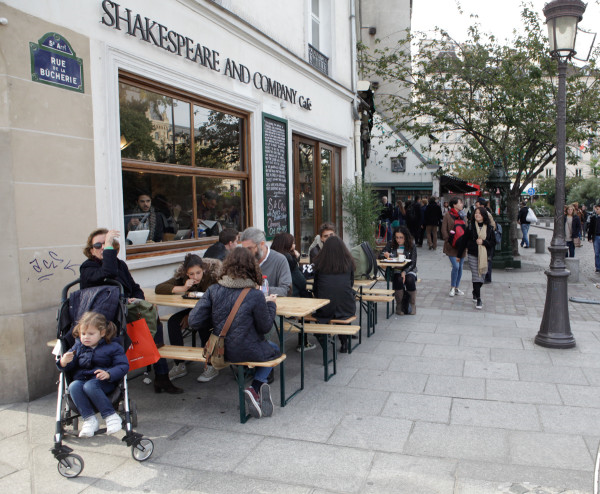
    — and we’re half way to ten, let’s imagine ourselves at Shakespeare and Co‘s bookstore and cafe in Paris

    shakespeare-co

    **

    Six:

    Calvino

    While we’re on a literary streak, here’s a thumbnail of one of artist Rod McLaren‘s illuminations of Italo Calvino‘s Invisible Cities:

    italo-calvino-mapped
    Rod McLaren, Invisible Cities Illustrated #2: Trude/Ersilia

    The detail here is fantastic, as befits Calvino’s work:

    The diagram, a network of curved lines connecting to every other node on a 6 x 5 grid, has two configurations: if the picture is hung one way up, it shows the “Ersilia configuration” (where the lines are like the threads strung between the buildings of Ersilia); if hung the other way up, it shows that of Trude (where the lines are like a complicated airline route map).

    Ersilia (Trading Cities 4, p78):

    In Ersilia, to establish the relationships that sustain the city’s life, the inhabitants stretch strings from the corners of the houses, white or black or gray or black-and-white according to whether they mark a relationship of blood, of trade, or authority, agency. When the strings become so numerous that you can no longer pass among them, the inhabitants leave: the houses are dismantled; only the strings and their supports remain. From a mountainside, camping with their household goods, Ersilia’s refugees look at the labyrinth of taut strings and poles that rise in the plain. That is the city of Ersilia still, and they are nothing.

    They rebuild Ersilia elsewhere. They weave a similar pattern of strings which they would like to be more complex and at the same time more regular than the other. Then they abandon it and take themselves and their houses still farther away.

    Thus, when travelling in the territory of Ersilia, you come upon the ruins of the abandoned cities, without the walls which do not last, without the bones of the dead which the wind rolls away: spiderwebs of intricate relationships seeking a form.

    Trude (Continuous Cities 2, p128):

    If on arriving at Trude I had not read the city’s name written in big letters, I would have thought I was landing at the same airport from which I had taken off. The suburbs they drove me through were no different from the others, with the same greenish and yellowish houses. Following the same signs we swung around the same flower beds in the same squares. The downtown streets displayed goods, packages,signs that had not changed at all. This was the first time I had come to Trude, but I already knew the hotel where I happened to be lodged; I had already heard andspoken my dialogues with the buyers and sellers of hardware; I had ended other days identically,looking through the same goblets at the same swaying navels.

    Why come to Trude? I asked myself. And I already wanted to leave.

    “You can resume your flight whenever you like,” they said to me, “but you will arrive at another Trude, absolutely the same, detail by detail. The world is covered by a sole Trude which does not begin and does not end. Only the name of the airport changes.”

    All of which reminds me of nothing so much as Antonio Gaudi‘s model — made of hanging chains — catenaries —

    inverted-model-barcelona

    which when turned upside down provide the structure for his Sagrada Familia cathedral in Barcelona:

    sagrada-familia

    Seven:

    Ghost:

    Meanwhile, back in London, we have maps of the ghost (ie abandoned) London tube stops:

    ghost-stations
    Dylan Maryk, Ghost Stations On The London Underground

    Eight:

    That’s one way to de-clutter the Tube map — show what ain’t there any more.

    Here’s another —

    declutteredtubemap
    Matt Thomason, 150 years of The London Underground

    Don’t ask me what it means — seeing as Hugh Grant gets a station, it’s either gentlemanly or ungentlemanly, I’m not sure which.

    Nine:

    Music:

    I simply didn’t know you’d have to travel this far to get from Dylan to the Beatles:

    london_music_genres_detail
    Dorian Lynskey, in Tufte, Response to London Underground maps

    I mean —

    bob-dylan-john-lennon
    Michelle Geslani, The Beatles and Bob Dylan met 50 years ago today

    Ten:

    I’ve kept this one for last because in some ways it’s the subtlest:

    exhibition-in-borders-we-trust

    It’s the work of architect Jug Cerovic., and on his page In Borders We Trust he offers this conceptual comment:

    Borders are primarily a mental construct.

    Just like a deity, they exist only insofar as People believe in them. Question is however how necessary our belief in their existence is and when exactly does that belief start harming us?

    At which point do borders cease to be a convenient orientation marker, a helpful tool for the comprehension of the land we inhabit, a common identifier for the construction of a shared identity? At which point do borders become a dogmatic limitation to imagination, a terrifying prison for the body and mind, a symbol and support of hatred?

    Borders do not possess an inherent bad or good character, on the contrary they are a malleable concept subject to appropriation and interpretation.

    “In borders we trust” examines the perception, physical manifestation and enforcement of the couple formed by People and Borders focusing on three key areas of the contemporary migration routes:

  • Gibraltar
  • Serbia
  • Levant
  • For this purpose the peculiar relationship between Borders and People is illustrated with a sequence of three distinct maps:

  • Borders without People
  • Borders with People
  • People without Borders
  • This novel perspective of a seemingly familiar representation, with each component of the couple shown separately and juxtaposed to their combined illustration, questions the articulation and pertinence of our present predicament.

    Happily, this is an area that I’ve delved into at some length myself in my earlier post, No man’s land, one man’s real estate, everyone’s dream? — with specific reference to ISIS’ bulldozing of the border between Iraq and Syria, and the Basque country, Euskadi, saddling the French / Spanish border.

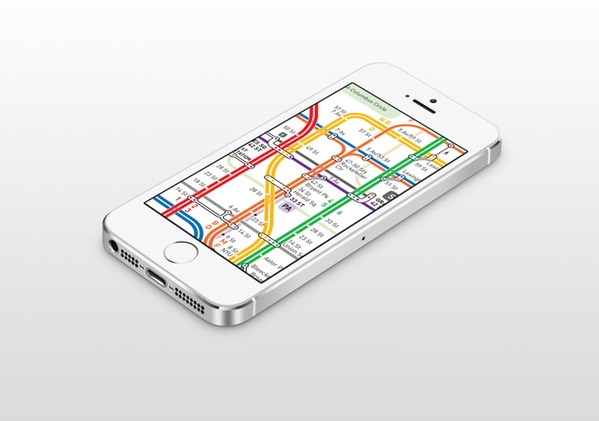
    Cerovic has achieved an eminently practical limited version of one of my own grandiose castle-in-air schemes — building a universal graphical mapping system. Cerovic’s version offers us a universal graphical underground / tube / metro mapping system, in the form of his book One Metro World — you still have a couple of weeks to support it on Kickstarter!

    map-app

    **

    Earlier in this series:

  • On the felicities of graph-based game-board design: preliminaries
  • On the felicities of graph-based game-board design: two dazzlers
  • On the felicities of graph-based game-board design: three
  • On the felicities of graph-based game-board design: four
  • On the felicities of graph-based game-board design: five
  • On the felicities of graph-based game-board design: six
  • On the felicities of graph-based game-board design: seven
  • On the felicities of graph-based game-board design: eight
  • And hey, and we’re back at maps — where we started in

  • On the felicities of graph-based game-board design: nine
  • When are look-alikes alike, eh?

    Friday, September 30th, 2016

    [ by Charles Cameron — a questiom for Cath Styles and Emily Steiner ]
    .

    It’s my proposal here that look-alikes are in the eyes of the beholder, perhaps more so than other forms of likeness.

    Consider:

    Do they look like Darth Vader and C3PO to you, frankly — or more like each other?

    **

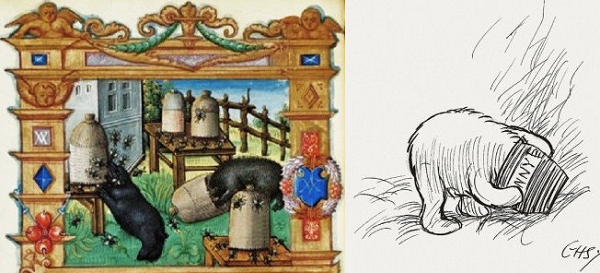
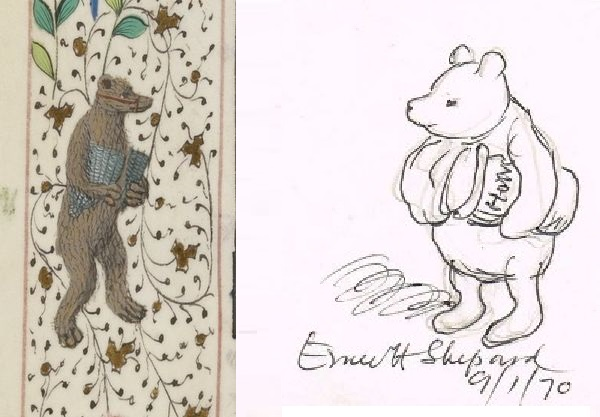
    One really does have to wonder how medieval monastics got hold of copies of Winnie the Pooh:

    honey-bear-02-600

    and:

    honey-bear-01-600

    With a double hat-tip to the immensely followable twitter feed of PiersatPenn

    **

    And what about this?

    It probably takes some historical knowledge to appreciate the similarities here — the comparison is not entirely visual.

    **

    Are mathematically or verbally juxtaposable similarities equally subject to human comparative bias?

    Not up for debate: three candidates

    Thursday, September 29th, 2016

    [ by Charles Cameron — a light-hearted, part-musical, part-personal, part-putinesque — counterpoise to the present Presidential electoral season ]
    .

    You wanna make government a barrel of fun? Vote Dizzy! Vole Dizzy!
    Your Politics Oughtta Be A Groovier Thing? Vote Dizzy! Vole Dizzy!

    **

    Okay, we’ve had a day or two to recover from the first of this year’s Presidential debates, and I’d like to give you a break from the incessant Trump no Hillary no stay home or vote Stein or Johnson or write in or whatever shindig with three possible candidates not on most lists.

    One is anonymous. One is myself (ridiculous). And one — the best known of the three, but deceased, alas — plays trumpet, and ran in 1964.

    **

    No, as far as we know, Vladimir Putin has not expressed a wish for Donald Trump to be President of the US, despite some fraternal noises. Instead, he somewhat cannily answered an unnamed US journalist’s question by wishing she could hold that office (upper panel, below):

    Tablet DQ Putin & Abu Walid

    So:

    Putin’s candidate is, as far as I know, anonymous — though there’s a presumably a journalist somewhere who knows, since she was there at the time, and Putin was responding to her.

    **

    I probably wouldn’t have given this particular remark of Putin’s a second thought, had Abu Walid al-Masri not wished the same fate on me (lower panel, above).

    Here’s how that happened.

    I’d been in friendly contact with the noted Australian Federal Police counterterrorism analyst Leah Farrall for a while, when Leah struck up an email correspondence some years back with Abu Walid. The latter was among the first Arabs in Afghanistan, a journalist, a friend of Mullah Omar and bin Laden, and a fierce critic of 9/11. Both Leah and Abu Walid were bloggers, and both deeply interested in the early history and structure of Al-Qaida so, Leah thought, why not talk? And talk they did.

    At one point, Leah very kindly invited me to join their conversation. I’m a know your enemy type on my father‘s side (he was a naval warrior) and a love your enemy type on my mentor‘s (he was a monk, and quite the warrior in his own way) — so I wrote to Abu Walid, and he responded:

  • All Things CT, Charles Cameron to Abu Walid al Masri
  • Zenpundit, Abu Walid al Masri to Charles Cameron
  • I don’t see myself as US President any time soon — I’m a Brit born and bred, which would rule me out in any case, and a monarchist at that — but Putin’s comment to the journalist reminded me of my own equivalent in Abu Walid’s response to my letter, and gave me a quiet chuckle — hence this post.

    More significant than my cameo appearance.. Years later, Abu Walid was released from house arrest in Iran. He — now dropping his nom de guerre and going by his original name, Mustafa Hamid — met in person with Leah in Alexandria, amd after months of conversations they produced an unparalleled joint work, The Arabs at War in Afghanistan (Hurst, 2015).

    It is, as I said, without parallel — with a second volume to follow?

    **

    Okay, back to electoral candidates. How about Dizzy Gillespie? Here’s a belated tribute to the candidate who blue-notes outside the lines:

    As blog-friend and jazz-meister Bill Benzon noted recently, Dizzy Gillespie nominated himself. And how!

    When I am elected President of the United States, my first executive order will be to change the name of the White House! To the Blues House.

    Income tax must be abolished, and we plan to legalize ‘numbers’ – you know, the same way they brought jazz into the concert halls and made it respectable. We refuse to be influenced by the warnings of one NAACP official who claims that making this particular aspect of big business legal would upset the nation’s economy disastrously.

    One of the ways we can cut down governmental expenditures is to disband the FBI and have the Senate Internal Security Committee investigate everything under white sheets for un-American activities. Understand, we won’t take no ‘sheet’ off anybody!

    You wanna make government a barrel of fun? Vote Dizzy! Vole Dizzy!


    Switch to our mobile site