Archive for the ‘national security’ Category
Sunday, November 20th, 2011

Thinking in Time by Richard Neustadt and Ernest May
Picked up this classic work on metacognition, history and strategic decision making for the astronomical price of…..$ 4. Including shipping.
The diminuition of the teaching of history in elite universities after the 1960’s, when the old undergraduate canon was chucked in deference to demands by student and faculty radicals for an a la carte system (to replace the old core with politicized race-gender-crit rubbish), has contributed to the decline in American strategic thinking.
Posted in academia, cognition, geopolitics, historians, historiography, history, ideas, intellectuals, metacognition, national security, reading, strategy | 2 Comments »
Wednesday, November 16th, 2011
[by J. Scott Shipman]
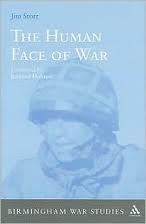
The Human Face of War by Jim Storr
[Zen reviewed this book earlier here. I had forgotten that I wrote a rather long review at Amazon after finishing in January 2010. Perhaps Storr will gain a wider audience as a result.]
Mr. Storr’s The Human Face of War will be I predict, a book studied by military professionals (and smart policy makers) for years to come. Using straightforward prose, Mr. Storr seeks to provide a philosophical approach to war—as he says, “In practice we are concerned so much with war as with waging it.” Storr goes on to differentiate between war and warfare; where war is an “issue” with history and warfare dedicated to methods/methodology. Storr rejects notion that war is art or science, and prefers instead to embrace pragmatism and limited empiricism. He points out correctly: “Pragmatism has obvious application to warfare. A significant aspect of warfare is `a process of trial and error; seeing what wins and exploiting it.” Storr continues that “empiricism is not just trial and error: it is a logical process based on structuring observed facts.” What “works” will suggest a way ahead.
Storr uses broad themes of what has worked and what has not worked in military history by explaining the nature of combat and tools and models available to the practitioner. He uses Clausewitz’s “dialectic of aims and means” in conjunction with Systems Theory to describe the holistic nature of military units; where effective/efficient output is dependent on input—where a good outcome is “winning” (as Storr repeatedly observes throughout the book, armies aren’t paid to come in second). Hence, organization of military units is fundamental; efficient/effective organizations are more likely to succeed. He observes: “Cohesion and collective performance indicate the whole is greater than the sum of the parts. There is a systemic effect, and we should see armed forces as systems.”
Storr is a proponent of forcing decision making to the folks on the ground using brief and succinct communications. His chapter on Commanding the Battle is excellent. Storr advocates lean command staff’s and dispersed decision making. “We should employ the best brains in small groups, rather than try to assemble a collective brain.” He points out that “when staff numbers are reduced, the effectiveness of HQ improves.” “Reducing staff numbers would increase speed with which they could get things done.” [Amazingly, Storr quotes a work from 1998 that reports a typical Western division commander has 600 people supporting!—and that number has, I’m sure increased in 10 years.] He concludes this excellent chapter making a distinction between technology and the human factor: “…the future is not digital: it’s human. What is needed is things that bind talents together as a team, not more bandwidth…given time, resources, open minds and not much money we could revolutionize land tactical command. The key problems are human, cultural and institutional.”
Storr asserts that successful modern commanders are most likely intuitive thinkers and possess the ability to learn from experience. He suggests further the “tendency to learn is more critical. It implies a tendency to reflect on experience and to learn from it, to maximize the benefit of the experience.” This tendency is key to the development of “skills”. He encourages a “permissive man-management regime that allows those who can learn rapidly from their experience to do so.” At the opposite end, Storr makes clear the unsuitability of many leaders who use bullying tactics and fear to motivate.
Storr concludes by observing that “institutional conservatism” inhibits armed forces from improving significantly during times of peace; that “the current size and shape of Western armies reflect issues that are not primarily related to warfighting effectiveness.” He insists that doctrine should be explicit, relevant,(descriptive and where appropriate, prescriptive), coherent, and practical. The short tours common in western armies harm team integrity—which is “huge”. Innovation is vital, and in many cases military members aren’t with a unit long enough to have the experience necessary to truly innovate. Storr advocates “experience is the best way to achieve practical coordination and overcome the fog of war, as long as the experience gained is positive.” He discourages the common use of lieutenant-colonels in jobs where a captain or major could function/thrive/learn; as these junior officers will have less experience when they are promoted and will have probably developed the habit of “referring decisions upwards, and hence develop little initiative.”
According the Storr, the “human” aspect of war should take prevalence over technology. He acknowledges the utility of technology, but asks the reader to “…pause and look for a moment at the Vietnam War, which suggests that superior technology is not always the deciding factor.” [9-11 is illustrative of this point on the “terror” side; determination and box cutters wreaked havoc.]
My review does not do justice to the wealth of information, insight, and counsel in Storr’s book and I quote him frequently because his style is better than a summary. This book was aimed at a narrow audience, hence the high price. When I began, I was concerned about Storr’ opinions concerning John Boyd’s OODA loop; but in late 2009 I rejected Boyd’s deterministic underpinnings of OODA—Storr’s pragmatic and partial empiricism makes more sense. OODA remains, in my humble opinion, a valuable and versatile methodology in both the military/law enforcement and business arenas.
This book is highly recommended; particularly for junior officers and NCO’s—the price is high, but what you will gain will be worth the cost.
UPDATE 11.17.2011: Jim Storr contacted me and confirmed the issue of a paperback for about $40.
Posted in 21st century, army, Clausewitzian, complex systems, J. Scott Shipman, john boyd, leadership, military, military reform, national security, recommended reading, strategist, strategy, Strategy and War, synthesis, Tactics, Uncategorized, uncertainty, war, warriors, Zen | 9 Comments »
Tuesday, November 8th, 2011

Lexington Green sent this extended profile/interview with Charles Hill by Emily Esfahani Smith. The tone of the article is somewhat hagiographic because Hill is a fellow at the Hoover Institution and….well…. this is in Hoover’s journal 😉 If you can get past that, it is a worthwhile read about a deep thinker and scholar of grand strategy.
Profile in Strategy: Charles Hill
….In diplomacy, literature is relied upon because, as he writes in “Grand Strategies,” “The international world of states and their modern system is a literary realm; it is where the greatest issues of the human condition are played out.” That is why Alexander the Great carried the Iliad with him on his conquests, and why Queen Elizabeth studied Cicero in the evenings. It is why Abraham Lincoln read, and was profoundly influenced by, Walt Whitman’s “Leaves of Grass,” and why Paul Nitze paged through Shakespeare on his flights to Moscow as America’s chief arms negotiator.
Hill, for his part, has always kept the “History of the Peloponnesian War” in his mind as the “manual of statecraft.”
Why Thucydides? He explains: “When you read the Peloponnesian War, you realize that Thucydides is moving from one set of problems to another, and you have to deal with them all-rhetorical problems, material problems, and moral problems. That’s the closest literary work related to statecraft that I can imagine.”
To understand world order-and those who manipulate it for their own aims-requires a literary education, the kind students were once able to find at such places as Yale, where Hill now teaches the humanities to freshman undergraduates.
This is a departure from his days at the State Department, where he helped orchestrate monumental events in the grand strategy of the Cold War. One of his first memories as a diplomat was of being seated behind Adlai Stevenson at the UN during the Cuban missile crisis, characteristically scribbling notes-in grand strategy, no detail can be lost. Later, Hill was a “China watcher” during that country’s Cultural Revolution. And when the Iran-Contra scandal nearly brought down the Reagan administration, Hill’s meticulous notes played an influential role in the Congressional investigations by shedding light on the chronology of then-Secretary of State George Shultz’s knowledge of the arms sale. Over the years, Hill has also served as confidante to Secretaries of State. For Henry Kissinger, Hill was speechwriter and policy analyst. For Shultz, Hill was an executive aide and trusted ally.
These days, Hill embodies grand strategy in a different way. After a long and distinguished career as a diplomat, Hill is now a heralded figure in academia. Beyond his appointment as a research fellow at the Hoover Institution, he is the Brady-Johnson Distinguished Fellow in Grand Strategy, a Senior Lecturer in Humanities, and a Senior Lecturer in International Studies at Yale. Alongside historians John Gaddis and John Kennedy [ sic] , he teaches one of Yale’s most legendary courses to a select group of elite students-future statesmen-the Grand Strategies course.
And yet, Hill tells me stoically, “There is no grand strategy in our time.” Turning his attention to the turmoil in the Middle East, Hill provides an example. “America’s lack of strategic outlook responding to the Arab Spring is really distressing.”
Hill retains the diplomat’s gift for understatement.
Read the rest here.
ADDENDUM:
Book Review: Grand Strategies by Charles Hill
Trial of a Thousand Years, by Charles Hill-a review
Posted in 21st century, academia, America, ancient history, cultural intelligence, culture, DIME, diplomacy, Epistemology, foreign policy, geopolitics, government, history, ideas, intellectuals, islamic world, literature, myth, national security, politics, reading, revolution, society, strategist, strategy, Strategy and War, synthesis, teaching, theory | 5 Comments »
Thursday, October 20th, 2011
Here is something for the learned readership to chew on.
As you are probably all aware, in the hard sciences it is common for research papers to be the product of large, multidiciplinary, teams with, for example, biochemists working with physicists, geneticists, bioinformatics experts, mathematicians and so on. In the social sciences and humanities, not so much. Traditional disciplinary boundaries and methodological conservatism often prevail or are even frequently the subject of heated disputes when someone begins to test the limits of academic culture
I’m not sure why this has to be so for any of us not punching the clock in an ivory tower.
The organizer of the Boyd & Beyond II Conference, Stan Coerr, a GS-15 Marine Corps, Colonel Marine Corps Reserve and Iraq combat veteran, several years ago, developed a very intriguing analytical outline of thirty years of Afghan War, which I recommend that you take a look at:
The Eagle and the Bear: First World Armies in Fourth World Insurgencies by Stan Coerr
the-eagle-and-the-bear-11.pdf
There are many potential verges for collaboration in this outline – by my count, useful insights can be drawn by from the following fields:
Military History
Strategic Studies
Security Studies
COIN Theory
Operational Design
Diplomatic History
Soviet Studies
Intelligence History
International Relations
Anthropology
Ethnography
Area Studies
Islamic Studies
Economics
Geopolitics
Military Geography
Network Theory
I’m sure that I have missed a few.
It would be interesting to crowdsource this doc a little and get a discussion started. Before I go off on a riff about our unlamented Soviet friends, take a look and opine on any section or the whole in the comments section.
Posted in 20th century, 4GW, academia, Afghanistan, America, analytic, COIN, cold war, Communism, consilience, counterinsurgency, cultural intelligence, culture, DIME, diplomatic history, empire, extremists, feedback, foreign policy, Geography, geopolitics, government, history, IC, ideas, insurgency, intellectuals, intelligence, international law, IO, islam.insurgency, islamic world, islamist, military, military history, national security, network theory, networks, non-state actors, pakistan, politics, primary loyalties, reader response, russia, security, social science, soviet union, state failure, strategy, Strategy and War, synthesis, Tactics, terrain, terrorism, theory, totalitarianism, transnational criminal organization, tribes, USMC, war, warriors | 19 Comments »
Tuesday, October 18th, 2011
A fascinating online discussion between US Army intellectuals Colonel Gian Gentile, Colonel Paul Yingling and journalist and Iraq War veteran Carl Prine:
Paul Yingling A Failure in Generalship –AFJ
….Having spent a decade preparing to fight the wrong war, America’s generals then miscalculated both the means and ways necessary to succeed in Iraq. The most fundamental military miscalculation in Iraq has been the failure to commit sufficient forces to provide security to Iraq’s population. U.S. Central Command (CENTCOM) estimated in its 1998 war plan that 380,000 troops would be necessary for an invasion of Iraq. Using operations in Bosnia and Kosovo as a model for predicting troop requirements, one Army study estimated a need for 470,000 troops. Alone among America’s generals, Army Chief of Staff General Eric Shinseki publicly stated that “several hundred thousand soldiers” would be necessary to stabilize post-Saddam Iraq. Prior to the war, President Bush promised to give field commanders everything necessary for victory. Privately, many senior general officers both active and retired expressed serious misgivings about the insufficiency of forces for Iraq. These leaders would later express their concerns in tell-all books such as “Fiasco” and “Cobra II.” However, when the U.S. went to war in Iraq with less than half the strength required to win, these leaders did not make their objections public.
Gian Gentile A Few Questions for Colonel Paul Yingling on Failures in Generalship – Small Wars Journal
….Perhaps you see it differently, but the failure that I see in American generalship in both wars in Iraq and Afghanistan (with precedence in Vietnam) is the idea that tactical and operational excellence through a certain brand of counterinsurgency (or any other form of tactical innovation) can rescue wars that ultimately are failures of strategy, or as Schlesinger more harshly puts it “national stupidity.”
In light of how you respond to these questions might you consider writing “A Failure of Generalship, Version 2” for Afghanistan?
If not, might you spell out the differences between what you saw as the failure of American generalship in Iraq from 2003-2006 with the past two years plus in Afghanistan. In other words, how has American generalship been a failure in Iraq and not in Afghanistan?
Paul Yingling The Gentile-Yingling Dialogue: ISAF Exit Strategy – Neither International nor an Exit nor a Strategy – Small Wars Journal
….Those of us charged with strategic thinking ought to heed this example. Imagine a failed Pakistan that results in a terrorist organization acquiring one or more nuclear weapons. What would our response be in the aftermath of such a crisis? What intelligence capabilities do we need to locate compromised nuclear materials? What civil security and law enforcement measures might disrupt or minimize the impacts of such a threat? What counter-proliferation capabilities are required to seize and render safe compromised nuclear weapons or materials? Imagine further the capabilities required to avoid such a crisis. What diplomatic measures might change the Pakistani strategic calculus that lends support to extremism? What broader engagement with Pakistani civil society might render this troubled country less amenable to radical ideology? Now imagine still further back to the institutional arrangements that generate national security capabilities. Do we have the right priorities? Are we buying the right equipment? Are we selecting the right leaders? Are we making the best use of increasingly scarce tax payer dollars?
Too often, what passes for strategic thought in the United States is actually a struggle among self-interested elites seeking political, commercial or bureaucratic advantage. Such behavior is the privilege of a country that is both rich and safe. However, a pattern of such behavior is self-correcting: no country that behaves this way will stay rich or safe for long.
Carl Prine A Colonel of Truth – Line of Departure
….Gentile and I agreed nevertheless that Yingling failed to seal the deal by naming names, something that would’ve allowed readers the chance to test empirically whether the LTC’s overall thesis had merit. Here’s Yingling’s nutgraf, words scribbled during the worst days in Iraq when Gentile commanded a cavalry squadron in Baghdad and I was stuck in Anbar as a lowly infantry SPC:
These debacles are not attributable to individual failures, but rather to a crisis in an entire institution: America’s general officer corps. America’s generals have failed to prepare our armed forces for war and advise civilian authorities on the application of force to achieve the aims of policy. The argument that follows consists of three elements. First, generals have a responsibility to society to provide policymakers with a correct estimate of strategic probabilities. Second, America’s generals in Vietnam and Iraq failed to perform this responsibility. Third, remedying the crisis in American generalship requires the intervention of Congress.
….Perhaps because it was so brief, Yingling’s essay lacked subtlety. It’s not true that America’s generals in Vietnam saw the conflict merely in terms of conventional warfare, although some surely did. He spun a dubious bit of scholarship on Malaya by John Nagl into a larger argument about Cold War generals choosing to orient American arms toward highly kinetic campaigns – as if the threat of Soviet arms in Europe had nothing to do with that. And he peppered his analysis with bromides that remain unproven, perhaps my favorite being the chestnut that “?opulation security is the most important measure of effectiveness in counterinsurgency.”
That read better in 2007 than it does today. But Yingling’s larger point held true: America’s generals failed to adapt our shrinking forces to how policymakers might direct their use, even if there was a re-emphasis on operations other than conventional war both in practice (Kurdistan, Bangladesh, Haiti, Somalia, Kovoso, Bosnia, Timor, Cambodia) and theory.
This is an important discussion because the failure of generalship is merely part of a larger paradigm of leadership by abdication and moral evasion that is corroding the fabric of American society to a degree not seen since the 1970’s. Or perhaps since the 1870’s. Colonel John Boyd once chided his brother officers for being willing to take a bullet for their country but not willing to risk their careers for their country. How much worse then is an elite civilian political class that grabs the largesse of government contracts with great gusto but is chronically unable to do the hard work of providing strategic leadership when in office?
Truman’s famous desk sign that indicated the buck stopped at his desk. To update the sign to fit the spirit of the times would require replacing it with a dead fish rotting from the head.
Posted in 21st century, America, analytic, army, authors, Character, counterinsurgency, culture, debate, dystopia, gian gentile, leadership, legitimacy, military, national security, politics, reform, small wars journal, society, strategy, Tactics, Vietnam War, Viral, war | 7 Comments »



