zenpundit.com » reading

Archive for the ‘reading’ Category

Some New Additions…..

Tuesday, August 3rd, 2010

To the ominously increasing antilibrary and the waning summer reading bookpiles:


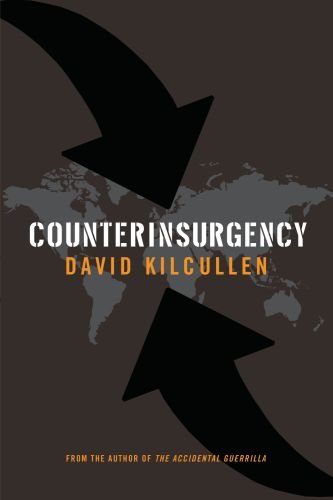
Counterinsurgency by David Kilcullen

The Grand Strategy of the Byzantine Empire by Edward Luttwak

Spook Country by William Gibson

Hope to start  a couple of these by the end of the month. A number of other books to be finished first.

I have a new decentralized reading strategy that seems to be helping me wad through books faster. Books that I am reading are distributed to be read in different places – one in my gym bag for the treadmill; one in my car in case there’s time to kill at an appointment or at a restaurant; one or two books downstairs to read on the couch or outside on the deck; one to take to the pool with the kids and four of five on my bedstand. There are also a store of books on my iPad, “just in case”.

The strategy allows me to concentrate on finishing several books – my “primary” reads – even as I steadily chip away at the rest and there are enough choices available to suit my mood on any given day so it doesn’t feel like I am doing a literary marathon. Books that I am focusing on, usually histories, strategic studies and social science works, I will mark up with marginalia and the others are just read without recourse to notation.

How do you handle your reading time?

New Books…..

Wednesday, June 30th, 2010


Framing the Sixties by Bernard von Bothmer

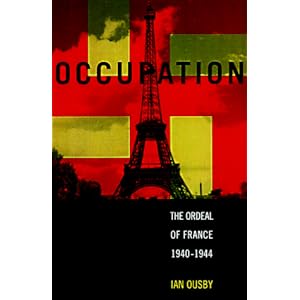
Occupation:The Ordeal of France 1940-1944 by Ian Ousby

How Wars are Won: the 13 Rules of War by Bevin Alexander

The first, which is an an analysis of how our historical memory of “the Sixties” have been wielded in cultural and political wars was sent as a review copy by Julie at FSB Associates. The next two were a gift from my regular guest-blogger,  Charles Cameron. Bevin Alexander is probably a familiar writer to many readers here. I’m adding them to my summer reading list.

The book pile towers ominously 🙂

Rofer on Blogging

Saturday, June 12th, 2010

Broadening the discussion on the state of blogging begun by Dr. James Joyner and Dr. Bernard Finel, blogfriend Cheryl Rofer at Phronesisaical delves into the stratification and attribution issues that have been wrought in the blogosphere by the MSM:

A Sketch of a Post on Blogging

….Once upon a time, the blogosphere was a sort of talent night, a talent 24/7, with entertainment for all. Much of that is still there, but some of the talent has gone pro; Kevin Drum, Ezra Klein, Matt Yglesias and others have joined the MSM or think tanks and link only to each other. Some days there is almost a perfect linking circle of Drum quoting Klein quoting Yglesias quoting Drum. Drum got linked from The Economist blog the other day, moving up one more notch. Stratification. The MSM, meanwhile, still doesn’t understand the idea of hyperlinks but provides something they call blogs at their sites. Some of these are actually blogs, like Ezra Klein’s at the WaPo. Some are more like newspaper columns with more depth or specialization, like Olivia Judson’s at the NYT. Some are sui generis, like the Gail and David show at the NYT. Others are clearly from reporters who have been told that they will produce a blog, probably not much more instruction provided.And then there’s the problem of the MSM simply stealing bloggers’ material (or those somewhere below them on the food chain) and not crediting it. I’ve seen this pretty unambiguously many times over the almost six years I’ve been blogging. And then there are situations where it’s not quite clear that material has been cribbed, but someone in the MSM says something that looks an awful lot like something I read days before in a blog. As a blogger friend said, “I think they call it research.” Or they don’t take it seriously enough. Today someone on The Oil Drum asked if the MSM was reading their threads, which have much more good information than anything I’ve seen on the BP Blowout in the MSM. Of course, it’s mixed, and there are some just plain dumb comments, but hey! that’s what the reporters get the big bucks to filter, right?

Read the rest here. 

Cheryl brings up a number of points about blogging from an information ecology standpoint I had not really considered when I reacted to Bernard’s post. I’ve noticed ideas or arguments that have been “liberated” from blogs I read in the media with some frequency in recent years and I think I first noticed a MSM outlet cribbing a paragraph, almost verbatim from me circa 2006. At the time, I laughed, but Cheryl’s considered point that attribution is important is not something peculair to the blogosphere – it’s actually the traditional standard for scholarship and journalism. Bloggers, reporters, academics, government officials – anyone writing in the public sphere – should hew to it.

When in doubt, adding the little quotation marks, a link or a hat tip is still the best course of action – it saves headaches down the road.

ADDENDUM:

Peter weighs in at The Strategist.

Karaka on WAR at SWJ Blog

Monday, June 7th, 2010

Blogfriend Karaka has a review of WAR by Sebastian Junger up at SWJ Blog today:

Junger’s War , Review by Karaka Pend

….Part of the purpose of Junger’s exercise is to engage as fully in the experience of being at Restrepo, of living with the men of Battle Company, as he can given the constraints of his embed. He mostly succeeds in that, in part because he let himself get swept up in the life-and-death fraternitas of it all, and perhaps more importantly because Battle Company allowed him to become a part of their brotherhood. It would have be a rather different story had he not won his way into the human terrain of that mountaintop.

….Throughout, Junger’s soldiers describe combat, describe firefight, as an addiction or a high; and perhaps that is the only real framework in which their longing for conflict or engagement with the enemy can be understood. If there is no greater high than when you are protecting your brother, how do you return to a world where you need not always watch your brother’s back?

ADDENDUM:

Video interview of Sebastian Junger by NRO.  Hat tip to Lexington Green.

Book Review: WAR by Sebastian Junger

Thursday, June 3rd, 2010

WAR by Sebastian Junger

I just finished reading my courtesy review copy of WAR by journalist and author Sebastian Junger, on his firsthand observation of the war against the Taliban in the Korengal Valley, waged by the soldiers of the 2nd Platoon of Battle Company. I cannot say that I found WAR to be an enjoyable read – though Junger is a polished writer – a more accurate description is that WAR is powerful, thought-provoking, at times moving and, ultimately, a very disturbing account of the war in Afghanistan.

Junger, whose previous works include The Perfect Storm: A True Story of Men Against the Sea and Fire, was embedded along with photojournalist Tim Hetherington, with 2nd Platoon during their COIN campaign in Korengal, a mission that resulted in some of the bloodiest firefights and highest American casualties of the Afghan war and withdrawal from a rugged valley sometimes known as “Afghanistan’s Afghanistan”. The Korengalis, related to the people of Nuristan, are noted for their xenophobic hostility to outsiders, which was directed at times toward the Taliban as well as Americans. Junger reports that the US only succeeded in controling a quarter of Korengal and contesting roughly half of the six mile by six mile valley with the Taliban and local “accidental guerrillas”motivated by money, excitement, religious zeal or revenge to attack the Americans.

WAR is not an especially “political” or “policy” book discussing the war from some remove. Junger’s primary interest are the men of second platoon at Restrepo, an outpost dedicated to the memory of a valorous medic who had been killed. O’Byrne, Anderson, Stitcher (who has “INFIDEL” tattooed across his chest), Jones, Moreno, Bobby to name just a few soldiers Junger interviewed and witnessed how they lived in the moment. That moment could comprise the adrenaline high of combat, agonies of grief, anticipatory tension before the next ambush, the angst of boredome behind the wire and especially the iron bonds of brotherhood in a small unit tempered by fire.

What comes through in War, aside from the extremity of the terrain and the uncertainty of ever-present danger, men being shot without warning by the enemy, even in Restrepo, is how very few men are actually involved in combat. Battle Company is the vaunted “tip of the spear” but when only a few hundred men were taking a wildly disproportionate percentage of all combat contacts in a nation the size of Afghanistan ( Junger cites 20 %) the spear begins to look more like a tiny sewing needle connected to a Leviathan-like noncombatant-administrative tail, surreally outfitted with fast food courts.

There’s a peculairly granular quality to Junger’s WAR, the grittiness of the squalid conditions in which soldiers live, the depths of their physical sufferings and mental exhaustion, their primal fear of letting their comrades down in battle and being responsible for getting friends killed. There are also epiphanies of bravery and carrying the day against the odds, men living who but for chance would have died on some rock strewn hill and lusty celebration after the deaths of their enemies. The sort of politically incorrect, atavistic, jubilation that is culturally frowned upon by people who are comfortably safe and far away.

What disturbed me most about WAR was not just how few Americans are carrying the burden of the combat in Afghanistan but how disconnected these few soldiers and their sacrifices are from the rest of the military itself. Junger’s epilogue with O’Byrne, a fine soldier who is a major figure in the book, and his inability to readjust and shift from the battlefield to garrison or civilian life is deeply depressing. “The Army’s trying to kill me” O’Byrne declared, finding a momentary refuge in alcohol, but little help from the military bureaucracy.

Junger attempted to show the war in Korengal as seen from the perspective of the privates, NCO’s and junior officers of Battle Company who lived and died there, from his interviews and his own participation in their patrols as they came under fire or as they gingerly parleyed with Korengali elders in isolated villages. Eschewing theory or a historian’s search for causation, Junger attempts to let the soldiers words and actions drive the narrative.

Sebastian Junger’s WAR is raw and undecorated by sentiment.

Switch to our mobile site