Archive for the ‘islamic world’ Category
Guest Post: DARPA, STORyNet and the Fate of the War by J. Scott Shipman
Wednesday, March 2nd, 2011J. Scott Shipman, the owner of a boutique consulting firm in the Metro DC area that is putting Col. John Boyd’s ideas into action, is a longtime friend of this blog and an occasional guest-poster. Scott has an important report regarding the “war of ideas” against the Islamist-Takfirist enemy in Afghanistan after attending a workshop hosted by DARPA.
DARPA, STORyNet and the Fate of the War
by J. Scott Shipman
I had the opportunity to attend a DARPA workshop yesterday called STORyNet. The purpose was to survey narrative theories, to better understand the role of narrative in security contexts, and to survey the state of the art in narrative analysis and decomposition tools (see below):
This STORyNET workshop has three goals:
1. To survey narrative theories.
These empirically informed theories should tell us something about the nature of stories: what is a story? What are its moving parts? Is there a list of necessary and sufficient conditions it takes for a stimulus to be considered a story instead of something else? Does the structure and function of stories vary considerably across cultural contexts or is there a universal theory of story?
2. To better understand the role of narrative in security contexts.
What role do stories play in influencing political violence and to what extent? What function do narratives serve in the
process of political radicalization and how do theyinfluence a person or group’s choice of means (such as violence) to achieve political ends? How do stories influence bystanders’ response to conflict? Is it possible to measure how attitudes salient to security issues are shaped by stories?
3. To survey the state of the art in narrative analysis and decomposition tools.
How can we take stories and make them quantitatively analyzable in a rigorous, transparent and repeatable fashion? What analytic approaches or tools best establish a framework for the scientific study of the psychological and neurobiological impact of stories on people? Are particular approaches or tools better than others for understanding how stories propagate in a system so as to influence behavior?
I was alerted to the meeting by a member at one of my “groups” at LinkedIn and just barely made the registration cut-off. It was a good meeting, but not reassuring on our situation in Afghanistan—you’ll see why below.
As a “hobby” I’ve been tinkering with the implications of patterns with respect to language and communications. Just about every presumption I have articulated over the last several months is being pursued in one way or another—which is good news for our guys. While the on-going research is good, I do believe there is room for better and more imaginative thinking, although I didn’t say anything during the meeting for once, I kept my mouth shut and just listened.
This is exceptionally brief and decidedly non-techincal. Here are some observations of interest:
- In Afghanistan, stories (those who tell them and those who believe) are central to our geopolitical strategy and policies.
- There is underway, a “battle of the narratives,” where any “counter” narrative developed by the US must have credibility. This seems obvious, but the speaker observed the “story telling” was more important than the story. Given the high illiteracy rate, this makes sense.
- We [DARPA] are reviewing chants (which are wildly popular), video, magazines, poetry, the Internet, and sermons as thematic vehicles for analysis.
- The language of the Taliban is not secular, and not the language of the insurgency—for the Taliban everything hangs on the legacy of jihad and religious struggle.
- The Taliban not willing to negotiate on matters of jihad. They are using a unified vision of Islam giving their struggle a noble foundation against the corruption of outsiders who want to “Christianize” the nation.
- The Taliban uses symbology to portray the struggle as a cosmic conflict against Christian invaders and US puppets (those cooperating with the US). Framing this symbology to communicate clearly the frame of the righteous vs. the infidels.
- The Taliban manipulates the language to connect the current struggle to previous struggles of “warrior poets.” There is hope a “discourse” can be created that will counter this framing [personal note: I’m not optimistic]. The Taliban uses different language to subjugate rural and urban dwellers, and actually have standard operating procedures for dealing with villages that resist.
- The cognitive patterns of rural Afghanistan are “foreign” to most Westerners and they use alien methods of knowledge transfer (chants, often under the influence of hashish).
- We are adding a geospatial element to our analysis of local and personal narratives (which includes subject, verb, object) with respect to identified “master narratives.”
- Internet data is indexed, with an eye toward predictive analysis and situational awareness (and interestingly, “sentiment” analysis). We are finding predictive power from the topology of “networks” used in models.
- From a neuroscience perspective, there was an amazing talk on empathy. It turns out, based on fMRI testing that empathy is quite predictable across subjects. Research indicates people “care more” about an “in-group” to which they belong more than an “out group.” The speaker defined the brain as a “parliament” of competing parties and nuanced spectrums [personal note: this elegant description tracks with everything I’ve read on the topic.].
- One presenter observed that after 10 years of war, we’re finally “getting” the importance of Pashtun culture and language. This presenter also noted US is still in need of people with language skills sufficient to adequately support the effort.
– End
COMMENTARY:
Zen here:
First, I’d like to cordially thank Scott for letting me share his insights gleaned from the workshop here with ZP readers. This is one of those fascinating events largely unavailable to those folks residing outside a reasonable driving distance from the Beltway.
Secondly, I am heartened that the brilliant folks at DARPA are taking the theological-ideological discourse of the enemy seriously in analyzing the power of narrative. Charles Cameron makes that point here with regularity. Michael Scheuer, Gilles Kepel and Olivier Roy did so even before 9/11. Our political appointees and policy makers remain steadfastly allergic to this reality, unable to process or discuss in public with coherence how religious ideas are a root for political extremism. Col. David Kilcullen, who certainly understands political Islam better than most and whose creative and analytical acheivements in structuring a framework for countering insurgency are second to none, eschews dealing with the topic in his theoretical writings on COIN where it can be avoided. That is the cost imposed by the political correctness to which our ruling elite are psychologically welded.
It comes as no surprise to me that only after “10 years of war” are we finally “getting the importance of Pashtun culture”.
Maybe at the dawn of the 22nd century we will be “old hands”.
A HipBone approach to analysis VI: from Cairo to Bach
Monday, February 28th, 2011[ by Charles Cameron ]
*
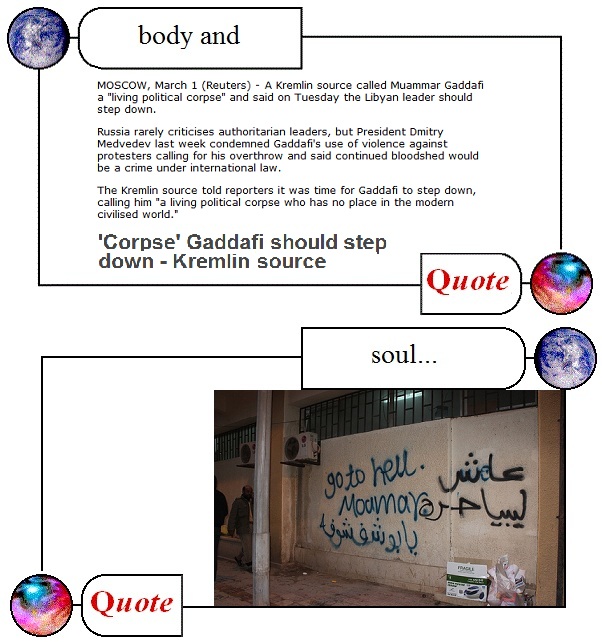
The description of Egyptian troops attacking a Christian monastery that forms the first quote in this DoubleQuote is horrifying in many ways.
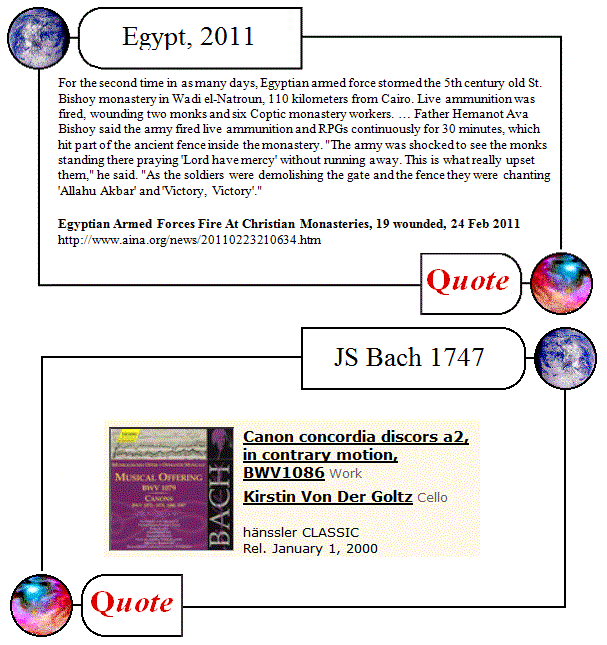
Recent events in Egypt had featured mutual support between Muslims and their Coptic Christian neighbors, each group in turn acting as human shields to protect the other while they were praying. Here, by contrast, the army – which is effectively now “ruling” Egypt in the interregnum between the fall of Mubarak and the election of a new President and government – is attacking the humans it is supposed to protect.
But what does that have to do with Bach?
*
Part I: a monastery attacked in Egypt
This is vile.
Those who are being attacked happen to be Christians and monks, no less human on either account, and just as subject to bleeding as others – so they might ask, with Shakespeare‘s Shylock speaking for the Jews:
If you prick us do we not bleed? If you tickle us do we not laugh? If you poison us do we not die? And if you wrong us, shall we not revenge?
That last question of Shylock’s is an interesting one, and gets to the heart of what I want to discuss here, as we shall see.
Specifically, these human beings were monks. Muhammad had a higher opinion of monks than of many others. In the Qur’an, we find:
The nearest to the faithful are those who say “We are Christians.” That is because there are priests and monks among them and because they are free of pride.
*
Sigh.
These “followers” of Muhammad were attacking Christian monks with live ammunition and RPGs continuously for 30 minutes, wounding 19.
They felt superior to their compatriots the monks, they cried “God is Great” and “Victory, Victory” as they did it.
In this they resemble GEN Boykin, who famously responded to a Somali warlord claiming that God would protect him, “Well, you know what? I knew that my God was bigger than his. I knew that my God was a real God and his was an idol.”
I could easily have made that my second quote here, pairing it with the description of the Egyptian army attack on the monastery, for between the two of them they raise the question of whether weaponry is stronger than belief – and while some Christians might agree with General Boykin, some Muslims might agree no less strongly with the members of the Egyptian military shouting “Allahu Akbar”.
*
I believe that taking sides here misses the point.
Which I am happy to say, Abraham Lincoln made with considerable eloquence in his Second Inaugural Address in 1865, almost a century and a half ago:
The prayers of both could not be answered. That of neither has been answered fully. The Almighty has His own purposes.
That point is one which HaShem made to his angels, according to rabbinic teaching:
The Talmud teaches us that on the night that the Egyptian army drowned in the Red Sea, the first true moment of freedom for the Jews fleeing Egypt, God refused to hear the angels sing their prayers, and said “my creations are drowning in the sea, and you will sing songs?”
So, no — revenge is not the way to go…
*
But please note that the point I am making is not one of moral equivalence.
That God which created “both sides” in any human conflict and loves each and every one of his own creations, might indeed find one creed superior to another, as he might find one scientific law more accurately describing the workings of, say, gravitational attraction than another – or the night sky at Saint-Rémy portrayed by Van Gogh more or less moving than the thunderous sky over Toledo of El Greco.
In the view I am proposing, the “God who takes neither side” in fact takes both, but with this distinction: he sides with the wounded more than with those who inflict wounds – not because one side has a better creed than the other, but because he made us to learn not to unmercifully maim and destroy one another…
…one of whose names is The Merciful, in whose scriptures it is written:
If thou dost stretch thy hand against me, to slay me, it is not for me to stretch my hand against thee to slay thee: for I do fear Allah, the cherisher of the worlds.
…one of whose names is The Lord is Peace, in whose scriptures it is written:
Love your enemies and pray for those who persecute you.
*
Part II: Bach and contrapuntal analysis
All of which brings me to the second “quote” in my DoubleQuote above: JS Bach‘s “concordia discors” canon in two voices, BWV 1086 – which you can hear or purchase here.
Bach’s mastery was in counterpoint, the play of one musical idea against another, and in this particular work, the two ideas are exact opposite: in musical terms, the melody is played here against its inversion. And the point of counterpoint, if I may put it that way, is not to provide “harmony” but to show how discord can become harmonious and concordant — or to put that in the geopolitical terms that interest me, how conflict and opposition can be resolved…
Not, you understand, that this state of affairs then leads necessarily to the singing of Kumbaya or the kind of ending in which “they all lived happily ever after”.
Concordia discors: the resolution of the present conflict, in a continuing overall “music” of great power and beauty, in which further conflicts will inevitably arise and find resolution.
*
Here’s the essence: Bach takes contrasting and at times conflicting melodic ideas and makes music.
He teaches us to hear distinct and differing voices, to allow ourselves to hear and feel both the discomfort that their disagreements raise in us, and the satisfaction that comes as those disagreements are worked out. He does this by teaching us to hear them as voices within a choir, ribbons in a complex braid, making together a greater music that any of them alone could give rise to. And in this process, their differences are neither denied nor lost, but resolved and transcended.
Edward Said, whose politics my readers may dislike or like or even perhaps be unaware of, was for years the music critic for The Nation, wrote three books (and an opus posthumous) on music, and with his friend the pianist and conductor Daniel Barenboim co-founded the West-Eastern Divan Orchestra, named for the West-östlicher Diwan, Goethe’s collection of lyric poems.
Barenboim (the Israeli) wrote of Said (the Palestinian):
In addition to being well versed in music, literature, philosophy, and the understanding of politics, he was one of those rare people who sought and recognized the connections between different and seemingly disparate disciplines. His unusual understanding of the human spirit and of the human being was perhaps a consequence of his revelatory construct that parallels between ideas, topics, and cultures can be of a paradoxical nature, not contradicting but enriching one another.
And there we have it again: Bach’s insight, this time transposed by an accomplished musician into the key of thoughts and ideas…
*
Said talks quite a bit about counterpoint, both musically:
Musically, I’m very interested in contrapuntal writing, and contrapuntal forms. The kind of complexity that is available, aesthetically, to the whole range from consonant to dissonant, the tying together of multiple voices in a kind of disciplined whole, is something that I find tremendously appealing.
.
[Said, Power, Politics and Culture, p. 99.]
and politically:
When you think about it, when you think about Jew and Palestinian not separately, but as part of a symphony, there is something magnificently imposing about it. A very rich, also very tragic, also in many ways desperate history of extremes — opposites in the Hegelian sense — that is yet to receive its due. So what you are faced with is a kind of sublime grandeur of a series of tragedies, of losses, of sacrifices, of pain that would take the brain of a Bach to figure out. It would require the imagination of someone like Edmund Burke to fathom.
.
[Said, Power, Politics and Culture, p. 447.]
*
As I commented in an earlier post that ties in with this one, the great pianist Glenn Gould was also preoccupied with counterpoint, both in Bach’s music and in conversations overheard at a truck-stop cafe or on long train journeys — he too was “working” the parallel between melodic and verbal forms of counterpoint.
And JRR Tolkien made the reconciliation of discordant musics in a greater concord the central to his creation myth in The Silmarillion, “The Music of the Ainur”, which can now be read online at the Random House site.
*
Part III: invitation
May I strongly commend to your attention the movie, Of Gods and Men, which just opened in limited release, having won the grand jury prize at Cannes…
Question……
Thursday, February 24th, 2011We have been hearing a great deal about the “leaderless” Libyan resistance to Gaddafi. To a lesser degree, we heard similar things about Egypt when protestors failed to coalesce behind Elbareidi as Egypt’s national savior, but it was muted, perhaps due to the prominence of Wael Ghonim, an influential figure to whom western reporters and audencies could relate. Ghonim, however, was not a “leader” in the same sense as say, Nehru, Walesa or Yeltsin.
Are these revolts really of a different political character or do their “leaders” in this panopticonic global environment just have the sense to stay the hell out of sight?
Farrall in Foreign Affairs:How al Qaida Works
Thursday, February 24th, 2011Leah Farrall, the Australian former counterterrorism official who blogs at All Things Counterterrorism (and is a friend of Charles Cameron ) has an important analytical article in Foreign Affairs (hat tip to the oratorical Josh Foust):
Despite nearly a decade of war, al Qaeda is stronger today than when it carried out the 9/11 attacks. Before 2001, its history was checkered with mostly failed attempts to fulfill its most enduring goal: the unification of other militant Islamist groups under its strategic leadership. However, since fleeing Afghanistan to Pakistan’s tribal areas in late 2001, al Qaeda has founded a regional branch in the Arabian Peninsula and acquired franchises in Iraq and the Maghreb. Today, it has more members, greater geographic reach, and a level of ideological sophistication and influence it lacked ten years ago.
Still, most accounts of the progress of the war against al Qaeda contend that the organization is on the decline, pointing to its degraded capacity to carry out terrorist operations and depleted senior leadership as evidence that the group is at its weakest since 9/11. But such accounts treat the central al Qaeda organization separately from its subsidiaries and overlook its success in expanding its power and influence through them. These groups should not be ignored. All have attacked Western interests in their regions of operation. Al Qaeda in the Arabian Peninsula (AQAP) has also long targeted the United States, but its efforts have moved beyond the execution stage only in the last two years, most recently with the foiled plot to bomb cargo planes in October 2010. And although al Qaeda in the Islamic Maghreb (AQIM) has not yet attacked outside its region, al Qaeda in Iraq (AQI) was reportedly involved in the June 2007 London and Glasgow bomb plots.
It is time for an updated conception of al Qaeda’s organization that takes into account its relationships with its subsidiaries. A broader conceptual framework will allow for a greater understanding of how and to what degree it exercises command and control over its expanded structure, the goals driving its expansion strategy, and its tactics.
AL QAEDA’S LOST DECADE
Although al Qaeda had tried to use other groups to further its agenda in the 1980s and early 1990s, Osama bin Laden’s first serious attempts at unification began in the mid-1990s, when the organization was based in Sudan. Bin Laden sought to build an “Islamic Army” but failed. Al Qaeda had no ideology or manhaj (program) around which to build lasting unity, no open front of its own to attract new fighters, and many of its members, dissatisfied with “civilian work,” had left to join the jihad elsewhere. Faced with such circumstances, bin Laden instead relied on doling out financial support to encourage militant groups to join his army. But the international community put pressure on Sudan to stop his activities, and so the Sudanese government expelled al Qaeda from the country in 1996. As a result, the group fled to Afghanistan.
By mid-1996, al Qaeda was a shell of an organization, reduced to some 30 members. Facing irrelevance and fearing that a movement of Islamist militants was rising outside of his control, bin Laden decided a “blessed jihad” was necessary. He declared war on the United States, hoping this would attract others to follow al Qaeda. It did not. A second effort followed in 1998, when bin Laden unsuccessfully used his newly created World Islamic Front for Jihad Against Jews and Crusaders to lobby other groups to join him. Later that year, al Qaeda launched its first large-scale attacks: the bombings of the U.S. embassies in Kenya and Tanzania, which it hoped would boost its fortunes. But these, too, failed to attract other groups to join, with some instead criticizing al Qaeda for the attacks and its lack of a legitimate manhaj.
With no coherent ideology or manhaj to encourage unification under his leadership, bin Laden instead pursued a predatory approach. He endeavored to buy the allegiance of weaker groups or bully them into aligning with al Qaeda, and he attempted to divide and conquer the stronger groups. In the late 1990s, he tried and failed to gain control over the Khalden training camp, led by the militants Ibn al-Shaykh al-Libi and Abu Zubaydah, and over the activities of Abu Musab al-Suri and Abu Khabab al-Masri, senior militant figures who ran their own training programs. Bin Laden’s attempts in 1997-98 to convince Ibn al-Khattab, a Saudi militant who led an international brigade in Chechnya, to come under al Qaeda’s banner also failed. His efforts in 2000-2001 to gain control over a brigade of foreign fighters in Afghanistan met a similar fate: the Taliban leader Mullah Omar, who had supreme authority over the brigade, instead handed the leadership of it to the Islamic Movement of Uzbekistan, another group bin Laden was attempting to convince to align with al Qaeda. Around the same time, bin Laden also unsuccessfully lobbied the Egyptian Islamic Group and the Libyan Islamic Fighting Group to join al Qaeda’s efforts. And although al Qaeda supported the militant Abu Musab al-Zarqawi in his establishment of an independent training camp in Afghanistan, bin Laden was unable to convince him to formally join the organization.
The only real success during this period was al Qaeda’s mid-2001 merger with Egyptian Islamic Jihad, led by Ayman al-Zawahiri, now al Qaeda’s second-in-command. The merger was possible thanks to Egyptian Islamic Jihad’s weakened position and its reliance on bin Laden for money. The decision was nevertheless contentious within Egyptian Islamic Jihad, and several of its members left rather than join with al Qaeda. In the end, al Qaeda’s only successful merger during its Afghanistan years added just five people to its core membership. Compared to this dismal record, the past decade has been highly successful….
Read the rest here (subscription required) or for a brief time in full, for free, here.
First, I’d like to say congratulations to Ms. Farrall who has been working hard researching the nuances of ideological, theological, tactical and organizational differences and personal rivalries that existed within the mutable and murky subterranean world of professional Islamist revolutionaries. It’s important work. Her recognition in FA is deserved and American terrorism experts should give her arguments close scrutiny.
Secondly, I will say her article shows the extent to which our takfirist enemies, not just al Qaida, take seriously the ideas behind their global insurgency and that, to them, it is both global and local. The “internationalist” jihadis like Bin Laden seek to weld themselves together with the parochial “Nationalist-Islamists” and David Kilcullen’s local “accidental guerrillas” with a “eucumenical” radical Islamism. As many USG officials seek to ignore or promote an official line of ignoring the ideological and theological motivations of our enemies, they will probably dismiss Farrall unless she gains enough media prominence that this is no longer feasible – at which point, they will make nasty and anonymous criticism about her on background to The New York Times and The Washington Post.
Thirdly, Farrall has a very important point here when she wrote:
….They drew from takfiri thought, which justifies attacking corrupt regimes in Muslim lands, and on materials that outline the Muslim requirement to target the global enemy: in this case, the United States and the West. (This was framed in the context of defensive jihad, the need for which was reinforced by the 2003 U.S. invasion of Iraq.) The hybrid ideology and manhaj that emerged make little distinction between targeting local enemies and targeting global ones and have a one-size-fits-all solution — jihad. Partnering with al Qaeda does not, therefore, require a local group to abandon its own agenda, just broaden its focus. This helped assuage other groups’ fears that merging with al Qaeda would mean a loss of autonomy to pursue their own local goals.
This is what Global Guerrilla theorist John Robb would call “a Plausible Promise“, a required step in building an “open source insurgency” which can attract groups with differing agendas, opportunitic actors and ideologically motivated, socially alienated “lone wolves” to their banner. Al Qaida has tacticians who apparently agree, having formally adopted “Open Source jihad” in late 2010. So far, the executive branch departments of the USG seem to be studiously determined to ignore that as well, a stance that corrupts our analytical integrity and cripples our operational effectiveness. Lying to oneself is rarely a good way to get an advantage over an opponent.
I think I can speak for Charles Cameron in that we here at zenpundit.com hope to see more articles from Ms. Farrall in the near future.
ADDENDUM:
SWJ Blog –The Hasan Slide Presentation A Preliminary Commentary by Charles Cameron


