On the felicities of graph-based game-board design: ten
Sunday, October 9th, 2016[ by Charles Cameron — a long, lazy Sunday post, packed with quirky interest and neat maps ]
.
Ten? What’s so special about ten, hunh? Just because you have ten fingers, you suppose that makes ten special?
**
One:
As simple as a map can get:
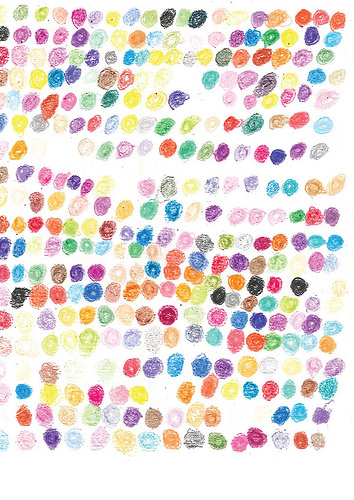
Simon Kirby, The Worry Line

Two:
As complex as one can get:
Eric Jaffe, The World’s 15 Most Complex Subway Maps

And I mean complex, cognitively complex:
When it comes to information processing, an average person’s “cognitive threshold” is about 250 connections, or the equivalent of roughly eight bits of data, according to the researchers. New York’s system neared that limit, with 161 total connections, and the most complicated two-transfer trip a person could make on the subway exceeded it—clocking in at 8.1 bits. Maps for the Paris Metro (with 78 total connections), Tokyo Metro (56), and London Tube (48) clustered around six bits of information.
Three:
Naked:
Nick van Mead, Can you identify the world cities from their ‘naked’ metro maps?

The Guardian wanted to know if you could recognize various cities if shown their metro maps without the stations markings.. and i could manage Chicago (above).
Four:
Coffee:
Chris Ward, Coffee Stops

Sadly, the map is not the territory, or I could get my Java from South Ken while sitting at my desk just outside Sacramento.
The London Coffee Map, “Coffee Stops,” was designed by Chris Ward, who calls himself “the boss who works from coffee shops.” He recently published Out of Office: Work Where You Like and Achieve More, a best-selling guide to leading a successful working life outside an office building. Apparently, being properly caffeinated is one of his biggest tips. Now you can grab your joe at local London cafes with quaint names like Scooter and Electric Elephant.
Five:
Mug:
I could then quaff it from an appropriately poetical Map Mug:
Royal Shakespeare Company, Greater Shakespeare Map Mug

The map here representing affinities between characters in the Bard’s various plays:

**
Interlude:
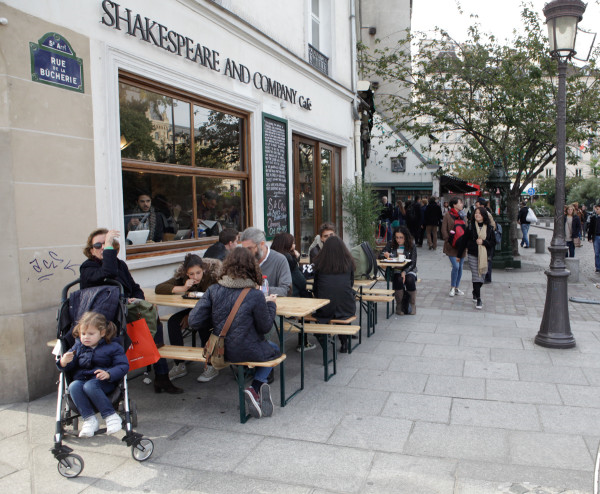
— and we’re half way to ten, let’s imagine ourselves at Shakespeare and Co‘s bookstore and cafe in Paris —
**
Six:
Calvino
While we’re on a literary streak, here’s a thumbnail of one of artist Rod McLaren‘s illuminations of Italo Calvino‘s Invisible Cities:
Rod McLaren, Invisible Cities Illustrated #2: Trude/Ersilia

The detail here is fantastic, as befits Calvino’s work:
The diagram, a network of curved lines connecting to every other node on a 6 x 5 grid, has two configurations: if the picture is hung one way up, it shows the “Ersilia configuration” (where the lines are like the threads strung between the buildings of Ersilia); if hung the other way up, it shows that of Trude (where the lines are like a complicated airline route map).
Ersilia (Trading Cities 4, p78):
In Ersilia, to establish the relationships that sustain the city’s life, the inhabitants stretch strings from the corners of the houses, white or black or gray or black-and-white according to whether they mark a relationship of blood, of trade, or authority, agency. When the strings become so numerous that you can no longer pass among them, the inhabitants leave: the houses are dismantled; only the strings and their supports remain. From a mountainside, camping with their household goods, Ersilia’s refugees look at the labyrinth of taut strings and poles that rise in the plain. That is the city of Ersilia still, and they are nothing.
They rebuild Ersilia elsewhere. They weave a similar pattern of strings which they would like to be more complex and at the same time more regular than the other. Then they abandon it and take themselves and their houses still farther away.
Thus, when travelling in the territory of Ersilia, you come upon the ruins of the abandoned cities, without the walls which do not last, without the bones of the dead which the wind rolls away: spiderwebs of intricate relationships seeking a form.
Trude (Continuous Cities 2, p128):
If on arriving at Trude I had not read the city’s name written in big letters, I would have thought I was landing at the same airport from which I had taken off. The suburbs they drove me through were no different from the others, with the same greenish and yellowish houses. Following the same signs we swung around the same flower beds in the same squares. The downtown streets displayed goods, packages,signs that had not changed at all. This was the first time I had come to Trude, but I already knew the hotel where I happened to be lodged; I had already heard andspoken my dialogues with the buyers and sellers of hardware; I had ended other days identically,looking through the same goblets at the same swaying navels.
Why come to Trude? I asked myself. And I already wanted to leave.
“You can resume your flight whenever you like,” they said to me, “but you will arrive at another Trude, absolutely the same, detail by detail. The world is covered by a sole Trude which does not begin and does not end. Only the name of the airport changes.”
All of which reminds me of nothing so much as Antonio Gaudi‘s model — made of hanging chains — catenaries —

which when turned upside down provide the structure for his Sagrada Familia cathedral in Barcelona:

Seven:
Ghost:
Meanwhile, back in London, we have maps of the ghost (ie abandoned) London tube stops:
Dylan Maryk, Ghost Stations On The London Underground

Eight:
That’s one way to de-clutter the Tube map — show what ain’t there any more.
Here’s another —
Matt Thomason, 150 years of The London Underground

Don’t ask me what it means — seeing as Hugh Grant gets a station, it’s either gentlemanly or ungentlemanly, I’m not sure which.
Nine:
Music:
I simply didn’t know you’d have to travel this far to get from Dylan to the Beatles:
Dorian Lynskey, in Tufte, Response to London Underground maps

I mean —
Michelle Geslani, The Beatles and Bob Dylan met 50 years ago today

Ten:
I’ve kept this one for last because in some ways it’s the subtlest:

It’s the work of architect Jug Cerovic., and on his page In Borders We Trust he offers this conceptual comment:
Borders are primarily a mental construct.
Just like a deity, they exist only insofar as People believe in them. Question is however how necessary our belief in their existence is and when exactly does that belief start harming us?
At which point do borders cease to be a convenient orientation marker, a helpful tool for the comprehension of the land we inhabit, a common identifier for the construction of a shared identity? At which point do borders become a dogmatic limitation to imagination, a terrifying prison for the body and mind, a symbol and support of hatred?
Borders do not possess an inherent bad or good character, on the contrary they are a malleable concept subject to appropriation and interpretation.
“In borders we trust” examines the perception, physical manifestation and enforcement of the couple formed by People and Borders focusing on three key areas of the contemporary migration routes:
Gibraltar Serbia Levant For this purpose the peculiar relationship between Borders and People is illustrated with a sequence of three distinct maps:
Borders without People Borders with People People without Borders This novel perspective of a seemingly familiar representation, with each component of the couple shown separately and juxtaposed to their combined illustration, questions the articulation and pertinence of our present predicament.
Happily, this is an area that I’ve delved into at some length myself in my earlier post, No man’s land, one man’s real estate, everyone’s dream? — with specific reference to ISIS’ bulldozing of the border between Iraq and Syria, and the Basque country, Euskadi, saddling the French / Spanish border.
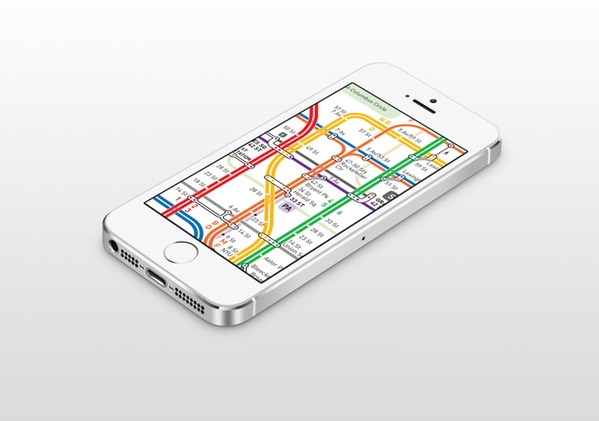
Cerovic has achieved an eminently practical limited version of one of my own grandiose castle-in-air schemes — building a universal graphical mapping system. Cerovic’s version offers us a universal graphical underground / tube / metro mapping system, in the form of his book One Metro World — you still have a couple of weeks to support it on Kickstarter!
**
Earlier in this series:
On the felicities of graph-based game-board design: preliminaries On the felicities of graph-based game-board design: two dazzlers On the felicities of graph-based game-board design: three On the felicities of graph-based game-board design: four On the felicities of graph-based game-board design: five On the felicities of graph-based game-board design: six On the felicities of graph-based game-board design: seven On the felicities of graph-based game-board design: eight
And hey, and we’re back at maps — where we started in
On the felicities of graph-based game-board design: nine