zenpundit.com » theory

Archive for the ‘theory’ Category

Guest Post: Charles Cameron on In a Time of Religious Arousal

Saturday, September 11th, 2010

Charles Cameron is the regular guest-blogger at Zenpundit, and has also posted at Small Wars Journal, All Things Counterterrorism, for the Chicago Boyz Afghanistan 2050 roundtable and elsewhere.  Charles read Theology at Christ Church, Oxford, under AE Harvey, and was at one time a Principal Researcher with Boston University’s Center for Millennial Studies and the Senior Analyst with the Arlington Institute:

In a Time of Religious Arousal

by Charles Cameron

We live in times of considerable religious arousal – witness the Manhattan mosque and cultural center controversy, the on-again, off-again Florida Quran burning, last week’s Glenn Beck rally at the Lincoln Memorial,Hindutva violence against Muslims in India, Muslim violence against Christians, the wars ongoing or drawing to an end in Afghanistan and Iraq, the threat of an Israeli or American attack on Iran, the Palestinian-Israeli conflict and peace process… In each of these instances, religious arousal has a role to play.

It would require considerable care, research, and craftsmanship to produce a nuanced and appropriately balanced view of human nature, the current state of the world, American, European and Islamic popular, polite and political opinions, the global admixture of peoples and approaches that characterize Islam, the history of violence, religious and otherwise, the braiding in different times and places of religion with politics, the roots of violence, the roots of peace and its meanings both as a state of cessation of conflict and as a state of contemplative calm…

Such a presentation would require at least a book-length treatment, and cannot be trotted out every time some new spark emerges from the ancient fires… but perhaps I can lay out some of my own considerations about the topic here, in somewhat condensed form.

The teachings of Jesus appear to have been directed towards an audience that included regular folk: fishermen, members of an occupying military force, radical zealots, a tax-collector, a physician, a prostitute, religious scholars… a fair cross-section of human kind…

Every religion of any real “size” will have followers who are intellectuals, fearful followers, angry and reactive followers, contemplative followers – followers who are skilled in the various businesses of crime prevention, defense, contemplation, literature, the sex trade, theft, medicine, art, bargaining, diplomacy, music, architecture, investigativejournalism, yellow journalism, inspirational writing, poetry…

It will of necessity address, and over time retain traces, of all their concerns.

Every religion of any real “size” will also have begun in a particular time, place and cultural setting, and will carry considerable parts of that setting with it, although it may also contain elements of a more profound or elevated spirit…

Every religion and scripture will, I suggest, promise a garden / paradise / city which is both attainable “outside” life, in a “there” which is hard to put into words, and “within” us, a similarly difficult concept to verbalize, in the moment, here.  It will also contain what I call “landmines in the garden” – verses or narratives that offer sanction to what we today might regard as abhorrent violence against the innocent “other”.

Thus in Numbers 25 in the Jewish Tanakh and Christian Bible, the Lord offers to Phineas / Pinchas a “covenant of priesthood”, because he recognized that his Lord did not appreciate an Israelite and a woman of the Midianitescopulating, and skewered the pair of them in flagrante through their conjoined parts with his spear — without first seeking the approval of the High Priest. 

This story gave rise to the notion of the “Phineas Priest” action, in which a “lone wolf” kills on behalf of [a version of the Christian] God.

One of the most radical Christian Identity theorists is Richard Kelly Hoskins, who in 1990 invented the notion of the “Phineas Priest,” built around the concept of the biblical Phinehas, who used a spear to slay an Israelite and a Midianite who had lain together. Phineas Priests believe themselves modern day Phinehases, with a self-appointed mission to strike out in the most violent and ruthless way against race mixers, abortionists, homosexuals, Jews, and other perceived enemies.

Hoskins expounded the idea in his 1990 book, Vigilantes of Christendom: The Story of the Phineas Priesthood, citing both Robin Hood (!) and John Wilkes Booth as examples…

It seems highly probable that Byron de la Beckwith, killer of civil rights leader Medgar Evers, considered himself a Phineas Priest, see Reed Massengill, Portrait of a Racist: The Man who Killed Medgar Evers, pp 303-305.  Similarly, it appears that Rev. Paul Hill, convicted of abortion clinic murders, was considered by his friends, and may have considered himself, a Phineas Priest. Likewise Yigal Amir, assassin of Yitzak Rabin, seems to have had the Phineas story in mind when deciding, without rabbinic support, to go ahead and kill the Israeli PM.

For an example of a recent meeting of rabbis — in Jerusalem’s Ramada Renaissance hotel– to promote the permissibility under halachic law of the killing of goyim / gentiles, see this article by Max Blumenthal and the accompanying video:

Individuals, small sects or powerful movements will on occasion seize on these “landmine” texts within a religious tradition, and use them to justify acts of violence, large and small. 

The Crusades, for instance, did this on behalf of Christianity and against Islam, notwithstanding which St Francis was able to approach Saladdin’s nephew, the Sultan Malik al-Kamil, across the battle lines, coming in peace, discussing matters of devotion, and departing in peace.  The Islam of al-Andalus was for centuries, in comparison to the Christendom of its time, a model of scholarship and tolerance – though not without aspects of the pre-eminence of Islam, dhimmi status for People of the Book, the jizya, etc. 

Mark Juergensmeyer, author of Terror in the Mind of God and currently our finest analyst of religious terrorism, recently co-edited a book on Buddhist Warfare (obligatory, cautionary note: Juergensmeyer and I are both contributors to Michael W Wilson and Natalie Zimmerman’s book, A Kingdom at Any Cost: Right-wing Visions of Apocalypse in America). The world of Zen has been rattled by controversy regarding the support of leading roshis for the Japanese imperial war effort — and there are apocalyptic references to a future war between Buddhists and the mleccha (presumably Islam) in the text ofwhat the Dalai Lama has termed an “initiation for world peace” — the Kalachakra tantra.

Alexander Berzin, who has translated for the Dalai Lama on numerous occasions when this teaching was given, comments:

A careful examination of the Buddhist texts, however, particularlyThe Kalachakra Tantraliterature, reveals both external and internal levels of battle that could easily be called “holy wars.” An unbiased study of Islam reveals the same. In both religions, leaders may exploit the external dimensions of holy war for political, economic, or personal gain, by using it to rouse their troops to battle. Historical examples regarding Islam are well known; but one must not be rosy-eyed about Buddhism and think that it has been immune to this phenomenon. Nevertheless, in both religions, the main emphasis is on the internal spiritual battle against one’s own ignorance and destructive ways.

Any and all religions can be used to justify internal struggle, external violence, external peace-making and inner peace: the question is how these various threads are interwoven in individual cultures and histories, and in our own times.

That is, I’d suggest, a matter for legitimate dispute – but not one with an easy one sentence or even single paragraph answer.

In my view, the most powerful response to the current global “jihadist” movement will come not from advocates of democracy (whether backed up or not by military force or threat of force) who will naturally appear to be interfering in affairs between the soul and its God that do not concern them – but from people within the jihadists’ own  religious tradition.

Noman Benotman, one-time leader of the Libyan Islamic Fighting Group and colleague of bin Laden and Zawahiri, wrote an open letter to bin Laden dated 10 September 2010 / 1 Shawwal 1431 AH, which the Quilliam Foundation just released under the title “Al-Qaeda: Your Armed Struggle is Over“.

Benotman’s letter opens with an invocationfrom Qur’an57:16:

Is it not time for believers to humble their hearts to the remembrance of God and the Truth that has been revealed.

The text of Benotman’s message is only four pages long, and I recommend reading the whole of it – but have selected this single passage as representative of his critique:

What has the 11th September brought to the world except mass killings, occupations, destruction, hatred of Muslims, humiliation of Islam, and a tighter grip on the lives of ordinary Muslims by the authoritarian regimes that control Arab and Muslim states? I warned you then, in summer 2000, of how your actions would bring US forces into the Middle East and into Afghanistan, leading to mass unrest and loss of life. You believed I was wrong. Time has proved me right

Benotman closes:

In urging you to halt your violence and re-consider your aims and strategy, I believe I am merely expressing the views of the vast majority of Muslims who wish to see their religion regain the respect it has lost and who long to carry the name of “Muslim” with pride.

For those who are concerned at the influence of Anwar al-Awlaki on English-speaking youth, there’s a detailed 130-page critique of his approach to global jihad from a strict Salafist perspective available on the web:

On the topic of suicide bombing / martyrdom operations viewed from an Islamic perspective, I’d suggest reading the Ihsanic Intelligence “Hijacked Caravan“:

And for a glimpse of the wider possibilities offered within the Islamic world, Bassam Tibi’s brief summary in his book, The Challenge of Fundamentalism: Political Islam and the New World Disorder is worth considering:

To me religious belief in Islam is, as Sufi Muslims put it, “love of God,” not a political ideology of hatred. … In my heart, therefore, I am a Sufi, but in my mind I subscribe to ‘aql/”reason”, and in this I follow the Islamic rationalism of Ibn Rushd/Averroes. Moreover, I read Islamic scripture, as any other, in the light of history, a practice I learned from the work of the great Islamic philosopher of history IbnKhaldun. The Islamic source most pertinent to the intellectual framework of this book is the ideal of al-madina al-fadila/”the perfect state”, as outlined in the great thought of the Islamic political philosopher al-Farabi.

Irani and Funk’s “Rituals of Reconciliation: Arab-Islamic Perspectives” indicates something of what an Islamic approach to truth and reconciliation might look like:

No doubt there’s a great deal more that onemight say, but that must suffice for now.

Charles Cameron.
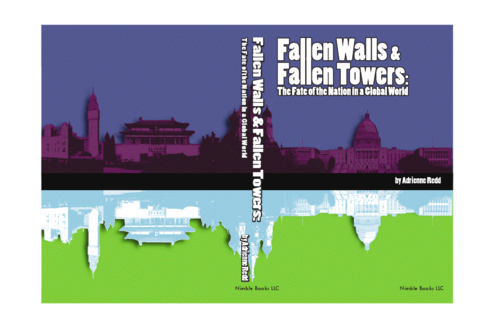
Fallen Walls and Fallen Towers by Adrienne Redd

Monday, August 30th, 2010

redd.png

Fallen Walls and Fallen Towers: The Fate of the Nation in a Global World by Adrienne Redd

I “met” Dr. Adrienne Redd some years ago through the kind offices of Critt Jarvis, which resulted in a wide-ranging and intermittent email discussion, sometimes joined by John Robb and others, of “virtual states”, “virtual nations”, “micropowers” and evolving concepts of sovereignty and statehood in international relations. It was an intellectually stimulating conversation.

Today, Dr. Redd is Nimble Books’ newest author, and she has just sent me a review copy of Fallen Walls and Fallen Towers, the culmination of approximately seven years of research and writing.  Redd investigates nothing less than the “fate of the state” and I am looking forward to reading her argument in detail.

To be reviewed here soon….

Grand Strategy and Morality II.

Tuesday, August 24th, 2010


After I wrote the post Grand Strategy and Morality, blogfriend T. Greer had a serious objection:

Grand Strategy, I submit, does not provide us with a moral purpose. Rather, grand strategy is the means we use to satisfy the demands of this purpose. You cannot have grand strategy without the purpose – but they are not one and the same. Purpose transcends individual statesmen. It is the work of peoples, not politicians. As I state later in the piece:

Greer cites his erudite essay on the subject, Dreaming Grand Strategy for the full explanatory argument ( here is Greer’s excerpt but you should read the whole thing):

In  Manifest Destiny and Mission in American History Frederick Merk states that the defining feature of the American polity has been its “sense of mission.” Americans, says he, have always been invested in the idea that their Republic served a great purpose. They could never delegate their destiny to the realpoliticking of the upper echelons of power. In times of crisis it is this sense of of purpose that has sustained the Republic, and in achieving national goals it is this sense of purpose that has acted as the unconscious guide of American statesmen and citizens alike. Strip away America’s mission, and you have stripped away America. And in doing so you have stripped away our grand strategy as well.

You will be hard pressed to find a strategy articulated and pursued by American statesmen that was not embedded in a larger sense of American purpose. The isolationism of the early 1800s was rooted in the conviction that America was creating “an Empire of Liberty”, untouched by the despotism of the old world. 50 years later the nation fulfilled its “Manifest Destiny” to “Extend the Area of Freedom” by expanding to the Pacific coast. Before Roosevelt could put “Germany First”, he needed to declare that his country was “The Arsenal of Democracy”.  Kennan’s policy of containment was reliant on the assurance that America was the true and only “Leader of the Free World.”

Phrases like “Manifest Destiny” and “Arsenal of Democracy” were not merely the rhetorical flourish used by canny politicians to justify the exercise of power. They were the reason power was exercised in the first place. These phrases were, in essence, bit-sized distillations of the mission and purpose Americans claimed for their nation. Containment only worked because the American populace believed that it was America’s mission to act as the Leader of the Free World. Cold War grand strategy was an outgrowth of this mission – a means to maintaining the mission’s end.

Purpose provides America with a vision. It prioritizes our interests, informs us of our enemies, and tells us what position we seek to hold on the international scene. A nation without a purpose is a nation without a grand strategy to achieve it.

I’m very sympathetic to much of what is in this post at Scholar’s Stage because we are grasping toward the same point: the relationship between grand strategy and moral purpose. Having reflected on T.Greer’s argument and my own prior post, here is my response:

  • While moral purpose is a constant variable in grand strategy generally, in specific historical cases it’s importance will vary significantly.
  • At times, Greer is right that grand strategy is embedded in a prexisting moral purpose. I certainly agree that that civilizational values and mores govern the nature of the grand strategies that societies will construct.
  • Greer’s essay, albeit persuasive, is too American-centric. The US among a handful of nations ( France, the former USSR, Imperial Japan, etc.) that requires a more explicit and rhetorically robust moral-ideological justification for a grand strategy than is typical. Some states only need a grand strategy that does not flagrantly contradict national moral principles, while other states require a grand strategy that champions them. Americans want America to be the “Citty on a hill”; others just want their country to survive with honor.
  • At other times, when realpolitik reigns, a successful grand strategy can ignite or act as a catalyst for a resurgence of moral purpose rather than be driven by it. Bismarck’s successful articulation of grand strategy went against prevailing elite opinion in the German states that was weighted heavily against Prussian domination of a united Germany, the military arguments of von Moltke’s grossgeneralstab and the preferences of Bismarck’s own monarch, King Wilhelm of Prussia. Bismarck’s wars of choice against Denmark, Austria-Hungary and France made Wilhem Kaiser and unleashed a ferocious dynamism of German nationalism whose consequences were to shake the world. 

My preference would be for strategic theory to be neat and clean, but history is a messy business.

Grand Strategy and Morality

Saturday, August 21st, 2010

Adam Elkus had two brief but thoughtful posts on grand strategy at Rethinking Security that I woulld like to highlight and use as a foil to promote further discussion. I encourage you to read both in full:

Basil Liddell-Hart, Grand Strategy, and Modern Grand Strategy

….This, however, is not the understanding of “grand strategy” we have today. Starting with Edward Luttwak’s Grand Strategy of the Roman Empire (Luttwak has written a new book about the Byzantine Empire), grand strategy has been used in books to refer to the overall method of a state for producing security for itself or making itself powerful. Paul Kennedy’s edited compilation Grand Strategies in War and Peace and Rise and Fall of the Great Powers explicitly uses this framework. The William Murray and MacGregor Knox edited compilation The Making of Strategy: Rulers, States, and War also pioneered it. And the Clausewitzian Colin S. Gray has written a great deal on grand strategy as well.

So, what to say? First, the better works on the subject do not treat grand strategies as linear plans but a coherent or at least related set of practices over a long period of time. This is a good approach to take, as it emphasizes that rulers did not instinctively seek to craft a Seldon Foundation-esque master plan for eternity but discovered, through trial and error, a set of practices, ideas, and concepts of operations that worked for a given period of time. Perhaps a very important question (and one that has been alluded to) is what kinds of political cultures tend to produce these sets of practices, and whether they are imposed top-down, generated in a mixed fashion, or come emergently from below

and:

Strategy and “Strategy”

Diplomatic historian Walter McDougall recently wrote this:

The most a wise statesman can do is imagine his ship of state on an infinite sea, with no port behind and no destination ahead, his sole responsibility being to weather the storms certain to come, and keep the ship on an even keel so long as he has the bridge.

I write this after an interesting Twitter conversation with Gunslinger of Ink Spots, which he later excerpted in his own reflections on strategy in America. Gunslinger points out a recurring dynamic. The upper layer of policy and strategy is thin and operational art, the solid bottom foundation, is filling in the void. The problem, however, is that operational art provides a narrow viewpoint to see the world. It is good as a cognitive ordering device for some things, but poor for others. When we try to use it as a strategic device, it magnifies our confusion because the blurs outside of our finely tuned vision are all the more distressing, frightening, and alien to us

Adam is right. Operational excellence is strongly desirable but by itself, insufficient. It is a sword, not a map. Still less is it a crystal ball or moral code. 

Grand strategy is not, in my view, simply just “strategy” on a larger scale and with a longer time line. Strategy is an instrumental activity that unifies ends, ways and means. While grand strategy subsumes that aspect, it also provides ordinary strategy with a moral purpose, perhaps even in some instances, an identity.  Grand strategy explains not just “how” and “for what”, but “why we fight” and imparts to a society the supreme confidence in itself to sustain the will to prevail, even in the face of horrific sacrifice. Grand strategy brings into harmony our complex military and political objectives with the cherished, mythic narrative of a “good society” we conceive ourselves to be, reducing “friction”, “pumping up” our resolve and demoralizing our enemies. Grand strategy is constructive and energizing.

A simple but profound moral argument is a critical element of a grand strategy, to a great extent, it frames the subsequent political and military objectives for which war is waged. Here is one example:

….We hold these truths to be self-evident, that all men are created equal, that they are endowed by their Creator with certain unalienable Rights, that among these are Life, Liberty and the pursuit of Happiness. – That to secure these rights, Governments are instituted among Men, deriving their just powers from the consent of the governed, – That whenever any Form of Government becomes destructive of these ends, it is the Right of the People to alter or to abolish it, and to institute new Government, laying its foundation on such principles and organizing its powers in such form, as to them shall seem most likely to effect their Safety and Happiness. Prudence, indeed, will dictate that Governments long established should not be changed for light and transient causes; and accordingly all experience hath shewn that mankind are more disposed to suffer, while evils are sufferable than to right themselves by abolishing the forms to which they are accustomed. But when a long train of abuses and usurpations, pursuing invariably the same Object evinces a design to reduce them under absolute Despotism, it is their right, it is their duty, to throw off such Government, and to provide new Guards for their future security

Or another:

….I would say to the House, as I said to those who have joined this government: “I have nothing to offer but blood, toil, tears and sweat.”

We have before us an ordeal of the most grievous kind. We have before us many, many long months of struggle and of suffering. You ask, what is our policy? I can say: It is to wage war, by sea, land and air, with all our might and with all the strength that God can give us; to wage war against a monstrous tyranny, never surpassed in the dark, lamentable catalogue of human crime. That is our policy. You ask, what is our aim?

I can answer in one word: It is victory, victory at all costs, victory in spite of all terror, victory, however long and hard the road may be; for without victory, there is no survival. Let that be realised; no survival for the British Empire, no survival for all that the British Empire has stood for, no survival for the urge and impulse of the ages, that mankind will move forward towards its goal. But I take up my task with buoyancy and hope. I feel sure that our cause will not be suffered to fail among men. At this time I feel entitled to claim the aid of all, and I say, “come then, let us go forward together with our united strength.”

War is not a game of chess. Without a moral purpose – an Atlantic Charter, a Gettysburg Address, Pope Urban II’s sermon, the Funeral Oration of Pericles – to lend sanction to strategy, a war effort is hamstrung and civil society is left unengaged, perhaps indifferent or even hostile to military action. In the American Civil War, there was a world of difference between the morale and determination of Union states of 1861-1862 and that of late 1864-1865. This turnaround was not solely due to Generals Grant and Sherman, the former of whom was being castigated in the newspapers as a “butcher” up almost until the moment where he was deified in victory, the change pivoted on the Emancipation Proclamation and the Gettysburg Address which welded battlefield sacrifice to a higher cause.

Naturally, actions that violate the moral purpose – of the grand strategy or a society’s sense of self – are incredibly, incredibly, damaging. This is why Abu Ghraib was utterly devastating to the American war effort in Iraq. Or why accusations or evidence of high treason are bitterly divisive. They contradict the entire raison d’etre for having a strategy and paralyze a society politically, energizing competing centers of gravity while giving heart to the enemy.

Oddly, highly sophisticated American leaders seem to be blind to this but Osama bin Laden, fanatical and ignorant in his half-baked, obscurantist understanding of Salafi Islam, is keenly aware. His entire “fatwa” declaring al Qaida’s jihad on America, despite being riddled with lies, is a painstaking plea to his fellow Muslims as to the righteousness of his cause, the worthiness of his objectives and the iniquity of the American infidels. Osama may be an evil barbarian, but Bin Laden has far more clarity of purpose and moral certitude  than many USG senior leaders who cannot bring themselves to say who the enemies are that United States is fighting and why ( other than “9/11” – which is like saying we fought Nazi Germany because of Pearl Harbor). Too often they have an indecent haste to cut checks to governments who are allied to our enemies

They are halfhearted and timid in America’s cause while our foes brandish their convictions like they were AK-47’s.

The Strategist as Demiurge

Saturday, August 7th, 2010

“Genius is above all rules” – Carl von Clausewitz

“Creativity is the ability to introduce order into the randomness of nature.” – Eric Hoffer

An intriguing, thought-provoking and frequently on-target paper by Dr. Anna Simons of SSI  (hat tip to SWJ Blog). First the summary excerpt and then some comments:

Got Vision? Unity of Vision in Policy and Strategy: What It Is and Why We Need It (PDF)

….Moving beyond “unity of effort” and “unity of command,” this monograph identifies an overarching need for “unity of vision.” Without someone at the helm who has a certain kind–not turn, not frame, but kind–of mind, asymmetric confrontations will be hard (if not impossible) to win. If visionary generals can be said to possess “coup d’oeil,” then unity of vision is cross-cultural coup d’oeil. As with strategic insight, either individuals have the ability to take what they know of another society and turn this to strategic–and war-winning–effect, or they do not. While having prior knowledge of the enemy is essential, strategy will also only succeed if it fits “them” and fits “us.” This means that to convey unity of vision a leader must also have an intuitive feel for “us.”

[ For the readers for whom military strategic terminology is unfamiliar, “coup d’ oeil” is an instant, intuitive, situational understanding of the military dynamics in their geographic setting. The great commanders of history, Alexander, Caesar, Belisarius, Napoleon – had it]

The key concept  here is “visionary generals” creating a mutually shared “general vision” of policy and its strategic execution. While military figures who hold high command – Eisenhower, MacArthur, Petreaus – are obvious examples, technically, it doesn’t have to be a “general” in immediate combat command, so much as the final “decider”. A figure whose authority is part autocrat and part charsmatic auctoritas. Abraham Lincoln and Winston Churchill epitomized this role, as did George Marshall, the orgainizer and architect of the Allied victory in WWII. On a less exalted scale, we see Edward Lansdale (cited by Simons) or Thomas Mann, LBJ’s behind the scenes, Latin America “policy czar” during the Dominican Crisis of 1965

Simons is arguing for finding “great men” of strategy rather than explaining how to contruct a strategic vision per se. There is a very strong emphasis here of successful strategy as an act of great creativity, with the strategist as a master artist of force and coercion, imposing their will on allies and the enemy to shape the outcome of events. Colonel John Collins, wrote of this article by Dr. Simons at his Warlord Loop:

Be aware that the following article is NOT about unity of vision. It is about visionaries who convinced a majority that their vision was the best available policy at a given time and place in a certain set of circumstances. Implementing plans, programs, and operations follow. Most successful visionaries indeed must be supersalespersons, because priceless theories and concepts otherwise gather dust.  

I agree. There’s a combination of actions here – strategic thought, proselytizing the vision, competent execution, empirical assessment and strategic adjustment – that feeds back continuously (or at least, it should). While Simons argues her point well and draws on several case studies from India from which I learned new things, there is a flaw in one of her premises:

Take Andrew Krepinevich’s and Barry Watts’s recent assertion that it is “past time to recognize that not everyone has the cognitive abilities and insight to be a competent strategist.”4 As they note, “strategy is about insight, creativity, and synthesis.”5 According to Krepinevich and Watts, “it appears that by the time most individuals reach their early twenties, they either have developed the cognitive skills for strategy or they have not.”6 As they go on to write:

If this is correct, then professional education or training are unlikely to inculcate a capacity for genuine strategic insight into most individuals, regardless of their raw intelligence or prior experience. Instead, the best anyone can do is to try to identify those who appear to have developed this talent and then make sure that they are utilized in positions calling for the skills of a strategist.7

Mark Moyar concurs. The point he makes again and again in his new book, A Question of Command: Counterinsurgency from the Civil War to Iraq, is that “counter-insurgency is ‘leader-centric’ warfare, a contest between elites in which the elite with superiority in certain leadership attributes usually wins.”8

Watts and Krepinevich are statistically correct regarding the rarity of strategic thinking and are probably largely correct regarding the effects of professional military education and the career path of most military officers. They are most likely wrong on the causation of the lack of strategic thinking ability. It is not exclusively a matter of winning the genetic lottery or losing it at age thirty, cognitively we are what we frequently do. Discourage a large number of people by regulation or culture from taking the initiative and making consequential choices and you will ultimately have a group bereft of strategic thought. Or possibly, thought.

As with most professionals, military officers tend to be vertical thinkers, or what Howard Gardner in Extraordinary Minds calls “Masters” – as they rise in rank, they acquire ever greater expertise over a narrower and more refined and esoteric body of professional knowledge. This tendency toward insularity and specialization, analysis and reductionism is the norm in a 20th century, modern, hierarchical institutional culture of which the US military is but one example.


However, if you educate differently, force officers out of their field (presumably into something different from military science but still useful in an adjunctive sense), the conceptual novelty will promote horizontal thinking, synthesis and insight – cognitive building blocks for strategic thinking. While we should value and promote those with demonstrated talent for strategic thinking we can also do a great deal more to educate our people to be good strategists.


Switch to our mobile site