zenpundit.com » COIN

Archive for the ‘COIN’ Category

History Will Judge Only if We Ask the Right Questions

Wednesday, April 18th, 2012
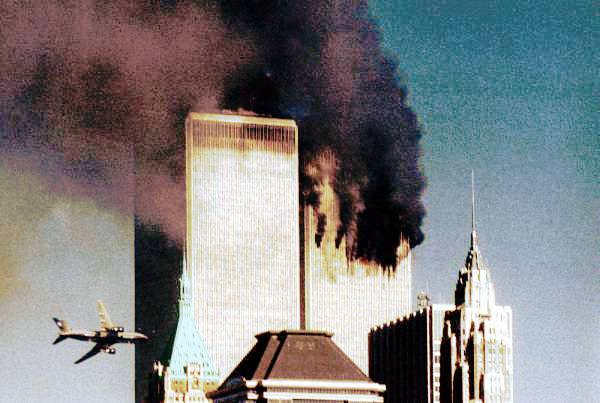
Thomas Ricks of CNAS recently had a historically-minded post at his Best Defense blog at Foreign Policy.com:

What Tom would like to read in a history of the American war in Afghanistan 

I think I’ve mentioned that I can’t find a good operational history of the Afghan war so far that covers it from 2001 to the present. (I actually recently sat on the floor of a military library and basically went through everything in its stacks about Afghanistan that I hadn’t yet read.)

Here are some of the questions I would like to see answered:

–What was American force posture each year of the war? How and why did it change?

–Likewise, how did strategy change? What was the goal after al Qaeda was more or less pushed in Pakistan in 2001-02?

–Were some of the top American commanders more effective than others? Why?

–We did we have 10 of those top commanders in 10 years? That doesn’t make sense to me. 

–What was the effect of the war in Iraq on the conduct of the war in Afghanistan?

–What was the significance of the Pech Valley battles? Were they key or just an interesting sidelight?

–More broadly, what is the history of the fight in the east? How has it gone? What the most significant points in the campaign there?

–Likewise, why did we focus on the Helmand Valley so much? Wouldn’t it have been better to focus on Kandahar and then cutting off and isolating Oruzgan and troublesome parts of the Helmand area?

–When did we stop having troops on the ground in Pakistan? (I know we had them back in late 2001.) Speaking of that, why didn’t we use them as a blocking force when hundreds of al Qaeda fighters, including Osama bin Laden, were escaping into Pakistan in December 2001?

–Speaking of Pakistan, did it really turn against the American presence in Afghanistan in 2005? Why then? Did its rulers conclude that we were fatally distracted by Iraq, or was it some other reason? How did the Pakistani switch affect the war? Violence began to spike in late 2005, if I recall correctly — how direct was the connection?

–How does the war in the north fit into this?

–Why has Herat, the biggest city in the west, been so quiet? I am surprised because one would think that tensions between the U.S. and Iran would be reflected at least somewhat in the state of security in western Afghanistan? Is it not because Ismail Khan is such a stud, and has managed to maintain good relations with both the Revolutionary Guard and the CIA? That’s quite a feat. 

Ricks of course, is a prize winning journalist and author of best selling books on the war in Iraq, including Fiasco and he blogs primarily about military affairs, of which Ricks has a long professional interest and much experience.  Ricks today is a think tanker, which means his hat has changed from reporter to part analyst, part advocate of policy. That’s fine, my interest here are in his questions or rather in how Ricks has approached the subject.

First, while there probably ought to be a good “operational history” written about the Afghan War – there’s a boatload of dissertations waiting to be born – I think that in terms of history, this is the wrong level at which to begin asking questions. Too much like starting a story in the middle and recounting the action without the context of the plot, it skews the reader’s perception away from motivation and causation.

I am not knocking Tom Ricks. Some of his queries are important – “What was the effect of the war in Iraq on the conduct of the war in Afghanistan?”  – rises to the strategic level due to it’s impact and the light it sheds on national security decision making during the Bush II administration, which I suspect, will not look noble when it is revealed in detail because it almost never is, unless you are standing beside Abraham Lincoln as he signs the Emancipation Proclamation.  Stress, confusion, anger and human frailty are on display. If you don’t believe me, delve into primary sources for the Cuban Missile crisis sometime.  Or the transcripts of LBJ and NIxon. Exercise of power in the moment is uncertain and raw.

But most of the questions asked by Ricks were “operational” – interesting, somewhat important, but not fundamental. To understand the history of our times, different questions will have to be asked in regard to the Afghan War. Here are mine for the far off day when documents are declassified:

What was the evolution of the threat assessment posed by Islamist fundamentalism to American national security by the IC from the Iranian revolution in 1979 to September 11, 2001?  Who dissented from the consensus? What political objections or pressures shaped threat assessment?

What did American intelligence, military and political officials during the Clinton, Bush II and Obama administrations know of the relationship between the ISI and al Qaida and when did they know it?

What did American intelligence, military and political officials during the Clinton, Bush II and Obama administrations know of the relationship between Saudi intelligence, the House of Saud and al Qaida and when did they know it?

What did American intelligence, military and political officials during the Clinton, Bush II and Obama administrations know of the relationship between the Taliban and al Qaida and when did they know it?

In the aftermath of 9-11, how did Saudi leverage over global oil markets effect American strategic decision making?

In the aftermath of 9-11, how did Pakistani nuclear weapons effect American strategic decision making?

In the aftermath of 9-11, how did the “Iraq problem”  effect American strategic decision making?

In the aftermath of 9-11, how did nuclear terrorism threat assessments effect American strategic decision making?  Did intelligence reports correlate with or justify the policy steps taken?

Who made the call on tolerating Pakistani sanctuaries for al Qaida and the Taliban and why?

Was there a net assessment of the economic effects of a protracted war in Afghanistan or Iraq made and presented to the POTUS? If not, why not?

Why was a ten year war prosecuted with a peacetime military and a formal declaration of war eschewed?

How did the ideological convictions of political appointees in the Clinton, Bush II and Obama impact the collection and analysis of intelligence and execution of war policy?

Who made the call for tolerating – actually financially subsidizing – active Pakistani support for the Taliban’s insurgency against ISAF and the Government of Afghanistan and why?

What counterintelligence and counterterrorism threat assessments were made regarding domestic Muslim populations in the United States and Europe and how did these impact strategic decisions or policy?

What intelligence briefs or other influences caused the incoming Obama administration to radically shift positions on War on Terror policy taken during the 2008 campaign to harmonize with those of the Bush II administration?

What discussions took place at the NSC level regarding the establishment of a surveillance state in the “Homeland”, their effect on our political system and did any predate September 11, 2001 ?

What were the origins of the Bush administration’s  judicial no-man’s land policy regarding “illegal combatants” and “indefinite detention”, the recourse to torture but de facto prohibition on speedy war crimes trials or capital punishment?

The answers may be a bitter harvest.

Pondering Transition Ops with Quesopaper

Monday, April 16th, 2012

One of the nice things about this blog is that periodically, smart folks will send me their unpublished material for feedback and private commentary. This comes in a wide variety of formats – manuscripts, articles, book chapters, powerpoint, sometimes an entire book or novel! It is flattering and almost always informative, so I try to help where I can or at least point the sender in the direction of someone more appropriate.

Recently, I was given a peek at a very intriguing paper on “Transition Operations” by Dr Rich Ledet, LTC Jeff Stewart and Mr. Pete Turner, who blogs occasionally at quesopaper.  Pete has spent a good chunk of the past ten years in a variety of positions and capacities in Iraq and Afghanistan, where he currently is with American troops in a remote rural district and it was he who passed their draft to me. They have taken a fresh look at the subject.

While I can’t give away their “secret sauce” in detail,  I particularly liked the fact that while the  focus and advice for executing transition operations is aimed at field grade officers and their civilian agency counterparts, their vision is in sync with the ideal of having policy-strategy-operations and tactics as a seamless “whole-of-government” garment. If only we could get our politicians to think in these terms, half the battle would be over.

Their paper is now headed to a professional journal; when it is published ( as I think it will be), I will definitely be linking to it here and hopefully, that will be soon.

My reason for my bringing this up – I have the permission of the authors to do so – is that the trio have put their finger on the major doctrinal problem faced by the United States military in Afghanistan – “transition operations” being a politically charged topic, laden as it is with implied foreign policy decision making by heavyweight policy makers, is treated in very scanty fashion by FM 3-24. Compared to other aspects of COIN, very little guidance is given to the the commander of the battalion or brigade in the effort to coordinate “turnover” of responsibilities and missions to their Afghan Army, police and government allies.

This at a time when the “readiness” of Afghan units and officials to accept these burdens in the midst of a war with the Taliban is questionable, variable, controversial at home and politically extremely sensitive in Afghanistan.

And at a point where, ten years after September 11, the US State Department is no more able in terms of personnel and vision or sufficiently funded by Congress, to step up their game and take the lead role in Afghanistan from the Pentagon than it was on September 10, 2001.  SECSTATEs Condi Rice and Hillary Clinton deserve great praise for making State do more with less, but State needs wholesale reform to fit the needs of the 21st century and the money and budgetary flexibility to split foreign policy tasks more equitably with the Defense Department.

State is not going to be playing a major role on the ground in our transition out of Afghanistan, which makes guidance to our majors and colonels – and in turn to their company and platoon leaders stationed there-  all the more important.

New Book: THE SNAKE EATERS by Owen West

Friday, April 13th, 2012

The Snake Eaters by Owen West 

Just received a review copy yesterday, courtesy of Simon & Schuster.  Full disclosure, by happenstance, I am on a private listserv with Major West, but you can take data point that alongside the fact that until today I hadn’t realized he was also the son of Bing West.  🙂

Judging from West’s already accomplished biography, the apple does not fall far from the tree.

Flipping through briefly, this book seems to be part high octane action story, part memoir,  part COIN treatise by other narrative means. The “novel-like” format appears to be an emerging trend in military and national security publishing distinguished from traditional, eye-in-the-sky, synthesizing, narratives like Steve Coll’s Ghost Wars.  Pre-publication materials sent described The Snake Eaters, thusly:

….The Snake Eaters takes readers into the streets, schools and homes of Khalidya [Iraq] – where the people WQest’s team were trying to protect were indistinguishable from the enemy they were trying to kill, and the the Iraqi battalion they mentored was both amateurish and hostile….By the end of the mission, the Snake Eaters was the first Iraqi battalion granted independent battle space, the insurgency was wiped off the streets of Khalidya, and peace was restored

Ok, that is just PR stuff which can be taken with a grain of salt, but the respected Bill Roggio of  The Long War Journal was embedded with the Snake Eaters in Iraq 2007 in the deadly Anbar province, when they were under Major West’s tutelage:

….Instead of moving out on Humvees, the Snake Eater’s platoon of scouts, accompanied by 5 MTTS and myself, struck out on foot from the battalion base, which sits on a hill overlooking Khaladiya, and moved into the city. The patrol moved through the desert hills between the base and the town. This approach is dangerous, particularly during the day, as soldiers are silhouetted behind the sky when coming over the hills, perfect targets for the snipers in the area.

On the march into Khaladiya, we overheard four mortars fall into one of the bases in the distance. The mortars were blind fired and we were told they didn’t hit a thing. The ever present semi-wild Iraqi dogs howled in the distance, and their howls grew louder as we approached and they shadowed our patrol. The insurgents couldn’t ask for a better early warning system.

This group of Iraqi Army scouts were the most disciplined and tactically proficient Iraqi soldiers I have seen while accompanying Iraqi troops outside the wire. They moved sharply, covered dangerous intersections and rooftops, effectively used hand and arm signals, and maintained their intervals. The scouts clearly embraced the idea of the “predator-prey” relationship. On the streets of Khaladiya, they were the hunters.

That doesn’t hurt the street cred (though TTP is way, way outside my area of expertise – I’ll leave that for folks who know what they are talking about to assess).

Incidentally, the FID/advisory/transition ops theme of The Snake Eaters is likely to make it very relevant reading in 2012 -2013.

A review will be forthcoming – have a bit of a backlog of reviews that I need to clear  (The End,  All In and The Hunt for KSM)

The Strategic Dilemma of Bitter-Enders

Sunday, April 8th, 2012

Berlin 1945

I have been reading The End by Ian Kershaw and it struck me that the story therein of Hitler’s Reich going down to total destruction is really a recurrent phenomena.

It is interesting that Kershaw, who began his earlier 2 volume biography of Adolf Hitler with the hypothesis that the Fuhrer was more the opportunistic vehicle of grand historical forces, in this study of the Nazi Gotterdammerung has accepted that the pull of Hitler’s inexorable authority over  Nazi and traditional German elites was charismatic, personalized and beyond challenge, even when Hitler was encircled by Soviet forces in his subterranean bunker and hours from suicide. Kershaw details how Hitler and his die-hard Gauleiter apparatchiks repeatedly demanded not only the militarily impossible, but the nonsensically insane, from the Wehrmacht, the Waffen-SS and the German people themselves. Virtually everyone struggled to comply.

This story is far from unique.

The Imperial Japanese, it must be said, surpassed even their Nazi allies in stubborn refusal to accept empirical reality and determination to fight to uttermost ruin. After the destruction of their Navy, loss of 100,000 men in Okinawa (their entire army there, minus a handful, fought to the death), the ruin of their cities, approaching famine, exhaustion of aviation fuel and gasoline stocks, the declaration of war on Japan by the Soviet Union and the atomic bombing of Hiroshima – Imperial Japan’s war cabinet deadlocked on a vote to surrender. The Kamikaze enthusiasts among the flag officers proposed a battle plan for their home islands to the war cabinet picturesquely titled “Honorable Death of 100 Million”, with gruesome implications for Japan’s civilian population.

Emperor Hirohito inspects Hiroshima after the atomic bombing

Many years later, Prime Minister Nakasone, who had been conscripted as a mere boy to meet invading American soldiers and Marines on the beach with a sharpened bamboo stake, credited the two atomic bombs with having saved his life. Without them, Japan’s warlords, with the tacit approval of their Emperor, would have coerced the Japanese nation into a gloriously genocidal defeat. A policy that while irrational,  faithfully followed the cultural spirit of Bushido and Japan’s mythic 47 Ronin.

Then there was the ancient example of Masada, the defiance of Titus by the Jewish Sicarii in 73 AD, as described by Josephus:

…. Miserable men indeed were they, whose distress forced them to slay their own wives and children with their own hands, as the lightest of those evils that were before them.  So they being not able to bear the grief they were under for what they had done any longer, and esteeming it an injury to those they had slain to live even the shortest space of time after them,-they presently laid all they had in a heap, and set fire to it.  They then chose ten men by lot out of them, to slay all the rest; every one of whom laid himself down by his wife and children on the ground, and threw his arms about them, and they offered their necks to the stroke of those who by lot executed that melancholy office;  and when these ten had, without fear, slain them all, they made the same rule for casting lots for themselves, that he whose lot it was should first kill the other nine, and after all, should kill himself. Accordingly, all these had courage sufficient to be no way behind one another in doing or suffering;  so, for a conclusion, the nine offered their necks to the executioner, and he who was the last of all took a view of all the other bodies, lest perchance some or other among so many that were slain should want his assistance to be quite dispatched; and when he perceived that they were all slain, he set fire to the palace, and with the great force of his hands ran his sword entirely through himself, and fell down dead near to his own relations. So these people died with this intention, that they would leave not so much as one soul among them all alive to be subject to the Romans.

….Now for the Romans, they expected that they should be fought in the morning, when accordingly they put on their armor, and laid bridges of planks upon their ladders from their banks, to make an assault upon the fortress, which they did,  but saw nobody as an enemy, but a terrible solitude on every side, with a fire within the place as well as a perfect silence So they were at a loss to guess at what had happened. At length they made a shout, as if it had been at a blow given by the battering-ram, to try whether they could bring anyone out that was within;  the women heard this noise, and came out of their underground cavern, and informed the Romans what had been done, as it was done, and the second of them clearly described all both what was said and what was done, and the manner of it:  yet they did not easily give their attention to such a desperate undertaking, and did not believe it could be as they said; they also attempted to put the fire out, and quickly cutting themselves a way through it, they came within the palace,  and so met with the multitude of the slain, but could take no pleasure in the fact, though it were done to their enemies. Nor could they do other than wonder at the courage of their resolution and the immovable contempt of death, which so great a number of them had shown, when they went through with such an action as that was.

What does the phenomenon of bitter-end political leadership mean in terms of strategy?

To the extent that war is a contest of wills or a form of bargaining between two political communities, the fanaticism of bitter-enders simplifies strategy while often complicating the warfare necessary to execute it.  Strategy is simplified because, to borrow a term from labor relations, the “last, best offer” has been refused. No bargaining is taking place – one or more sides refuses peace at any price short of total victory (“unconditional surrender”) or complete defeat. This represents movement away from a limited war for limited ends closer toward Clausewitz ‘s theoretical “Absolute War” by becoming, for the losing party, an existential conflict. The implicit threat to fight to the bitter end in any war – assuming the resources and will to make good on the threat exist – is really a primitive form of psychological deterrence; most states seeking limited objectives will avoid getting trapped in this dynamic.

This means the strategic calculus is altered by such a stance. The war itself and the driving need to wage it to it’s ultimate conclusion may have come to outweigh the value of the original “End” over which the conflict began; perhaps a policy concession or bit of territory or admission by a state’s rulers of a subordinate place in the diplomatic pecking order. While adopting a “bitter-end” position logically seems disadvantageous to the weaker party, it presents the enemy with a new set of problems. The “Means” or costs required to wage a war of conquest and lengthy occupation may be economically or attritionally prohibitive, or even physically impossible. Israel has a fine military and nuclear weapons but the Jewish state is too small to subdue and rule over the Arab states; Imperial Japan, for all it’s martial ferocity and cruelty, could not swallow the vastness of China, divided by civil war and fighting without allies, even before Pearl Harbor. Reach can exceed grasp.

Likewise, the moral burden and diplomatic friction of waging war not only against the opposing army, but the enemy population as well – of bombing or blockading into starvation women, children and the elderly – may be more than a political community or it’s leadership are able to bear and remain unified. As callous and narcissistic leaders of great countries usually are, few of them (fortunately) aspire to follow in the footsteps of Hitler, Stalin or Mao and openly spill an ocean of blood.  The impressive firepower of the bombing campaigns of Lyndon Johnson and Richard Nixon did not break Hanoi’s will to fight the Vietnam War, they broke the Eastern Establishment’s will to pursue anticommunist Containment by force in Vietnam or elsewhere. The brutal counterinsurgency tactics of the French Army in the Algerian War destroyed the Algerian rebels militarily, but it shattered the Fourth Republic politically.

Insurgency, the “war of the weak”, is powerful because it inherently contains elements of bitter-endism. To rise up against one’s own society usually is an act of politically burning your boats and wearing, so far as the state is concerned, the mantle of treason and all that it entails. A desperate act by desperate men and conversely,  many of the leaders of states, being tyrants, are in no better position. Tyrants are widely despised; the Gaddafis or Mussolinis know that their power is their only guarantee of safety and their fate, if they fall into the hands of their people, would be terrible, so any rebellion must be crushed immediately, lest it gain traction. The Shah by contrast, was a congenital coward but a realist. He knew what might happen if he and his family fell into the hands of his political opponents, so the Pahlavi dynasty preemptively fled at the first sign of trouble (twice).

Finally, a word must be said about the position of a people under the leadership of  bitter-ender rulers in a war. Caught between a rock and a hard place, they essentially have three choices, none of them attractive:

1. Make a supreme effort to win the war.

2. Make a supreme effort to overthrow the government and sue for peace.

3.  Desert the cause as quietly as they can on an individual basis and hope for the best.

The best almost never happens. Kershaw’s history of the fate of the Germans in 1945 would have been well understood by Thucydides, even if the Melians were as blameless as the Germans were deserving of their fate:

….About the same time the Melians again took another part of the Athenian lines which were but feebly garrisoned. Reinforcements afterwards arriving from Athens in consequence, under the command of Philocrates, son of Demeas, the siege was now pressed vigorously; and some treachery taking place inside, the Melians surrendered at discretion to the Athenians, who put to death all the grown men whom they took, and sold the women and children for slaves, and subsequently sent out five hundred colonists and inhabited the place themselves.

If you want the bitter end, be prepared to drink the last drop.

Strategy and Perception, Part II.

Monday, March 26th, 2012

To continue, my last post was inspired by analysis by Jason Fritz at Inskspots and I would like to continue to use excerpts from his post as a foil to ruminate about strategy:

Delicate strategic balancing: perception’s role in formulating strategy

….We have a whole suite of problems with our strategy in Afghanistan, foremost of which are a failure to state specific and achievable ends as well as a misalignment of ways and means to achieve the pitifully-described desired ends we have written down. But if our strategic success now depends upon selling to the Afghans that we mean well and that they are now more skeptical than not of us, well we have a very, very serious problem. Balancing the Say-Do equation is an imperative. However, if public perception is that mistakes and crimes committed by individual U.S. service members is indicative of U.S. policy or strategy, then public communications begins to drive strategy instead of the other way around.

Incidentally, I agree completely with Jason’s emphasis that we do not have the fundamentals right on strategy and Afghanistan. To an extent, worrying about “Perception” when you do not have Ends, Ways and Means in sync is akin to fretting about the paint job and waxing of your automobile while the battery is dead, the engine is shot and your car is up on blocks with the tires stolen. Nevertheless, perception will always be at least a contingent factor in strategy, affecting the friction of your diplomatic and theater environment, the attitude of the home front and the political will of elite decision makers.

The classic example of perception having a strategic impact is the Tet Offensive and the effect it had on America’s Eastern Establishment political elite and the Johnson administration directing the war in Vietnam. While Tet was a debacle militarily for the southern Communist cadres that composed the Viet Cong, the offensive struck the American political center of gravity hard. SECDEF McNamara resigned, the antiwar movement was energized and Tet indirectly contributed to the primary results in New Hampshire that caused President Lyndon Johnson to withdraw from the race for president in 1968 and subsequently order a halt to bombing North Vietnam. The mighty Democratic Party, which had dominated American politics since 1933, was riven by an ideological civil war that played out in the streets of Chicago.  Had Hanoi been prepared to seek a negotiated settlement, Johnson likely would have given away the store (a TVA on the Mekong!) to secure peace.

….Public communications and information operations to influence perceptions are ways, but the U.S. keeps falling into the trap of making perceptions ends in themselves. If our ends, ways, and means were better formed and aligned, I suspect that the “Do” side of the equation would be solid enough to negate the affects of mistakes. But this is not the situation in Afghanistan where continued programs of questionable efficacy, strategic drift with regard to ends (compare this and this for instance), andcontinued support for an illegitimate and ineffectual government abound. If ways and means are not succeeding (to what ends?!?) or are the wrong ways and means entirely then your strategy rests in total upon Afghan perception that you’re making a difference instead of in part, which amplifies individual disasters such as we’ve seen of late. While it is unlikely that the United States will change course at this juncture, we need to start paying attention to this phenomenon now and avoid it in the future so we can avoid codifying perceptions as ends and put influencing them back where they belong: as ways. A successful strategy would go a long way to restoring this balance. Once again, maybe in the next war.

I think Jason has put his finger on another problem altogether here. His description of “perception” in that paragraph is one of political perception of a foreign audience of our actions as they constitute an ongoing, apparently unending process to which there is no conclusion in the sense of a defined End, just an arbitrary time limit (to which we are only kinda, sorta, maybe sticking to).  Actually “audience” is not even the right word, as the Afghans are interested participants and actors as well as onlookers who happen to be on the weaker side of an asymmetric dynamic. Weak does not equate to “powerless”, and as we have stupidly set very high strategic goals that require the voluntary consent, adoption and cooperation of the Afghan people to reach, withholding of consent, passive or active resistance or armed insurgency are Afghan bargaining alternatives to abject submission to our wishes. As occupation in the form of unending process looks a lot like foreign domination of Afghanistan by infidels and their corrupt and predatory collaborators, it is not surprising that the Afghans of all stripes are bargaining hard after ten long years.

American civilian leaders running the Afghan war are politicians and lawyers, for whom unending process (like for example, the Federal budget) rather than results is familiar and comfortable and for whom irrevocable choice making is anathema. Crafting a usefully effective military strategy is difficult if one of the unspoken, sub rosa, goals is to “keep all options open as long as possible” which precludes commitment to and vigorous pursuit of a prioritized, specific End to the exclusion of others in as short a time as possible.

This perspective, while perhaps a career advantage for a politician, is over the long haul ruinous for a country in a statesman, as the net result becomes burning money and soldier’s lives to garner nothing but more time in which to avoid making a final decision, hoping to be rescued by chance (Once in a blue moon in warfare, a Tsarina dies or an Armada sinks and changes fortunes, but most nations losing a war ultimately go down to defeat).

A defined and concrete End, by contrast, yields a different perceptual effect because uncertainty for soldiers and onlookers alike is reduced. Foreigners can calculate their own interests and costs with accuracy and decide if opposition, neutrality or alliance will be to their advantage. Now it may be that a desired strategic End is so provocative that it is best kept secret until a sudden victory can be presented to the world as fait accompli, but that is still a very different thing from elevating process of Ways and Means over distant, ambiguously unrealistic and vaguely defined Ends. Loving policy process and tactical excellence above strategic results when employing military force gets you a very long and likely unsuccessful war.

However, somebody else said it much better than I can  2500 years ago….

….When you engage in actual fighting, if victory is long in coming, then men’s weapons will grow dull and their ardor will be damped. If you lay siege to a town, you will exhaust your strength
Again, if the campaign is protracted, the resources of the State will not be equal to the strain
Now, when your weapons are dulled, your ardor damped, your strength exhausted and your treasure spent, other chieftains will spring up to take advantage of your extremity. Then no man, however wise, will be able to avert the consequences that must ensue.
Sun Tzu

Switch to our mobile site

