zenpundit.com » teaching

Archive for the ‘teaching’ Category

The Strategist as Demiurge

Saturday, August 7th, 2010

“Genius is above all rules” – Carl von Clausewitz

“Creativity is the ability to introduce order into the randomness of nature.” – Eric Hoffer

An intriguing, thought-provoking and frequently on-target paper by Dr. Anna Simons of SSI  (hat tip to SWJ Blog). First the summary excerpt and then some comments:

Got Vision? Unity of Vision in Policy and Strategy: What It Is and Why We Need It (PDF)

….Moving beyond “unity of effort” and “unity of command,” this monograph identifies an overarching need for “unity of vision.” Without someone at the helm who has a certain kind–not turn, not frame, but kind–of mind, asymmetric confrontations will be hard (if not impossible) to win. If visionary generals can be said to possess “coup d’oeil,” then unity of vision is cross-cultural coup d’oeil. As with strategic insight, either individuals have the ability to take what they know of another society and turn this to strategic–and war-winning–effect, or they do not. While having prior knowledge of the enemy is essential, strategy will also only succeed if it fits “them” and fits “us.” This means that to convey unity of vision a leader must also have an intuitive feel for “us.”

[ For the readers for whom military strategic terminology is unfamiliar, “coup d’ oeil” is an instant, intuitive, situational understanding of the military dynamics in their geographic setting. The great commanders of history, Alexander, Caesar, Belisarius, Napoleon – had it]

The key concept  here is “visionary generals” creating a mutually shared “general vision” of policy and its strategic execution. While military figures who hold high command – Eisenhower, MacArthur, Petreaus – are obvious examples, technically, it doesn’t have to be a “general” in immediate combat command, so much as the final “decider”. A figure whose authority is part autocrat and part charsmatic auctoritas. Abraham Lincoln and Winston Churchill epitomized this role, as did George Marshall, the orgainizer and architect of the Allied victory in WWII. On a less exalted scale, we see Edward Lansdale (cited by Simons) or Thomas Mann, LBJ’s behind the scenes, Latin America “policy czar” during the Dominican Crisis of 1965

Simons is arguing for finding “great men” of strategy rather than explaining how to contruct a strategic vision per se. There is a very strong emphasis here of successful strategy as an act of great creativity, with the strategist as a master artist of force and coercion, imposing their will on allies and the enemy to shape the outcome of events. Colonel John Collins, wrote of this article by Dr. Simons at his Warlord Loop:

Be aware that the following article is NOT about unity of vision. It is about visionaries who convinced a majority that their vision was the best available policy at a given time and place in a certain set of circumstances. Implementing plans, programs, and operations follow. Most successful visionaries indeed must be supersalespersons, because priceless theories and concepts otherwise gather dust.  

I agree. There’s a combination of actions here – strategic thought, proselytizing the vision, competent execution, empirical assessment and strategic adjustment – that feeds back continuously (or at least, it should). While Simons argues her point well and draws on several case studies from India from which I learned new things, there is a flaw in one of her premises:

Take Andrew Krepinevich’s and Barry Watts’s recent assertion that it is “past time to recognize that not everyone has the cognitive abilities and insight to be a competent strategist.”4 As they note, “strategy is about insight, creativity, and synthesis.”5 According to Krepinevich and Watts, “it appears that by the time most individuals reach their early twenties, they either have developed the cognitive skills for strategy or they have not.”6 As they go on to write:

If this is correct, then professional education or training are unlikely to inculcate a capacity for genuine strategic insight into most individuals, regardless of their raw intelligence or prior experience. Instead, the best anyone can do is to try to identify those who appear to have developed this talent and then make sure that they are utilized in positions calling for the skills of a strategist.7

Mark Moyar concurs. The point he makes again and again in his new book, A Question of Command: Counterinsurgency from the Civil War to Iraq, is that “counter-insurgency is ‘leader-centric’ warfare, a contest between elites in which the elite with superiority in certain leadership attributes usually wins.”8

Watts and Krepinevich are statistically correct regarding the rarity of strategic thinking and are probably largely correct regarding the effects of professional military education and the career path of most military officers. They are most likely wrong on the causation of the lack of strategic thinking ability. It is not exclusively a matter of winning the genetic lottery or losing it at age thirty, cognitively we are what we frequently do. Discourage a large number of people by regulation or culture from taking the initiative and making consequential choices and you will ultimately have a group bereft of strategic thought. Or possibly, thought.

As with most professionals, military officers tend to be vertical thinkers, or what Howard Gardner in Extraordinary Minds calls “Masters” – as they rise in rank, they acquire ever greater expertise over a narrower and more refined and esoteric body of professional knowledge. This tendency toward insularity and specialization, analysis and reductionism is the norm in a 20th century, modern, hierarchical institutional culture of which the US military is but one example.

However, if you educate differently, force officers out of their field (presumably into something different from military science but still useful in an adjunctive sense), the conceptual novelty will promote horizontal thinking, synthesis and insight – cognitive building blocks for strategic thinking. While we should value and promote those with demonstrated talent for strategic thinking we can also do a great deal more to educate our people to be good strategists.

Interviewed by Steven Pressfield

Saturday, June 12th, 2010

Shameless Self-Promotion Department:

In an unusual turn of events, I was the subject of an interview by novelist and historian Steven Pressfield, author of Gates of Fire and The War of Art.

Steve has an interview section on his newly redesigned site and I join a series of bloggers and authors like Instapundit  Glenn Reynolds, Tim O’Brien and Seth Godin who have sat down, in a virtual sense, with Steve for a discussion about writing and creativity. Having done such interviews of others in the past, it was a good experience to be on the receiving end of questions, for which I thank Steve:

The Creative Process: Mark Safranski

SP: Mark, what is the ZenPundit philosophy? Howdo you decide which stories or posts (or even guest bloggers) you want to include? What criteria do you use?

MS: Good question. My philosophy is something I also try to impart in my teaching.

Marcus Aurelius said “Look beneath the surface; let not the several qualities of a thing nor its worth escape you.” Most phenomena have many dimensions, multiple causes and second and third order effects. To deal with all of this complexity, we simplify matters by looking at life through an organizing frame, which we might call a worldview, a schema, a paradigm or a discipline. Whatever we call our mental model, we tend to become wedded to it because it “works.” It helps us understand some of what we are looking at-and in getting good at applying our model, advances us professionally and brings prestige or material rewards. So we will defend it to the death, from all challengers!

That’s getting carried away. Our mental model is just a tool or, more precisely, a cognitive lens. We need to be less attached to our habitual and lazy ways of looking at the world, put down our magnifying glass and pick up a telescope. Or, bifocals. Or, a microscope. Stepping back and applying different perspectives to a problem or an issue will give us new information, help us extrapolate, identify unintended consequences or spot connections and opportunities. When I do analytical pieces, I try to take that approach….

Read the rest here.

H-Diplo’s Roundtable: On “Politics and Scholarship”

Friday, June 11th, 2010

H-Diplo, the H-Net listserv for Diplomatic History, has an outstanding set of essays by prominent historians and political scientists on the subject of “Politics and Scholarship” (hat tip to Bruce Kesler and the Warlord Loop):

NOTE TO READERS: I am having some difficulty fixing the links, notably to Jervis and Cumings, due to site problems at H-Diplo so I am going with Phil’s suggestion in the comments and posting a link to the PDF VERSION here.

Commissioned for H-Diplo/ISSF by Robert Jervis, Columbia University

….This is a slippery slope, and as academics we should worry about it.  Perhaps the most important thing we can do is to remind ourselves that our policy judgment is likely to be considerably more fallible than our scholarly expertise. Most intelligent people know this, which is why mass letters to the editor by professors protesting or advocating some policy carry so little weight.  By and large, the policy world does not think of professors as being any wiser than any other class, and they are correct to do so.  The ancient distinction between theoretical and prudential wisdom holds as strongly as ever. Humility is not, alas, a common academic virtue, and someone involved in the hurly burly of political discourse should try to make a clear distinction, at least in his or her own mind, about what he knows as a professor, and what he thinks as a citizen or policymaker.  The most troubling area of pseudo-scholarship is likely to be that kind which nominally deals with policy in a scholarly way, but is, in fact, nothing more than a polemic masquerading as something else.

….We are told by many people – for example by Nobel scientist E. O. Wilson in his best-selling book Consilience – that the hard sciences and the social sciences are coalescing in the use of mathematical modeling, computers, game theory, and various other methods to finally get to the bottom of what makes human beings tick. I would argue the exact opposite: both the hard and soft sciences are in crisis. From my point of view the social sciences should have seen this crisis coming long ago (in fact many did – long ago, but they did not redefine the disciplines), but much more significant is the turn toward uncertainty in the hard sciences, as Newtonian mechanics, empiricism, and the scientific method show themselves incapable of comprehending the complexities of the physical world.

Q: Does being in the minority ever annoy you?A: Yes, some aspects of this minority status are annoying.  For instance, it is annoying that my peers presume that I “have an ideology” whereas they do not.  It is very reminiscent of African-Americans in the academy several decades ago; they were presumed to have “race” and “racially tinged views” whereas Caucasians did not.  For that matter, the racial analogy suggests another curious burden: being assigned the role of token on panels.  Some of my peers believe that a balanced panel on foreign policy is one that has a critique of Democrats from the left along with two shades of Democratic perspective, say center-left and center.  However, most recognize that it would be better if they could find just one person, me, to offer the “whacky conservative view” – here they hope I will represent not just my own actual views but also cover, or be held responsible for, everything to the right.  And this leads to my biggest gripe: feeling obligated to defend, or at least explain, the position of anyone to the right of Joe Biden, because if I don’t then no one will.  Because liberals do not have a monopoly on nonsense, there is plenty of bone-headedness from conservatives and Republicans for my colleagues to highlight and go after.  Often the attacks are legitimate and fair, but when they cross over into caricature and canard I am left with a tough choice: do I inject a clarification or do I let it pass?

….Instead of this kind of variation, however, what we typically see is stability both across time and across issues that are at most loosely connected.   For example, during the Cold War, hawks and doves rarely changed their assessment of Soviet motives, which had decisive impacts on their policy prescriptions, with hawks favoring many variations of competitive military and political policies and doves favoring none.  Proponents and opponents of ballistic missile defense have rarely changed their assessments of the feasibility of effective defense: proponents have consistently found significantly greater prospects for technically feasible defenses, which they believe would provide substantial strategic advantages; in contrast, opponents have as regularly found that the prospects for  effective defenses have been poor, and worried that these missile defenses would generate strategic dangers whether or not they were effective.  And Cold War hawks were more likely than doves to believe the effective missile defense were feasible, even though their hawkishness stemmed primarily from assessments of Soviet motives, not technology.  Scholars’ overall assessments of the danger posed by nuclear proliferation appear to be stubbornly constant in the face of evolving circumstances and possibilities, reinforcing their established preferences for adopting more or less costly policies in response. 

….The scholarly critics’ stance is predicated on a crucial, often unacknowledged, assumption (shared by my American students and their parents): that they themselves are non-ideological, personally and in their analysis of events, though they may hold personal ideological beliefs.   This is even true of many self-identified orthodox Marxists, liberals, socialists, political religionists, realists, and other believers with universalist truth claims or political goals: they personally are not ideologists because what they believe is true, not some metaphysical scheme that only the foolish or the dangerous could believe. 

It is my contention that this assumption of non-ideological pragmatism, or presumed normative detachment, in the critics’ point of view is not sustainable upon examination.  Scholars have found that even in the natural sciences certain beliefs can be held or supported largely because they are congruent with ideological norms, e.g., in liberal societies the assumed symmetrical, random distribution of human intelligence.

Presumably Niebuhr would have seen what so many fail to see still today, that by becoming a “science,” DPT-in conjunction with democratic transition theory and liberal international jurisprudence-blinded American policy makers to many dangers they might otherwise have perceived.  In this respect we might recall how the “Washington Consensus,” the package of ideas behind economic globalization that included deregulation, privatization, and openness, contributed to the blindness that allowed the economic crash of 2008 to occur. In each case, the wounds have been self-inflicted; American hubris has been our own worst enemy. How united the American economics profession seemed at the time and indeed for the most part still today, just as political science seems unwilling to recognize the damage its theorizing underwrote. Democratic Peace Theory, like the Washington Consensus, reminds us of the famous words of John Maynard Keynes:The ideas of economists and political philosophers, both when they are right and when they are wrong, are more powerful than is commonly understood.  Indeed the world is ruled by little else.  Practical men, who believe themselves to be quite exempt from any intellectual influence, are usually the slaves of some defunct economist.

Some Anglospheric Multimedia

Thursday, May 27th, 2010

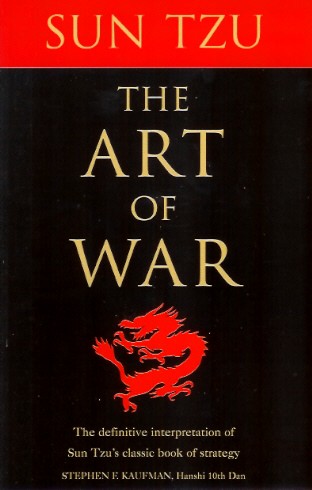
The Art of War by Sun Tzu

A BBC podcast on Sun Tzu’s classic The Art of War. Perhaps the most sublime work on strategy of all time ( Hat tip to The Warlord)

Next, and unrelated: 

Via blogfriend Robert Paterson, a new talk by educational and creativity thought leader, Sir Ken Robinson. The ritual TED bowing to Al Gore notwithstanding, if you are interested in education issues, this is a must see video.

Expanding the Antilibrary

Wednesday, May 19th, 2010

Posts have been slow here lately because my real-life workload has temporarily increased. Irrationally, I’ve attempted to compensate for my lack of blogging by ordering yet more books; perhaps I should order more free time instead!

 In any event, esteemed readers, @cjschaefer and @CampaignReboot have requested a full accounting of what is new and here it is:


 Blood and Rage: A Cultural History of Terrorism by Michael Burleigh

Koran, Kalashnikov and Laptop by Antonio Giustiozzi

The Collapse of Complex Societies by Joseph Tainter

Street Without Joy by Bernard Fall


The Third Reich at War by Richard J. Evans

The War Lovers by Evan Thomas

The Death and Life of the Great American School System by Diane Ravitch

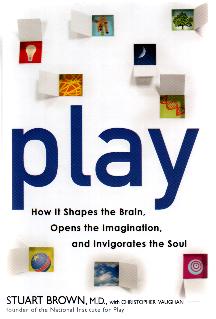
Play: How it Shapes the Brain, Opens the Imagination and Energizes the Soul by Stuart Brown


Rewired by Larry D. Rosen

The Human Factor: Inside the CIA’s Dysfunctional Intelligence Culture by “Ishmael Jones

Coupled with what was leftover from last year, my 2010 summer reading list is set.


Switch to our mobile site